
Target Modi, Target India: How the Deep State Wants to Halt Bharat’s Rise
A global deep state plot, dubbed Operation 37, seeks to destabilize India by targeting PM Modi and swaying 37 MPs. Beyond politics, it’s an existential threat to India’s sovereignty, economy, and future. India, meanwhile, is responding with geopolitical offensive.
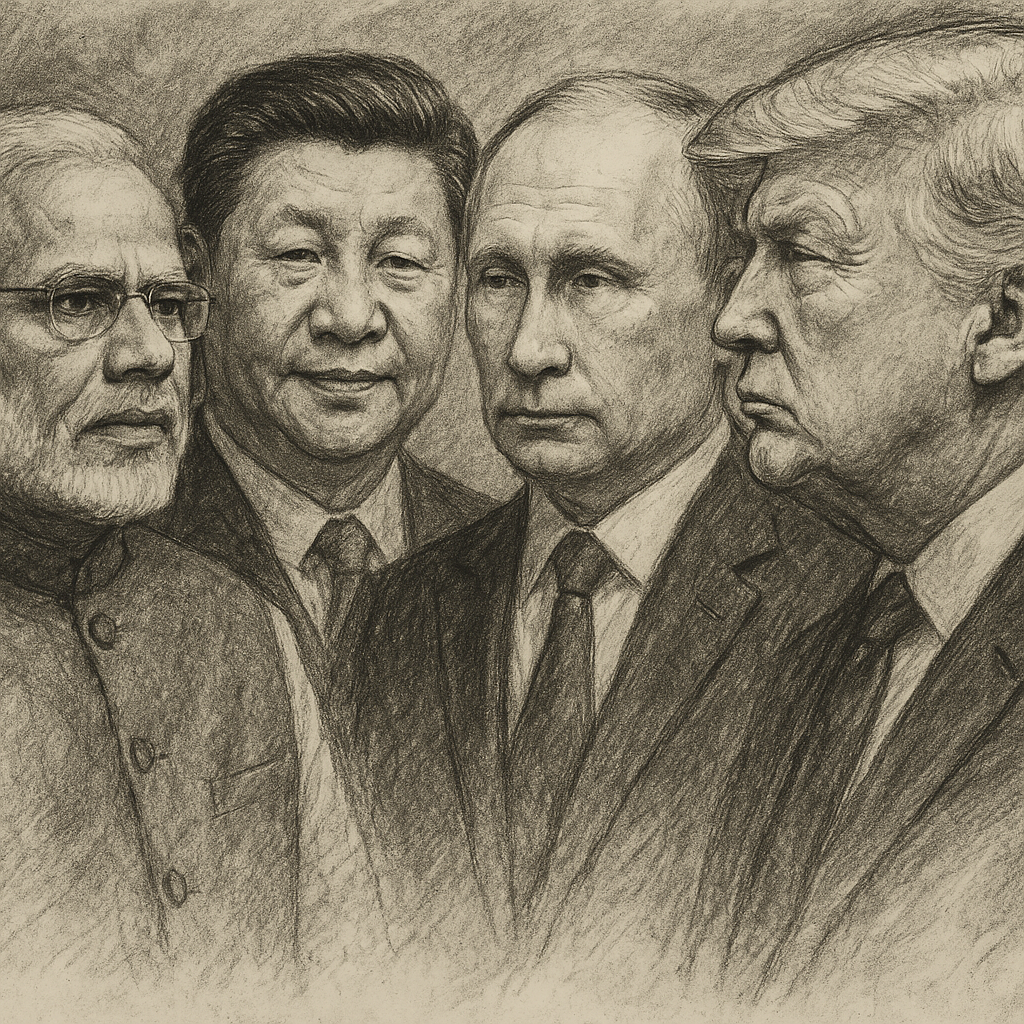
A young monk once sat under a vast banyan tree with his teacher. The tree’s roots wound deep into the earth, its branches stretched wide into the sky. The monk said, “Master, this tree is like our nation, broad, strong, sheltering countless lives.”
The master smiled, then pointed to a single root that termites had begun to gnaw. “Do you see this? The tree stands tall, but the unseen gnawing can hollow its strength. The storm need not uproot it, the betrayal within can.”
The monk grew worried. “Then must we cut the termites away?”
The master replied, “Yes, but not in anger. You must guard the root, for if it weakens, the branches cannot protect the birds. If the root dies, all songs of the forest cease.”
The monk bowed in silence, understanding. Protecting the banyan was not about saving a tree—it was about saving life itself.
SUPPORT DRISHTIKONE
In an increasingly complex and shifting world, thoughtful analysis is rare and essential. At Drishtikone, we dedicate hundreds of dollars and hours each month to producing deep, independent insights on geopolitics, culture, and global trends. Our work is rigorous, fearless, and free from advertising and external influence, sustained solely by the support of readers like you. For over two decades, Drishtikone has remained a one-person labor of commitment: no staff, no corporate funding — just a deep belief in the importance of perspective, truth, and analysis. If our work helps you better understand the forces shaping our world, we invite you to support it with your contribution by subscribing to the paid version or a one-time gift. Your support directly fuels independent thinking. To contribute, choose the USD equivalent amount you are comfortable with in your own currency. You can head to the Contribute page and use Stripe or PayPal to make a contribution.
Subversion as a National Right
When subversion becomes a national right, and unmitigated power is the means to enforce that right, while labeling it "god given," then the world at some point refuses to play the game.
No cost is more than self-respect and self-preservation.
Independence, you see, is not just the fundamental right of the most powerful and the flamboyant. If it is to be something essential to the human being, then it must be accessible to the most vulnerable.
Too many lives have been taken for this show of power by the self-appointed moral busybodies.
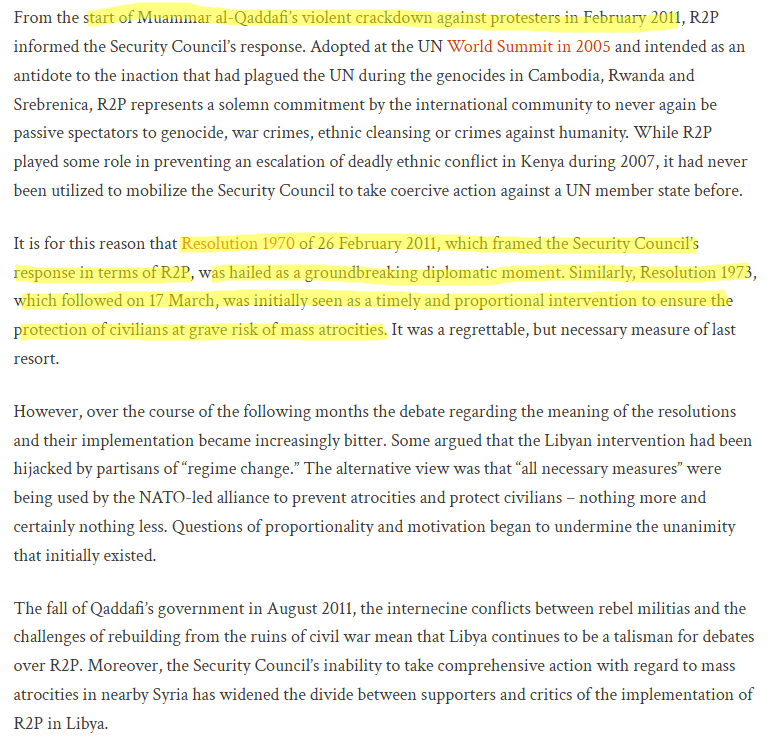
A few months after the takedown of Libyan leader Gaddafi, human beings were being sold on the street corners as slaves.
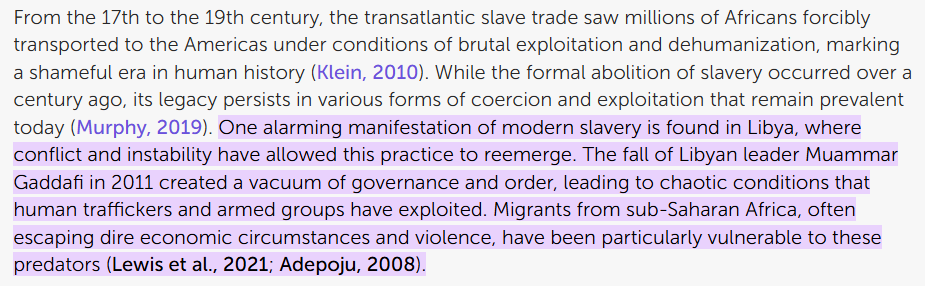
Within a matter of months and a few years, the once prosperous nation was brought to its knees.
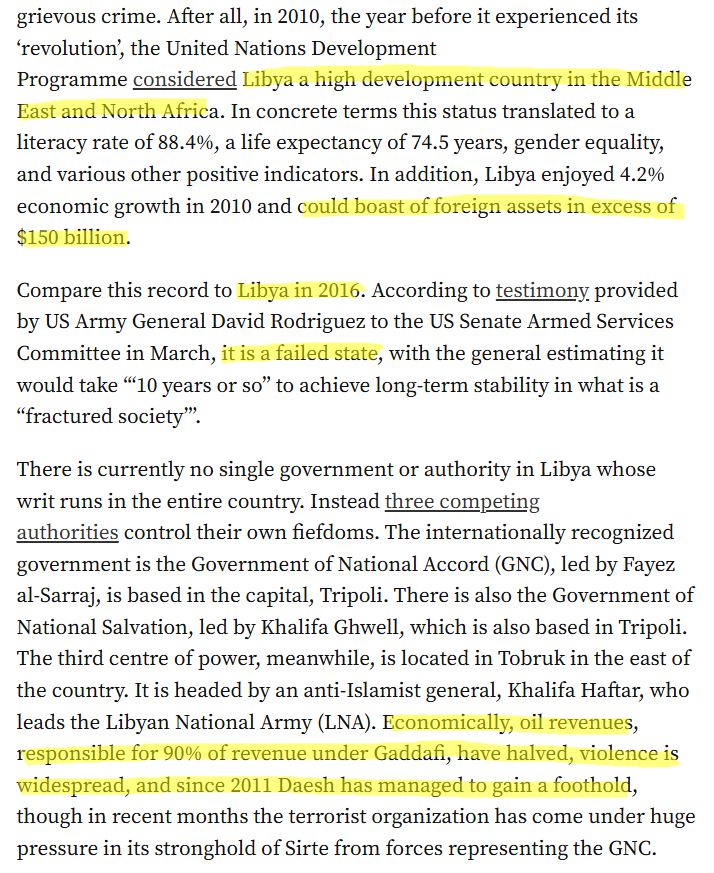
All for what? Because Colonel Gaddafi had dared to stand up for a unified and "independent" Africa and its currency.
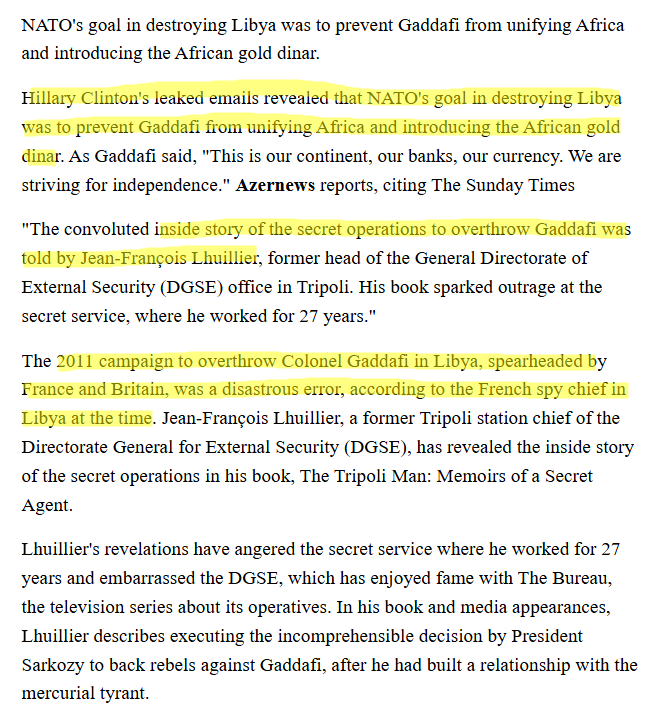
After having Gaddafi assassinated, Hillary Clinton proudly mocked him.
The mocking laugh of arrogance.
An entire society was destroyed. Destinies obliterated. And this woman was having fun!
Remember, all this was done backed by global institutions created for "establishing the world order".
The UN’s “Responsibility to Protect” resolutions (1970/1973) enabled a NATO intervention marketed as civilian protection but culminating in regime change—sparking years of state collapse.
But that is what the other societies have been for the Western elites - a sport.
What might seem to be targeting of a West-appointed national villain of another country is actually an operation aimed at destroying that society. Anyone in that country who thinks it is all about one person, the way the Western mainstream media obediently portrays it, is quite simply retarded and hallucinating. More importantly, self-hating and suicidal.
For those who do not understand the machinations of the United States, along with its allies, in treating the world as their doormat, listen to Professor Jeff Sachs. He lays out the history of America's perfidious behavior clearly and concisely.
That is the background of how we can see the dynamics of what is transpiring between the US and India right now.
Operation 37: Regime Change Operation
Operation 37 refers to a coordinated plan allegedly devised by the Deep State — involving intelligence networks, economic lobbies, and political actors — to destabilize India by toppling Prime Minister Narendra Modi’s government. The core mechanism is deceptively simple: convince, coerce, or compromise 37 NDA MPs into breaking ranks. With BJP/NDA holding a comfortable majority, this defection figure becomes the “tipping number” that could flip the Lok Sabha arithmetic and enable a No-Confidence Motion against Modi.
The Deep State’s playbook operates on multiple levels. At its core are money flows, scandal manufacturing, and targeted probes—often amplified through NGO and media warfare—to isolate MPs and erode their loyalty. The psychological pressure points are well known: MPs facing cases under ED, CBI, or IT; regional leaders harboring ambitions of chief ministership or cabinet posts; and family vulnerabilities ranging from business interests to children studying abroad. Each becomes a potential lever for coercion or inducement.
External actors amplify the internal dissonance. Western intelligence templates — CIA and MI6-style subversion — push narratives of “vote chori,” “EVM fraud,” and “India sliding into authoritarianism.” Diaspora networks are mobilized to brand India as a democracy in crisis, while Western capitals echo these themes in policy forums. Financial disruption adds another dimension: inducements linked to the dollar and crypto flows, including speculative channels involving Trump’s crypto-Pakistan nexus, could bankroll the operation.
Please watch this episode, which shares the details.
In their second video, Savio and Gayatri Mishra discussed who was involved in this operation.
According to Savio, the Modi government is expected to take action against those involved in "Operation 37," with potential measures including their removal or imprisonment. The video predicts that these individuals may go into hiding and retaliate by targeting companies that support Modi within the next seven to ten days.
The speaker also alleges that Donald Trump is leveraging this operation for his own benefit. Funding for the operation is reportedly sourced from business entities connected to the US and India, with the video hinting at the involvement of a wealthy businessman and his son in the conspiracy.
In the third video of this series, Savio goes further than the last two.
Savio Rodrigues emphasizes that Narendra Modi’s primary role is as the Prime Minister of India, serving all citizens, regardless of caste, religion, or community identity. His outreach to minorities, therefore, is not a political ploy but a constitutional duty. At the same time, Modi also carries the identity of leading the BJP, a party often criticized by its detractors for being Hindu-majoritarian. This dual perception fuels a continuing debate: can minorities see him beyond that label?
Rodrigues points out that despite broad participation in welfare schemes—ranging from housing to health—minority communities largely refrain from voting for the BJP. This is not due to the absence of benefits, but rather the persistence of a negative narrative that has been constructed over the last nine years. The Karnataka elections, where minorities voted heavily to oust the BJP, are cited as evidence.
A significant role in this reluctance, Rodrigues argues, is played by religious leaders and community elites, who foster a climate of fear. They reinforce the belief that the BJP is anti-minority, even while their congregations avail themselves of taxpayer-funded schemes. Christian groups, for instance, benefit from government initiatives yet overwhelmingly resist supporting the BJP at the ballot box.
Rodrigues stresses that Modi’s political opponents, anti-BJP forces, and groups seeking religious expansion use religion and caste as divisive tools to demonize him. This negativity is then amplified by external actors, such as the U.S. and China, who exploit India’s internal divisions as leverage points. He notes the hypocrisy of criticism: while earlier leaders like Nehru or Indira visiting religious places were normalized, Modi’s temple visits are portrayed as communal.
What is the significance of Operation 37?
First, let's examine its math and its impact.
The “Math” of 37 MPs: BJP/NDA Lok Sabha strength: ~293 (BJP alone ~240).
- Simple majority in 543-member House: 272.
- If 37 MPs defect, BJP drops below safe majority → Opposition gains momentum → No Confidence Motion becomes feasible.
So what is the Deep State’s calculation? That 37 MPs is the “tipping number.” This doesn’t require full Opposition unity—just enough “swing votes” to trigger chaos.
Most importantly, even if Modi survives the motion, the perception of instability could slow India’s global assertiveness.
That could be the "worst case scenario" for the orchestrators of such an Operation.
Rodrigues refers to this strategy with the tagline “Diversion, Deception, and Division,” reflecting its three-pronged approach:
- Diversion: Create distractions and rifts within the ruling party and its base. Rodrigues alleges that operatives are targeting influential BJP figures – each capable of bringing along a group of MPs – in hopes of splitting the party. By luring away a total of 37 BJP MPs, the plotters believe they can deprive Modi of a majority and instigate political turmoil. This number is deliberately fixed: “They’re not saying 30 or 40 – they are fixed on 37 MPs to break and co-opt,” Rodrigues emphasizes.
- Deception: Use bribery, kompromat, and psychological pressure to “co-opt” lawmakers into turning against Modi’s leadership. Rodrigues asserts that the CIA’s modus operandi is to exploit personal secrets – be it evidence of corruption or illicit relationships – and entice targets with money to bring them under control. In his interviews, he revealed that intelligence sources (both overseas and within India) tipped him off about a “focused campaign” in motion for weeks aimed at making BJP MPs “uneasy” with Modi and Home Minister Amit Shah. Tactics reportedly include blackmail using compromising videos and even “honey traps” (using women to compromise politicians) – methods Rodrigues describes as “part and parcel of the game” in politics. These efforts, he says, are meant to deceive both the public and BJP insiders, sowing mistrust and disunity.
- Division: Foment internal dissent within the BJP and its ideological parent, the Rashtriya Swayamsevak Sangh (RSS). By creating “confusion in the RSS ranks”, the conspirators hope to weaken Modi’s support base and embolden would-be defectors. Rodrigues warns that in recent weeks, an “intensification” of political confusion is evident – youth and voters are being bombarded with narratives that make them question where the country is headed. Key national institutions are being targeted and undermined in public discourse to erode confidence in the Modi government. In short, the plan seeks to divide the ruling party internally and polarize public opinion, thus softening the ground for a regime change attempt.
Rodrigues portrays Operation 37 as an extraordinarily audacious plot – essentially an attempted “soft coup” via legislative defections.
“I told [the intel sources], are you crazy? Who would dare take on Modi and Shah? BJP is a strong team,” he recounts, noting even he was stunned by the conspirators’ confidence.
Nevertheless, he insists the threat is real: “I’m not saying it has happened, but the attempt has begun”.
He reports that India’s leadership is aware of the conspiracy – the Prime Minister, Home Minister, and National Security Advisor “know who the 37 MPs are”.
In fact, after Rodrigues’s initial exposé, there was panic among the plotters: phones were “ringing from Delhi to the White House” once the details “leaked out,” and an influential insider allegedly called the conspirators, instructing them to “back off and retreat into their shell”.
Rodrigues asserts that within 7 minutes of that warning call, the startled conspirators were contacting their network, scrambling to identify the source of the leak and “how much information [Rodrigues’s] team has”.
“Deep State...with the CIA...have started a focused campaign in which removing Modi is necessary. CIA has been given 12 months... we’ve named their operation ‘Diversion, Deception & Division’. This is what they want to do – create turmoil in the Indian government… their one goal is Modi must go.”
Rodrigues’s allegations, albeit unproven, have gained traction in nationalist circles. Even the timing he suggests is pointed: a 12–18 month “emergency plan” coinciding with India’s 2024 general election (Source: "BJP Leader Savio Rodrigues Claims Trump, Deep State Plotting PM Modi's Ouster" / tfipost.com).
A no-confidence motion engineered by peeling away a couple of dozen NDA lawmakers could either force early elections or at least tarnish Modi’s image ahead of the polls. The moniker “Operation 37”, notably, was coined by Rodrigues himself (a BJP politician from Goa) as a call for Modi and Shah to take countermeasures.
In other words, Rodrigues is urging the government to identify and neutralize those 37 ‘traitors’ before they can act. As he bluntly puts it, the rogue MPs should “get in line or we will shoot you (metaphorically)...we’ll straighten everything out”. His rhetoric underscores the high stakes he perceives: “Not everyone puts Nation First,” he wrote, implying some insiders are betraying India in league with foreign interests.
Foreign-Funded Subversion: Bribery, Blackmail and “Deep State” Meddling
Central to these allegations is the charge that foreign agencies are funding and directing the destabilization efforts. Rodrigues explicitly accuses the CIA of orchestrating Operation 37, describing it as a tool of the American deep state’s geopolitical agenda. The CIA, he claims, has compiled dossiers on Indian politicians’ vulnerabilities (e.g. corruption scandals or personal secrets) and will not hesitate to “use people’s greed for money” to buy influence or cooperation. In his words, the “CIA’s plan necessitates removing Modi”, and they will “try very hard within 12 months” to achieve that. Implicit is the idea that large sums of money are being funneled into bribing lawmakers or otherwise compromising them. Rodrigues even suggests that compromising videos used for blackmail were employed to pressure some BJP MPs – videos now in possession of Indian agencies who are building counter-cases. “Blackmail is normal in politics,” he remarks, noting that sexual honey-traps have “always been used” to compromise people in such clandestine operations.
These claims dovetail with a broader narrative from the BJP and its allies: that Western governments and billionaire-funded NGOs are covertly backing the Indian opposition to unseat Modi.
In early 2023, for instance, Hungarian-American financier George Soros openly opined that turmoil in the Adani Group (a conglomerate led by a perceived Modi ally) “will significantly weaken Modi’s stranglehold on the Indian government”, potentially “opening the door” to a democratic revival. The Modi government reacted furiously – Dr. Jaishankar accused Soros of having “ill intentions to intervene in India’s democratic processes”
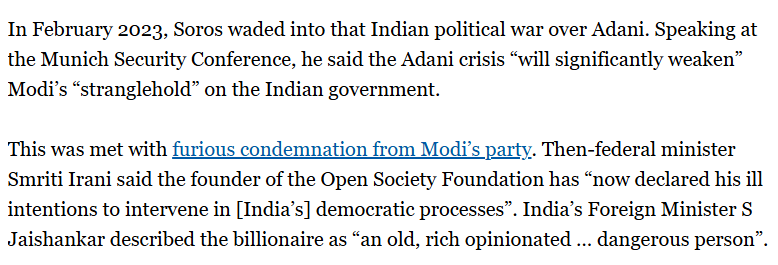
By late 2024, as elections neared, BJP leaders escalated their charges: Soros was accused of “sponsoring the opposition and backing other Modi critics with intent of destabilising India,” and even the U.S. State Department was named as colluding in this agenda.
In December 2024, the BJP’s official social media pointed to reports that Soros’s Open Society Foundations and the U.S. State Dept funded the Organized Crime and Corruption Reporting Project (OCCRP), which had published investigative exposés embarrassing to the Modi government (on alleged spyware abuse, the Adani business empire, and religious freedom issues).
“The deep state had a clear objective to destabilise India by targeting Prime Minister Modi,” a BJP spokesperson declared, calling OCCRP a “media tool” of this conspiracy.
Rodrigues’s “deep state” thesis extends even to Donald Trump – interestingly casting the former U.S. president (seen as friendly with Modi on the surface) as colluding with Washington’s establishment against Modi. He alleges that Trump was frustrated by Modi’s refusal to sign a U.S.-favored free trade agreement and by India’s fiercely independent economic stance. Modi, Rodrigues says, put “India First” and balked at aspects of the trade deal that he felt would let the U.S. “exploit” India like a neo-East India Company.
This reportedly “rattled” Trump and his corporate backers, spurring them to support the CIA-led effort to remove Modi. Rodrigues claims Trump “gave CIA the order” to topple Modi within 12 months, as Modi’s continuation was “detrimental” to their plans.
He even accuses Trump of cutting murky deals with Pakistan (such as a cryptocurrency venture involving Trump’s associates, a Pakistani firm, and possibly Afghan drug money) to bankroll the campaign against India.
While these assertions are highly speculative, they paint a picture of an international axis – CIA operatives, disaffected global elites, and perhaps Trump’s circle – converging to fund and enable a regime change operation in New Delhi.
Even though Savio places the US and China in the same basket - as being anti-India and anti-Modi - which they have been - the current geopolitical climate offers nuance.
Game Playing the Consequences
To understand the impact of these actions, let us do some game playing of the different aspects of the scenarios staring at us.
Operation 37: If CIA Topples Modi
What happens when a nation’s destiny is stolen? If Operation 37 succeeds and Modi is brought down, the first tremors will be domestic—but their echoes will reshape the world order.
Phase 1: The Domestic Fracture
The Prime Minister is forced out. The NDA collapses like a breached dam. A new coalition, stitched by Congress, regional satraps, and blessed by the West, claims the throne. Western media celebrate the coup as “democracy restored.” Indian opposition chants “freedom.” Every tool of narrative—allegations of authoritarianism, CBI/ED excess, election fraud—is mobilized to sanctify the takeover.
But beneath the celebration lies a purge. Bureaucrats, technocrats, and officers who powered India’s sovereign rise (UPI, indigenous chips, air defence) are cast aside. Into the vacuum step CIA-linked advisors, nesting inside the PMO and think tanks. India bends.
Russia's oil stops. BRICS stalls. Indo-Pacific becomes a leash. Strategic autonomy dies.
Phase 2: Dismantling the Core
India’s air defense projects (Akash and S-400 integration) are being shelved in favor of the Patriot and THAAD systems. Nuclear posture “softened” under Western arms-control sermons. Tejas, AMCA, hypersonics—all slowed, all redirected toward joint ventures enriching Lockheed and Raytheon.
Digital sovereignty? UPI clipped, SWIFT restored, Visa/Mastercard enthroned again. Rupee settlement with Russia and Africa gutted. Dollar hegemony extended.
Semiconductors meet the fate of SCI’s mysterious 1989 fire. Domestic fabs are delayed, and foreign MNCs monopolize. AI, quantum, and cyber programs become Western IP pipelines.
Energy policy collapses: Russian crude is banned, and Indian wallets are drained by U.S./Gulf suppliers. Coal cuts forced. Blackouts loom.
Phase 3: Geopolitical Reverberations
Russia sees betrayal. Just as Ukraine pivoted, now India. Arms and energy ties collapse. Moscow hugs China and Iran tighter, even toys with fueling insurgencies in India’s northeast.
China rejoices. With India neutralized, Beijing becomes the unchallenged voice of the Global South. Border disputes silenced. BRICS currency frozen.
The Global South watches in despair. Brazil and South Africa drift West. Iran, Indonesia, and Africa cling harder to China-Russia. BRICS splinters. Dollar supremacy earns another decade.
Phase 4: The World Broken
The U.S. achieves what it hasn’t in decades—breaks a rising challenger without firing a shot. Multipolarity collapses. The Russia-China-India tripod shatters. For a brief season, Washington revives unipolarity.
But beneath the ashes, embers glow. Indians remember. Just as Iran erupted after the Shah’s CIA-engineered rule, so too will India’s next nationalist wave. When it rises, it will not be pliant. It will be vengeful.
Takeaway: The coup would temporarily neuter India, embolden America, and indirectly empower China. But in the long arc, it may forge an India more hostile to the West than ever before.
Operation 37 Fails — Bharat Consolidates Sovereignty
When foreign subversion stumbles, Bharat does not just surviv, it fortifies.
Operation 37, designed to peel away MPs and fracture Delhi’s mandate, collapses under its own weight. The attempted coup becomes fuel for a greater consolidation of sovereignty.
Phase 0: Stabilize, Expose, Deter
The first thirty days are ruthless but precise. Suspect MPs are whipped into line, bribery trails prosecuted with forensic evidence.
No rhetoric.
A redacted dossier—money flows, psy-ops, handlers—is released to inoculate the public. The Prime Minister addresses the nation: “Outside interference attempted. Institutions prevailed.” Markets are soothed with RBI liquidity, crude continuity statements, and rupee swaplines with the UAE and Saudi.
A Joint Task Cell—comprising Home, Finance, MEA, and RBI—begins surgical investigations into foreign funding. The message is simple: India will not be bought.
Phase 1: Make Defections Useless, Interference Expensive
A Foreign Influence Transparency Act (FITA) is unveiled—India’s FARA. Every foreign-funded NGO and lobby must disclose donors quarterly.
The Tenth Schedule gains new teeth: proven defectors face lifetime bans. Electoral trust is reinforced—expanded VVPAT audits, real-time campaign finance APIs, and open methodologies.
Financial sovereignty builds firewalls: OFAC-exposed trades shift to state banks; rupee-settlement corridors expand across UAE, Saudi, Indonesia, Nigeria, with Russia backstopped. A StratComs Cell releases monthly declassified briefs exposing foreign botnets and narrative ops. The press reports interference; the state merely proves it.
Phase 2: Lock the Pillars
Energy: A five-year crude blend from Russia and the Gulf hedges volatility, sovereign insurance pools cap risk, and refineries retooled for flexibility.
Finance: BRICS-lite settlement hubs anchor rupee trade. Pilot gold-linked notes build trust in South-South commerce.
Chips & Tech: “SCI 2.0” secures a domestic fab, RISC-V mandated for PSU/defense. AI and cyber stacks are air-gapped and sovereign.
Air Defence: Akash-NG, AD-1/AD-2, counter-drone swarms sprint forward. Offsets bring process transfer, not screwdriver imports.
Digital Rails: UPI International V2 spreads to ASEAN, Africa, Latin America. GovStack—India’s open identity and payments stack—offered as Global South aid.
External Balancing
Russia deepens energy-for-tech swaps. China is managed through border freeze protocols and quiet competition. The U.S. is compartmentalized: engines and minerals, yes, data and payments no. The Middle East and Africa become partners in corridors, rupee settlements, and farm-health diplomacy.
Outcome
The coup attempt backfires. India emerges with fortified institutions, robust financial infrastructure, and a sovereign tech-industrial backbone. The world recalibrates: the U.S. adapts, China recalculates, Russia embraces, Global South aligns. Multipolarity doesn’t just survive—Bharat cements itself as its axis.
This will help us understand what Indians could be in for, in both the scenarios.
Indo-China Rapprochement - The "Message"
An attempt is being made by India and China to work through their differences. Because they both realize the threat the United States, specifically under Trump, poses to India, which has Modi at its helm.
The credit for breaking the ice, however, should go to Chinese President Xi Jinping. Amid the geopolitical turbulence, Beijing made a move.
According to a Bloomberg report, President Xi Jinping sent a private letter to President Droupadi Murmu earlier this year. The gesture bypassed Prime Minister Modi and carried a clear test: would India recalibrate ties with China just as Trump escalated his trade war?
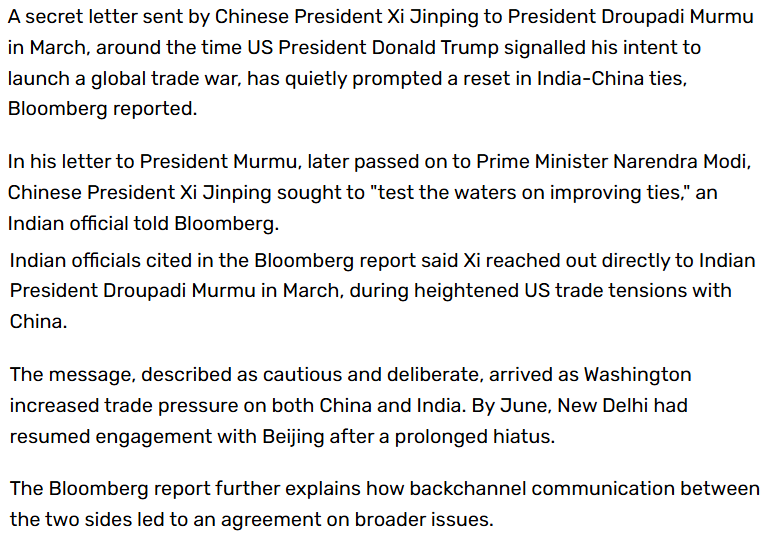
The symbolism was striking. Letters between heads of state and heads of government typically flow through official, public channels. By writing to Murmu, Xi avoided confronting Modi directly while still probing India’s willingness to bend. It was an invitation couched in ambiguity.
For Beijing, this was an opportunity.
Facing tariffs from Washington, China sought to peel India away from its growing alignment with the U.S. For India, the choice was stark: seize leverage in its relationship with China, or reaffirm its defiance in the shadow of Galwan and a frozen border standoff.
New Delhi’s silence was its answer. By not making the letter public, India neither rejected nor embraced Xi’s overture. Instead, it reminded the world that India will not be hurried into recalibration on Beijing’s terms.
Think about it.
This letter would have been sent in March, weeks before the Pahalgam attack by Pakistan's jihadis, orchestrated by Pakistan's Army Chief and his minions. A Chief who has been backed by Trump because of his crypto deal done just around that time!
 Desh Kapoor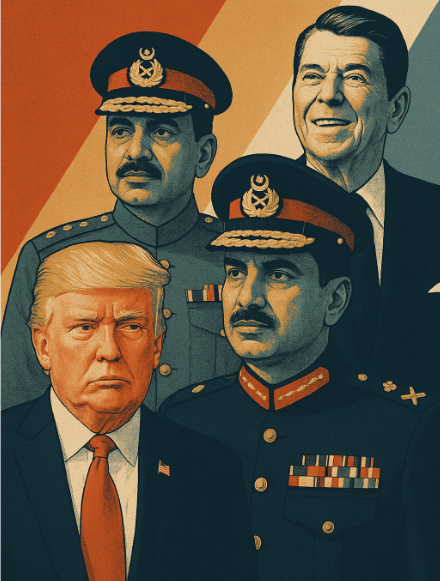
Yes, Chinese arms were used by Pakistan during the attacks against India. The close association, however, during that time for the Pakistanis was with the US, as opposed to the Chinese.
Could it have been possible that the Chinese had sent a "decoy" message to the PM Office as well, along with the "secret letter" to President Murmu's office? An act that would have bared the mole in the PMO?
If our speculation is true, then it aligns with what Savio has been hinting at as well.
Very interestingly, Dr. Jaishankar is not accompanying Modi on the SCO meeting tour. Given that Dr. Jaishankar was India's longest-serving ambassador to China and his insights would have been crucial at this tense and critical summit, specifically with Xi Jinping, it seems rather odd.
External Affairs Minister S Jaishankar will not be travelling to China for the SCO Leaders’ Summit. He will therefore miss the important bilateral meeting between Prime Minister Narendra Modi and President Xi Jinping scheduled for Sunday morning. Sources confirmed that Jaishankar had some personal health issues, which prevented his travel to China and also for the first-leg of Modi’s trip to Japan. Jaishankar’s absence was noted at Tokyo yesterday when Modi met his Japanese counterpart Shigeru Ishiba for a bilateral meeting. The Ministry of External Affairs (MEA) released pictures of the meeting on its handle on social media platform X. In the photograph, Prime Minister Modi is flanked on his right by National Security Advisor Ajit Doval. According to past protocol, the EAM would be positioned to the Prime Minister’s left. (Source: EAM Jaishankar not at SCO meeting in China due to health reasons / Tribune India)
Take it for what it is, but there are internal and external turmoils going on in India and other countries, such as China, as well.
Trump's Unrequited Phone Calls
On the other hand, Trump was trying to call Modi. Four times, according to the reports in Frankfurter Allgemeine, a German newspaper. A phone call that Modi never took.
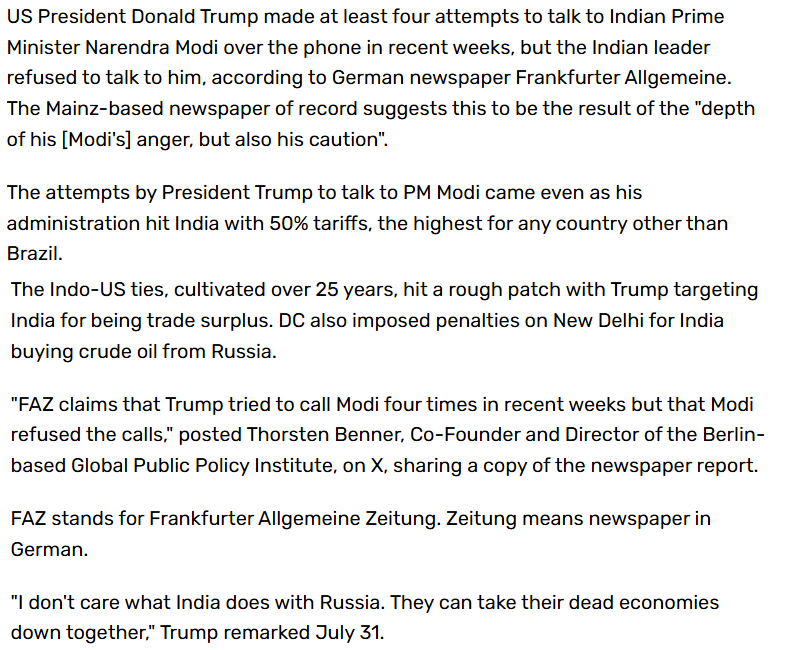
The good image that Trump had in India has turned sour in recent times. The news of his antics with Pakistan (read this "The Great American Tradition of Geopolitical Betrayal: Trump's Crypto and Reagan's Nuke deals with Pakistan") has spread rather quickly. He's now being recognized as a "backstabber" and a "Thug".
Just weeks after the June phone call, and with trade talks dragging on, Mr. Trump startled India by announcing that imports from the country would be subjected to a tariff of 25 percent. And on Wednesday, he slapped India with an additional 25 percent tariff for buying Russian oil, adding up to a crushing 50 percent. Mr. Modi, who once called Mr. Trump “a true friend,” was officially on the outs. After telling Mr. Modi that he would travel to India later this year for the Quad summit, Mr. Trump no longer has plans to visit in the fall, according to people familiar with the president’s schedule. In India, Mr. Trump is now seen in some quarters as a source of national humiliation. Last week, a giant Trump effigy was paraded around a festival in the state of Maharashtra, with signs declaring him a backstabber. The blows from the United States have been so intense that one Indian official described them as “gundagardi”: straight-up bullying, or thuggery. (Source: "The Nobel Prize and a Testy Phone Call: How the Trump-Modi Relationship Unraveled" / New York Times) - Emphasis added
A quick turnaround in how Indians now view Trump, particularly in relation to India's relationship with the US.
The New York Times shared Trump's side of the conversation, which paints a rather bleak picture of Trump as a global leader. Impetuous, egotistical, and extremely short-sighted.
NYT reporting for the first time on Trump's side of the June 17 call with Modi based on sources in Washington and Delhi
— Journalist V (@OnTheNewsBeat) August 30, 2025
Trump won't be visiting India for the Quad either pic.twitter.com/yWjRawjmTy
The ramifications of Trump's rather reckless actions and American Deep State's blatant targeting of Modi has achieved the opposite result.
If Donald Trump hoped to bring India to heel, things are not going to plan. Narendra Modi has not only proved unyielding. He is also giving the US president the silent treatment. Since Mr Trump singled out India with an unexpectedly draconian double dose of tariffs earlier this month, he has reportedly phoned the Indian prime minister on four occasions to seek a compromise. Each time, the Indian leader refused to pick up. In the same period, Mr Modi has twice spoken to his “friend” Vladimir Putin and dispatched his foreign minister to Moscow. This weekend, he travels to China for the first time in seven years to attend a security summit hosted by Xi Jinping, the Chinese president, in the north-eastern city of Tianjin. The two men, long estranged but now bound by circumstance, will hold talks on Sunday. Since 2001, Washington has sought to pull India into its orbit as a bulwark against a rising China. But Mr Trump has just taken a blowtorch to a quarter of a century of careful diplomacy, first imposing a 25 per cent tariff on Indian exports, then doubling down to punish New Delhi for buying Russian oil – the stiffest measures Washington has imposed on any country bar Brazil. (Source: "Trump’s double humiliation as Xi embraces Modi and Putin' / Telegraph)
The tilt towards China.
All this raises the specter of an oft-repeated script from Washington!
Historical Parallels: CIA-Backed Regime Change in Georgia and Ukraine
One can easily see parallels to past CIA-assisted regime change operations – particularly the early 2000s “Color Revolutions” in former Soviet republics – to illustrate the tactics allegedly being used in India.
Two notable examples are Georgia (2003) and Ukraine (2004/2014), where popular uprisings overthrew incumbent governments, accompanied by significant involvement (direct or indirect) of Western agencies.
Georgia’s Rose Revolution (2003): A peaceful uprising in November 2003 forced President Eduard Shevardnadze to resign after disputed parliamentary elections. While driven by local grievances (corruption, power cuts, election fraud), the revolution’s success was facilitated by extensive Western aid and influence. International NGOs were deeply involved in Georgia’s political scene by the early 2000s (Source: csce.gov).
Notably, George Soros’s Open Society Institute heavily funded pro-democracy groups, such as the Liberty Institute, Georgia’s leading human rights organization. The Liberty Institute, in turn, allied with a student activist movement called Kmara (“Enough”), which had been trained by Serbian organizers who previously ousted Milosevic.
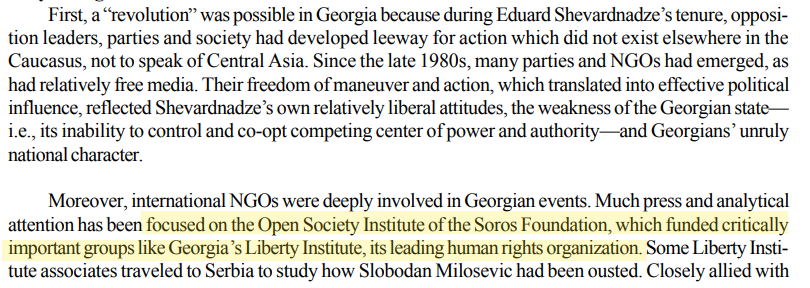
Backed by Soros’s funding, Kmara mobilized nationwide protests against alleged vote fraud in the 2003 elections.
Additionally, Western-aligned media played a decisive role: Georgia’s Rustavi-2 TV, which had received Western support, relentlessly exposed government abuses and gave voice to the opposition.
When Shevardnadze attempted to crack down on Rustavi-2 in 2001, mass protests erupted, foreshadowing the revolution.
By November 2003, as crowds filled Tbilisi’s streets demanding Shevardnadze’s ouster, U.S. and European diplomats pressured him against using force.
Ultimately, the peaceful transfer of power to pro-Western opposition leader Mikheil Saakashvili was hailed as a triumph of democracy – but it was not lost on Moscow (or New Delhi) that American NGOs, money and moral support were key to the outcome.
U.S. officials openly acknowledged the role of philanthropists and aid programs in enabling Georgia’s revolution. In fact, the U.S. Helsinki Commission’s report on the Rose Revolution noted Soros’s funding of critical groups and concluded that “the events in Georgia… demonstrated the power of independent, not state-controlled, television” and civil society in mobilizing popular will.
Ukraine’s Orange Revolution (2004) and Euromaidan (2013–14): Ukraine has seen two major uprisings that unseated governments in the post-Soviet era, both amid allegations of Western orchestration. In late 2004, after a fraudulent presidential election in which the Russia-leaning candidate Viktor Yanukovych was initially declared the winner, massive protests (the Orange Revolution) erupted, leading to a re-vote that brought pro-Western Viktor Yushchenko to power.
Western NGOs and election monitors (many funded by the U.S. and EU) had laid the groundwork by supporting opposition parties, training activists, and publicizing allegations of fraud. The pattern repeated more dramatically a decade later with the Euromaidan uprising (2013–14).
When Yanukovych (then President) ditched an EU trade deal in favor of Russian aid, student-led protests in Kyiv’s Maidan Square swelled into a revolution after a violent crackdown. Western governments not only cheered from the sidelines, but their officials also directly intervened in the process. U.S. Senator John McCain flew to “We are here to support your just cause… Ukraine’s destiny lies in Europe”.
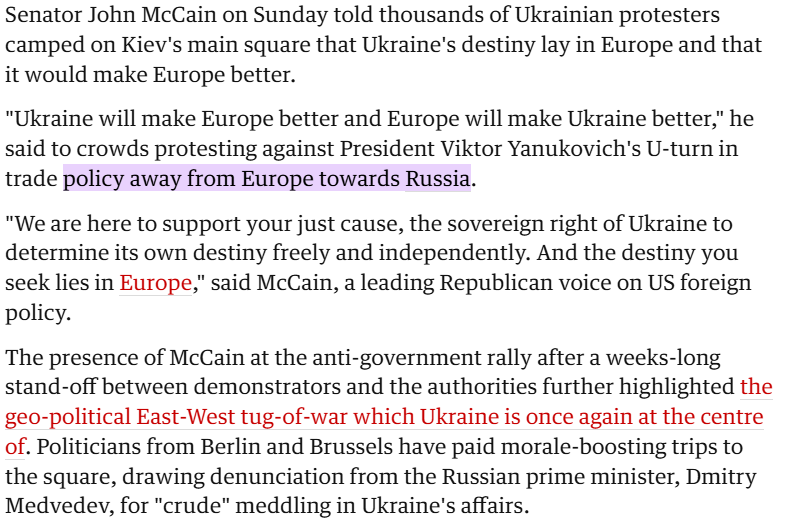
The U.S. involvement went beyond public moral support.
In early February 2014, a leaked phone call between top U.S. diplomat Victoria Nuland and the U.S. Ambassador to Ukraine Geoffrey Pyatt revealed them discussing which opposition figures should join a new Ukrainian government. “Yats is the guy,” Nuland said, referring to Arseniy Yatsenyuk (who indeed became prime minister), while nixing others like Klitschko.
The call even caught Nuland cursing the EU’s softer approach (“f** the EU,”* she said), underscoring Washington’s aggressive role in shaping Ukraine’s outcome.
Clearly in the conversation, the two openly discussed who should head the post-Yanukovych setup—repeatedly pushing Arseniy Yatsenyuk as the preferred choice. Just weeks later, on February 27, Yatsenyuk was installed as Prime Minister, precisely as outlined in the call.
During the Maidan uprising, Nuland herself was photographed on the ground, handing out cookies and snacks to demonstrators, including radical nationalist groups and paramilitaries demanding the ouster of President Viktor Yanukovych, after he decided to halt an EU agreement.
The leaked call and Nuland’s public appearance together underscored what Moscow and others had long warned: the U.S. was not merely observing events in Ukraine—it was stage-managing them.
Russia seized on this as proof that the U.S. Deputy PM Dmitry Rogozin choreographed the Ukraine revolution, quipped that while the West “weaves intrigues… people organize riots in their own cities with foreign money,” pointedly accusing outside powers of funding the unrest.
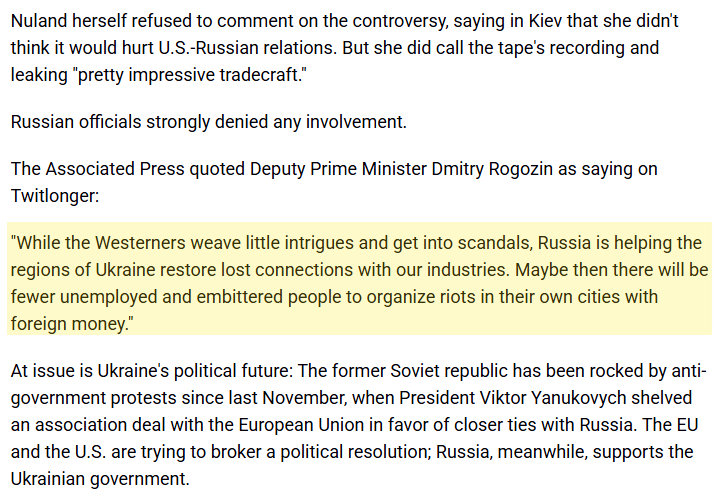
Within weeks, President Yanukovych was forced to flee and a pro-West interim government took charge, soon signing the EU pact and tilting Ukraine firmly towards the West. Moscow and many observers labeled it a CIA-backed coup, given the heavy involvement of organizations like USAID, the National Endowment for Democracy (NED), and other U.S.-funded entities that had spent billions in Ukraine since the 1990s to nurture pro-West civil society.
While U.S. officials deny “rigging” foreign elections, former CIA directors have candidly admitted to influencing foreign media and opinion to shape outcomes. Leon Panetta noted the CIA “would sometimes acquire media within a country… or influence those who own media” to deliver Washington’s message. Such methods – propaganda, disinformation, and strategic funding – fall short of vote tampering, but achieve influence, “all a question of degree,” as former DNI James Clapper put it.
Some officials told Shimer that the US has abandoned electoral interference in the twenty-first century. Others hedged. “This is not something that intelligence does with anything like the sense of flexibility and freedom that it might have had in the early Cold War,” said former CIA Deputy Director John McLaughlin. Avril Haines, who held the same role a decade later, said that, “it is not acceptable to tamper with votes in an election,” but (according to Shimer) declined “to comment on how the CIA may still seek to influence voters’ minds.” As former Director of National Intelligence James Clapper put it, “It’s all a question of degree.” Former CIA Director Leon Panetta said that the agency doesn’t alter votes or spread disinformation, but does influence foreign media outlets to “change attitudes within the country.” Panetta told Shimer that the CIA would occasionally “acquire media within a country or within a region that could very well be used … to deliver” messages, or try to “influence those that may own elements of the media to … cooperate, work with you in delivering that message.” It is hard to know exactly what types of activities Panetta had in mind – perhaps he was talking about traditional CIA propaganda efforts that intersect with electoral politics. But they sound similar to some of the Russian social media operations in 2016. These varying accounts by US officials probably turn on definitional differences. Electoral interference can take many forms, including vote-changing, disinformation, doxing, propaganda, and financial support. Shimer gave me his view of where the US likely stands today: “[I]t has not banned the practice of covert electoral interference, but it is an option that is not actually executed with great frequency. And that is different than the Cold War, but it’s also different from saying that this is something the US categorically will not do any more, which is not where things are.” (Source: "Does the US Still Interfere in Foreign Elections?" / Project Syndicate)
It's all, as Clapper said, a "question of degree."
India's Diplomatic Offensive
Meanwhile, what is interesting is that Indian PM Modi is busy working with Ukraine's leader Zelensky as well as with Putin.
Anyone who knows Modi would also understand that he might outdo Trump in bringing the Ukraine war to an end.
I spoke with Prime Minister of India @NarendraModi.
— Volodymyr Zelenskyy / Володимир Зеленський (@ZelenskyyUa) August 30, 2025
I informed about the talks with President Trump in Washington with the participation of European leaders. It was a productive and important conversation, a shared vision among partners on how to achieve real peace. Ukraine… pic.twitter.com/fINVbncnlR
Remember that the Trump-Putin interaction was high on optics and one-upmanship. That is not how Modi conducts his business with Putin.
The SCO Summit is being held in Tianjin from August 31st through September 1st, 2025. SCO was established by China, Russia, Kazakhstan, Kyrgyzstan, and Tajikistan, and later expanded to include members such as India, Iran, Pakistan, and Belarus. Afghanistan and Mongolia are observer states, and 14 other countries, mainly from Southeast Asia and the Middle East, serve as “dialogue partners.” The country hosting the annual summit rotates every year.
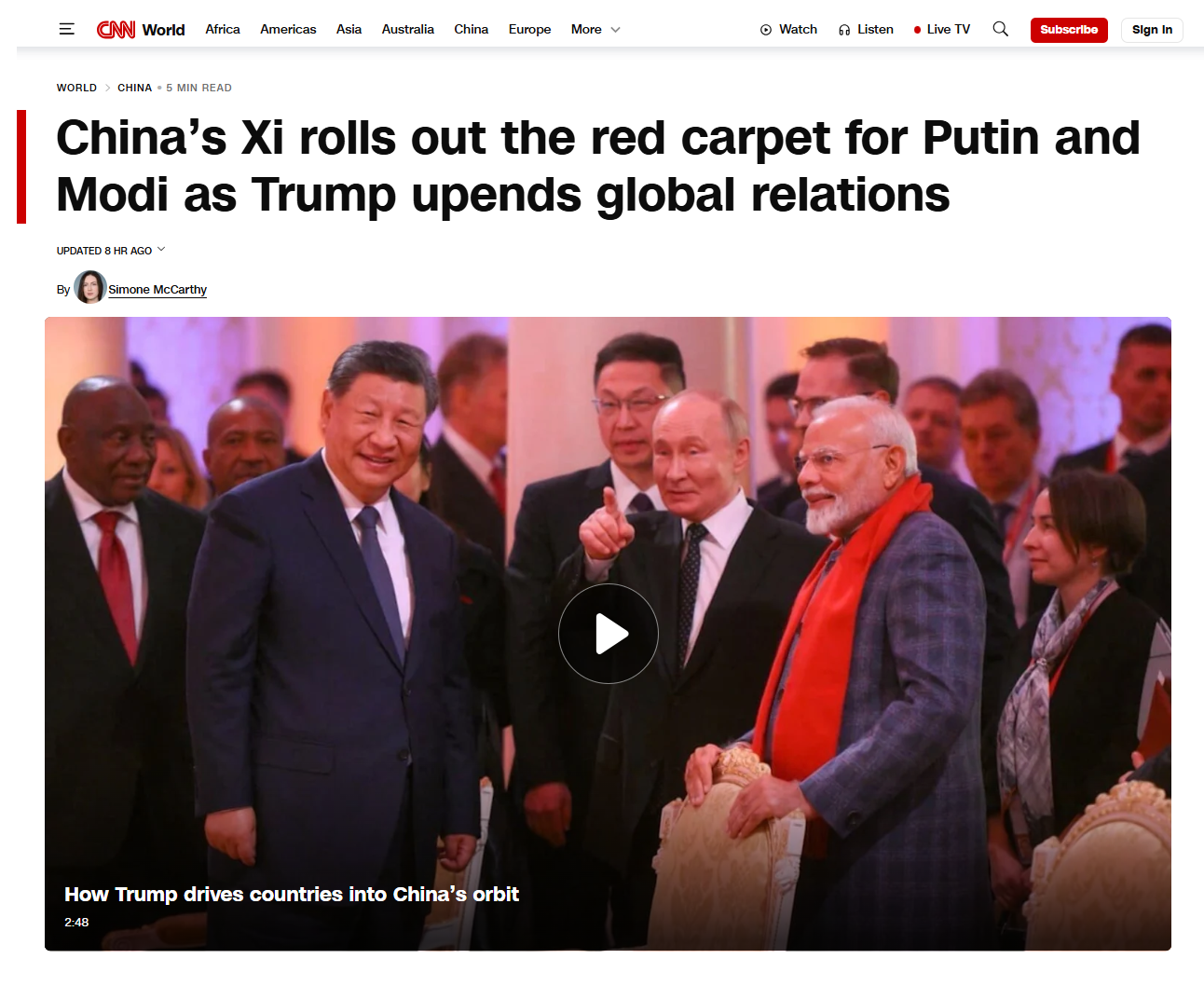
As CNN noted, the backlash to Trump's antics has been so intense on the other side of the planet that the entire global order is being turned on its head. This picture below of the leaders walking out of the door signals a new direction for the world.
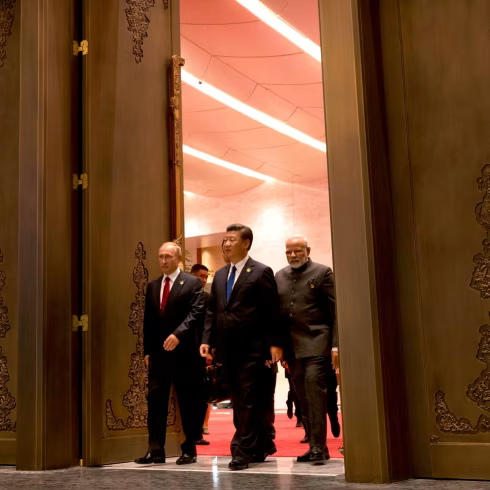
Of course, Xi Jinping is playing the role of an architect of the new global order.
“Beijing wants to signal that China is the indispensable convener in Eurasia, capable of seating rivals at the same table and translating great-power competition into managed interdependence,” said Rabia Akhtar, director of the Centre for Security, Strategy and Policy Research at the University of Lahore in Pakistan. “The optics are straightforward: China is not just a participant in regional order-making – it is a primary architect and host.” Modi’s attendance at the gathering also adds heft to Xi’s guest list. The Indian prime minister skipped last year’s summit in Kazakhstan. Now, he has arrived in Tianjin against a backdrop of souring relations with Washington – and as Beijing and New Delhi have moved to ease their own frictions, a nascent realignment that could imperil US efforts to cultivate India as a counterweight against a rising China. (Source: "China’s Xi rolls out the red carpet for Putin and Modi as Trump upends global relations" / CNN)
Xi Jinping and Narendra Modi met on the sidelines of the event. The two delegations met on Sunday, China time.
Modi said in his opening remarks that relations with China have moved in "a meaningful direction," adding that "there is a peaceful environment at the borders after disengagement." Xi said he hoped the Tianjin meeting will "further elevate" and "promote the sustained, healthy and stable development of bilateral relations," according to state broadcaster CCTV. The two sides should "not let the border issue define the overall China-India relationship," Xi said, adding that economic development for both countries should be their main focus. "As long as they remain committed to the overarching goal of being partners, not rivals, and providing development opportunities, not threats, China-India relations will flourish and move forward steadily," Xi said. (Source: "China's Xi and India's Modi vow to resolve border differences at meeting in Tianjin" / NPR)
Let us decode this message.
Xi Jinping’s Framing – "Economics over Borders"
Xi’s statement that India and China should “not let the border issue define the overall relationship” is a calculated pivot:
- China’s Agenda: Beijing wants to reorient the relationship toward trade and investment at a time when its economy is slowing sharply, capital is fleeing, and supply chains are shifting. India, with its large consumer market and manufacturing ambitions, is both a competitor and a potential buffer against Western economic pressure.
- The Subtext: By suggesting the border is a “side issue,” Xi implicitly asks India to de-link security from economics. A framework that China prefers with many partners. It allows Beijing to pocket military leverage (control of contested zones in Ladakh) while still demanding economic engagement.
India, on the other hand, pushed back the Chinese Foreign Minister's characterization of his discussions with the Indian side, where he suggested that India backed the 'One China' policy with respect to Taiwan. The Indian side set the record straight by saying that Yi had misquoted.
Quite simply, India is not willing to accommodate China's territorial sensitivities until the latter stops acting in a manner that is perceived as provocative. Modi and his administration seek quid pro quo.
Decoding that.
India’s Counterbalance – Taiwan & Strategic Signaling
India’s refusal to restate the “One China” policy in recent months—particularly in the context of Taiwan—is a deliberate strategic signal:
- Message to Beijing: India will not offer China the diplomatic comfort it seeks while Chinese troops remain along the LAC in a posture of mistrust.
- Message to the West: New Delhi is aligning more visibly with the Indo-Pacific coalition on Taiwan, hedging against Chinese aggression, and reinforcing that sovereignty is not a one-way street. If Beijing wants India to mute its Taiwan card, concessions on the border are the price.
Let us put this all together now.
Reading the Modi-Xi Exchange
- Modi’s Line: By saying relations have moved in a “meaningful direction” and noting a “peaceful environment after disengagement,” Modi is diplomatically acknowledging progress. However, it becomes useful only after actual de-escalation has occurred. India ties any improvement directly to border stabilization, refusing to accept Xi’s de-linking.
- Xi’s Line: “Partners, not rivals… development opportunities, not threats” is carefully worded. It’s an invitation couched in soft rhetoric, but it subtly paints India as the one who must decide whether it wants rivalry or cooperation.
Essentially, this is a form of positional bargaining. As much as many would want it to be, it is not a reconciliation.
Faced with domestic economic fragility and external isolation, Beijing seeks to have New Delhi set aside the Line of Actual Control (LAC) dispute and normalize economic relations. Essentially, President Xi is asking India to prioritize the marketplace over the mountains.
Conversely, Prime Minister Modi's government is holding firm, linking any diplomatic or economic progress directly to peace and disengagement at the border. By leveraging its stance on the "One China" policy, India is sending a clear message: a secure border is the non-negotiable foundation upon which any sustainable marketplace can be built.
Modi's Trip to Japan
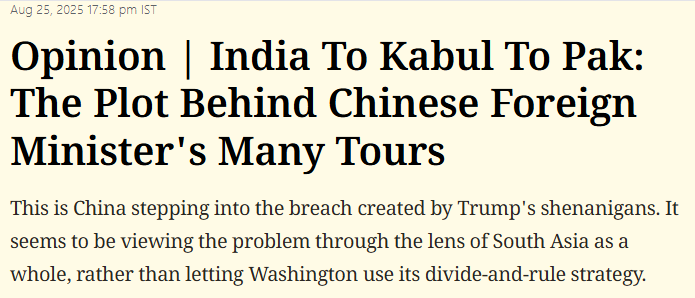
Earlier this month, Chinese Foreign Minister Wang Yi had visited India but after that he stopped in Afghanistan and Pakistan as well.
Interestingly, Indian PM Modi also stopped in Japan to discuss the Indo-Pacific partnership with Japan. The Indo-Pacific strategy is to contain China primarily.
The meeting became an economic playground.
Prime Minister Narendra Modi announced that New Delhi and Tokyo have set a target of 10 trillion yen ($68 billion) Japanese investment in India over the next decade, with a strong focus on collaborations between small and medium enterprises and startups.
Addressing a joint press conference with Japanese Prime Minister Shigeru Ishiba after the 15th India-Japan annual summit in Tokyo, Modi reaffirmed both nations’ commitment to a free, open, peaceful, prosperous, and rules-based Indo-Pacific.
He noted that India and Japan share common concerns on terrorism and cybersecurity, and emphasized that their defence and maritime security interests are closely aligned. The two countries agreed to strengthen cooperation in the defence industry and innovation to bolster regional stability.
Additionally, an Action Plan for Human Resource Exchange was unveiled, aiming to enable the two-way movement of 500,000 people, underscoring the growing strategic and people-to-people partnership between the two democracies.
 Dipanjan Roy Chaudhury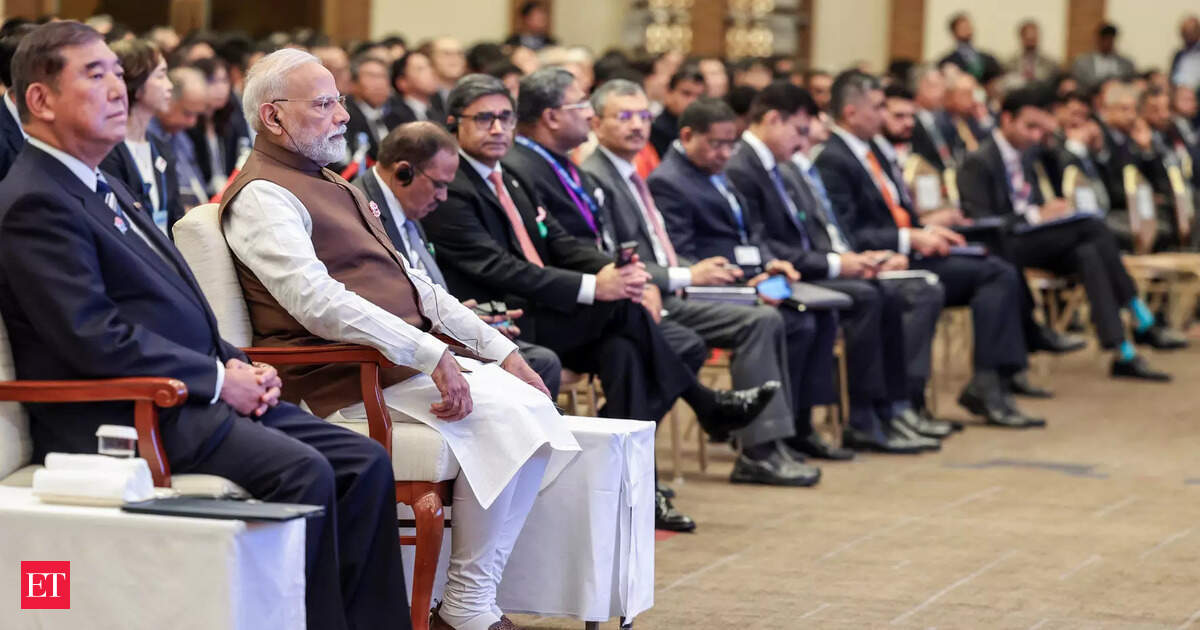
Remember that Japan is losing nearly a million people from its population every year.
 You will find more infographics at Statista
The fall in the Japanese population is precipitous. Unless action is taken, Japan will face significant issues in the future.
Japan’s precipitous population decline shows no sign of slowing, with the nation shrinking by more than 900,000 people last year – the biggest annual drop on record, according to government data. The data, released by the Ministry of Internal Affairs and Communications on Wednesday, showed that the number of Japanese nationals fell by 908,574 in 2024, bringing the total population to 120 million. Since peaking at 126.6 million in 2009, the population has declined for 16 consecutive years, diminished by various factors like a struggling economy and deep-seated gender norms. (Source: "Japan’s population decline keeps getting worse. Last year, it saw a record drop" / CNN)
The experiment with the Muslim immigrants is not going well in Japan.
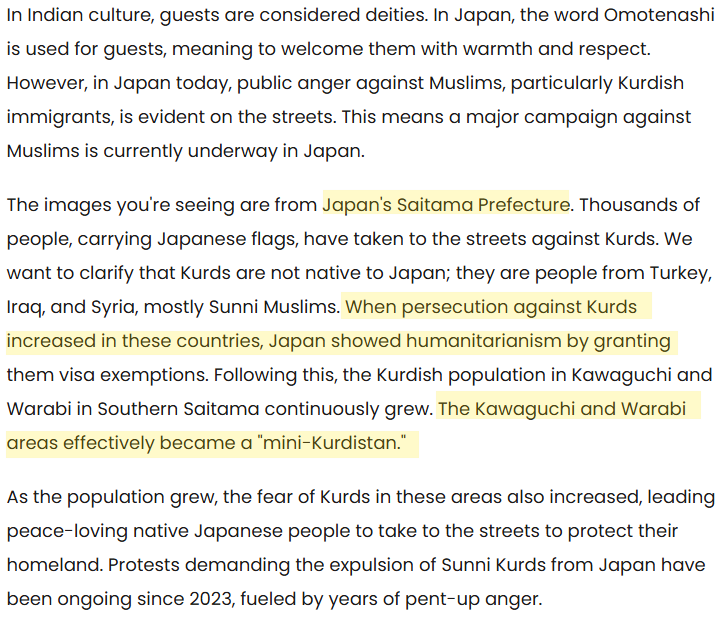
Indian immigrants may be a good option given the closeness of cultural ethos.
Future for Indians
At stake today is not merely the leadership of one man, but the sovereignty of a civilization. The threats converging on Prime Minister Modi are, in truth, aimed at hollowing out the very roots of India’s rise.
Its independence, its confidence, and its future as a global power.
Operation 37 is not about thirty-seven MPs; it is about prising open India’s weakest points— (religion, caste, and political division) and using them as entry doors for forces that cannot tolerate an India standing tall.
The response must be clarity, not confusion; unity, not fragmentation.
India must show that its mandate cannot be bought, its democracy cannot be subverted, and its destiny cannot be dictated. When external powers seek to weaponize internal discord, the most excellent counter is national cohesion.
Protecting Modi is not about preserving a leader.
It is about protecting the voice of a billion people.
If India holds firm, no storm, foreign or domestic, can uproot the banyan tree of its civilizational strength.
Comments ()