
The Daily Geopolitics Brief # 15
The ceasefire did not even last 24 hours. Israel bombed Lebanon 160 times in 10 minutes. Iran re-closed Hormuz. The US rewrote what it had agreed to. Islamabad talks begin tomorrow — and India's wisest move may be to wait it out and engage strategically.
"The Iran–U.S. Ceasefire terms are clear and explicit: the U.S. must choose — ceasefire or continued war via Israel. It cannot have both. The world sees the massacres in Lebanon. The ball is in the U.S. court, and the world is watching whether it will act on its commitments." — Iranian Foreign Minister Abbas Araghchi, X (formerly Twitter), April 8, 2026 — hours after Israel bombed Lebanon 160 times in 10 minutes
What This Signals
The quote is a diplomatic ultimatum dressed in the language of accountability — and it signals that the ceasefire announced with such fanfare on the night of April 7 is already, less than 24 hours later, under existential stress.
Araghchi's framing cuts to the structural contradiction at the heart of the "double-sided ceasefire": the United States and Iran each signed up to different agreements. Iran believed it was accepting a region-wide cessation of hostilities — "everywhere including Lebanon and elsewhere," in Pakistan PM Sharif's words.
The US believed it had agreed to pause strikes on Iran proper while preserving Israel's freedom of action against Hezbollah in Lebanon. Netanyahu said explicitly that the ceasefire "does not include Lebanon." Trump told PBS it excluded Lebanon "because of Hezbollah."
White House spokeswoman Karoline Leavitt went further, claiming Iran's 10-point plan had been "literally thrown in the garbage" by Trump's team — a startling revision of Trump's own Truth Social post that had called it "a workable basis on which to negotiate."
These are not competing interpretations of ambiguous text. They are incompatible positions.
Either Lebanon is included, or it isn't.
Either Iran's 10-point plan is a negotiating basis, or it is "garbage." Either the ceasefire is "everywhere," or it is nowhere that Israel chooses to fight. When these contradictions were exposed by Israeli bombs falling on central Beirut — 50 fighters, 160 munitions, 100 targets in 10 minutes, 254 dead — Iran's parliament speaker declared the agreement "unreasonable" and warned that negotiations were pointless. Iran re-closed the Strait of Hormuz.
The oil markets, which had surged on ceasefire relief, began to reassess.
What this signals for India: the 14-day window on which India was counting for Chabahar negotiations, Hormuz passage formalization, and fertilizer procurement normalization is now under immediate pressure.
Day 1 of the ceasefire is also Day 1 of its potential collapse.
The Islamabad talks scheduled for April 10 now face the question of whether Iran will attend at all.
Story #1: The Day After — How the Ceasefire Was Already Unraveling
The Full Picture
Within hours of the ceasefire taking effect on April 8, the Gulf was anything but quiet. Iran's IRGC intercepted what it described as fresh attacks on oil facilities — including an attack on Lavan Island — and responded with its "95th wave" of Operation True Promise 4, striking UAE and Kuwaiti infrastructure.
The IRGC's wave-count numbering system continued sequentially through the ceasefire announcement as if the ceasefire did not exist, a bureaucratic tell that the IRGC's pre-authorized strike packages were not canceled when Tehran's political leadership announced a pause.
Meanwhile, Iran opened the Strait of Hormuz for the first time in 39 days — but only barely.
Ship-tracking data from MarineTraffic showed the first crossing: the Greek-owned NJ Earth, a product tanker, transiting via an Iranian-approved route near Larak Island, with its transponder active. Analyst Ana Subasic at Kpler described it as an "early sign of movement" but cautioned it was "too soon to tell whether this reflects a broader ceasefire-driven reopening." No major tanker convoy had passed through by nightfall. Oil markets, which had initially plunged — Brent fell 13-17% to settle around $94-95 from a war high above $120, with WTI dropping over 16% to settle near $95 — began clawing back some losses as doubts about a ceasefire set in.
The NYT's reporting cited global market relief: the Dow surged over 1,374 points (2.95%), the S&P 500 gained 2.56%, and the Nasdaq soared 3.46%. In Asia, South Korea's Kospi led gains at +6.87%, Japan's Nikkei +5.39%.
But the Al Arabiya/Kuwait reporting showed the darker reality: Kuwait's interior ministry reported "severe material damage" at Kuwait Petroleum Corporation facilities, three power stations, and water desalination plants after Iranian drone attacks. The UAE said its defenses engaged 17 ballistic missiles and 35 drones. The ceasefire's first day looked more like the war's 40th day.
Iran's Supreme National Security Council emphasizes commitment by emphasizing that the ceasefire "does not signify the termination of the war." Hezbollah said it had not formally agreed to any ceasefire.
Iran's parliament speaker, Mohammad Bagher Ghalibaf, declared the negotiations "unreasonable" given what he described as three violations of Iran's 10-point plan:
- Continued attacks on Lebanon instead of implementing the clause calling for a ceasefire there
- An Israeli drone’s incursion into Iranian airspace over Lar in Fars Province, violating the clause prohibiting further airspace violations
- U.S. statements denying Iran’s right to uranium enrichment, which he said contradict the clause affirming Iran’s enrichment rights
The ceasefire was alive on paper and dead in spirit by the close of Day 40.
🇮🇳 How This Impacts India
India's 14-day window for Chabahar negotiations and the formalization of Hormuz passage has effectively shrunk to 12 days — or fewer if the Islamabad talks collapse. More urgently: India's decision to resume Iranian crude imports must now be hedged against the risk that Hormuz re-closes as soon as Iranian-Israeli tensions re-ignite. India's Petroleum Ministry must instruct HPCL, BPCL, and IOC to maintain pre-positioned alternative cargoes at anchorages in the UAE and Oman for at least 30 days, ensuring that any sudden Hormuz re-closure does not strand Indian crude-carrying vessels mid-transit.
The cost of Brent at $94-95 still represents a 35-40% increase from pre-war levels — meaningful relief, but not full normalization.
📎 References: New York Times | Al Arabiya | Al Jazeera | CNN Business | CNBC
Story #2: Israel Bombs Lebanon 160 Times in 10 Minutes — And Kills the Ceasefire's Spirit
The Full Picture
Hours after the ceasefire was announced, the Israeli Defense Forces launched what they called the largest single wave of coordinated strikes on Lebanon since the war began: 50 fighter jets, 160 munitions, 100 Hezbollah targets struck in 10 minutes across Beirut's Dahiyeh district, the Bekaa Valley, Sidon, Tyre, and Mount Lebanon.
Lebanon's Civil Defense confirmed at least 254 dead and 1,165 wounded — the single deadliest day in Lebanon since the current conflict began. Israeli Defense Minister Israel Katz said Israel had insisted on "separating the war with Iran from the fighting in Lebanon in order to change the reality in Lebanon."
There was no warning. Lebanese civilians who had heard the ceasefire news and were driving home to southern Lebanon — Al Jazeera's cameras captured cars loaded with belongings heading south, families celebrating — ran directly into the bombardment. "Total chaos," an aid worker in Beirut told NBC News. "Bombs raining down over the city, striking what she described as civilian areas with no warning. These are not targeted attacks." The Lebanese Red Cross dispatched 100 ambulances. Lebanon's health minister declared a "dangerous escalation." Lebanon's parliament speaker Nabih Berri called it "a full-fledged war crime." Spain's Prime Minister Sanchez demanded that Lebanon be included in the ceasefire, that the EU suspend its Association Agreement with Israel, and that accountability be sought for what he called "criminal acts."
French President Macron called both Trump and Iranian President Pezeshkian, insisting the ceasefire must include Lebanon. Italy summoned the Israeli ambassador.
Netanyahu told a news conference Israel would "continue to strike" Lebanon and that the war's objectives in Lebanon — permanently degrading Hezbollah — remained unmet. He said Israeli attacks had been coordinated with Washington in advance. A US official confirmed that Vance had acknowledged a "legitimate misunderstanding" between the US and Iran over Lebanon, but said the US was "not concerned" the Lebanon situation would cause the ceasefire to collapse — a statement immediately contradicted by Iran shutting the Strait again.
🇮🇳 How This Impacts India
Lebanon is home to approximately 85,000 Indian nationals, most of whom live in Beirut and southern Lebanon. India's MEA had previously urged citizens to leave; the ceasefire announcement may have led some to consider returning or remaining. India's Consulate General in Beirut must immediately assess whether any Indian nationals were in areas struck on April 8 and reissue evacuation advisories with the utmost urgency. Beyond the humanitarian dimension, the Lebanon strikes reveal that Israel's war aims are not aligned with the ceasefire's scope, which means the Israeli factor will continue to destabilize the Islamabad talks.
India's diplomatic value in Islamabad, if it chooses to send an observer, would include its ability to privately counsel moderation on both sides without having a public position on Hezbollah or Lebanon's sovereignty.
📎 References: Metro UK | RT | The Telegraph | NBC News | NPR | Al Jazeera
Story #3: The Uranium Trap — Why the Farsi-English Translation Gap Could Restart the War
The Full Picture
The ceasefire produced its most structurally dangerous moment when two versions of Iran's 10-point plan diverged on the most critical issue of the war: nuclear enrichment. The version of the agreement circulated in Farsi — including on Iran's Supreme National Security Council official statement and the Iranian embassy in India's verified X account — contained the phrase "acceptance of enrichment," affirming Iran's right to continue uranium enrichment. The English versions circulated by Iranian diplomats to foreign journalists omitted that phrase entirely.
Trump initially called Iran's 10-point plan "a workable basis on which to negotiate." Then, when the Farsi enrichment clause became public, Trump called it "fraudulent" without elaborating.
White House spokeswoman Karoline Leavitt said Iran's original 10-point proposal had been "literally thrown in the garbage" by Trump's team — contradicting the president's own Truth Social post from the previous night. She added that a "different, revised" Iranian proposal was the actual basis for the ceasefire, without publishing its text.
Secretary of Defense Pete Hegseth, speaking at the Pentagon on April 8, said Iran's nuclear uranium "will either give it to us, we'll get it, we'll take it, we'll take it out" — explicitly threatening resumed military action to seize Iran's enriched uranium stockpile of approximately 972 pounds enriched to 60% purity. Trump posted on Truth Social: "There will be no enrichment of Uranium" and said the US would "work with Iran, dig up and remove all of the deeply buried (B-2 Bombers) Nuclear Dust." Iran's parliament speaker immediately declared this "a violation of the framework even before negotiations began." Iran has insisted for years that enrichment is a national right under the NPT and is non-negotiable.
The Farsi-English split is not a translation error. It is a political act: Iran communicated different things to its domestic audience and to Western interlocutors simultaneously. Its domestic audience heard "we kept the right to enrich." The US heard "this is workable." When the domestic version went public, the gap became a crisis.
JD Vance, speaking in Budapest, said the "Iranians thought the ceasefire included Lebanon and it just didn't" — a frame that positions the entire ceasefire collapse as an Iranian misunderstanding rather than a US commitment failure.
🇮🇳 How This Impacts India
The dispute over enrichment is the most dangerous fault line in the Islamabad talks, and India has a direct stake in its outcome. Iran's embassy in India posted the Farsi version of the 10-point plan — including "acceptance of enrichment" — on its official X account. This means India has been formally placed by Tehran in the category of countries that have seen the full Iranian demand set. India cannot play a constructive role in the Islamabad talks while simultaneously maintaining a studied silence on the enrichment question. India's position on Iranian enrichment — which it has historically treated as a sovereign NPT right subject to IAEA verification — must be clearly communicated to both Washington and Tehran before April 10. India cannot be seen as endorsing the "enrichment is garbage" position without destroying its Tehran relationship, nor can it publicly endorse Iranian enrichment without damaging its US partnership. The only viable Indian posture is active diplomatic pressure for IAEA-verified limitations rather than zero-enrichment maximalism.
📎 References: OPB/AP | Washington Times | Al Jazeera | Newsweek | Euronews
Story #4: "Tested and Failed" — Trump Threatens to Redeploy US Troops Away From NATO Allies
The Full Picture
While the ceasefire drama dominated headlines, Trump fired his most serious salvo yet at the NATO alliance. In a statement relayed through White House press secretary Karoline Leavitt, Trump declared that NATO allies "were tested and they failed" during the Iran war. "It's quite sad that NATO turned its back on the American people over the course of the last six weeks, when it's the American people who have been funding their defense," Leavitt told reporters.
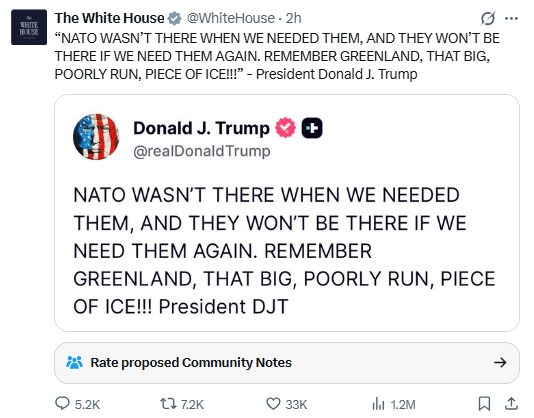
The Wall Street Journal reported, citing administration officials, that the Trump administration is now considering a plan to punish NATO members it deems insufficiently supportive of the Iran campaign. The proposal would move US troops out of NATO countries that did not support the Iran war effort and redeploy them to countries that did — effectively rewarding compliant allies and penalizing those that maintained neutrality or opposed the war. Countries in the frame for troop withdrawal include France, Germany, and Belgium, whose governments publicly called for de-escalation. Countries potentially in line for enhanced US troop presence include Hungary (where Vance was meeting Orbán) and potentially Gulf states.
NATO Secretary General Mark Rutte met Trump at the White House on April 8 for what he described as a "frank and open" discussion between "two good friends." Rutte acknowledged that "some NATO countries were tested and failed" — a remarkable concession from the alliance's own chief — while arguing that European nations had provided logistical support, overflights, basing, and other assistance short of combat participation.
The Leavitt White House said Trump "will discuss the US withdrawal from NATO with Secretary General Rutte." Trump did not announce a withdrawal, but the public framing of a scheduled meeting as a withdrawal discussion is itself a historic signal. A 2023 law co-sponsored by Rubio requires Congressional approval for any NATO withdrawal — but legal experts note courts could side with Trump if he chose to test the statute.
🇮🇳 How This Impacts India
A fracturing NATO is unambiguously good news for India's short-term strategic autonomy and deeply complex in the long term.
In the short term, a United States alienated from France and Germany needs alternative relationships, and India is the most plausible candidate for an enhanced partnership. US troop redeployments away from European NATO bases toward Gulf and Indo-Pacific positions would increase US military presence in India's immediate strategic neighborhood, potentially including discussions on enhanced basing. In the long term, a fragmenting transatlantic alliance reduces the collective Western capacity to manage China, which is the primary long-term security challenge for both India and the US. India benefits from a strong NATO as a counterweight to Chinese strategic confidence, even while it benefits from being positioned as the swing state that Washington courts. India's strategic interest is in a bruised but intact NATO, not a collapsed one — and India's diplomats should be quietly making that case to Washington.
📎 References: Daily Mail | Jerusalem Post | CNN | Washington Times
Story #5: The American Pope Refuses to Come Home — What the Vatican's War With the White House Signals
The Full Picture
Pope Leo XIV — the first American-born pope in the history of the Catholic Church — will reportedly not visit the United States while the Trump administration is in power, following what sources describe as a "trainwreck" meeting between Pentagon officials and the Vatican's US ambassador.
According to a report in The Free Press, the confrontation began after the Pope's January "state of the world" address, in which he appeared to challenge Trump's "Donroe Doctrine" — Trump's hemispheric dominance framework — by saying: "A diplomacy that promotes dialogue and seeks consensus among all parties is being replaced by a diplomacy based on force, by either individuals or groups of allies."
The Pentagon summoned Cardinal Christophe Pierre, the Holy See's ambassador to the US, for what sources describe as an "unprecedented" meeting in which Pentagon brass "picked apart" the Pope's speech and expressed outrage at what they perceived as an anti-Trump political statement. At one point, a US official reportedly referenced the Avignon Papacy — the 14th-century period when the French Crown used military power to control the papacy — a remark the Vatican sources characterized as an implicit threat.
Pope Leo has since refused Trump's invitation to attend America's 250th anniversary celebrations. Instead, on July 4, 2026, the Pope will visit Lampedusa — the Mediterranean island that serves as a gateway for North African migrants — in what is described as a deliberate counter-statement. Vatican sources: "The Pope may well never visit the United States under this administration." Leo has been one of the most vocal international critics of the Iran war, calling Trump's "whole civilization will die tonight" threat "truly unacceptable," condemning attacks on civilian infrastructure, and describing the war as "unjust."
🇮🇳 How This Impacts India
The Pope's refusal to visit the US under Trump is not merely a religious-diplomatic story — it is a signal about the moral authority deficit that Trump's Iran war has created at the global level. India has a Catholic minority of approximately 20 million people and maintains warm diplomatic relations with the Holy See through its Embassy to the Vatican. Pope Leo XIV's specific choice of Lampedusa — a symbol of migrant dignity — over Washington on July 4 puts the Catholic Church in the position of being perhaps the world's most visible institutional critic of the Trump administration's foreign policy. This gives India's own carefully calibrated criticism of the Iran war additional moral cover: if the American-born Pope won't visit American soil in protest, India's principled non-alignment cannot be characterized as anti-American. India should use this moment to quietly signal to the Vatican its support for compliance with international humanitarian law in the Iran conflict, and potentially propose a joint India-Vatican humanitarian initiative for Iranian civilian reconstruction.
📎 References: Mediaite | The Free Press
Story #6: Israeli Knesset Fury — "Netanyahu's Worst Strategic Failure in All of History"
The Full Picture
In the Israeli Knesset, the ceasefire announcement triggered the most scathing parliamentary condemnations of Prime Minister Netanyahu since the war began. Opposition leader Yair Lapid of the centrist Yesh Atid party declared, "There has never been such a political disaster in all of our history. Israel wasn't even at the table when decisions were made concerning the core of our national security." In a post on X, he added: "Netanyahu failed politically, failed strategically, and didn't meet a single one of the goals that he himself set."
Former Deputy Economic Minister Yair Golan, leader of the Democratic Party, called it a "total failure," adding that Iran had emerged from the conflict "stronger than before." Avigdor Liberman of Yisrael Beytenu warned that peace with Iran under the ceasefire conditions "would only lead to another conflict later." The criticism cut to the core of the war's strategic premise: Netanyahu had publicly promised that the campaign would eliminate Iran's nuclear threat, decapitate the IRGC leadership, and end the era of Iranian proxy warfare. None of those goals was achieved. Iran's nuclear stockpile — roughly 972 pounds of uranium enriched to 60%, potentially enough for ten weapons — remains intact.
The IRGC continues to function despite the decapitation of its intelligence chief. Hezbollah continues to fight. The Strait of Hormuz remains under Iranian management.
Netanyahu himself, in his post-ceasefire press conference, said this was "not the end of the war" and that "all goals will be achieved" — while simultaneously saying Israel "supports" Trump's two-week pause. He said Iran's enriched uranium "will be removed, by agreement or in resumed fighting."
Israeli Chief of Staff Lt. Gen. Eyal Zamir vowed Israel would "continue to utilize every operational opportunity" to strike Hezbollah. The internal Israeli political crisis created by the ceasefire — with hard-right coalition partners threatening to collapse the government if Lebanon operations are constrained — may be more destabilizing to the agreement than anything Iran does.
🇮🇳 How This Impacts India
Israel's internal political dysfunction over the ceasefire is the most immediate threat to the Islamabad talks — more immediate than Iranian maximalism or US domestic politics. If Netanyahu's coalition partners force him to escalate Lebanon operations to prevent a government collapse, Iran has stated it will re-close Hormuz and exit negotiations. That scenario — coalition politics in Tel Aviv triggering Hormuz closure and derailing Islamabad — is not hypothetical. It is the most likely path to the collapse of the ceasefire. India's intelligence assessment of Israeli domestic politics must be updated immediately, and India's back-channel to Israel — through the Indian embassy in Tel Aviv and the Mossad-RAW relationship — should be activated to communicate that Israel's coalition politics have direct consequences for India's energy security.
📎 References: RT | Axios | Haaretz | Times of Israel
Story #7: Hormuz Opens — Barely — With Fees, IRGC Escorts, and More Questions Than Answers
The Full Picture
Reports on Hormuz's first hours of "opening" reveal a shipping lane that is technically accessible but operationally treacherous. The first vessel through post-ceasefire was the NJ Earth — a Greek-owned product tanker that transited via the IRGC-approved route near Larak Island, the same narrower corridor Iran has been requiring vessels to use since the war began. The ship kept its AIS transponder on and coordinated with Iranian naval authorities before passage. The transit took significantly longer than normal due to the coordination requirements.
More substantially: Iran's position, confirmed by multiple Iranian officials, is that the Strait reopens "via coordination with Iran's Armed Forces and with due consideration of technical limitations." The formal fee mechanism — $2 million per vessel, to be split between Iran and Oman — was not explicitly mentioned in the ceasefire announcement, but regional sources told OPB/AP that the arrangement "may formalize a system of charging fees in the strait that Iran instituted." The Oman split arrangement — potentially giving Oman a revenue stake in Hormuz governance — is diplomatically significant as it gives a non-belligerent Gulf state a financial incentive to maintain the ceasefire.
Iran's IRGC Navy posted a map showing "alternative shipping routes in the Strait of Hormuz to help transiting ships avoid naval mines" — a note that simultaneously reassured commercial shipping and reminded the world that mines remain deployed in the waterway. One analyst quoted by CNN noted this represents a "de facto partial nationalization of the shipping route." European natural gas futures posted their biggest single-day decline in over two years, shedding up to 20% as markets priced in a resumption of LNG supply from Qatar. But the caveat was stark: Ras Laffan in Qatar, the world's largest LNG export facility, sustained 17% capacity damage from Iranian attacks, with repairs expected to take three to five years. Even with Hormuz open, global LNG markets face structural tightness through at least 2028.
🇮🇳 How This Impacts India
India must move immediately on two parallel tracks regarding Hormuz.
The first: commercial passage. India's state-owned shipping companies and private tanker operators should begin coordination protocols with the IRGC Hormuz management authority within 24 hours, establishing India's "friendly nation" passage on an operationally documented basis rather than an informal understanding.
The second: financial. The $2 million-per-vessel fee — suspended but not abolished — will be on the table in Islamabad. India needs a negotiated preferential rate formalized as part of any permanent agreement. Beyond Hormuz, India's LNG import planning for 2026-27 must now account for the fact that even a fully opened Hormuz cannot restore Qatar LNG volumes to pre-war levels for three to five years. India's LNG diversification — Australian spot cargoes, US LNG from Sabine Pass and Corpus Christi, and the acceleration of the Mozambique LNG project — must be treated as urgent strategic priorities, not as medium-term planning items.
📎 References: Archive.is/Fz65d | Times of Israel | OPB/AP
Story #8: $194 Million in Ceasefire Bets — How Polymarket Called the War's Turning Points
The Full Picture
The Guardian's April 8 investigation into Polymarket's Iran war markets revealed that the prediction platform had generated $194.1 million in trading volume on the single market "US x Iran ceasefire by?" — making it one of the largest geopolitical prediction markets in the platform's history. But the aftermath of the ceasefire announcement raised the question that has dogged prediction markets since 2024: was someone trading on inside information?
Bloomberg's separate investigation reported that traders who had bought "ceasefire by April 10" shares — which settled at 100 cents on the dollar after the ceasefire was announced — had amassed significant positions in the hours leading up to the announcement. Some of the largest positions were built between 4 pm and 6 pm EST on April 7, approximately 2-4 hours before Trump posted on Truth Social at approximately 6:15 pm.
The current state of the Polymarket Iran markets as of April 8-9: the "Iran x Israel/US conflict ends by?" market prices December 31 as the most likely outcome at 92% — meaning traders believe the conflict will restart within the two-week window. The "Trump announces US x Iran ceasefire end by?" market has "April 21" leading at 36% and "April 18" at 30% — suggesting markets price a significant probability that Trump will declare the ceasefire over before the two weeks are up.
The "JD Vance diplomatic meeting with Iran by?" market price is "April 30" at just 30% — reflecting skepticism that the Islamabad talks will produce the headline meeting, even if they begin. Total trading volume across all Iran-related Polymarket markets exceeded $500 million.
🇮🇳 How This Impacts India
Prediction markets are increasingly used by sophisticated financial and strategic actors — including hedge funds, sovereign wealth funds, and institutional energy traders — to price geopolitical risk in real time. India's financial institutions, particularly SBI, LIC, and the National Investment and Infrastructure Fund (NIIF), have exposure to energy-linked assets whose value is directly affected by the outcome of the war in Iran. The 92% market probability that the conflict extends to December 31 is not merely a gambling datum — it is the aggregated judgment of tens of thousands of informed traders with financial skin in the game. India's energy hedging strategy — crude oil forward contracts, LNG spot coverage, fertilizer futures — should be calibrated against the market's own probability distribution, not against official optimism about the ceasefire holding. At 92% probability of resumed conflict by year-end, India cannot plan as if the ceasefire is durable.
📎 References: The Guardian | Bloomberg | Polymarket
Story #9: Congress Pushes Back — Democrats Move Toward Impeachment as Republicans Stay Silent
The Full Picture
The Hill's reporting on April 9 captures the full shape of Congressional response to the "whole civilization will die tonight" post and the subsequent ceasefire: Democrats are moving toward formal accountability mechanisms, while Republicans maintain studied silence or mild private concern.
House Democrats, led by Minority Leader Hakeem Jeffries, have drafted an impeachment resolution based on Trump's Iran war conduct — specifically citing the threat to destroy civilian infrastructure, which legal experts have characterised as an illegal threat of war crimes under the US Army Field Manual and international humanitarian law; the conduct of a war without Congressional authorisation under the War Powers Act; and the specific threat in the April 7 Truth Social post, which Democrats argue meets the threshold of inciting genocide against a civilian population. The resolution is not expected to pass the Republican-controlled House, but its filing forces every Republican member to take a recorded position.
From the Republican side: Senator Ron Johnson ("hoping and praying it's just bluster"), Senator Lisa Murkowski (declined to comment), Senate Majority Leader John Thune (no comment).
No senior Republican lawmaker has publicly defended the "whole civilization will die tonight" post.
The White House's response has been to insist the post was "taken out of context" — an extraordinary claim for a text that reads, in full: "A whole civilization will die tonight, never to be brought back again. I don't want that to happen, but it probably will."
JD Vance, in Budapest, used language that simultaneously validated the threat and distanced himself from it: "There's going to be a lot of negotiation between now and then. We're going to find out." After the ceasefire, Vance described the truce as "fragile" and warned Iran that Trump is "not one to mess around. He's impatient."
🇮🇳 How This Impacts India
A Trump facing an impeachment resolution — even a doomed one — is a president who needs diplomatic wins urgently. The impeachment push makes the Islamabad talks more, not less, important to Trump personally. A successful negotiated framework at Islamabad that he can display as the outcome of his "maximum pressure" strategy would be the most effective political counter to impeachment proceedings. India, as a potential positive actor in those talks, holds indirect leverage over Trump's domestic political survival — a leverage point that Indian diplomacy should deploy with discretion but without hesitation.
📎 References: The Hill | NBC News | RT
Story #10: The Architecture of Dishonesty — Why This Ceasefire Was Broken Before It Started
The Full Picture
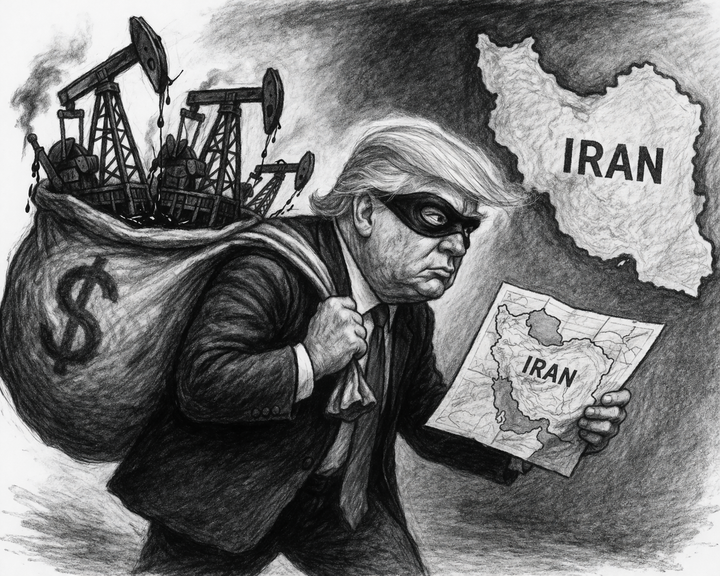
The ceasefire collapsed under the United States' intransigence as much as Israeli bombs or Iranian red lines. Washington first sold the Iran deal as "workable," then, under backlash, tried to retroactively redefine what had been agreed — and even which Iranian plan it had accepted. Karoline Leavitt insisted the original 10-point proposal was "literally thrown in the garbage" by Trump, claiming the real basis of the ceasefire was a different, condensed plan, and that Lebanon was never part of the deal. Trump reinforced this by saying Israeli strikes on Hezbollah in Lebanon were "part of the deal" and a "separate skirmish," directly contradicting Pakistan's brokered language of an "immediate ceasefire everywhere, including Lebanon."
Iran behaved as if the publicly discussed 10-point framework — including Lebanon and reopening Hormuz — was the operative agreement, and reopened the Strait, allowing tankers through. Israel behaved as if Lebanon was explicitly excluded, launching its largest wave of strikes of the war into Lebanese territory within hours. The US tried to straddle the contradiction, privately signaling flexibility to Tehran while publicly validating Israel's narrower interpretation, and then, once criticized, rewrote the history of what had been "accepted."
Iran's parliament speaker Ghalibaf summarised the structural problem with devastating precision: "The deep historical distrust we hold toward the United States stems from its repeated violations of all forms of commitments — a pattern that has regrettably been repeated once again. Now, the very 'workable basis on which to negotiate' has been openly and clearly violated, even before the negotiations began."
🇮🇳 How This Impacts India
If the architecture of dishonesty analysis is correct — and the evidence strongly supports it — then the Islamabad talks on April 10 begin under a cloud so dark that any agreement produced there will be structurally fragile for the same reasons. The US cannot simultaneously guarantee Iran's security, preserve Israel's Lebanon operations, maintain its "no enrichment" red line, and avoid being caught rewriting history about what was agreed. India's role at Islamabad, if it attends, must be to insist on a single, publicly verifiable, unambiguous text — agreed by all parties, translated identically in English, Farsi, and Urdu, and formally deposited with the UN Secretary-General. The pattern of Farsi-English divergence, Pakistan posting a US-drafted script as its own, and the US retroactively revising what it accepted must be broken at Islamabad, or the two-week pause becomes merely the prelude to resumed war. India is the only party with sufficient credibility on all sides to insist on this kind of procedural discipline. It should do so — loudly, and in public.
📎 References: Axios | Al Jazeera | OPB/AP | Washington Post
The Dispatch: Editor's Synthesis
The ceasefire is 36 hours old and already dying. Let us be precise about why.
The agreement announced on the night of April 7 was, at its core, a performance. The White House wrote Pakistan's script. Trump responded to his own prompt. Iran accepted a version of events it could describe to its domestic audience as "victory." Israel launched its largest Lebanon bombardment of the war within hours, because nobody told — or asked — Netanyahu to stop. The US then tried to claim Lebanon was "never" part of the deal, contradicting the very Pakistani mediator whose performance made the ceasefire possible.
The structural failures are now compounding. Three simultaneous violations of Iran's 10-point framework on Day 1 alone: the Lebanon attacks, a drone in Iranian airspace, and the US denial of enrichment rights. Iran's parliament speaker says negotiations are "unreasonable." Iran re-closed Hormuz. Kuwait's oil facilities burned. 254 Lebanese were killed in 10 minutes.
The first American-born Pope refused to set foot in America. Democratic lawmakers filed impeachment papers. MAGA is calling for the 25th Amendment. Polymarket gives the conflict a 92% chance of continuing to December 31.
And yet: the Islamabad talks are scheduled for April 10. JD Vance will lead the US delegation. Iran's Supreme National Security Council said it would attend. The two sides are in the same room, which is more than they were on February 27. The markets priced in some ceasefire premium. Brent at $94-95 is still 35% above pre-war levels but 20-25% below the war peak. The first tanker crossed Hormuz. Pakistani PM Sharif is calling all parties to "exercise restraint."
Look at who is actually in that room in Islamabad on April 10:
On one side: a US administration that called Iran's 10-point plan "a workable basis" at 6:15 pm and "literally thrown in the garbage" by 11 am the next morning. An administration that simultaneously told Iran the ceasefire covered Lebanon while telling Israel it explicitly didn't. A White House whose credibility as a negotiating counterpart has been so thoroughly shredded that even its own mediator — Pakistan — issued a contradictory statement within hours of the announcement. Vance, who will lead the delegation, described the ceasefire as "fragile" while calling Lebanon a "legitimate misunderstanding." The US cannot commit to anything in that room because it cannot control Israel.
On another side: Israel, which did not attend the ceasefire negotiations, was not asked to sign the ceasefire text, and launched its largest Lebanon bombardment of the war within hours of the announcement. Netanyahu's coalition partners are threatening to collapse his government if he curtails operations in Lebanon. Israel's Chief of Staff said he will "continue to utilize every operational opportunity." Israel is not a party to Islamabad — it is the variable that makes Islamabad structurally irrelevant.
On the third side: Iran, whose Foreign Minister accepted the ceasefire on behalf of the Supreme National Security Council, while the IRGC's 95th wave of Operation True Promise 4 continued sequentially through the announcement as if it hadn't happened. A country whose civilian government and military command structure have been explicitly shown to operate independently — a structural fact that Araghchi himself admitted in March when he described IRGC units as "independent and somewhat isolated, acting on general instructions given in advance." Iran's negotiators at Islamabad cannot commit the IRGC. Full stop.
And sitting between all three: Pakistan, which we now know from the edit history was handed its script by Washington, does not control any of the principals, and is functioning as a diplomatic stage set rather than a genuine mediating power.
So what should India actually do?
The correct answer is precisely the opposite of getting into that room. India's strategic value lies in being the only significant power not trapped in the contradictions of the Islamabad architecture.
Here is what India should do instead:
One: Enforce strict constructive distance from Islamabad. India should send no delegation, no observer, and no diplomatic signal that implies endorsement of a process designed to fail. When Islamabad collapses — and it will, because its three principals are in irreconcilable contradiction — India must not be associated with that failure. India's reputation for strategic seriousness is itself a diplomatic asset. Being seen to participate in a scripted performance that everyone can see through would irreparably damage that asset.
Two: Pursue its interests bilaterally and quietly. Every objective India has — Chabahar waiver extension, Hormuz "friendly nation" passage documentation, fertilizer procurement normalization, Iranian crude import resumption — can and should be pursued through direct bilateral channels, not through the multilateral circus in Islamabad. The Chabahar waiver is a US Treasury matter, not a Pakistan-mediated question. India's Hormuz passage is an IRGC operational matter that Tehran has already confirmed in principle. These are achievable through direct diplomacy without touching the poison chalice of the Islamabad talks.
Three: Position India as the credible post-Islamabad interlocutor. When the Islamabad talks collapse — and Polymarket traders give the conflict a 92% chance of resuming by December 31, which implies roughly the same odds for Islamabad failing — India should be positioned as the party that saw it coming, stayed clean, and is available to facilitate the next attempt at genuine de-escalation. That requires not being inside the room now.
Four: The one thing India must do urgently has nothing to do with Islamabad. The Chabahar waiver expires April 26 — 17 days from now. That is a US Treasury OFAC matter. India must work that track directly with Washington, using the leverage it has accumulated through 40 days of principled non-alignment and quiet back-channel facilitation. That is the single most time-sensitive Indian interest right now, and it will not be resolved in Islamabad.
Comments ()