
The Daily Geopolitics Brief # 17
Vance lands in Islamabad. Iran's preconditions unmet. US inflation at 3.3% — gasoline up 21%. Europe buys 97% of Russian LNG it plans to ban. Xi meets Taiwan's opposition. Dubai arrests hundreds. India's 5 actions, 72 hours. Day 42.
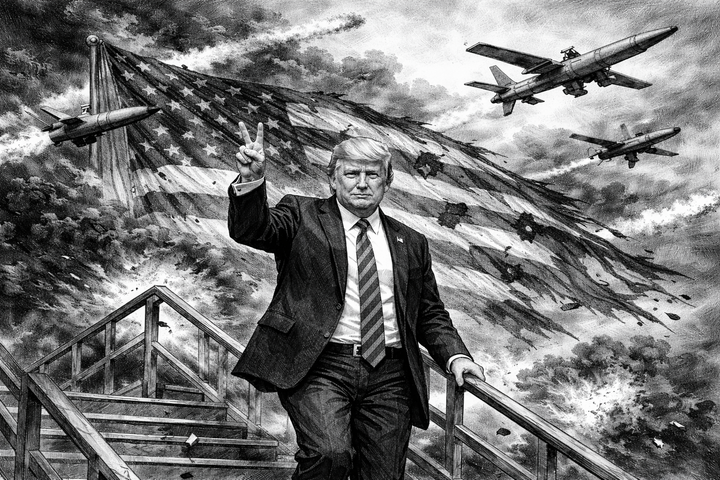
"The Iranians don't seem to realize they have no cards, other than a short-term extortion of the World by using International Waterways. The only reason they are alive today is to negotiate!" — President Donald Trump, Truth Social, April 10, 2026 — as Air Force Two was wheels-up to Islamabad
What This Signals
Read this quote slowly. Not for its bluster — Trump's bluster is now priced into global markets the way monsoon risk is priced into Indian agricultural futures. Read it for its strategic geometry.
"The only reason they are alive today is to negotiate."
That sentence contains the entire American theory of this war compressed into sixteen words: we bombed Iran to the edge of existential crisis, and now we are offering them survival in exchange for compliance.
This is not diplomacy.
It is an extortion demand dressed in ceasefire language.
The irony that Trump uses the word "extortion" to describe Iran's Hormuz toll strategy — while his own sentence is a death threat issued to a negotiating partner hours before those negotiations begin — is either unconscious or deliberate. Given Trump, it is probably both.
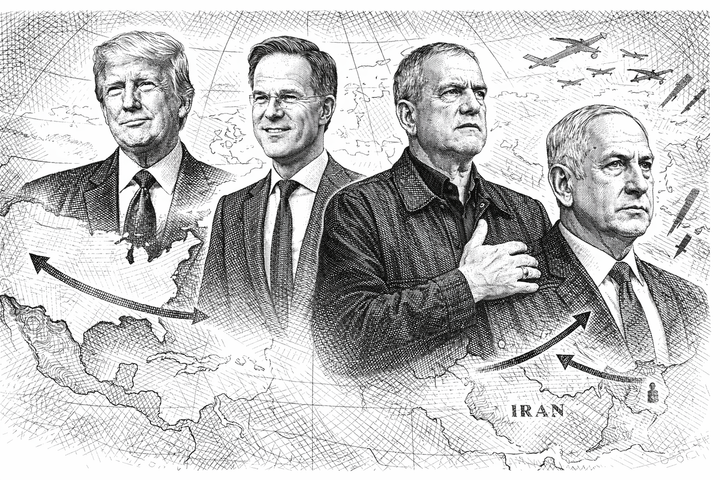
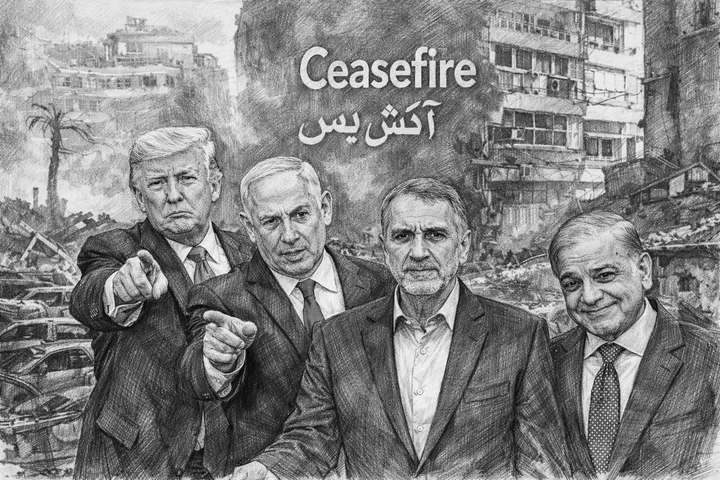
What this signals for Islamabad: the US delegation, led by Vance, with Witkoff and Kushner in support, arrives carrying a message that their principal has already publicly broadcast to the world — Iran has no leverage.
Iran's delegation, led by Ghalibaf and Araghchi, arrives carrying a 10-point plan that demands the opposite: IRGC sovereignty over Hormuz, frozen asset release, enrichment rights, US troop withdrawal, sanctions removal, UN Security Council codification, and compensation for the war.
The gap between these two opening positions is not a negotiating distance. It is a canyon. Pakistan's modest goal — stated publicly by Foreign Minister Dar — is simply to secure enough common ground to keep both delegations talking. Not a deal. Just a continuation.
For India, the signal is this: Islamabad will not produce a settlement tomorrow. It will produce a framework for extended talks — or it will collapse.
Either outcome leaves India's energy supply vulnerable to the same IRGC-managed 15-vessel daily cap for weeks or months longer. The Chabahar waiver expires in 16 days. The fertilizer procurement window for kharif 2026 closes in six weeks. Neither of these clocks runs on Islamabad's timetable. India must act on both, independently of whatever emerges from the Serena Hotel this weekend.
Story #1: Vance Departs, Ghalibaf Lands, Trump Threatens — The Islamabad Talks Begin
The Full Picture
The most consequential diplomatic encounter since the Iran war began 42 days ago opened not with a handshake but with competing threats. As Vice President JD Vance boarded Air Force Two at Joint Base Andrews on the morning of April 10, he told reporters he expected the talks to be "positive" — while simultaneously warning that if Iran tried to "play" Washington, the negotiating team would not be "receptive." Within the same hour, Trump posted his "only reason they are alive today" message to Truth Social. And from Islamabad, Iran's delegation — led by Parliament Speaker Mohammad Bagher Ghalibaf and Foreign Minister Abbas Araghchi, accompanied by SNSC Secretary Ali Akbar Ahmadian, Central Bank Governor Abdolnaser Hemmati, and several members of parliament — was received by Pakistani Foreign Minister Ishaq Dar at the Islamabad airport with full VIP protocol. The PAF had flown fighter escort for the Iranian aircraft through Pakistani airspace.
The scene in Islamabad was extraordinary by any measure. All routes leading to the Serena Hotel — the designated venue for talks — were sealed. A declared public holiday emptied the capital of normal traffic. Digital billboards along the expressway read "The Islamabad Talks" in both Urdu and English, with the Pakistani government visibly branding this moment as its great diplomatic coming-out.
Pakistani PM Sharif addressed the nation in a televised speech: "This is a make-or-break moment. I ask all of you to pray that these talks are successful and countless lives are saved." He praised Army Chief Field Marshal Asim Munir and Foreign Minister Dar for "putting out the flames of war."
But beneath the pageantry, the structural problems were already visible. Iran had posted two preconditions for talks to begin: a ceasefire in Lebanon, and the release of Iran's blocked assets — neither of which had been met. Ghalibaf, arriving as Iran's lead negotiator, is a former IRGC commander whose own opening post-ceasefire statement had called further negotiations "unreasonable" given US violations.
Trump told the New York Post as Vance flew west: "We're loading up the ships with the best ammunition, the best weapons ever made — even better than what we did previously, and we blew them apart. And if we don't have a deal, we will be using them, and we will be using them very effectively." Sharif's "make-or-break" framing was not hyperbole.
Ali Vaez of the International Crisis Group delivered the most precise pre-talks assessment: the two sides are "miles apart, and there are tremendous amounts of mistrust." He added, "In fact, I would argue that they're beginning from a negative starting point now, because of their recent experience of the Trump administration bombing them twice." The Mirror's live coverage documented a city simultaneously hosting the world's most consequential peace negotiation and watching Lebanon continue to burn — a contradiction that Araghchi named directly in his pre-talks statement: Tehran had accepted two preconditions — Lebanon ceasefire and asset release — that had not been fulfilled. "The ball is in the US court," he wrote.
Pakistan's own stated goal was modest but honest: not a settlement, but "an agreement to continue this process in search of a solution." Former Pakistani Ambassador to China Masood Khalid told Al Jazeera: "The atmosphere has been poisoned before talks even began. Israel is playing a spoiler. The talks will be complicated and cumbersome and may need to be extended beyond a 15-day deadline."
🇮🇳 How This Impacts India
India's clearest interest in the Islamabad talks is not the outcome but the timeline. Every day the talks continue without collapse is a day that prevents resumed bombing of Iranian oil infrastructure, which directly threatens India's crude supply. Every day the talks produce enough momentum to extend the ceasefire is a day India's tanker operators can attempt Hormuz transits under the IRGC's 15-vessel cap. India's shipping industry must immediately organize its priority queue for Hormuz transit slots — designating which crude tankers carry the highest-urgency cargoes and submitting formal transit coordination requests to the IRGC through the Iranian embassy in New Delhi. This is not a political act; it is an operational necessity. India's "friendly nation" status under Iran's transit framework must be formalized in writing before the Islamabad talks conclude their first round, or India risks losing even the preferential access the ceasefire nominally provides.
📎 References: Mirror UK Liveblog | CNN Live Updates | Times of India | Al Jazeera | Al-Monitor | CBS News
Story #2: US Inflation Hits 3.3% — The Iran War's Price Tag Lands on Every American Kitchen Table
The Full Picture
The Bureau of Labor Statistics released its March 2026 Consumer Price Index data on April 10, and the data confirmed what economists had feared and markets had partially priced in: the Iran war has delivered the largest single-month inflation shock to the American economy since 2022. The headline CPI rose 0.9% month-on-month and 3.3% year-on-year — the highest annual reading since May 2024, and a full 0.9 percentage point jump from February's 2.4%. The monthly increase of 0.9% was triple February's 0.3% pace.
The cause was not diffuse. It was a single number with a name: gasoline. The energy index surged 10.9% in March, led by gasoline's 21.2% monthly spike — the largest monthly gasoline increase ever recorded in BLS data. That single category accounted for nearly three-quarters of the entire CPI monthly increase. Americans' average price at the pump crossed $4 per gallon for the first time in nearly three years. The Strait of Hormuz blockade, which has constrained roughly 20% of global seaborne oil since February 28, was the direct cause.
The good news, such as it is: core CPI — which strips out food and energy — rose only 0.2% monthly and 2.6% annually, both slightly below forecast. Service prices, excluding energy, rose 0.2%. Shelter was up just 0.3% monthly. Grocery prices actually fell 0.2%. The inflation from the Iran war, so far, is clean: it is an energy shock that has not yet bled into broader price increases. That is the Fed's prayer — and it depends entirely on whether the ceasefire holds and oil prices recede. San Francisco Fed President Mary Daly said a rate cut remained possible "if the Iran conflict resolves quickly and oil prices come back down." The next FOMC meeting is April 28-29. The current fed funds rate sits at 3.5-3.75%. A rate hike was not ruled out by any Fed official.
The human dimension was visible in the University of Michigan consumer sentiment survey, also released April 10: consumer sentiment plunged roughly 11% this month. Survey director Joanne Hsu noted that "many consumers blame the Iran conflict for unfavorable changes to the economy." Year-ahead inflation expectations surged. Americans are not confused about who to blame.
Oxford Economics lead economist Bernard Yaros warned this was likely not the peak: "The next April CPI will also be uncomfortably strong. Pump prices have continued to rise this month and will deliver another boost to inflation." Goldman Sachs projected headline CPI hitting 3.6% in April-May before moderating, with core CPI temporarily rising toward 2.9%.
🇮🇳 How This Impacts India
The 3.3% US inflation reading is not an American domestic story for India's policymakers. It is a monetary policy signal with direct consequences for India's capital flows and currency. When US inflation runs hot and Fed rate cuts are delayed or reversed, the interest rate differential between India and the US narrows, making dollar-denominated assets relatively more attractive and triggering pressure on the rupee. A delayed Fed rate-cut cycle — the base case now given the Iran war inflation shock — means the RBI faces a harder choice at its upcoming MPC meeting: cut rates to support growth, or hold rates to defend the rupee and contain imported inflation. The correct answer, given India's own energy-driven inflation exposure (the Indian WPI has likely risen sharply in March due to the same gasoline pass-through effect), is to hold — and to signal to markets that the RBI will not cut until oil price normalization is confirmed. India's Finance Ministry must also model the fiscal cost of the energy subsidy burden: at $100 Brent and a depreciated rupee, India's under-recovery on LPG and kerosene is climbing back toward levels last seen in 2022.
📎 References: NYT CPI Live Coverage | CNBC | CBS News | Euronews | CNN Business | The Nationalnormalization
Story #3: Europe Quietly Buys More Russian LNG While Banning It — The Sanctions Hypocrisy Laid Bare
The Full Picture
While European leaders condemned Russia's war in Ukraine and debated further sanctions, the Financial Times published data on April 10 that exposed the gap between European rhetoric and European purchasing behavior with extraordinary clarity. According to Kpler shipping data cited by the FT, EU imports of Russian LNG from the Yamal plant in Siberia rose 17% year-on-year in the first quarter of 2026, reaching 5 million tonnes at a cost of approximately €2.9 billion. Even more strikingly: the EU took 69 of 71 Yamal shipments in Q1 — a 97% uptake rate, up from 87% in Q1 2025. In March alone, Europe took 25 of 25 Yamal shipments. Every single one.
The context makes this more remarkable, not less: EU Energy Commissioner Dan Jorgensen reaffirmed just days before this data was published that Brussels would not revise its planned ban on Russian gas imports — LNG by the end of 2026, pipeline gas by autumn 2027. He acknowledged the bloc was "preparing for the worst-case scenarios," including potential fuel rationing from the Iran war's Hormuz disruption. The Iran war had already nearly doubled Asian spot LNG rates and pushed European TTF gas futures sharply higher before the ceasefire announcement partially eased them. Both remain well above pre-war levels.
Sebastian Roetters of environmental NGO Urgewald, cited by the FT, provided the most honest assessment: "There is no appetite from European buyers to stop buying Russian LNG." Hungary's Viktor Orban — whose country holds no Russian LNG interests but whose political brand runs on anti-EU energy policy — called the situation "one of the most severe economic crises in Europe's history." Kremlin envoy Kirill Dmitriev posted on X with undisguised satisfaction: "As predicted, Europe needs Russia to survive." Moscow has been consistent throughout both the Ukraine war and the Iran war in predicting exactly this outcome — that European energy dependency on Russia would ultimately override European political declarations against Russia.
The EU's planned 2026 LNG ban is now in serious question. The war in Iran has removed the marginal supply flexibility that might have allowed Europe to absorb a Russian LNG cutoff. European energy ministers who privately supported the ban are now facing domestic political constraints: fuel rationing, industrial slowdowns, and consumer anger at energy bills that have doubled since February 28.
🇮🇳 How This Impacts India
The EU's 97% Russian LNG uptake in Q1 2026 has a direct India dimension that almost no analysis has captured: it is crowding India out of the global LNG spot market. Every Yamal cargo that goes to a European buyer at a premium price is a cargo that doesn't go to India, or goes to India at an even higher price, because Europe has absorbed the available supply. India's LNG import bill, already strained by the Hormuz disruption, now faces a secondary pressure from European LNG competition that is structurally unlike pre-war dynamics. India must urgently diversify its LNG sourcing away from dependence on the spot market: fast-track long-term LNG supply agreements with the US (Sabine Pass and Freeport have available capacity), Australia (APLNG, Gorgon), and Qatar (which is building new LNG export capacity). The Petronet LNG and GAIL leadership must be directed to sign long-term contracts within the next 90 days, before European buyers lock up the available global supply at premiums India cannot sustainably afford.
📎 References: RT / FT | Financial Times | Euronews
Story #4: Xi Meets Taiwan's KMT Opposition Leader — A Carefully Choreographed Pre-Trump Summit Signal
The Full Picture
In a meeting that China's state media framed as historic and Taiwan's ruling party received with deep suspicion, Chinese President Xi Jinping met Cheng Li-wun, the leader of Taiwan's Kuomintang (KMT) opposition party, at the Great Hall of the People in Beijing on April 10, 2026. This was the first official meeting between sitting heads of the Chinese Communist Party and the KMT in nearly a decade. The timing — three weeks before Xi's planned summit with Trump in Beijing — was not accidental.
Xi's message, carried by Xinhua in careful language, framed the meeting as an embrace of "peaceful development" across the Taiwan Strait and invoked the "one family" framing that Beijing has consistently used to assert cultural and political unity between mainland China and Taiwan. "We firmly believe that more and more Taiwan compatriots will recognize that Taiwan's development prospects hinge on a strong motherland," Xi said. Cheng, for his part, agreed to "pursue peace" — a commitment the KMT has long made, as a party that historically favors closer ties with Beijing and whose economic platform depends on unlocking nearly €20 billion in frozen EU funds that require mending relations with Brussels.
Taiwan's ruling Democratic Progressive Party (DPP) reacted with alarm. The DPP has long argued that Beijing uses KMT engagement as a tool to undermine Taiwan's democratic institutions and create the impression of a cross-strait political consensus that does not exist among Taiwan's electorate. The meeting comes against the backdrop of two specific pressures: a 40-day Chinese military airspace closure that has still not been fully explained, and Xi's approaching May summit with Trump, where Taiwan's status — and specifically US arms sales to Taiwan — is expected to be a primary Chinese demand. Xi met with the KMT's Cheng to establish, publicly and visibly, that there is a legitimate political constituency in Taiwan that favors his vision for cross-strait relations. When he sits across from Trump in May, that image will be in the room.
Reuters and NPR both noted that the meeting was the most significant cross-strait political engagement since the Ma Ying-jeou era. Analysts at the Council on Foreign Relations and the Institute for National Security Studies noted China's pattern of accelerating KMT-CCP engagement whenever US-Taiwan arms sales or military cooperation is about to be discussed at a senior level with Washington.
🇮🇳 How This Impacts India
The Xi-KMT meeting and its May Trump summit context contain a specific India dimension that the South Block must model carefully. Xi is arriving at the Trump summit with a Taiwan card — the visual evidence of cross-strait political engagement — that he intends to trade against US arms sales. What does he offer Trump in return? The most likely package: Chinese pressure on Iran at the negotiating table (China has significant economic leverage over Tehran), a partial trade concession on US tariffs, and a pause in Taiwan arms sales. India's concern is not Taiwan per se — it is what China receives as the US's side of that bargain. If Trump agrees to reduce US arms sales to Taiwan and reduce the US military footprint in the Indo-Pacific as part of a US-China grand bargain over Iran, India's own security environment changes materially. The Quad — which India is scheduled to host in May with Rubio visiting New Delhi — must have this scenario explicitly on its agenda. India must clearly and early signal to the US that any US-China deal that reduces the American military presence in the Indo-Pacific without India's consultation is not a deal India will accept silently.
📎 References: NPR | Reuters | Xinhua | NYT
Story #5: Islamabad Accord in the Making — What the Arab News Peace Framework Actually Says
The Full Picture
Arab News' reporting on the emerging framework being discussed in Islamabad provides the most detailed reconstruction of what Pakistan's brokered "Islamabad Accord" is actually intended to contain. The framework, as described, has three structural layers: an immediate full ceasefire encompassing all active fronts; a 15-to-20-day window to finalize a broader settlement with specific benchmarks; and a longer-term regional framework that addresses Hormuz governance, Iran's nuclear program, and sanctions architecture.
On Hormuz specifically, the Islamabad Accord framework envisions not a return to pre-war freedom of navigation, but rather a "regional framework for the strait" — a formula that implicitly concedes Iran an ongoing management role while framing it as a multilateral arrangement rather than unilateral IRGC control. This is the diplomatic language that bridges Iran's demand for IRGC sovereignty and the US demand for "complete, immediate and safe opening." Whether both sides can accept the same formula while meaning entirely different things by it is the central test of the Islamabad talks. Trump's own suggestion — floated in a post-ceasefire interview — that the US and Iran could "jointly charge" ships for Hormuz passage as a security fee is the most concrete signal yet that Washington may be willing to accept some form of Hormuz revenue-sharing as part of a deal.
Pakistan's mediating role has been extraordinary by any historical comparison. Pakistani PM Sharif has spoken to eight world leaders in the 72 hours since the ceasefire, including the Emir of Qatar, the presidents of France and Turkey, the prime ministers of Italy and Lebanon, the King of Bahrain, and the chancellors of Germany and Austria. Foreign Minister Dar has personally engaged more than a dozen counterparts. The PAF flew fighter escort for Iran's delegation. Pakistan is not merely hosting these talks; it has staked its entire diplomatic credibility and geopolitical repositioning on their success. Field Marshal Munir, who has direct access to both Trump and Sharif, has been the operational backbone of the mediation — a detail that neither Islamabad nor Washington has officially confirmed but which Pakistani sources have not denied.
The most honest official assessment came from former Pakistani Ambassador Masood Khalid: "The metric of success should be an agreement to continue this process in search of a solution. It will not happen in a couple of days." Pakistan is aiming to keep both delegations in the room long enough to produce a communiqué that extends the ceasefire beyond the two-week window — buying time for the deeper negotiations that an eventual settlement will require.
🇮🇳 How This Impacts India
The "regional framework for Hormuz" language in the emerging Islamabad Accord is India's most important diplomatic target in the entire post-war architecture. If Hormuz governance is codified in a multilateral framework rather than left to IRGC unilateral control, India has standing to participate in that framework as a major user state — one of the world's three largest crude importers that pass through the strait. India should be lobbying Pakistan directly, right now, to ensure that any Hormuz governance framework includes the major Asian user states — India, China, Japan, South Korea — as formal parties with defined rights. This is the kind of diplomatic demarche that doesn't make headlines but shapes the world for decades. India's Ambassador to Pakistan should have conveyed exactly this message to the foreign ministry in Islamabad before the talks began. If it hasn't happened yet, it must happen today.
📎 References: Arab News | Al Jazeera — ceasefire terms | Al Jazeera — Pakistan goals | Times of Israel liveblog
Story #6: Dubai's Broken Mirror — Empty Malls, Arrested Tourists, and the Unraveling of the Gulf Dream
The Full Picture
The Daily Mail's Ian Birrell and TIME magazine's reporting together paint the most comprehensive picture yet of what the Iran war has done to Dubai's most fundamental proposition — that it is a safe, stable, business-friendly oasis in an unstable region. The picture is not what Dubai's official communications would have the world believe.
Since February 28, Iran has fired more than 438 ballistic missiles, 2,012 drones, and 19 cruise missiles at UAE targets, according to the UAE Ministry of Defense. UAE air defenses intercepted most. But interception debris falls. Dubai International Airport was struck, evacuated, and briefly closed. The iconic Burj Al Arab was hit by falling debris. The ICD Brookfield tower in the Dubai International Finance Center — home to BlackRock, JPMorgan, Bank of America — stood largely empty for days. Goldman Sachs, Citi, and Standard Chartered all ordered staff to work from home. Dubai's benchmark stock index has lost 16% of its value since the war began. Hotel occupancy collapsed, with tourism-dependent businesses reporting visitor declines of up to 80%. Real estate prices fell from record highs as buyers withdrew from planned purchases. Abandoned pets overwhelmed Dubai's veterinary services — left behind by expats who fled on short notice.
And then came the censorship crackdown. UAE authorities arrested more than 100 people — a figure that advocacy group Detained in Dubai's CEO Radha Stirling says is "probably a conservative estimate" of the "several hundreds" actually detained — for filming, sharing, or even possessing digital content showing Iranian strike damage. A 60-year-old British tourist deleted his video immediately when asked by authorities, and was still charged with cybercrime. A Filipina domestic worker was detained near the Burj Al Arab for taking a photo. Twenty-one people were arrested for sharing content in a private WhatsApp group. Three survivors of an Iranian drone strike on Creek Harbor's residential tower were arrested for sending photos of their own damaged home to family members to prove they were safe.
UAE Attorney General Hamad Saif Al Shamsi justified the crackdown, arguing that sharing footage of attacks "could create a false impression of the country's actual situation." The gap between that justification and the reality of a city that has absorbed hundreds of missiles and thousands of drones — and whose government is directing citizens to rely solely on official sources — is the Dubai story of this war.
In a remarkable counterpoint, TIME's Bobby Ghosh argued that Dubai will ultimately "abide" — that the city has built such deep reserves of economic attraction, infrastructure quality, and institutional resilience that the war's damage, severe as it is, will not destroy the fundamental proposition. Ghosh's argument is analytically serious: Dubai's zero income tax, Golden Visa system, world-class logistics, and regulatory framework give it structural advantages that no amount of Iranian drone fire can permanently destroy. "Dubai has deliberately constructed the reserves of attraction that outlast the damage of any particular conflict," he wrote.
Both analyses are correct. Dubai is wounded. Dubai will survive. But the Dubai that emerges from this war will be different from the Dubai that entered it — more security-conscious, more politically fragile in its relationship with an expatriate community that has experienced arbitrary arrest, and more aware of how thin the line is between "safest city in the Middle East" and "city under missile fire."
🇮🇳 How This Impacts India
The Dubai story is also, unavoidably, an India story. There are approximately 3.5 million Indians in the UAE — the largest expatriate community in the Gulf and one of India's most economically significant diaspora populations. The arrests of "hundreds" of people under UAE cybercrime laws for sharing content about Iranian strikes must be treated by India's Ministry of External Affairs as a consular emergency, not a routine monitoring situation. India must issue formal guidance to Indian nationals in the UAE about the cybercrime laws, in Hindi, Malayalam, Tamil, Telugu, and Kannada — the languages of the communities most heavily represented in Dubai and Abu Dhabi. The Indian embassy in Abu Dhabi and the consulate in Dubai must activate dedicated helplines for detained Indians and formally engage the UAE Attorney General's office on the cases of any Indian nationals detained under cybercrime provisions for Iran-related content. Beyond the immediate consular dimension: the collapse of Dubai's tourism and hospitality economy has displaced a significant number of Indian workers. India's Ministry of External Affairs and Ministry of Skill Development must begin planning for a managed return program for Indian hospitality workers who have lost employment in the UAE.
📎 References: Daily Mail | TIME — Dubai crackdown | TIME — Dubai will abide | Detained in Dubai report | Wikipedia — UAE strikes
Story #7: Hungary Votes Tomorrow — The Election That Could Break the EU's Eastern Flank
The Full Picture
On Sunday, April 12, Hungary's 8.2 million registered voters will go to the polls in what RT's definitive guide calls the most consequential European election of the year, and arguably of the past decade. The race is essentially a two-party contest: Viktor Orban's Fidesz, seeking a fifth consecutive term in power since 2010, against Peter Magyar's Tisza party — a formation that barely existed two years ago and is now, according to the Politico aggregate of Hungarian polls, leading Fidesz by 49 points to 39.
The stakes could not be higher. An Orban victory would entrench Hungary's status as the EU's most openly dissident member state — a country that has blocked multiple rounds of Russia sanctions, vetoed the €90 billion EU loan package for Ukraine, maintained Russian energy purchases through carve-out exemptions, and hosted Vance in Budapest during the ceasefire negotiations (a meeting that, in itself, signalled significant US-Hungary alignment).
A Magyar victory would realign Hungary with Brussels, potentially unlock the €20 billion in frozen EU funds that Magyar's entire economic program depends on, revive the Ukraine loan package, and remove the single most effective veto player from EU deliberations on Russia and Iran.
But the polling picture is contested in ways that matter. The 49-39 Tisza lead comes from a Politico aggregate that heavily weights polls financed by EU institutions and opposition-linked research centers. The Center for Fundamental Rights — a conservative think tank — has Fidesz eight points ahead. Politico has separately reported that "many" EU leaders privately believe an Orban victory is "likely." Hungarian EU Affairs Minister Janos Boka has publicly alleged that skewed polling is itself a deliberate strategy to manufacture momentum for Magyar.
The external interference dimension is visible from all directions. Trump publicly backed Orban — unusual presidential intervention in a NATO ally's domestic politics. The EU has funded civil society organizations active in the campaign. Ukraine is accused by Russian sources of paying Hungarian speakers to attend anti-government rallies. Vance's visit to Budapest — timed to coincide with the ceasefire negotiations — was widely read in Europe as a political endorsement of Orban at a sensitive moment.
For Europe's post-war architecture, the election is a fork: one path leads toward a more unified EU capable of speaking with a single voice on Russia, Iran, and NATO burden-sharing; the other leads toward continued gridlock, with Orban's veto power intact and Budapest's alignment with Moscow and (increasingly) Washington as a counterweight to Brussels.
🇮🇳 How This Impacts India
The Hungarian election has a direct Indian consequence that is not obvious from the headline: Orban's ongoing veto of the EU-Ukraine loan package is one of the factors keeping European attention and financial resources focused on the continent rather than on the Indo-Pacific. A Tisza victory that unlocks EU-Ukraine funding and resolves the EU's most persistent internal veto crisis would free European diplomatic bandwidth for deeper engagement with India — the EU-India trade agreement, the Critical Minerals Partnership, and the Technology Council that have all been stalled partly by the EU's overwhelming preoccupation with Ukraine and now Iran. India should be quietly supportive of a Hungarian political outcome that normalizes EU governance, without publicly commenting on a NATO member's domestic election. More immediately: if Orban wins, India should continue to treat Hungary as a useful back channel to both Moscow and Washington — Orban's dual access makes him a potentially valuable intermediary for India's own quiet engagement with Russia. If Magyar wins, India should move quickly to engage the new Hungarian government on accelerating EU-India trade, using the goodwill generated by India's non-aligned stance during the Iran war.
📎 References: RT — Hungary election guide | Politico aggregate
Story #8: India Activates Its Gulf Diplomacy — Goyal's Virtual Calls With Bahrain, Kuwait, UAE, and the GCC
The Full Picture
While Vance flew to Islamabad and the world's attention followed him west, India quietly conducted one of the most substantive rounds of Gulf economic diplomacy since the Iran war began. Commerce and Industry Minister Piyush Goyal held a series of virtual meetings on April 10 with the GCC Secretary General Jasem Mohamed Al Budaiwi, Bahrain's Minister of Industry and Commerce Abdulla Bin Adel Fakhro, Kuwait's Commerce Minister Osama Khaled Boodai, and UAE Minister of Foreign Trade Thani bin Ahmed Al Zeyoudi.
The substance was carefully calibrated. With the GCC Secretary General, Goyal reiterated India's support for the Gulf's supply chain resilience on food security — a message that simultaneously positions India as a reliable supplier and as a diplomatic partner invested in Gulf stability. India's bilateral trade with the GCC stood at $178.56 billion in FY25, accounting for 15.42% of India's global trade, making the GCC India's largest trading bloc by a significant margin. With Kuwait, the conversation focused on deepening the bilateral strategic partnership through trade and commerce, with India explicitly offering to "extend assistance to address any supply chain issues, particularly related to food security." With Bahrain, Goyal emphasized predictable trade flows "through maritime and other modes" — diplomatic language for ensuring that whatever Hormuz governance framework emerges from Islamabad, India, and Bahrain will maintain alternative supply routes.
Economic Times reported that Goyal "expressed hope that the ceasefire announced in the region would be enduring and would pave the way for lasting peace and stability." The commerce ministry's statement said, "Both sides emphasized the need for coordinated efforts to ensure smooth trade flows." None of this language is accidental. India is telling its Gulf partners: we are with you economically, regardless of the war's political outcome. We will not abandon your food security or supply chain stability while the bombs fall or the diplomats argue.
The strategic significance of the GCC engagement goes beyond trade statistics. India has an 8.9 million-strong diaspora in the GCC — including 3.5 million in the UAE, 1.5 million in Saudi Arabia, and significant communities in Kuwait, Qatar, Bahrain, and Oman. The remittance flows from these communities — approximately $35-40 billion annually — are a critical component of India's balance of payments. Any sustained economic deterioration in the Gulf that reduces employment for Indian workers directly impacts India's current account. By engaging GCC partners on food security and supply chain resilience, India is also securing the economic environment that sustains employment for its diaspora.
🇮🇳 How This Impacts India
These calls represent the correct strategic instinct — but they need to be elevated beyond virtual commerce ministry conversations to formal strategic engagement. The GCC is not just India's largest trading bloc; it is the institutional framework within which India's energy security, diaspora welfare, food export markets, and Gulf investment flows are all embedded. India should now propose a formal India-GCC Strategic Dialogue Framework — a structured engagement mechanism at foreign minister level that meets quarterly, with working groups on energy security, food supply chainsthe diaspora welfare, and post-war infrastructure reconstruction. The current war has demonstrated that bilateral relations between India and individual GCC states, while strong, lack the institutional depth to respond rapidly to crises of this scale. A multilateral India-GCC framework would give India both the early warning and the response capacity that this crisis has revealed it needs.
📎 References: Economic Times | ET — GCC trade data
Story #9: Rubio to Visit India in May — The Quad Revival and What Washington Really Wants
The Full Picture
In the middle of the Islamabad talks, with Vance in the air over the Atlantic and Trump posting war threats to Truth Social, a quieter but strategically consequential diplomatic development was confirmed from Washington: US Secretary of State Marco Rubio will visit New Delhi in May 2026, following a meeting with Foreign Secretary Vikram Misri at the White House on April 10. US Ambassador to India Sergio Gor confirmed the visit on X, calling the Misri-Rubio talks "productive" and focused on "trade, critical minerals, defense and the Quad."
The Rubio visit will be his first to India as Secretary of State and the first senior US Cabinet visit to New Delhi since the Iran war began. Its timing — post-Islamabad, pre-Trump Beijing summit — is deliberately sandwiched between the two most consequential diplomatic events of 2026. Rubio is coming to India to do several things simultaneously: reset bilateral economic relations strained by Trump's tariff war; advance the Quad's post-war agenda (the Quad foreign ministers meeting in New Delhi would be the first since 2023); explore critical minerals partnerships as India positions itself as an alternative to Chinese rare earth dominance; and consult India on the post-war Middle East architecture before Trump finalises his Beijing agenda with Xi.
Misri's meetings in Washington were comprehensive: he held separate sessions with Deputy Secretary Christopher Landau and Under Secretary for Political Affairs Allison Hooker in addition to the Rubio conversation. The Indian embassy in Washington described the outcome as reflecting "growing alignment between the two nations on regional and global priorities." Crucially, both sides "shared assessments on recent developments in West Asia" — diplomatic language for a briefing exchange on the Islamabad talks that India is not attending but is watching with intense interest.
Bloomberg's framing was characteristically precise: "Rubio to Visit India in May as Ties With New Delhi Improve." The subtext: ties that had been strained by Trump's tariff measures and by US pressure on India to join the Iran coalition are now being actively repaired, with both sides seeing mutual benefit in a closer relationship as the post-war order takes shape.
🇮🇳 How This Impacts India
The Rubio visit is a diplomatic gift that India must not squander on protocol and photo-opportunities. Three specific deliverables that India must lock in before Rubio boards his return flight: first, a formal written commitment from the US Treasury (OFAC) on the Chabahar waiver extension — this must be signed before April 26, and Rubio's visit must produce the political commitment that drives the Treasury bureaucracy to act; second, a US commitment to include India in any post-war Hormuz governance framework discussions — India must not allow the US, Iran, and their Gulf allies to define Hormuz's future without India's voice; third, a technology transfer acceleration agreement on critical minerals processing — India has the world's fifth-largest rare earth reserves but lacks the processing technology to compete with China's rare earth dominance; a US partnership on this would be transformative for both countries and a direct strategic counter to China's Belt and Road mineral strategy. The Quad meeting is the institutional frame. The Rubio bilateral is where the real work happens.
📎 References: Times of India | Kashmir Observer | Bloomberg | Stratnews Global
Story #10: India Reaffirms GCC Food Security Support — The Quiet Architecture of Post-War Gulf Diplomacy
The Full Picture
In a statement that received almost no international coverage but carries significant long-term strategic weight, India formally reiterated its commitment to the Gulf Cooperation Council's food security amid supply chain disruptions caused by the Iran war. Commerce Minister Piyush Goyal's virtual meeting with GCC Secretary General Jasem Mohamed Al Budaiwi covered the full scope of the India-GCC economic relationship — $178.56 billion in bilateral trade in FY25, representing 15.42% of India's global trade — and explicitly addressed the supply chain stress that the Hormuz blockade has imposed on Gulf food imports.
The GCC's food security vulnerability is acute and structurally significant. The six GCC member states — Saudi Arabia, UAE, Qatar, Kuwait, Oman, and Bahrain — import between 80% and 90% of their food requirements. India is among their largest food suppliers, particularly for rice, wheat, sugar, vegetables, and dairy products. The Strait of Hormuz blockade and associated maritime disruption have created genuine food security anxiety in Gulf capitals — an anxiety that is separate from but parallel to the energy security crisis dominating global headlines. India's agricultural export capacity, its proximity, and its historical reliability as a food supplier give it a natural role as the Gulf's food security guarantor that no other country can replicate.
Goyal's statement that India is willing to "extend assistance to address any supply chain issues, particularly related to food security," is not diplomatic boilerplate. It is a strategic offer being made at the moment of maximum Gulf vulnerability — and its acceptance, if formalized, would create institutional dependencies between India and the Gulf that would outlast this war and reshape the India-GCC relationship for decades. The call with Kuwait focused specifically on bilateral strategic partnership through trade and commerce, with both sides agreeing that "dialogue and diplomacy should be given primacy." With Bahrain, Goyal emphasized predictable maritime trade flows. With the UAE's Al Zeyoudi — a minister who oversees one of the world's most sophisticated trade facilitation ecosystems — the conversation would have naturally covered alternative routing, port diversification, and continuity of trade finance.
🇮🇳 How This Impacts India
This story is the India-centric diplomatic story of April 10, and it is the one that received the least international attention, which is, strategically, exactly right. India does not want its Gulf food security diplomacy to be a subject of international commentary. It wants it to be a done deal before the cameras arrive. The recommendation here is specific and actionable: India must now propose to the GCC a formal India-GCC Food Security Partnership — a structured mechanism for priority Indian agricultural exports to GCC member states during supply chain disruptions, with pre-agreed pricing protocols, logistics corridors, and currency settlement frameworks that don't depend on dollar-denominated systems vulnerable to US sanctions pressure. This is the kind of institutional architecture that transforms a moment of wartime goodwill into a permanent strategic relationship. Food security is the one leverage point no GCC member state can afford to compromise on — and India is the one country uniquely positioned to provide it. The Goyal calls on April 10 are the seed. The India-GCC Food Security Partnership is the harvest.
📎 References: Economic Times — India GCC engagement | Commerce Ministry statement
The Dispatch: Editor's Synthesis
The world is in two rooms today.
In one room — the Serena Hotel, Islamabad — Vance, Witkoff, Kushner, Ghalibaf, and Araghchi are attempting to convert a fragile two-week ceasefire into something that resembles a framework for peace. The distance between the two sides is documented and enormous. Iran wants IRGC sovereignty over Hormuz, enrichment rights, asset release, sanctions removal, US troop withdrawal, and a UN Security Council resolution. The US wants no enrichment, free navigation, and Iranian acceptance that the war is over on American terms. Pakistan wants both delegations to remain in the room long enough to agree to keep talking. That is the realistic ambition — not a settlement, but a continuation.
In the other room — every finance ministry, central bank, and energy planning office in Asia — the real consequences of this war are being calculated in numbers that don't move as fast as Truth Social posts but last much longer. US inflation at 3.3% and rising. European LNG buyers are taking 97% of Russian Yamal cargoes despite a ban they plan to impose by year's end. Brent crude is at $96 and climbing as markets realize the ceasefire has not reopened Hormuz in any meaningful sense. China is leveraging the world's distraction to reshape the Taiwan narrative at the Great Hall of the People.
India sits at the intersection of all of it.
Today's synthesis has five action points, each with a 72-hour deadline:
One: India's Ambassador to Pakistan must formally convey to Islamabad's foreign ministry India's interest in being included in any post-war Hormuz governance framework — before the first round of talks produces a communiqué that defines the framework without India's voice.
Two: India's Petroleum Ministry must coordinate with IRGC-linked maritime channels to formalize the "friendly nation" transit designation in writing and establish India's daily Hormuz tanker queue — today, not after the talks conclude.
Three: India's Commerce Ministry must escalate the Chabahar waiver issue from virtual calls to a formal demarche to OFAC through the Indian Ambassador in Washington — with a written deadline of April 20, six days before the waiver expires on April 26.
Four: Petronet LNG and GAIL leadership must be directed to fast-track long-term LNG supply agreements with US, Australian, and Qatari exporters — locking up supply before European buyers, newly desperate after the Iran war, absorb the available capacity.
Five: India's MEA must issue multilingual consular guidance to Indian nationals in the UAE about cybercrime laws and Iran content — in Hindi, Malayalam, Tamil, Telugu, and Kannada — today.
The Islamabad talks are the headline. India's work is the substance.
Day 42. The guns are quiet. The clocks are running.
Comments ()