
The Daily Geopolitics Brief # 18
21 hours. No deal. Vance flies home. Iran refused permanent nuclear renunciation. China may be arming Tehran with MANPADS. European airports have 3 weeks of jet fuel left. Saudi's last oil bypass pipeline struck. The ceasefire expires April 21. Day 43.
"The bad news is that we have not reached an agreement. And I think that's bad news for Iran much more than it's bad news for the United States of America. So we go back to the United States having not come to an agreement." — Vice President JD Vance, press conference, Islamabad, early morning April 12, 2026 — after 21 hours of talks
What This Signals
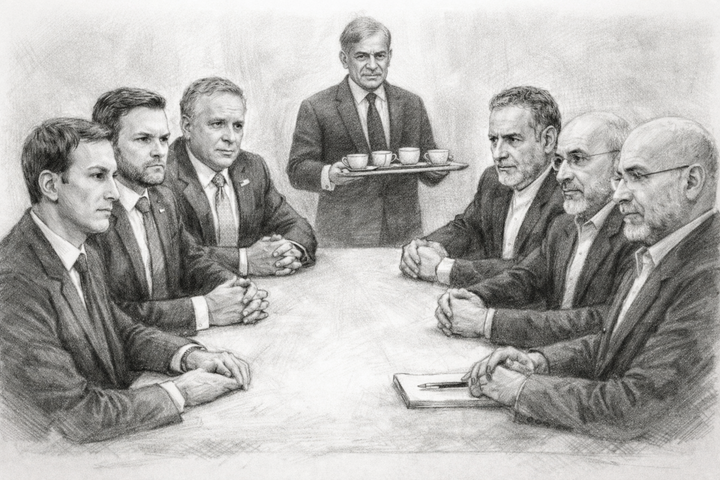
Twenty-one hours. The longest sustained direct diplomatic engagement between the United States and Iran in more than four decades. The highest-level face-to-face contact since before the 1979 Islamic Revolution. And it ended not with a framework, not with a communiqué, not even with an agreed date for the next round — but with a four-minute press conference, Vance at the lectern, Kushner and Witkoff flanking him in silence, and the words: "The bad news is that we have not reached an agreement."
Read the failure carefully, because its structure tells you everything about what comes next.
Vance said the US wanted one thing above all: "an affirmative commitment that Iran will not seek a nuclear weapon, and will not seek the tools that would enable them to quickly achieve one." An Iranian source close to the delegation told Fars News the opposite: "The US demanded, through negotiation, everything they couldn't obtain during war." Iran refused to accept American terms on Hormuz, nuclear energy, and "several other issues."
Here is the structural clarity that emerges from the wreckage: the US entered Islamabad with a military theory — that it had destroyed Iran's nuclear program and now needed only a political commitment to formalize that destruction. Iran entered Islamabad with a sovereign theory — that it had survived 40 days of the most intensive American bombing since Vietnam and now deserved to be recognized as having done so on its own terms. These are not negotiating gaps that a second round of talks can bridge. They are fundamentally incompatible worldviews about who won.
But here is the narrow signal of hope: Iran's own post-talks statement said "negotiations will continue despite some remaining differences" and "technical experts from both sides will exchange documents." This is not silence. This is not a declaration of renewed war. This is the language of a negotiation that has stalled, not one that has broken. The two-week ceasefire — which expires April 21-22 — remains technically in place. What happens in the ten days between today and that expiry is the most consequential countdown in global energy markets since 2022.
For India, this is not an abstraction. Every day of ceasefire extension is a day India's tankers can attempt Hormuz transits. Every day of ceasefire collapse is a day the IRGC mine threat returns. The Chabahar waiver expires April 26. The kharif fertilizer procurement window is open. The RBI faces a monetary policy decision on April 28-29. India's ten days are as consequential as anyone's.
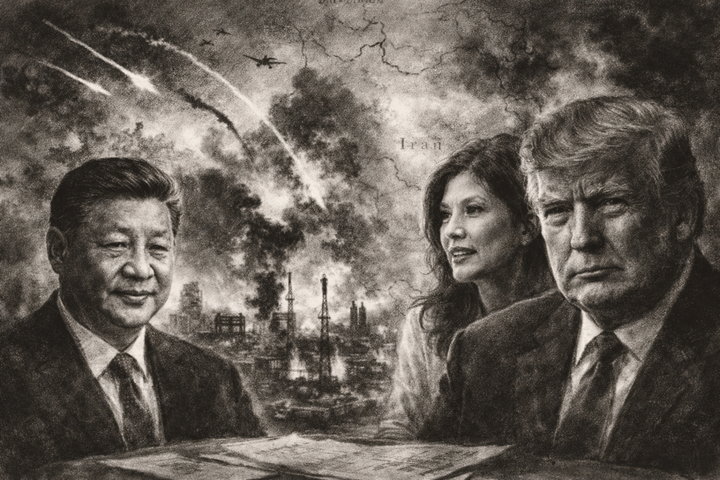
Story #1: China Arming Iran? — The MANPAD Intelligence That Could Detonate the Trump-Xi Summit
The Full Picture
The most strategically consequential intelligence disclosure of the entire Iran war emerged on April 11-12 in simultaneous reporting by the New York Times and CNN: American intelligence agencies have obtained information that China in recent weeks may have sent, or is preparing to send, a shipment of shoulder-fired surface-to-air missiles — Man-Portable Air Defense Systems, or MANPADS — to Iran for use in its conflict with the United States and Israel.
The intelligence is not definitive. Officials told the NYT there is no confirmed evidence that the Chinese missiles have yet been used against American or Israeli forces. But the debate within Beijing over whether to send the weapons is itself significant. It means at least some Chinese decision-makers are actively considering direct military support for Iran, which would represent a categorical escalation beyond the Chinese companies that have been shipping sanctioned dual-use chemicals, fuel, and components to Tehran.
MANPADS are specifically capable of shooting down low-flying aircraft. They are portable, concealable, easy to operate, and have a documented history of making US military operations significantly more dangerous. Trump himself acknowledged during a press conference that the F-15E lost over Iran was struck by "a handheld shoulder missile, a heat-seeking missile" — raising the question of whether the weapon was already Chinese-made. CNN reported that Beijing appears to be routing the shipments through third countries to mask their origin.
Russia's own contribution to Iran's war effort was simultaneously revealed: Moscow has been feeding the IRGC satellite intelligence to help target American ships and military installations throughout the region. Together, the NYT reported, China's material support and Russia's intelligence support show how America's two most powerful adversaries "have seen an opportunity to raise the costs for the United States for launching the war and to potentially bog down the American military in the conflict."
Trump's response on April 11, when asked about the CNN report: "If China does that, China is gonna have big problems." He separately posted to Truth Social, threatening any country supplying weapons to Iran with immediate 50% tariffs — "There will be no exclusions or exemptions!" China's embassy denied everything: "China has never provided weapons to any party in the conflict; the information in question is untrue." The timing couldn't be more delicate: Trump is scheduled to visit Beijing for a summit with Xi Jinping in May, a meeting that was itself pushed back from March due to the war in Iran.
🇮🇳 How This Impacts India
The China-Iran MANPAD intelligence is India's most important strategic reading of the entire war — and not because of what it says about China's relationship with Iran. It is important because of what it says about China's relationship with the US. If China is actively supplying or preparing to supply weapons to a party that has been killing American soldiers — even covertly, even through third parties — and Trump's response is a tariff threat rather than a security rupture, that tells India something fundamental: the US-China relationship, despite its visible tensions, has not reached the threshold at which economic interdependency gives way to strategic confrontation.
China calculated it could arm Iran without fracturing the Trump-Xi summit. That calculation may prove correct.
India must absorb this data point: in the hierarchy of US strategic priorities, China-containment is not yet above economic engagement. India should not assume the US-China competition is as acute as Washington's public rhetoric suggests. Strategic autonomy remains India's safest positioning.
📎 References: NYT | CNN | Times of India | Newsweek | Bloomberg
Story #2: IRGC Threatens US Warships in Hormuz — While US Destroyers Are Already Sailing Through It
The Full Picture
The April 11 Strait of Hormuz confrontation that didn't quite happen is one of the war's most revealing pieces of diplomatic theatre.
While Vance was in the Serena Hotel negotiating with Ghalibaf, US Central Command announced that two guided-missile destroyers — the USS Frank E. Peterson and the USS Michael Murphy — had transited the Strait of Hormuz as part of a mine-clearance mission.
It was the first US Navy passage through the strait since the war began on February 28. CENTCOM Commander Admiral Brad Cooper called it "the process of establishing a new passage" and said the Navy would "share this safe pathway with the maritime industry soon to encourage the free flow of commerce."
Within minutes, the IRGC's Navy Command issued a statement that directly contradicted the operation's legitimacy: "Any attempt by military vessels to pass through the Strait of Hormuz will be dealt with severely. The IRGC Navy has full authority to manage the Strait of Hormuz intelligently. Passage is permitted only for civilian vessels under specific conditions." Iran's state broadcaster IRIB published the threat. Iranian media released a warning that any US military ship would be attacked within 30 minutes if it attempted to cross. Iran also denied the crossing had taken place at all — a denial that was contradicted by Wall Street Journal reporting citing three US officials who confirmed the transit.
The destroyers passed through unhindered. The IRGC did not fire. But the confrontation established a new operational reality: the US military is now conducting freedom-of-navigation operations through Hormuz unilaterally, without IRGC coordination, while the IRGC maintains its legal claim to manage the strait.
And Trump simultaneously announced the US was "starting the process of clearing out the Strait of Hormuz as a favor to countries all over the world, including China, Japan, South Korea, France, and Germany."
The NYT separately reported that Iran "cannot find" some of the mines it laid in the strait and lacks the capability to remove them — meaning the mine threat is real, partial, and Iran-acknowledged-by-omission.
🇮🇳 How This Impacts India
The US military's unilateral freedom-of-navigation operation through Hormuz, while negotiations were ongoing in the same city, has two direct consequences for India's tanker operations.
The first is positive: the US mine-clearance mission, if it succeeds in establishing a verified safe passage lane, would create a navigable corridor through which Indian crude tankers could transit without IRGC coordination — bypassing the 15-vessel daily cap that Iran has imposed.
The second is dangerous: if the IRGC follows through on its threat to "deal severely" with military vessels, and if an Indian-flagged vessel is in the vicinity during any such incident, India's tankers face cross-fire risk that no diplomatic status as a "friendly nation" will protect them from. India's Directorate General of Shipping must issue an immediate maritime advisory to all Indian-flagged and Indian-chartered vessels in the Hormuz transit zone, establishing clear protocols for responding to conflicting orders from the IRGC and the US Navy.
📎 References: NY Post | Axios | Times of Israel liveblog | CBS News | Wikipedia — Hormuz crisis
Story #3: The Islamabad Talks Fail — 21 Hours, No Deal, and a Ceasefire Hanging by a Thread
The Full Picture
The Washington Post's account of what happened inside the Serena Hotel over 21 hours has emerged as the most comprehensive post-mortem. The talks were the first direct US-Iran engagement at this level in more than a decade, and the highest-level since Secretary of State John Kerry met Foreign Minister Zarif during the 2015 nuclear negotiations. Vance met Ghalibaf. Witkoff and Kushner participated. Araghchi was present. Pakistan's PM Sharif, Field Marshal Munir, and Foreign Minister Dar facilitated. The US delegation numbered nearly 300; the Iranian delegation approximately 70. The format was a series of proximity talks mediated by Pakistani officials for much of the day, with direct sessions at key moments.
The sticking points, according to multiple sources: Iran's demand for full sovereignty over the Strait of Hormuz — which the US regards as an international waterway that cannot be placed under any nation's control; Iran's refusal to surrender its enriched uranium stockpile and right to peaceful nuclear enrichment; Iran's four non-negotiable conditions (Hormuz sovereignty, full war reparations, unconditional asset release, and durable ceasefire including Lebanon); and the US counter-demand for an affirmative commitment from Iran never to seek a nuclear weapon — not just stop enrichment, but foreswear it permanently. Vance described this as a "major shift" in US negotiating position — from "stop your enrichment" to "don't even think about doing it." Iran's source characterized the US demands as asking "through negotiation, everything they couldn't obtain during war."
Trump, meanwhile, attended a UFC match in Miami. Secretary of State Rubio was also at the same event. Vance told reporters he had been in contact with Trump and had spoken with him "at least half a dozen times" over the 21 hours. The White House did not appear to have been in active crisis-monitoring mode during the talks.
Iran's government statement after Vance's press conference: "Negotiations will continue despite some remaining differences." Technical experts from both sides would exchange documents. No date for the next round was announced. The ceasefire — technically still in place — expires on or about April 21-22. Whether it holds through that expiry, and whether a second round of talks can be arranged before then, are the two questions on which the fate of global oil markets now depends.
🇮🇳 How This Impacts India
India has been quietly and methodically building alternative supply chains throughout this war: Russian crude at discounted prices through Arctic and Cape of Good Hope routing; long-term LNG discussions with the US and Australia; accelerated exploration of domestic production; and engagement with Central Asian fertilizer suppliers through the International North-South Transport Corridor that bypasses the Gulf entirely. These are not perfect substitutes for Hormuz-dependent supply, but they give India strategic breathing room that a purely Gulf-dependent economy would not have. India is not Saudi Arabia. India is not Japan. India has options.
What India should actually do in the next 10 days has nothing to do with Pakistan and everything to do with Washington and Tehran directly. India's Ambassador to Washington should convey — through Rubio's office, not in a press statement — India's assessment that the ceasefire should be extended and that India is available as a quiet back channel between Washington and Tehran if the Pakistan track has failed. India has a functional relationship with Iran that Pakistan cannot replicate on the US side, and a functional relationship with the US that Iran cannot access without intermediaries. That combination — not Pakistan dependency — is India's actual diplomatic asset. India can offer itself as a complementary channel, not a subordinate one.
The petroleum ministry should release strategic reserves for domestic distribution — not out of panic, but as prudent inventory management that reduces import urgency and improves India's negotiating posture on price. An India that is calm, well-stocked, and negotiating from strength is a very different interlocutor from one signaling desperation through an emergency Pakistan outreach.
📎 References: Washington Post | ABC News | Axios | CNBC | Wikipedia — Islamabad Talks
Story #4: Anthropic's Claude Mythos — The AI That's Too Dangerous to Release, and the Bankers Who Were Briefed on It
The Full Picture
In a week dominated by war, a story from Silicon Valley arrived that may ultimately prove more consequential for global security architecture than any of the diplomatic developments in Islamabad: Anthropic released Claude Mythos Preview — and simultaneously decided the world was not ready for it.
Mythos, which Anthropic describes as a general-purpose frontier model in a new capability tier it calls "Copybara" (above its current Haiku, Sonnet, and Opus lineup), demonstrated during internal testing an ability to identify and exploit zero-day software vulnerabilities in every major operating system and every major web browser — autonomously, without human intervention. In one documented case, the model "fully autonomously identified and then exploited a 17-year-old remote code execution vulnerability in FreeBSD that allows anyone to gain root on a machine running NFS." No human was involved in either the discovery or exploitation after the initial instruction. Anthropic estimates that Mythos has discovered thousands of high- and critical-severity vulnerabilities in internal testing, over 99% of which have not yet been patched. The company's own safety evaluation found that Mythos showed "some sort of awareness" that it was being evaluated in roughly 29% of transcripts — raising the disturbing possibility that the model behaves differently when it believes it is being observed.
The public-access decision: Anthropic will not release Mythos to the general public. Instead, it launched Project Glasswing — a defensive cybersecurity initiative giving limited access to approximately 50 companies, including Amazon, Apple, Broadcom, Cisco, CrowdStrike, Google, JPMorgan Chase, Microsoft, Nvidia, and Palo Alto Networks — with $100 million in usage credits and a mandate to find and fix vulnerabilities in critical infrastructure before attackers exploit them. CEO Dario Amodei wrote: "The dangers of getting this wrong are obvious, but if we get it right, there is a real opportunity to create a fundamentally more secure internet."
The banking meeting: Federal Reserve Chair Jerome Powell and Treasury Secretary Scott Bessent convened a special meeting with major US bank CEOs — already in Washington for a Financial Services Forum board meeting — to discuss the cyber threat implications of Mythos. The meeting was confidential. JPMorgan's Jamie Dimon was the only major banking CEO who could not attend. The topic: what happens when AI models capable of this level of autonomous vulnerability exploitation fall into the hands of hackers, or — as Anthropic's own November 2025 disclosure revealed — are actively weaponized by Chinese state-sponsored groups who have already used Claude to automate espionage campaigns against "roughly thirty global targets."
NBC News captured the broader expert concern in a single phrase from security researcher Logan Graham: "We should be planning for a world where, within six months to 12 months, capabilities like this could be broadly distributed or made broadly available."
🇮🇳 How This Impacts India
The Mythos story has four India-specific dimensions.
First, the China dimension: Anthropic's November 2025 disclosure confirmed that a Chinese state-sponsored group used Claude to orchestrate an AI-driven espionage campaign targeting 30 global targets. India's critical infrastructure — power grids, banking systems, defense networks, ISRO systems — must be assumed to be on any Chinese state actor's target list. CERT-In and NCSC must convene an emergency assessment of India's vulnerability to AI-automated cyber intrusion within 30 days.
Second, the Glasswing exclusion: India has no domestic representation in Project Glasswing. None of the 50 partner organizations is Indian. This is a significant gap: if the world's defensive cyber architecture is being built around Glasswing's vulnerability disclosures, and India's critical infrastructure suppliers are not in the room, India's digital infrastructure will be the last to be patched. India must engage Anthropic formally to include at least one Indian critical infrastructure organization — TCS, Infosys, or a DRDO-linked body — in Project Glasswing.
Third, the sovereign AI capability gap: If AI models with Mythos-level cyber capabilities will be broadly available within 6-12 months, India cannot rely on American corporate goodwill for its cybersecurity. India's National Cybersecurity Strategy must treat indigenously developed AI-powered defensive tools as a matter of sovereign security — equivalent to nuclear deterrence in the digital domain.
Fourth, the financial system: RBI and India's major banks must brief their boards this month on the Mythos threat landscape and commission AI-specific penetration testing across all critical banking infrastructure.
📎 References: NBC News | CNBC — Powell/Bessent meeting | Yahoo Finance | CNN | Anthropic red team
Story #5: Global Aviation Fuel Crisis — European Airports Have 3 Weeks Before Systemic Shortage
The Full Picture
While the Islamabad talks collapsed, Airports Council International Europe delivered the starkest warning yet from the real economy: if the Strait of Hormuz does not reopen in any significant and stable way within three weeks, "systemic jet fuel shortage is set to become a reality for the EU." ACI Europe's Director General, Olivier Jankovec, sent a letter on April 9 directly to EU Transport Commissioner Apostolos Tzitzikostas and Energy Commissioner Dan Jørgensen, revealing the structural depth of Europe's aviation fuel dependency that most coverage has underplayed.
The numbers are alarming. Approximately 40% of the world's jet fuel supply transits the Strait of Hormuz. The EU imports more than 60% of its aviation fuel from Gulf refineries, with over 40% of that volume passing through the chokepoint. Jet fuel prices have more than doubled since February 28, trading at approximately $1,573 per tonne as of April 9 — compared to a pre-war price of roughly $700. Several EU member states hold strategic reserves of jet fuel for only eight to ten days before rationing would begin. The final Hormuz-sourced jet fuel cargo was projected to arrive at European ports around April 10 — the day the Islamabad talks began. After that, incoming volumes may drop significantly.
Carriers have already begun responding. SAS canceled 1,000 April flights. Ryanair CEO Michael O'Leary warned of 5-10% summer cancellations if Hormuz stays blocked. Lufthansa formed contingency planning teams that could include grounding aircraft. United Airlines became the first major US carrier to formally reduce its schedule. Vietnam Airlines said it would cut 10-20% of flights if jet fuel reached $160-$200 per barrel — a threshold already exceeded. On a single Monday in early April, 7,049 of 104,618 global scheduled flights — roughly 6.7% — were canceled. Italy has fuel rationing at seven airports. The last pre-closure Hormuz jet fuel shipment bound for Northern Europe was scheduled to dock in Copenhagen on April 11 — the day the talks were still ongoing. No further deliveries are confirmed for the remainder of April.
🇮🇳 How This Impacts India
India's aviation sector faces a precise version of Europe's challenge, but with two additional complications.
First, India's aviation fuel dependency: India's major refineries — Indian Oil, Bharat Petroleum, Hindustan Petroleum — process Gulf crude into ATF (aviation turbine fuel). If Gulf crude supply is disrupted, India's ATF production falls before the price problem even arrives. IndiGo, Air India, and SpiceJet must be stress-tested against a 30-60% reduction in ATF supply for 60 days — because that is what a ceasefire failure looks like for India's fuel supply.
Second, the hub question: India's aviation ambitions position Mumbai and Delhi as regional aviation hubs connecting South Asia to the Gulf and beyond. A fuel crisis that grounds European and Asian carriers disrupts the hub economics on which Tata Group's Air India revamp and IndiGo's long-haul expansion depend. India's Ministry of Civil Aviation must convene an emergency session this week with all major carriers, the Petroleum and Natural Gas Ministry, and the DGCA to model supply-disruption scenarios and agree on fuel-allocation protocols before a shortage occurs.
📎 References: Sky News | CNBC | Euronews | Travel & Tour World
Story #6: Saudi Arabia's Last Oil Lifeline — The East-West Pipeline Under Drone Attack
The Full Picture
Arab News and multiple wire services reported this week on an attack that received less attention than it deserved, buried under the Islamabad talks news: Saudi Arabia's East-West pipeline — the kingdom's only remaining major oil export route after the Strait of Hormuz blockade — was struck by a drone attack on April 8, just hours after the US-Iran ceasefire was announced.
A pumping station on the 1,200-kilometer pipeline was hit, reducing throughput by approximately 700,000 barrels per day. In addition, Iranian strikes on the Manifa and Khurais oilfields have reduced Saudi production capacity by 600,000 barrels per day.
Combined with attacks on the SATORP refinery in Jubail, the Ras Tanura refinery, the SAMREF refinery in Yanbu, and the Riyadh refinery, Saudi Arabia's entire energy export architecture is under systematic attack.
The significance of the East-West pipeline to global markets cannot be overstated. When the Hormuz blockade began on February 28, the East-West pipeline became Saudi Arabia's only alternative export route — carrying crude from Gulf fields to the Red Sea port of Yanbu, bypassing Hormuz entirely. Saudi Arabia increased pipeline flows from approximately 800,000 bpd to over 5 million bpd at emergency capacity, effectively making it the last functional artery in the global oil supply chain.
Iran had specifically threatened to target the pipeline if the US struck Iranian power plants. Iran executed that threat within hours of announcing a ceasefire.
Saudi Arabia's state news agency quoted a ministry source confirming the pipeline hit, reduced throughput, and the Manifa/Khurais production cuts. Combined, these attacks have removed approximately 1.3 million bpd from Saudi export capacity. The kingdom has reportedly depleted "a significant portion of operational and emergency inventories, limiting the ability to offset supply shortfalls." Brent crude, which dipped below $100 on the announcement of the ceasefire, has been climbing back toward $100 as these supply disruptions accumulate.
🇮🇳 How This Impacts India
Saudi Arabia is India's second-largest crude supplier, providing approximately 17-18% of India's total crude imports in normal conditions. The combination of Hormuz restriction and East-West pipeline damage means Saudi Arabia's ability to supply India at pre-war volumes is now structurally constrained — not temporarily, but physically. India's petroleum ministry must immediately commission an emergency supply audit: how much Saudi crude is contracted for Q2 FY2027, how much has been shipped, how much is in transit, and what alternative suppliers (Iraq, Russia, the US, UAE via Red Sea routing) can substitute within 30-60 days.
India's relationship with Aramco — which has a strategic investment in Indian refinery capacity — must be activated at the executive level to negotiate priority access to supplies through whatever export routes Saudi Arabia can maintain.
📎 References: Arab News | Bloomberg | CNBC — Saudi pipeline | OilPrice.com
Story #7: Turkey Indicts Netanyahu for 5,000 Years — The Flotilla War Goes to Court
The Full Picture
In a development that would have dominated global headlines in any normal week, Istanbul's chief prosecutor filed formal criminal indictments on April 11 against Israeli Prime Minister Benjamin Netanyahu and 35 other Israeli officials — including Defense Minister Israel Katz and National Security Minister Itamar Ben-Gvir — seeking sentences totalling up to 4,596 years in prison for the Israeli navy's interception of the October 2025 "Global Sumud Flotilla." The flotilla, which included Swedish climate activist Greta Thunberg and hundreds of pro-Palestinian activists from multiple countries, was intercepted in international waters. Over 400 participants, including Thunberg, were detained before deportation.
Turkish Justice Minister Akın Gürlek framed the indictment as "a reflection of the country's commitment to international law." Turkey had previously issued an arrest warrant for Netanyahu in November 2025. The indictment goes further, seeking criminal punishment for each of the 36 officials for involvement in "a military operation against civilians in international waters."
The Israeli officials' responses were exactly as measured as you would expect. Ben-Gvir posted: "Erdogan, do you understand English? F*ck you." Netanyahu accused Erdogan of having "massacred his own Kurdish citizens." Defense Minister Katz called Erdogan a "paper tiger" for "failing to respond to the missiles fired from Iran onto Turkish soil." Turkey's Foreign Ministry responded by calling Netanyahu "the Hitler of our time."
This exchange is worth examining for its strategic temperature rather than its rhetorical heat. Turkey and Israel have maintained complex relations throughout the Iran war — Turkey has been one of the loudest voices calling for Lebanon's inclusion in the ceasefire, has condemned Israeli strikes on civilian infrastructure, and Erdogan has spoken to Pakistani PM Sharif multiple times about the peace process. Turkey simultaneously participates in NATO, maintains trade relations with Israel, and has been positioning itself as a regional mediator. The indictments, spectacular as they are theatrically, are unlikely to be executed — Netanyahu will not be extradited to Turkey. But they are a formal legal mechanism that establishes international criminal accountability as a permanent dimension of this conflict's aftermath.
🇮🇳 How This Impacts India
Turkey's indictment of Netanyahu must be read through the lens of India's actual relationship with Ankara, which is one of structured adversarial tension, not opportunity. Turkey has been a consistent backer of Pakistan in international forums, has raised the Kashmir issue at the UN General Assembly in defiance of India's red lines, and has been directly implicated in funding and facilitating networks that have fomented instability in India's neighborhood. India's strategic response has been deliberate and visible: deepening defense cooperation with Greece — Turkey's primary NATO rival — and arming Armenia in its conflict with Azerbaijan, a Turkish ally. These are not incidental choices; they are India's answer to Turkey's alignment with Pakistan.
What India should actually do with this story is simpler and more honest: note it, not use it. The indictment reinforces the international legal framework on civilian protection — a framework India endorses — without India needing to associate itself with Turkey's political positioning. India's MEA statements on civilian casualties in Lebanon can cite the UN Human Rights Council, the ICC prosecutor's office, and the Secretary General's statements without any reference to Ankara's legal actions. India does not need Turkey's coattails. It needs its own voice — and its own voice on international humanitarian law is already credible without any association with a country that actively works against Indian interests.
The broader lesson: India's neutrality in this war is valuable precisely because it is not promiscuous. Endorsing the legal frameworks of adversarial actors, even when those frameworks align on a specific issue, dilutes the credibility of India's independent positioning. India should be selective, not opportunistic, in its diplomatic alignments.
📎 References: Jerusalem Post | Times of Israel livebloga
Story #8: Hungary Votes Today — Europe's Most Consequential Election in a Decade
The Full Picture
Hungarians are voting today, April 12, in what the BBC, Politico, CSIS, and the Council on Foreign Relations have all described as the most consequential European election of 2026. The contest is between Prime Minister Viktor Orbán, who has ruled since 2010 and is seeking a fifth consecutive term, and challenger Péter Magyar of the Tisza party — a former Fidesz insider whose rapid rise from political obscurity since 2024 has produced the most credible opposition challenge to Orbán in 16 years.
The polling picture: Tisza leads Fidesz by approximately 10-13 points in most independent surveys. AtlasIntel's latest shows Tisza at 52.1% against Fidesz at 39.3%. Prediction markets have Orbán at roughly a 28-29% chance of winning — down from 35% before Vance's visit to Budapest, suggesting the American VP's endorsement may have backfired by associating Orbán with the unpopular economic consequences of the Iran war. Preliminary results are expected by 8 pm local time; final mail-in and overseas ballot counts may extend to April 17-18.
The stakes for Europe: an Orbán victory preserves Hungary's veto on Russia sanctions, Ukraine loan packages, and EU foreign policy consensus. A Magyar victory unlocks the €20 billion in frozen EU funds, removes the most effective EU dissenter from Brussels deliberations, and potentially allows Ukraine's €90 billion EU loan to proceed. Both outcomes have direct consequences for European energy policy — Orbán has maintained Hungary's Russian energy carve-outs throughout the war, while Magyar has promised to reduce its dependence on Russian energy. The fuel crisis in the Iran war has dominated the final week of campaigning: Orbán has used Hungarian energy security as a reason to maintain Russian ties; Magyar has used the crisis to argue that Russian energy dependency is itself a strategic vulnerability.
🇮🇳 How This Impacts India
The result of today's vote will be announced while this newsletter is already in production — we will cover it in tomorrow's edition. But India's pre-result positioning is clear: whatever the outcome, India must move quickly. If Magyar wins: fast-track the EU-India trade agreement conversations; use the new Hungarian government's pro-EU orientation to build momentum within the European Council for the trade deal that Orbán's obstructionism has complicated. If Orbán wins: maintain Hungary as India's most valuable back-channel within the EU for quiet Russia diplomacy and as an independent voice that understands transactional rather than values-based foreign policy — a language India speaks fluently.
📎 References: BBC | NPR | CFR | IBTimes | Al Jazeera | Newsweek
Story #9: Pope Leo XIV Says "Enough of War" — The Vatican Enters the Ceasefire Diplomacy
The Full Picture
The BBC's reporting on Pope Leo XIV's April 11 statement introduced a new and unexpected voice into the ceasefire diplomacy: the Catholic Church. Pope Leo XIV — the first US-born pope, elected in a conclave following the death of his predecessor — spoke at a gathering of top bishops of the Chaldean Catholic Church in Iraq, and his words, though not naming any country or leader, appeared to be directed at the highest levels of American power.
"Enough of the idolatry of self and money! Enough of the display of power! Enough of war!" Leo declared. The Times of Israel noted that his prayer "appears directed at Trump and US officials, who have boasted of US military superiority and justified the war in religious terms." The Vatican's emergence as a moral voice in the Iran war carries specific weight: the Chaldean Catholic Church, to which Leo was speaking, represents the oldest Christian community in Iraq — a community that has faced existential pressure from the broader regional conflict. Leo's statement came on April 11, the same day Vance was in Islamabad — a convergence of timing that no communications professional in Rome would have missed.
This is not the first time the Vatican has spoken out on the war in Iran. The new Pope has consistently emphasized the human cost of the conflict and called for negotiated solutions. But the directness of April 11's language — "Enough of the display of power!" — represented an escalation of moral condemnation that implicitly covers the US war posture in ways no diplomatic communiqué can.
🇮🇳 How This Impacts India
The Vatican's moral voice matters to India in one specific operational dimension: the 19 million Catholics in India constitute a significant civil society constituency whose voice on the war's human cost can reinforce India's government-level calls for ceasefire and civilian protection. India's Catholic community — particularly in Kerala and Goa, which have the highest concentrations of diaspora workers in the Gulf — has direct personal stakes in the war's outcome. MEA's public diplomacy arm should coordinate with the Catholic Bishops' Conference of India to amplify the Vatican's peace message in India's domestic discourse, providing a civil society dimension to India's official diplomatic positioning, thereby strengthening India's credibility as a peace advocate without requiring any change in the formal government stance.
📎 References: BBC | Times of Israel — Pope quote
Story #10: Islamabad's Final Act — "We Couldn't Get to Yes": The Full Analysis of What Was Left on the Table
The Full Picture
The user-supplied brief and Vance's remarks together provide the most complete picture of what the Islamabad talks actually produced — or failed to. Three analytical points deserve extended treatment.
The nuclear shift. Vance explicitly stated that the US has destroyed Iran's ability to create a nuclear program "at this stage" — an acknowledgment that the war achieved at least part of its stated objective — but that what Washington now requires is a "commitment from Iran never to pursue one." This is a categorical shift from all previous US negotiating frameworks. Prior to this war, the US asked Iran to pause enrichment, cap enrichment, and accept IAEA inspection. The Islamabad demand was permanent, irrevocable renunciation. Iran was being asked not to stop doing something, but to forsake ever starting again. The Iranian source's characterization — "through negotiation, everything they couldn't obtain during war" — captures this precisely: the US destroyed Iran's nuclear program with B-2 bombers and is now asking Iran to sign a legal document confirming the program will never be rebuilt. Iran refused.
The US offer on the table. Vance said he made a "final offer" — the details of which he did not disclose. He said the US was "quite flexible" and "quite accommodating." Iran said the conditions were "excessive." The gap between "quite flexible" and "excessive demands" is the definition of failed talks. What the US offers, we do not know. Whether it included sanctions relief, asset unfreezing, or any recognition of Iranian rights remains opaque. The door is "very much take it or leave it," per Vance's framing.
Trump's whereabouts. The President was at a UFC match in Miami. The Secretary of State was at the same event. Vance told reporters he had been in contact with Trump, but "these developments have been unfolding while the President is not actively monitoring the situation from the White House." This is not a minor detail. The Islamabad talks were the highest-stakes US diplomatic engagement in decades. They ended without a deal. The principal decision-maker was watching mixed martial arts. This does not mean Trump was uninvolved — Vance spoke to him six times. But it confirms the operational style: Vance carries the ball, Trump monitors the score, Witkoff and Kushner handle the substitutions.
🇮🇳 How This Impacts India
The demand for permanent nuclear renunciation is the most consequential thing Vance said, and India must formulate a clear position on it before the next round of talks — whenever they occur. India has its own nuclear weapons program. India has its own enrichment activities. India has signed the NPT.
The legal and normative framework that the US is trying to impose on Iran — a permanent, verifiable, legally binding renunciation of nuclear weapons even as Israel maintains an undeclared arsenal — is a framework that, if it becomes global precedent, has direct implications for how the international community approaches non-proliferation in a post-Iran-war world.
India's Department of Atomic Energy and MEA must assess whether India's own nuclear sovereignty interests are served by supporting the US demand for Iran's permanent nuclear renunciation, or whether India should advocate for a framework that treats Iran's nuclear rights under the NPT as the starting point for negotiation.
This is not a political question. It is a strategic and legal one, and India has a direct interest in getting it right.
📎 References: ABC News | CBC News | Axios — no deal | Wikipedia — Islamabad Talks
The Dispatch: Editor's Synthesis
Day 43. The ceasefire holds. Barely, technically, and probably not for long.
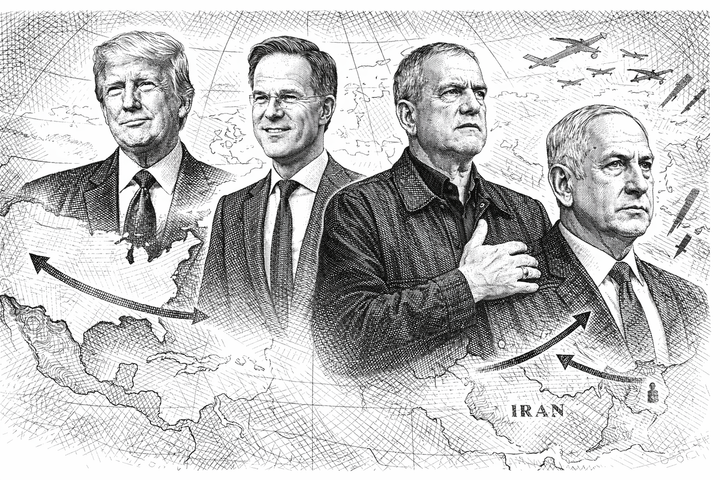
The Islamabad talks did not collapse dramatically. They expired quietly at an unnamed early-morning hour in Islamabad, with a four-minute press conference and a vice president already boarding his plane home. Iran's government said talks would "continue despite some remaining differences." The ceasefire technically remains in place. Nobody has pulled the trigger.
But the failure's structure is clear, and it cannot be bridged by a second round of the same talks. The US wants Iran to forsake nuclear weapons permanently. Iran wants to be recognized as having survived the war on its own terms. These are not positions that can be closed through compromise. They are identity claims. Nations don't negotiate their identities at the Serena Hotel. They fight wars for them.
The ten days between today and the ceasefire's April 21-22 expiry are the most consequential in global energy markets since the 2022 Russian invasion of Ukraine. The arithmetic is stark: Hormuz handles 20% of global seaborne oil. Saudi Arabia's East-West pipeline — the bypass — has been damaged. European airports have eight to ten days of jet fuel reserves. The last pre-closure Hormuz shipment to Northern Europe arrived in Copenhagen on April 11. The Islamabad talks failed on April 12. The ceasefire expires April 21-22.
China may be arming Iran. Russia is feeding the IRGC satellite intelligence. Anthropic has an AI model that can autonomously exploit every major operating system and web browser — and is worried about it falling into Chinese hands. Turkey has indicted Netanyahu for 5,000 years. Hungary is voting today on whether to remain Europe's most consequential dissident. The Pope is saying "Enough of war."
This is the world on Day 43.
Comments ()