
The Daily Geopolitics Brief # 2
A diplomatic pause can't remove a mine. Israel struck Tehran overnight as Trump announced peace talks Iran denies happened. Oil crashed 11%. The war continues. Five days to see if any of it is real.

-- Donald Trump, Truth Social, March 23, 2026 (note: "WITCH" is Trump's original text)
What this signals: Trump walked back the 48-hour Hormuz ultimatum, claimed productive talks with Iran, and gave a 5-day grace period. Iran's Foreign Ministry denied any talks occurred. The oil market moved $13/bbl on this one post. The gap between Trump's claims and Iran's denials is the most important unresolved ambiguity in the war. He told reporters separately: "Otherwise, we'll just keep bombing our little hearts out."
GEOPOLITICAL STORIES
#1: Trump Blinks – The 5-day pause and the talks that may not exist
Just hours before his 48-hour ultimatum expired Monday evening, Trump posted on Truth Social that the US and Iran had been engaged in "very good and productive conversations" about "a complete and total resolution." He gave a 5-day grace period on strikes against Iranian power infrastructure.
The problem: Iran denied everything. Iran's Foreign Ministry stated flatly that "there is no dialogue between Tehran and Washington." Iran's parliament speaker Ghalibaf called Trump's claims "fake news used to manipulate oil markets." Fars and Tasnim framed it as Trump "retreating out of fear of Iran's response."
What actually happened: Israel launched massive waves of airstrikes on Tehran overnight, causing widespread blackouts across eastern, western, and northern Tehran. The strikes – not Trump's rhetoric – produced the de-escalation optics. The 5-day window now runs through Saturday March 28. Egypt and Pakistan both publicly called for diplomatic solutions on Monday, suggesting third-party intermediary activity is real even if the direct channel is disputed.
President Donald Trump extended his deadline for Iran to reopen the crucial Strait of Hormuz to international shipping, saying Monday that the U.S. would hold off on threatened strikes against Iranian power plants for five days. In his announcement on Truth Social, Trump also held out the possibility of a resolution to the war — though Iranian officials denied there were negotiations. Trump's turnaround appeared to offer something of a reprieve after the U.S. and Iran traded threats with potentially catastrophic repercussions for civilians across the region. (Source: U.S. won't strike Iran's power plants for 5 days, Trump says in turnaround on Strait of Hormuz deadline / PBS)
Trump told reporters at Palm Beach International: "We'll at some point very, very soon meet. We're doing a 5-day period. We'll see how that goes. And if it goes well, we're going to end up with settling this. Otherwise, we'll just keep bombing our little hearts out."
#2: Iran has laid mines in the Strait of Hormuz - the physical problem outlasts any deal
CBS News, citing US officials, reported Monday that Iran has laid at least a dozen underwater mines in the Strait of Hormuz. This is separate from and more consequential than the political theater of the ultimatum exchange. Mines are not rhetorical. A ceasefire, even a genuine one, does not clear them. Mine clearance in a contested maritime environment requires weeks of precision naval work.
US forces struck Iranian naval vessels attempting to lay mines as early as March 10 – but evidently did not prevent all mine-laying operations. Iran's Defence Council separately warned Monday that any strike on Iran's coastline or islands will trigger deployment of naval mines across the ENTIRE Persian Gulf. Iran also circulated an IRGC-affiliated Mehr news agency map showing power plants in the UAE, Saudi Arabia, and Kuwait as potential retaliation targets, captioned: "Say goodbye to electricity."
A CBS Pentagon correspondent noted: "Even if the conflict were to end today, those mines could take some time to clear and bring back traffic."
#3. Tehran goes dark - Israel strikes infrastructure while Trump claims peace
As Trump announced "productive talks" Monday morning, Israel was simultaneously launching waves of strikes on Tehran that plunged the capital into widespread blackouts. IDF confirmed it targeted: weapons production sites, IRGC air force facilities, the Ministry of Intelligence headquarters, an emergency command post of internal security forces, and an Iranian army base for missile training and storage.
Iran's internet has been shut down for 92 million people for 23 consecutive days – the longest blackout in the country's history. The division of labor between Trump and Netanyahu is intentional: Trump manages the oil price and diplomatic optics; Netanyahu manages the military end-state. The 5-day pause does not mean Israel stops bombing.
#4: Oil Crashes 11% on the 5-Day Pause - Goldman raises full-year forecast
Brent crude fell from $116.50 (Day 23) to $101.44 by 9 AM ET Monday – a $15/bbl crash, the largest single-day drop since the war began. WTI fell to $98.51, briefly touching $87 intraday before recovering. April WTI futures were down 11.50% at the session low. Stock markets surged on the same news.
Goldman Sachs published its revised forecast Sunday: 2026 Brent average to $85 (from $77), March-April average to $110 (from $98). Goldman assumes Hormuz flows remain at 5% of normal capacity for six weeks, followed by a one-month gradual recovery. In a severe adverse scenario, Brent "would likely exceed its 2008 record" (~$147/bbl).
Goldman Sachs late on Sunday raised its 2026 average price forecast for Brent crude oil to $85 per barrel (bbl) from $77, while raising its West Texas Intermediate (WTI) forecast to $79/bbl from $72. The bank expects extended disruptions to crude shipments through the Strait of Hormuz and increased strategic stockpiling to drive the market into a tighter and more risk‑averse posture. (Source: Reuters)
The market's message: the 5-day pause is real enough to trade, but not real enough to price in structural resolution. Brent settled ~$103-104, not $80.
#5: Houthis making "preemptive moves" - The Red Sea wildcard remains open
The Jerusalem Post reported Monday that the Houthis have begun major movements on five frontlines in Yemen, with possible clashes near Taiz.
 SETH J. FRANTZMAN
Middle East Monitor reported Houthi warnings of escalation if Iran is further targeted. The group did not enter the war on Monday as predicted for the Eid al-Fitr deadline – but their mobilization posture has not reversed.
 Muhammad Hussein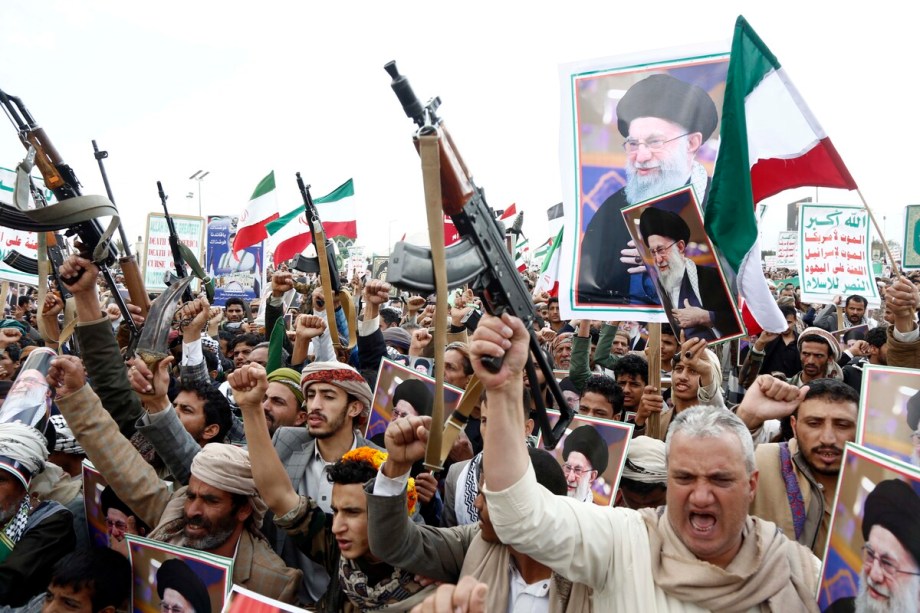
The Soufan Center analysis: Houthis would target oil tankers in the Red Sea to help Tehran achieve a tipping point. With Hormuz mined and the Persian Gulf a parking lot, the Cape of Good Hope bypass is the only functioning route for Asia-bound energy. Houthi activation closes that route.
The gap between what's being said and what's actually happening is the most dangerous space in geopolitics right now.
This brief exists to live in that gap — not to pick a side, but to tell you which facts are settled, which are theater, and which you need to watch.
The goal is simple: to be the one thing in your inbox that you trust to tell you what's actually happening.
Daily. Free for now, with a paid tier coming for deeper analysis.
If you know someone who needs to read past the noise, send it to them.
Comments ()