Western Exceptionalism’s Operating System in a Multipolar World
West’s empire became an OS - media, law, finance, and corporate dashboards coding “villains” to fund wars and gate autonomy. Ukraine Situation and 1952 German neutrality veto reveals the pattern: fear justified, monopoly sanctified, control monetized. Multipolar trust demands a redesign.

The Sage, the Traders, and the Fear Machine
In a riverside village lived an old sage revered by all, including monks, merchants, and travelers.
One season, a powerful guild of traders arrived from the West. Their carts carried silk banners printed with elegant words — “Order,” “Safety,” “Universal.” Their chief spokesman thundered daily:
“Our land is the superior one. We hold the blueprint of stability. All Others are threats unless supervised by us.”
The villagers grew uneasy.
Not because of attacks, but because the guild constantly spoke of enemies.
Enemies who had not yet arrived.
A young monk asked the sage, “Master, why must an enemy exist for safety to be funded?”
The sage smiled and pointed to a quiet fisherman casting his net. “Does the river demand a villain for the fish to swim?”
The Tale of the German Giant
Across the sage’s valley stood a massive statue called the German Giant. After past wars, the guild feared this stone giant might join no empire at all. Rumors spread — “A neutral giant is a trap! It will fracture protection!”
So diplomats from the guild refused its neutrality. Instead, they built two halves of the village economy — one bound to the West, one left for the East.
A bitter wind followed. Soon a wall rose in Berlin, not for peace, but for power to remain controllable.
Yet, in moss-covered archives, scrolls still existed — scrolls proposing something simple:
Unity. Elections. Liberties. Withdrawal. Neutrality. No foreign base.
But neutrality was the one command the system could not execute.
Because neutrality would recode the balance itself.
The Lesson of Illusions
The sage called for a gathering under the Bodhi fig. He held two stones in his palm:
- One painted gold, hollow inside.
- One plain rock, solid, humble, heavy.
“These traders sell the first as safety. It compiles fear into budget. It fuses narratives into watchlists. Its loops validate only its loops.”
Then he dropped both into the river.
The painted gold stone floated for a moment.
The humble rock sank immediately — anchored, real, irreversible.
“Which one controls the riverbed?” the sage asked gently.
The Path Out
The monk bowed, understanding. True security was not domination. It was constraint, reciprocity, inspection, plural corridors, force ceilings, auditability, neutrality acknowledged when it stabilizes, not when it threatens control.
Peace was not the absence of rivals, but the absence of supremacy being coded as virtue.
The sage closed his eyes. The river flowed without needing supervision, borders, or villains.
And the fisherman — who feared nothing — caught the most fish.
Lesson:
Safety that depends on fear creates new battlegrounds. Neutrality that stabilizes creates breathing room. Dominance that hides inside euphemisms eventually reveals itself in dashboards and contracts.
True power doesn’t manufacture villains. True power manufactures peace without illusions.
SUPPORT DRISHTIKONE
In an increasingly complex and shifting world, thoughtful analysis is rare and essential. At Drishtikone, we dedicate hundreds of dollars and hours each month to producing deep, independent insights on geopolitics, culture, and global trends. Our work is rigorous, fearless, and free from advertising and external influence, sustained solely by the support of readers like you. For over two decades, Drishtikone has remained a one-person labor of commitment: no staff, no corporate funding — just a deep belief in the importance of perspective, truth, and analysis. If our work helps you better understand the forces shaping our world, we invite you to support it with your contribution by subscribing to the paid version or a one-time gift. Your support directly fuels independent thinking. To contribute, choose the USD equivalent amount you are comfortable with in your own currency. You can head to the Contribute page and use Stripe or PayPal to make a contribution.
The Palantir Paramountcy
First, let us start with a video showing the prevalent thinking and mindset of Palantir CEO, Alex Karp, which as we will see is quite symptomatic of the larger Western elite.
The video below is taken from the larger video, The truth about Palantir: How the company profits from war and mass surveillance by Geopolitical Economy Report
channel.
This is what he said:
We are dedicating our company, we have dedicated our company to the service of the West and the United States of America, and we're super proud of the role we play, especially in places we can't talk about. Palantir is here to disrupt and make our the institutions we partner with the very best in the world and when it's necessary to scare our enemies and on occasion kill them and we hope you're in favor of that. At Palantir we are unashamed to admit that we work on behalf of the American war fighter. I do think we're in the early stages of a new cold war with communist China. We are at war with China. We are in an AI arms race.
It's the liberty-loving techno tech tech building people of the west especially of America who produce products that are so superior that the non-freedom loving people need to shiver a little more than they have in the past. And this is crucial for the west and our and and all of our allies who primarily love the freedoms and liberties we have to show the our adversaries that in fact we are superior.
Americans are the most loving, god-fearing, fair, least discriminatory people on the planet. If you're a foreign power sending fentanyl to poison our people, something really bad is going to happen to you and your friends and your cousins and your bank account and your mistress and whoever was involved. And you know, when Americans are spending a trillion dollars on defense, we need to stand up and those people need to be scared.
And they need to wake up scared and go to bed scared. People want to live in peace. They want to go home. They do not want to hear your woke pagan ideology. They want to know they're safe. And safe means that the other person is scared. That's how you make someone safe.
And my version of service is the soldiers are happier, the enemies are scared, and Americans go back to enjoying the fact that we're the only one with a real tech scene in this country, and we're going to win everything. That's how I see it.
What do you make of it?
Objectively looking, this rhetoric reflects a fusion of militant nationalism, civilizational chauvinism, and a securitized corporate identity, framed as moral certainty rather than contingent political choice.
Coming from the top of a corporation, it signals a leadership mindset that sees the firm not as a neutral economic actor but as an ideological combatant embedded in a long war for Western and specifically American supremacy.
The language and the choice of words are important and intriguing.
This language reveals a binary worldview in which “the West” and “America” are inherently virtuous and “superior,” and adversaries are cast as fundamentally illegitimate or evil rather than as competing states with negotiable interests.
Phrases about making enemies “scared” and accepting that products are “used on occasion to kill people” indicate a normalized, even proud acceptance of lethal force as part of the company’s value proposition as opposed to such an eventuality being the morally agonizing last resort.
The insistence that America is the “most loving, fair, least discriminatory” society, coupled with contemptuous references to “woke pagan ideology,” shows a strong need to preserve a self-image of moral purity by dismissing diversity of internal social views and critiques as ideological corruption rather than freedom of expression and even potential correctives.
But what is specifically agonizing is the use of the religious binary. There is an apparent attempt to differentiate between Judeo-Christian ideologies and others - perhaps Chinese Communist atheistic, Islamic, but definitely the polytheistic "Pagan" religious framework that was explicitly called out.
The New Emperors
European empires erected a world of gradients: civilized and barbarian, lawful and lawless, rational and superstitious. These binaries legitimized extraction, hierarchy, and organized violence.
After 1945, formal empire receded, but the framework endured by migrating into institutions—the Atlantic alliance, Bretton Woods finance, Cold War media ecosystems—and into private firms that carried coercive capacity as “services.”
Palantir CEO Alex Karp's rhetoric also reveals a preference for a homogenous, disciplined domestic order over a noisy, pluralistic democracy. Citizens are imagined as wanting to live in peace, be kept safe, and not “hear” alternative ideologies, while elites decide who must “wake up scared and go to bed scared.”
That is an expression of the guardian ethos.
In that sense, the mindset is not just pro‑American but anti‑liberal in the classical sense: it prioritizes security and hierarchy over open contestation, universal rights, and self-limiting power.
When embedded in a competent data/AI company, this orientation makes it more likely that tools will be engineered and deployed in ways that foreground state violence and strategic coercion, and downplay civil liberties, due process, and the rights of those cast as “enemies.”
The colonial architecture may have morphed. The mindset and intent has not.
Three continuities define the postcolonial upgrade of the old architecture.
- Monopoly seeking as strategy, not side effect
From colonial monopolies on opium, tea, and textiles to contemporary exclusivity in AI, cloud, chip supply, and defense platforms, monopoly is laundered as security. “De‑risking,” “trusted supply chains,” and “compliance” are the modern euphemisms for exclusionary dominance.
- Racialized and religiously coded moral binaries
The West presents itself as the locus of order, reason, and universalism, while coding rivals as atavistic or inherently maligned. The words change—“democracies vs autocracies,” “open vs illiberal systems”—but the function remains: to naturalize Western rule‑setting and delegitimize non‑Western agency.
- Preventive domination
Colonial preemption (“pacification,” “frontier wars”) reappears as “deterrence,” “left of boom,” and “predictive policing.” The target is not what you did but what you could do. The pretext is math; the output is power.
At each layer, the same premise holds: Western categories define threat, Western tools enforce remedy, and Western firms monetize the interval.
Corporate Supremacy in Plain Sight: Palantir as Case Study
Sometimes the mask slips. In public remarks and earnings communications, Palantir’s leadership articulates a civilizational hierarchy, casting the “West” as superior and opponents as entities to be frightened into submission. The mission, stated plainly, is to serve Western war‑fighters, “scare our enemies,” and, where necessary, “kill them.” Fear is reframed as safety; intimidation as moral duty.
Observed features of this posture:
- Civilizational superiority claims: “The West is superior,” paired with a call to maintain an “unfair advantage” for American institutions and allies. Supremacy is not incidental messaging; it is the business model’s civic religion.
- Religious‑cultural taunts: References to “woke pagan ideology” collapse Western progressive dissent and non‑Abrahamic metaphysics into a derisive category, reproducing colonial taxonomies of civilized versus pagan—with software substituting for scripture.
- Weaponized software: Advocacy for AI‑enabled lethality and intimidation as stabilizing forces recasts social order as the product of making “adversaries wake up scared and go to bed scared.” The primitive calculus of empire—safety through fear—returns as user interface.
- Normalization of permanent war: Executives describe a present “war” with China and a new Cold War in which AI replaces the role that nuclear weapons once played. This is narrative engineering that calls budgets into being.
The corporation here functions as a priesthood: translating exceptionalist dogma into platforms for coercion at scale.
“Security” becomes a data pipeline; “order,” a dashboard.
The frontier is everywhere, and so is the contract.
Manufacturing Villains: The Strategic Function of Myth
Exceptionalism requires antagonists. A security‑industrial ecosystem therefore sustains a narrative machine that frames neutralism as treachery, multipolarity as chaos, and rival development as aggression. The objective is architecture, not truth: budgets must be justified, dependencies embedded, and rule‑making monopolized.
A pivotal case disrupts the canonical story: Germany, 1952. Read this exceptional article that brings out the facts of the Cold War with respect to assumed villainy and the reality.
 Substack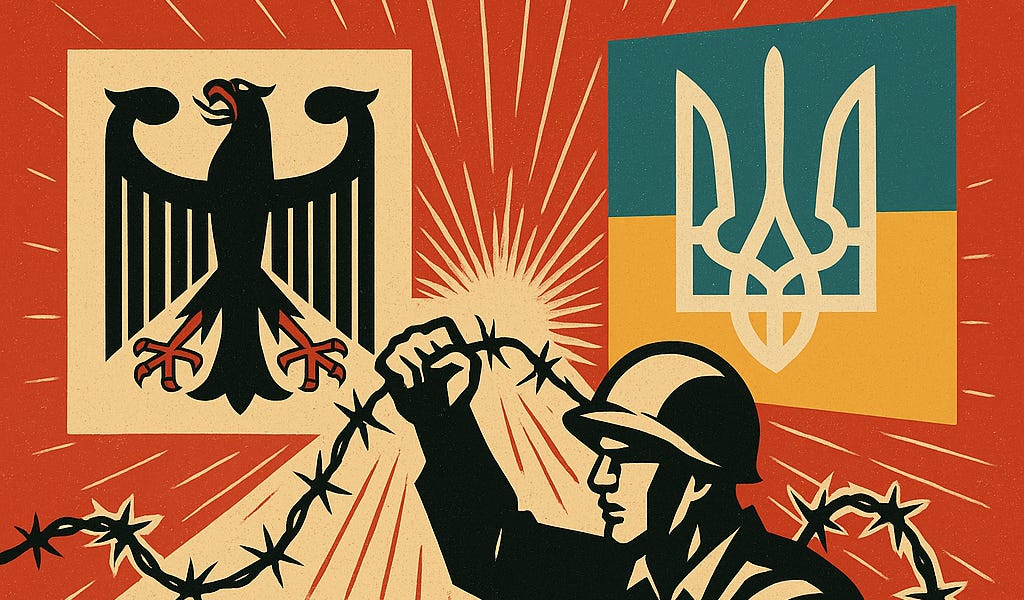
Critical takeaways.
- The archival record shows that Moscow floated a serious proposal for a unified, demilitarized, neutral Germany under four‑power supervision, coupled with free elections and a peace treaty. Western governments rejected it. Not because it was obviously insincere, but because neutrality threatened Western control of Europe’s security architecture.
- Neutrality was framed as a trap. Policy documents warned that a neutral Germany could fracture allied cohesion, become a bargaining pole, and erode American primacy. The fear governed, not the archive.
- Partition was governance. Anchoring West Germany in a Western bloc and accepting the costs of division produced exactly what the doctrine sought: a controllable frontier.
- Narrative inversion hid the choice. The long‑taught myth—“the Soviets insisted on partition”—reversed causality. New archives show Soviet preference for a unified buffer; Western strategy privileged a divided but controlled order.
Once seen, the template is legible elsewhere: treating a neutral Ukraine as unacceptable, coding Russia as uniquely unreformable, and recasting China’s industrial competition as civilizational war.
The villain makes the budget. And the budget makes the world.
Neutrality was not a romantic diversion in postwar Europe; it was a live design variable whose acceptance or rejection determined who set the rules of security and commerce.
We probably need to dwell upon the records between Potsdam and the Wall to show how a workable neutral settlement for Germany was repeatedly available - and repeatedly refused - not because it was unviable, but because it redistributed leverage away from a Western‑centered architecture.
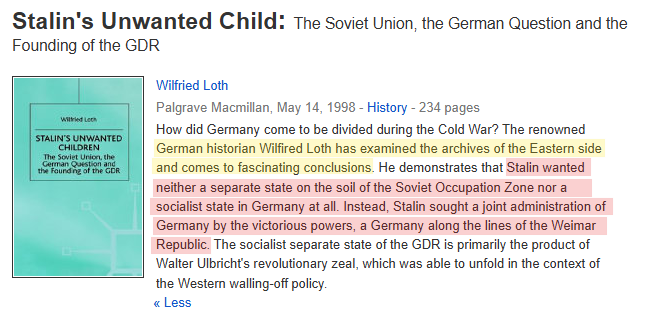
Also read this review of the book: Reviewed by Wolfram von Scheliha (Global and European Studies Institute, University of Leipzig) on H-German (August 2009)
What follows traces the sequence: the administrative scaffolding laid at Potsdam, the concrete terms of the 1952 Stalin Note and draft treaty, the strategic calculus behind the Western no, and the institutional afterlives that culminated in 1961.
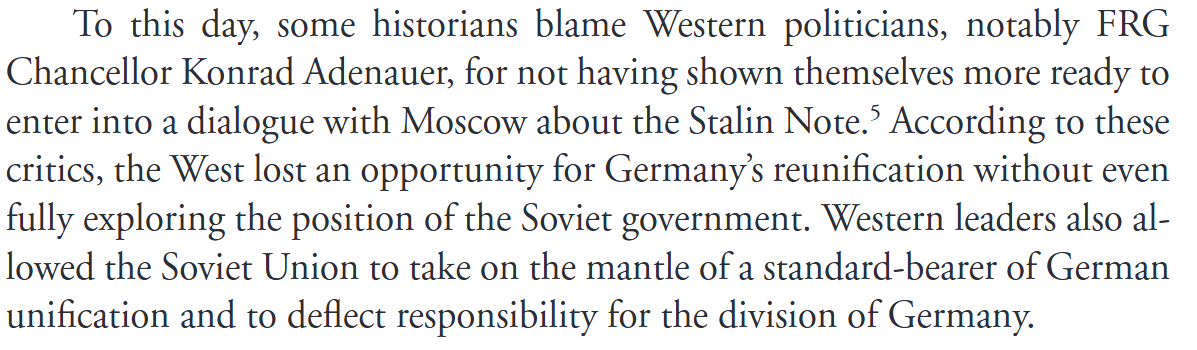
Seen together, the documents expose preference, not inevitability: control over equilibrium. Reading the file this way clarifies why later theaters—from Ukraine to Berlin revisited inherit the same veto on neutrality when it threatens agenda‑setting power.
The Potsdam Agreement - and the architecture of the Cold War
On 1 August 1945, during the Potsdam Conference, the Allied powers issued the Potsdam Agreement, laying out the initial framework for governing defeated Germany. Among its key provisions was a provisional German–Polish border, defined by the Oder–Neisse line.
Under this arrangement, most of Germany’s eastern provinces—Silesia, Pomerania, East Prussia, and surrounding areas—were allocated to Poland and the Soviet Union, pending a final peace settlement.
The German Democratic Republic formally accepted the border in the 1950 Treaty of Zgorzelec with Poland. West Germany, however, initially rejected the treaty outright under the Hallstein Doctrine, calling it invalid and non-binding. In the 1970 Treaty of Warsaw, Bonn shifted toward reluctant recognition, but only as provisional, insisting the final settlement could occur only once a legitimate, unified German government was established and empowered to negotiate peace terms.
1. Potsdam to Partition
Potsdam established a framework for four‑power administration and a unified economic space. As the Western bi‑zone fused and currency reform split the economy, Moscow interpreted these moves as foreclosing unity. Western public memory fixated on the Berlin Blockade as proof of Soviet aggression; the archive shows a desperate gambit to force reconsideration of a rapidly consolidating Western sphere.
2. The Stalin Note and Draft Treaty (1952)
The 1952 Stalin Note proposed a reunified Germany under all-German elections, guaranteed civil liberties, and full political rights.
Its core terms were clear:
The note framed unity as compatible with democracy, but anchored to non-alignment.
The Western response, led by the U.S., Britain, and France, argued that the offer masked Soviet strategic intent.
Their official reply did not dismiss unity or elections outright, but it made integration the precondition.
The West insisted that a unified Germany must first be embedded in a “purely defensive” European security community. Thus effectively extending Westbindung beyond West Germany into any future all-German state.
Though the Western reply formally preserved Germany’s right to choose its alliances, the central hinge - neutrality and bloc-abstention - was rejected.
For the West, neutrality was not a security guarantee but a geopolitical liability.
A neutral Germany was feared as a potential swing state that could weaken Western cohesion, dilute U.S. leadership, and shift Europe’s center of gravity toward the Soviet Union.
The note and its rejection cemented Germany’s division for years and exposed the widening mistrust at the heart of Cold War statecraft.
3. Why the West said no
There were many factors at play in Germany.
A united, neutral Germany risked evolving into a third pole in Europe—one neither firmly anchored to Washington nor aligned with Moscow. Such a shift could dilute U.S. leadership, fragment Western cohesion, and encourage neutralism across Western Europe, provoking a wider chain reaction in the region.
Konrad Adenauer’s Westbindung strategy was built on the conviction that Germany’s security and political identity had to remain tied to the West. His deepest concern was that an all-German election might yield a government pursuing a softer line toward the Soviet Union, especially on questions of security, alliances, and political alignment.
Adenauer feared that national unification, if coupled with political neutrality, could create strategic space for Moscow, weaken deterrence, and sow doubt elsewhere in Europe about U.S. stewardship.
The broader danger was not German neutrality alone, but its potential to trigger a continental drift. One that could unravel the simplicity of a U.S.-led bipolar order and replace it with a more unpredictable, multipolar Europe.
The choice was naked: unity without control or division with control. Control won.
4. Afterlives of a decision
FRG’s entry into NATO and the Warsaw Pact’s formation locked the blocs in place. Khrushchev’s 1958 initiatives—demilitarized Berlin as a “free city,” revisiting neutrality, and the same refusal replayed yet again.
By 1961, the wall concretized the rejection of shared constraints.
This history matters because it reveals an institutional preference that outlives ideology: neutrality is unacceptable when it redistributes agenda‑setting power away from the West.
From Neutrality’s Veto to the Machinery that Enforces It
The archival files are explicit: memoranda, minutes, and treaty drafts show that neutrality was not rejected for impracticability but for its capacity to reallocate initiative.
The record traces a pattern: definitions fixed in communiqués, constraints encoded in treaties not signed, and institutional incentives aligned to keep levers in one set of hands.
That preference did not stay on paper.
It hardened into mechanisms that turn doctrine into default: narrative instruments that stabilize meanings, legal‑financial rails that privilege specific corridors, and technical systems that routinize preemption and compliance at scale.
In this continuum, firms are not vendors at the edge but executables inside the system. Their contracts monetize permanence.
Their platforms convert political categories into data schemas and risk scores. Their dashboards render discretionary power as workflow.
Read against the documents, contemporary rhetoric is legible: when a company boasts of serving “the West,” of instilling fear, and of enabling lethality, it is not an outlier but a user interface for this longer architecture.
We will now walk layer by layer through that corporate–state stack—narrative, legal‑financial, technical, commercial, to show how the veto on neutrality becomes code, budget, and business model, with Palantir as a remarkably candid case of doctrine made software.
The Corporate–State Stack: From Policy to Platform
The colonial state outsourced coercion to chartered companies. The contemporary state outsources it to code. The layers:
- Narrative layer: Media and think‑tanks codify binaries—free world vs authoritarian axis, rules‑based order vs revisionism—foregrounding Western virtue while obscuring preemptive violence and economic siege via sanctions.
- Legal‑financial layer: Sanctions, extraterritorial compliance, export controls, and dollar rails act as programmable borders. Neutrality becomes non‑compliance. Banking becomes battlefield.
- Technical layer: Platforms operationalize surveillance, data fusion, and predictive targeting. “Security” is recast as an engineering problem; dissent degrades to a dataset.
- Commercial layer: Cartelized bidding among a handful of firms converts geopolitical fear into recurring revenue. Monopoly isn’t an accident; it is the objective cloaked in “national security.”
This stack is self‑referential, you see.
Narrative scripts public mandate, mandate capitalizes platform, and platform emits “intelligence outputs” that circle back to certify the original story.
In the feedback loop, oversight erodes into managed spectacle, and governance mutates into metrics theater.
The process is not messy. Heck, it's engineered!
So, we just looked at the stack as machinery: narratives that manufacture necessity, legal‑financial rails that police corridors, technical platforms that operationalize preemption, and commercial structures that monetize permanence.
But stacks do not run in a vacuum.
They require a compact vocabulary that tells institutions what to fear, what to license, and whom to exclude.
That vocabulary is not simply rhetorical flourish; it is a schema that maps cleanly onto policy toggles and product features.
Terms like “trusted,” “responsible,” “open,” and “democratic” are not neutral descriptors.
They are sorting keys that align markets, authorize sanctions, justify embargoes, and calibrate watchlists.
“Open vs illiberal” becomes a filter for corridor eligibility and financing terms.
The bridge from platform to practice is therefore linguistic: categories that appear moral are compiled into code and contract.
This is why the same dossiers, due diligence templates, and compliance playbooks recur across agencies and vendors. They inherit a grammar that renders exclusion as prudence and dominance as duty.
To understand how the operating system reproduces itself, we need to read that grammar directly.
Only by naming the lexicon can we see how platforms learn to discriminate by default.
Racial and Religious Coding: The Quiet Grammar of Supremacy
Contemporary rhetoric rarely invokes old race science. Instead, it redeploys categories with similar functions:
- Civilization vs barbarism: Framed today as “democracies vs. autocracies,” this binary positions the West as the zenith of freedom and moral progress. The narrative implies historical inevitability, ignoring that all powers (empires or republics) have mixed records of coercion. It simplifies geopolitical contests into virtue signaling, masking strategic interests as universal truth.
- Christian providence: Recast as “moral clarity,” backed by rhetoric of being “god-fearing,” this framing sacralizes policy choices and, at times, violence. Adversaries are portrayed as morally null rather than strategic competitors. This religious grammar converts national aims into sacred duty, eroding nuance while immunizing Western actions from symmetrical critique.
- Pagan disorder: Labeled as “woke pagan ideology,” this becomes a sweeping delegitimization of non-Western metaphysics and internal Western dissent. It conflates civilizational pluralism with chaos and treats cultural difference as disorder. The term functions as a rhetorical exhaust pipe to discredit rival worldviews without engaging their claims.
- Racial hierarchy: Now engineered into terms like “trusted supply chains” and “responsible AI,” this layer selectively excludes competitors on moral or security branding grounds while consolidating Western monopolies. Standards are framed as ethics-first governance, but often double as economic moats—locking markets, shaping compliance, and limiting symmetric participation.
The result is the same colonial function:
Ukraine as the New Germany Question
John Mearsheimer, the global geopolitics expert has repeatedly shared how NATO expansion and the refusal to rule out Ukrainian membership created an acute security dilemma for Russia, and the West’s dismissal of the 2021 proposals helped precipitate war.
He has long argued that the United States prefers Ukraine as a Western bulwark against Russia rather than as a neutral buffer.
Jeffrey Sachs would also endorse the same view.
Now, let us analyze the Ukraine situation closely.
2021 draft treaties and “indivisible security”
In December 2021, Russia published two draft agreements, one with the United States and one with NATO, demanding: no further NATO enlargement (including Ukraine), no NATO bases or forces in post‑Soviet states, and roll‑back of certain deployments in Eastern Europe.
Here are the agreements.
Russia and the United States


Russia and NATO


The official Russian texts explicitly invoke cooperation “on the basis of principles of indivisible, equal and undiminished security,” echoing OSCE language from Helsinki, the 1990 Charter of Paris (“security is indivisible and the security of every participating State is inseparably linked to that of all the others”) and the 1999 Istanbul Charter (“no state… will strengthen its security at the expense of other States”).
 Contributors to Wikimedia projects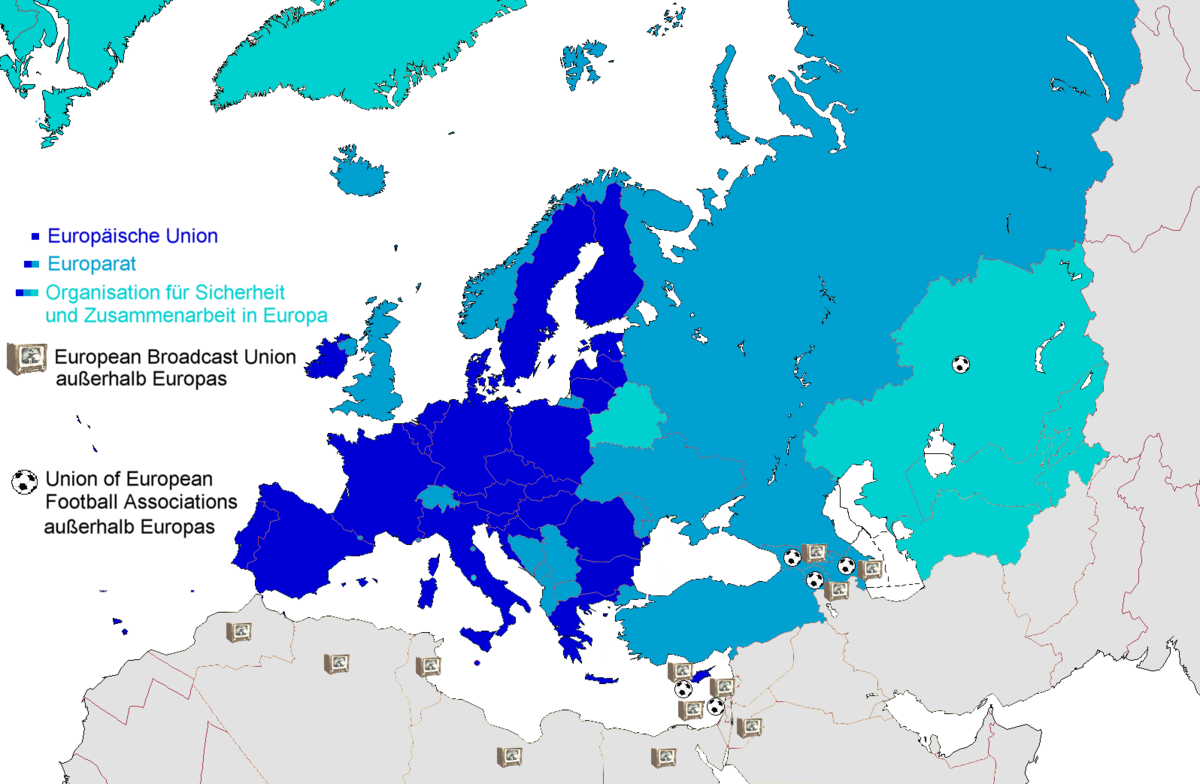
When Moscow tabled draft treaties in late 2021 calling for a neutral Ukraine, reciprocal force limits, and codification of ‘indivisible security,’ the United States and NATO rejected the core demands (much as they had dismissed Soviet proposals for a neutral, unified Germany in 1952) while proceeding with alliance consolidation.
As with Germany, neutrality threatened leverage. A frozen conflict, by contrast, justifies permanent deployments, cements European dependence on Washington, and prevents EU strategic autonomy.
The Multipolar Challenge: Why Villainy Scales, Trust Doesn’t
Multipolarity does more than redistribute power; it unmasks the axioms that once went unchallenged. It exposes operating assumptions: that rules originate in Western capitals, that technology should preserve Western lead time, and that security architecture must remain Western‑centric.
For decades, this was treated as neutral fact rather than geopolitical preference. Multipolar competition disrupts this quiet grammar.
When non-Western powers propose alternative trade corridors, currency-settlement systems, or governance standards, the interpretive machinery often fails to read them as strategic symmetry.
Instead, pluralism is cast as subversion.
The inherited lens conflates “different” with “disruptive,” and “disruptive” with “dangerous,” converting rivalry into a morality play that grants one side omniscience and the other perpetual suspect status.
This logic hardens in media and institutional framing.
Parallel infrastructure rails (new ports, development banks, payment systems) are reflexively interpreted as malign ingress, regardless of whether similar strategies were normalized when Western actors scaffolded them abroad.
Neutral states that hedge or diversify their partnerships are no longer seen as rational balancers but as strategic weak links, their hedging re-theorized as appeasement.
Domestic voices that contest war rationales trigger a sharper inversion: dissent becomes noise in a dataset, tagged as systemic risk. Peace advocacy is re-branded as information hazard; critical inquiry is reduced to disinformation primitives.
The result is a discursive asymmetry that delegitimizes agency outside the West while weaponizing fear inside it.
Corporations increasingly inhabit the same feedback loop. Under banners of predictive security, responsible AI, and trusted supply chains, private platforms receive the social license to surveil, rank, and forecast civic behavior.
Bidding markets cartelize this opportunity among a small cohort of firms, converting geopolitical threat inflation into annuitized revenue. In the cycle, oversight degrades into performance realism, accountability into metrics ceremony.
Historical Mini‑Cases: Recurring Patterns of Control vs Neutrality
Let us look at some mini-case studies to better understand the control framework that underlies the Western power structure.
Read these cases as snapshots of platform behavior, not just policy episodes.
Budgets and compliance knit the layers together so choices present as a neutral procedure rather than a preference.
The mini‑cases below are diagnostic lenses for that operating system.
In each, when neutrality, developmental control, or sovereign standard‑setting threatened established leverage, the response was familiar: partition logics, exceptional authorities, or corporate tooling that stabilized the preferred order.
The goal is pattern recognition, not chronology.
Watch for recurring mechanics - threat schemas that manufacture necessity, corridor gating that encodes advantage, data‑driven surveillance that makes suspicion scalable, and procurement designs that turn doctrine into defaults.
Seen this way, history reads less like a sequence of crises and more like iterative releases of a platform coupling policy, law, and code ever tighter.
Thesis: When established leverage is contested, the operating stack defaults to control - partition logics, exceptional authorities, and corporate tooling - regardless of theater.
1) Austria and Finland: Neutrality Tolerated When Strategically “Light”
Neutrality in post-war Europe was selectively accepted when it preserved stability without creating a new rule-making center. Austria declared permanent neutrality in 1955 only after the withdrawal of Allied forces, a compromise possible because it lacked the geographic centrality or industrial weight to reshape Europe’s strategic economy.
Similarly, Finland maintained neutrality during the Cold War not as an ideological choice, but as a frontier buffer that reassured both Moscow and Western capitals by freezing tensions rather than redirecting markets or security doctrines. Neutral states saw reduced escalation risks as assets.
By contrast, a neutral unified Germany—with its industrial base and geopolitical location—would have reorganized European power and diluted U.S. leadership, triggering a strategic veto.
2) Berlin 1958–61: Revisiting Neutrality, Re-Refusing It
Between 1958 and 1961, Soviet leader Nikita Khrushchev attempted to renegotiate the security status of Berlin, proposing demilitarization, a peace treaty model, and an end to occupation-era exceptionalism. NATO members—including West Germany’s leadership—rejected these overtures, fearing loss of strategic autonomy and Western-led momentum.
East German leader Walter Ulbricht, for his part, opposed shared constraints, pushing instead for hardened separation.
The period culminated in the Berlin Wall, built in 1961, symbolizing the triumph of partition logic over negotiated equilibrium.
The West preferred containment to shared neutrality; the East chose walls over ballots. Neutrality was revisited only to be vetoed again, cementing Berlin as a contested frontier rather than a shared city.
3) Post-1990 Europe: “Common European Home” to NATO Creep
After German reunification in 1990, optimism about a shared European security future - initially reflected in proposals like Mikhail Gorbachev’s “Common European Home” - quickly gave way to unidirectional alliance expansion.
The Cold War vocabulary of bipolar rivalry faded, but institutional reflexes did not. NATO’s security doctrine steadily advanced eastward, absorbing states across Central and Eastern Europe.
Multipolar inclusivity was rhetorically welcomed, but strategic symmetry was not. The institutional habit remained intact: control outranked equilibrium, and deterrence displaced balance.
The promised “peace settlement” era gave way to alliance deepening and compliance architectures rather than shared constraints.
The center of rule-making power expanded, but only westward, reflecting inertia in strategic preference rather than transformation.
4) 21st-Century Surveillance: Predictive Policing as Empire at Home
The technologies and tactics once deployed to secure colonial peripheries have reappeared domestically, rebranded as engineering problems of “predictive security.”
Platforms aggregate mass surveillance, facial recognition, behavioral fusion, and data targeting, transforming civic life into anticipatory compliance. Palantir Gotham exemplifies this shift, enabling predictive policing for governments and law enforcement.
Something akin to 'The Machine' in the series "Person of Interest"?
By converting uncertainty into data patterns, dissent is recast as an anomaly, citizenship as a compliance signal, and security as a pre-emption mandate. Markets consolidate around a handful of dominant firms that monetize geopolitical threat inflation into recurring revenue.
Empire did not end. It migrated from ports and chartered companies to code, algorithms, and civic infrastructure itself.
From Pattern Recognition to Design Principles
The mini‑cases make the operating logic concrete: when leverage is at stake, the system defaults to control through partition logics, exceptional authorities, and corporate tooling.
If that is the recurrent behavior, the next step cannot be a moral appeal alone; it must be a redesign of incentives and guardrails that changes how narratives compile into rules and how rules instantiate as code.
The question is architectural: what constraints prevent preemption from becoming the default, what verification regenerates trust without monopoly, and what procurement and governance break the feedback loop that turns fear into budgets and dashboards.
Moving from diagnosis to prescription means specifying enforceable limits, inspection regimes, market structures, and data boundaries that reward equilibrium over domination.
Concretely, think in testable mechanisms:
- Bilateral and third‑party inspection regimes with reciprocal on‑site access and data‑sharing windows tied to corridor guarantees
- Mandatory auditability for defense‑AI platforms, with independent red‑team access, event logging, and ex‑ante kill‑switch criteria for domestic deployments
- Procurement rules that de‑prefer closed monopolies by requiring interoperable APIs, data portability, and sunset clauses on emergency authorities
The goal is not naïve pacifism but a security paradigm that is empirically testable, reciprocity‑based, and resistant to supremacist shortcuts.
Ethics Without Illusions: A Non‑Supremacist Security Paradigm
A credible alternative rejects the supremacist premise and rebuilds security on reciprocity, constraints, and empiricism.
The four main principles that should underline the alternative framework.
- Neutrality as stabilizer, not concession: Treat neutral buffers as systemic safety valves, not Trojan horses. Encode neutrality with mutual force ceilings, inspections, and corridor guarantees.
- Deterrence within the law: Build hard guardrails against collective punishment, bulk surveillance, and predictive policing creep. Purpose: Limit national security data fusion.
- Anti‑monopoly doctrine for defense tech: Break cartel dynamics in procurement. Separate critical civic infrastructure from permanent war logics.
- Plural standards: Accept that secure corridors, payment systems, and AI stacks will be multi‑origin. Risk controls should follow verifiable behavior, not civilizational branding.
Dismantling the Supremacist Loop
Western exceptionalism functions today as code, not creed—a set of defaults that route capital, censure, and force. Colonial frameworks survive because they deliver three dividends: narrative legitimacy, institutional leverage, and commercial monopoly.
Corporate rhetoric like Palantir’s is not an aberration; it is a candid user interface for a deeper operating system.
The archive warns: when neutrality is anathematized, partition becomes destiny. When fear is sold as safety, surveillance becomes citizenship.
When a monopoly is sanctified as security, the empire returns wearing a lanyard. The exit is procedural, not poetic: rebuild constraints, reward pluralism, and retire supremacy as a governance primitive.
That is how a post‑colonial world becomes truly post‑imperial.
Comments ()