Exposé: The Underlying Game behind Trump's Oil-Crypto Play in Pakistan
Trump has promised massive oil exploration in Pakistan which has no oil reserves. His firm did a crypto deal with Pakistan, a country that has no national assets left. So what is the real deal?

With odd old ends stol'n out of holy writ;
And seem a saint, when most I play the devil.” ― William Shakespeare, Richard III
Long ago, in the mountains of the East, there lay a small village built around a sacred lake. The water was so clear that it reflected the sky, the trees, and even the hearts of men. Travelers said the lake could reveal truth to those who gazed into it with honesty.
One day, a group of strangers arrived. Dressed in fine robes and speaking foreign tongues, they offered the villagers magical mirrors. “These mirrors,” they said, “will show you visions more beautiful than the lake ever could. With them, you can see wealth, safety, and power—all from your homes.”
The villagers, curious and hungry for ease, accepted. Slowly, the people stopped visiting the lake. They gathered around their mirrors, which showed glowing images of gold mines, vast fields, and treasure beneath their own huts.
But the gold was not real.
The strangers began to mark territories around the village. "We must protect the resource zones," they said, building watchtowers and importing guards “for your safety.” They handed out shiny tokens to the villagers, saying, “This is your share of the treasure. Trade with it, live by it.”
Soon, the village that had once lived in peace began to divide. Some fought over mirror visions. Others claimed tokens that they had never honestly purchased. The sacred lake, forgotten and neglected, grew dark and still.
An old monk, watching from the forest, finally made his way into the village. He sat before a crowd and spoke:
“When men chase shadows cast upon glass,
they forget the soil beneath their feet.
When outsiders draw borders around illusions,
it is not land they seek—but your minds.
A nation is lost not when its gold is stolen,
but when its people stop seeking the truth in still waters.”
That night, one child returned to the lake and looked in.
She saw not treasure, but truth:
The strangers had drawn maps on water.
The people had built walls around echoes.
And the only real wealth had been within all along.
SUPPORT DRISHTIKONE
In an increasingly complex and shifting world, thoughtful analysis is rare and essential. At Drishtikone, we dedicate hundreds of dollars and hours each month to producing deep, independent insights on geopolitics, culture, and global trends. Our work is rigorous, fearless, and free from advertising and external influence, sustained solely by the support of readers like you. For over two decades, Drishtikone has remained a one-person labor of commitment: no staff, no corporate funding — just a deep belief in the importance of perspective, truth, and analysis. If our work helps you better understand the forces shaping our world, we invite you to support it with your contribution by subscribing to the paid version or a one-time gift. Your support directly fuels independent thinking. To contribute, choose the USD equivalent amount you are comfortable with in your own currency. You can head to the Contribute page and use Stripe or PayPal to make a contribution.
Trump's Tariff Deals
U.S. President Donald Trump has been on a tear with tariff-trade deals.
In the last week of July, he did deals with the EU and Japan.
There was one interesting factor in both these cases. The EU and Japan have to invest in the US to lower the tariffs forcibly.
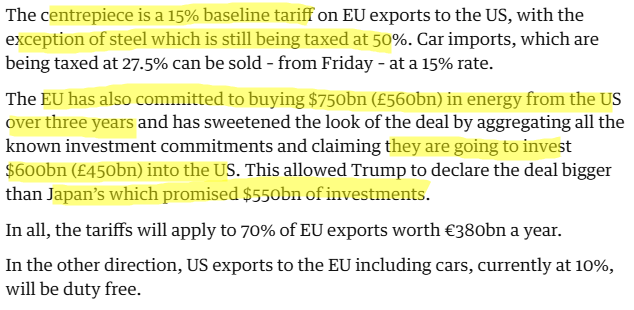
The EU deal has secured $1.4 trillion in American-bound capital over the next three years. Tariff reductions are no longer given for free. Countries must buy their way into the American market via investment pledges. Japan paid $550 billion to get similar treatment. Now, 75+ countries are rushing in with proposals to avoid future U.S. tariffs.
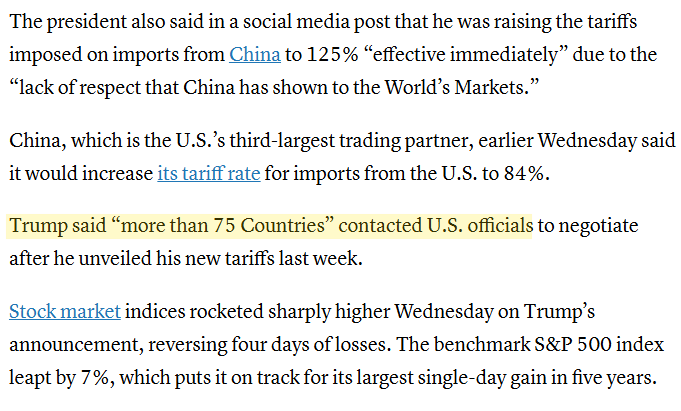
A global auction of loyalty?
Interestingly, the Trump-EU deal exempted specific sectors from tariffs:
- Aircraft & components
- Semiconductor equipment
- Critical chemicals
- Some agricultural products
Why are they significant? They sure aren't random. They are critical supply chains being secured for long-term control by the American bloc.
End of Health of the EU citizens
Then there is the clause on food standards.
The EU will open new market access for U.S. Alaska pollock, Pacific salmon and shrimp, subject to quotas. It will also offer improved access for U.S. soya bean oil, planting seeds, grains, and nuts as well as processed food such as tomato ketchup, cocoa, and biscuits, again subject to quotas. Furthermore, the EU states that it will cooperate with the U.S. on automotive and food safety standards, while maintaining its existing rules. Cooperation could take the form of streamlining certification for U.S. pork or dairy products.
The phrase "streamlining certification for U.S. pork or dairy" means:
- Mutual recognition of U.S. safety inspections and certifications.
- Lower resistance at customs and regulatory checkpoints.
- Possibly bypassing the EU-level revalidation of certain products.
Even if the EU retains "its current rules," trusting U.S. standards as equivalent or sufficient undermines the actual enforcement of EU food purity regulations.
What would this mean?
a. Infiltration of GMO and Pesticide-Heavy Products
- While GMO bans may formally remain in place, processed food items containing GMO-fed meat, dairy, or additives may enter via loopholes.
- The U.S. agri-lobby has long pushed for such “mutual recognition” to break EU resistance to American agro-exports.
b. Erosion of EU Food Sovereignty
- Over time, regulatory convergence creates dependency on U.S. supply chains and certification processes.
- If certification is “streamlined,” U.S. agribusiness can flood European markets with pork, chicken, and dairy that don’t meet EU-origin standards.
c. Public Health Backlash in Europe
- Expect massive protests and political blowback — especially in France, Italy, and Germany — where consumers are very aware and vocal about food purity.
- Green parties and farm lobbies will likely mobilize against “American food imperialism.”
Europe’s vaunted Precautionary Principle is under siege. The "Anglo-American agro-industrial complex" is pushing its influence into the EU's last remaining regulatory strongholds. What was once a trade firewall is now being turned into a revolving door.
This clause directly threatens the principle of Purity, undermines PDOs, and violates the Precautionary Principle.
"Purity" in the European context refers to the high-quality, minimally altered, and naturally sourced nature of food products. This is both a cultural value and a regulatory expectation. The concept of "clean label" directly embodies these ideas of purity.
“Clean Labelling” is an initiative driven by consumer demands regarding easy understandable food labels, and foods containing natural and familiar ingredients and free from additives. Food business acknowledge such demands and are increasingly developing products and designing labels towards “Clean Label” market demands. However, there are no generally accepted standards for “Clean label”; related terms include e.g. certified organic foods, free-from, and no-additives among others. (Source: The Age of Clean Label Foods/Charis M. Galanakis)
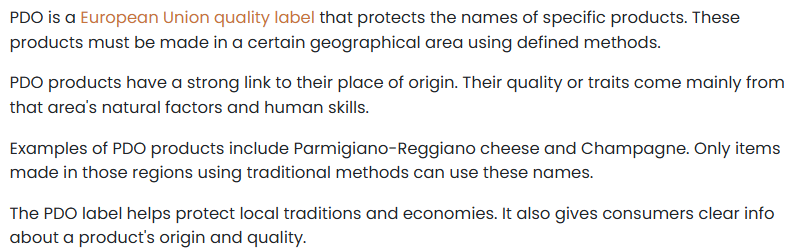
The Protected Designation of Origin (PDO) label is a legal certification granted by the European Union to foods that are:
- Produced,
- Processed, and
- Prepared in a specific geographic area, and whose quality or characteristics are linked to that origin.
Precautionary Principle: is a core philosophy in European regulation, which can be explained as follows.
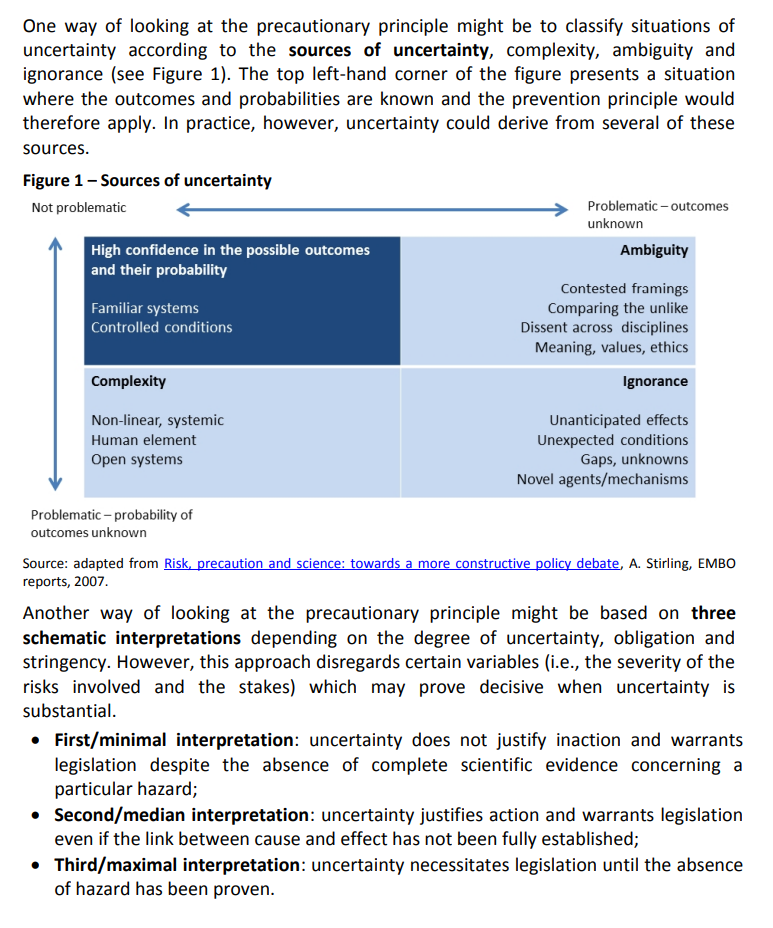
In practice:
That is the most fundamental difference between the EU and the US.
By “streamlining certification,” the EU is inviting in the Trojan Horse of deregulated, chemically-enhanced American products. European farmers and small producers will be undercut by large-scale, subsidy-backed U.S. meat, dairy, and processed food products.
Paying Protection Money
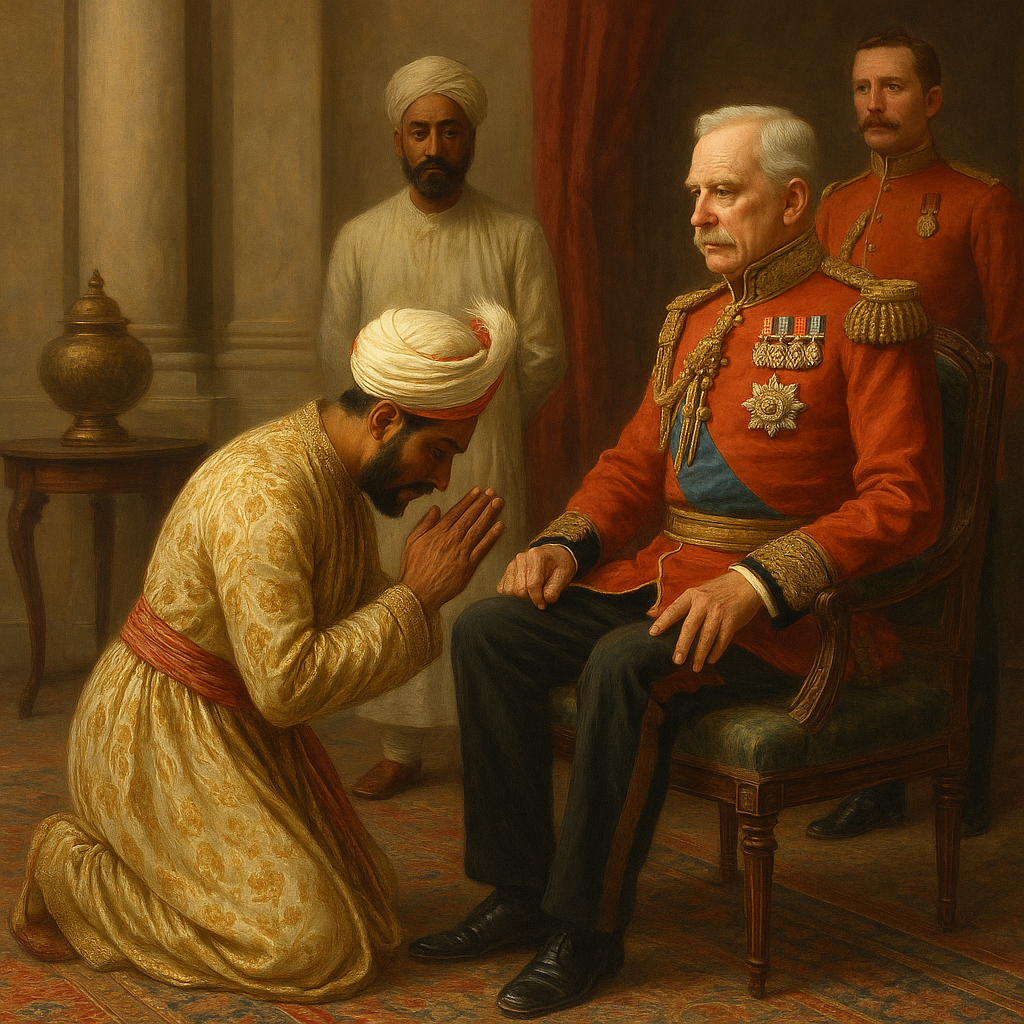
Europe serves as a vital forward military-industrial base for the United States, strategically positioning American influence against Russia and China. Deep economic ties reinforce this geopolitical alignment, as European industries are financially dependent on access to U.S. markets and technology.
Concurrently, political and regulatory bodies in Brussels often advance American strategic objectives. These policies are typically framed as independent, multilateral initiatives or rigorous standards, effectively masking their alignment with U.S. foreign policy interests.
This creates a dynamic where European power is subtly leveraged to support transatlantic goals led by Washington.
The era of free trade diplomacy is over, replaced by a transactional model where nations must pay for market access through strategic investment and military compliance.
This new economic statecraft, of using tariffs, mirrors the tribute collection practices of old empires, compelling partners to contribute to American interests.
The core objective is a fundamental restructuring of global supply chains. The U.S. is systematically shifting critical choke points in energy, technology, and defense manufacturing away from its adversaries.
Control is being consolidated within a sphere of trusted allies, creating a more resilient and hierarchical economic bloc under American leadership.
But more importantly, it is a rather interesting framework for neo-colonization.
So there is a pattern with Donald Trump. He acts crazy; however, he's anything but. He is busy creating a colonial empire for the US.
Trump's Unhinged Rants Against India
In a stark chronology of events, a significant financial deal was finalized in Islamabad on April 26th, 2025, just days before a deadly terrorist attack on pilgrims in Pahalgam.
The agreement partners the newly formed Pakistan Crypto Council (PCC), a national body established to legitimize and regulate digital currencies, with World Liberty Financial (WLF), an international firm specializing in blockchain finance.
Their landmark deal aims to establish a formal cryptocurrency market in Pakistan. This could attract significant foreign investment while potentially creating a financial infrastructure designed to operate outside the purview of traditional global banking and oversight systems.
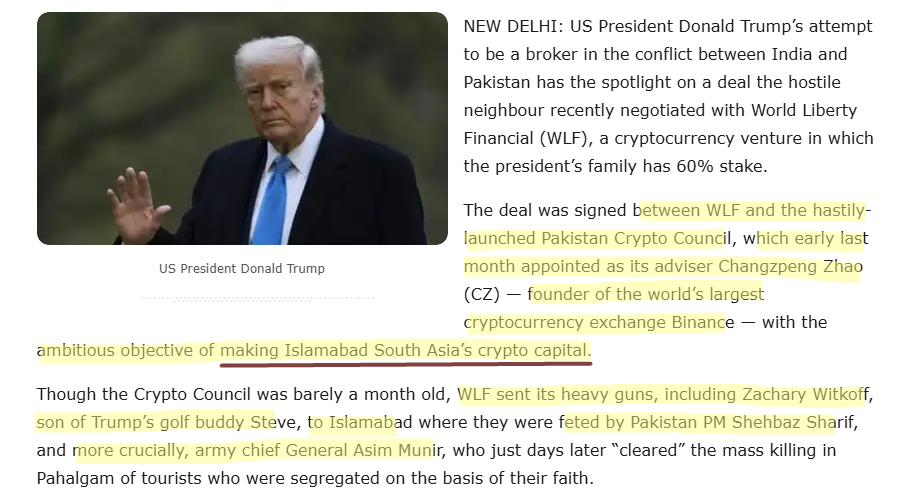
The strategic importance of the deal with World Liberty Financial (WLF) was underscored by the direct involvement of Pakistan's military leadership. In a highly unusual move for a commercial venture, Army Chief General Asim Munir personally welcomed the WLF delegation and participated in closed-door meetings with Prime Minister Shehbaz Sharif.
This coordinated military-civilian effort suggests the project's significance extends beyond financial innovation. WLF, in which Eric Trump, Donald Trump Jr., and Jared Kushner hold a 60% majority stake, aims to build out Pakistan's blockchain infrastructure, including stablecoins and tokenized assets.
The details of this story were discussed in our video.
So what is the deal trying to accomplish?
Officially, the agreement allows World Liberty Financial (WLF) to integrate blockchain technology across Pakistan's financial institutions, publicly framed as a move to enhance “financial inclusion and digital transformation.”
However, following the deadly Pahalgam terror attack, the deal has faced intense scrutiny. This prompted WLF to issue a press statement insisting there were “no political motives” behind the partnership.
Despite the growing controversy surrounding the deal and WLF's ownership by members of the First Family, both the Trump family and the White House have so far maintained a conspicuous silence on the matter. (Source: "Deal In Pakistan With Links To Donald Trump, Asim Munir Under Scrutiny: Report" / NDTV)
Read that statement in the link carefully.
But in geostrategic financial terms, it signals the construction of a shadow financial architecture, and potentially, a financial dark web under the guise of fintech experimentation.
Here's the bizarre thing. There are no real national assets left with the Pakistani government!
The Pakistan International Airlines (PIA), Power Distribution Companies (DISCOs), as well as First Women Bank and House Building Finance Corporation, even the Roosevelt Hotel in New York - have been on the chopping block.
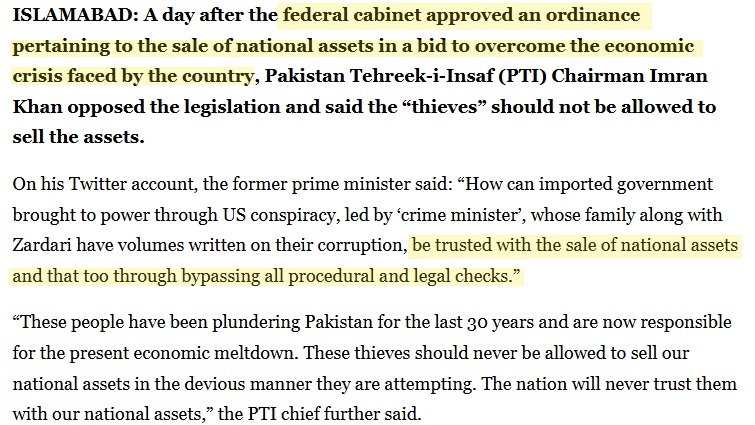
Let's look at the two links and stories shared above - one from Dawn (leading Pakistani daily) and NDTV (leading Indian news channel).
- As per Dawn (2022): Pakistan’s state-owned assets—including power plants, airports, oil fields, and government land—have been either privatized, pledged against IMF loans, or sold to Chinese firms (under CPEC).
- As per NDTV (2024): A Trump-linked group (DJT crypto partners) struck a deal to “tokenize” Pakistan’s national assets via a blockchain infrastructure—with Pakistan’s military and crypto council involvement, bypassing civilian oversight.
So, where's the catch?
The real game here is not to "attach" the national assets in Pakistan but Tokenization as a geopolitical infrastructure. "Tokenization" here is NOT about ownership of physical assets.
It is about building a digital financial infrastructure in Pakistan that:
- Replaces the traditional banking system (which is sanctioned, hollow, or under IMF scrutiny)
- Runs on stablecoins or crypto tokens
- Gives strategic control to foreign actors, particularly U.S.-aligned financial and intelligence networks
Even if physical assets are gone, the representation of these assets as digital tokens can still be:
- Collateralized
- Traded
- Fractionally owned
- Monetized in a shadow economy
Think of it as owning the control layer over digital representations of strategic infrastructure—even if the asset itself is owned by someone else (like China or UAE).
'Massive Oil Exploration' in Pakistan
There is another unhinged direction that Trump has taken. Massive Oil exploration in Pakistan by the US companies.
Oil reserves and production so huge that Pakistan will start selling it to India as well! Really?
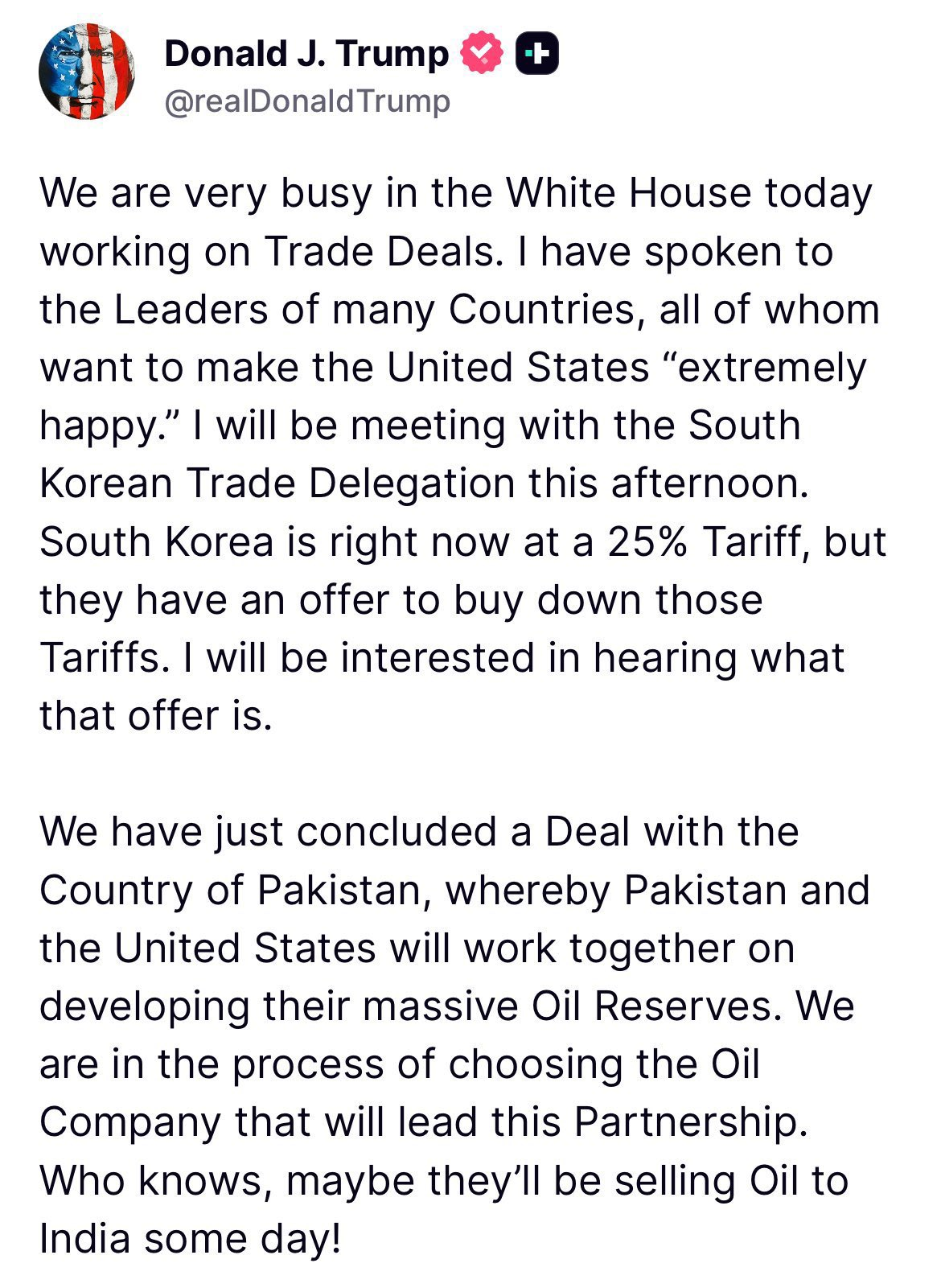
The announcement caught many by surprise – not least because Pakistan is not known to sit on any bonanza of oil. In fact, Pakistan’s proven crude reserves are only about 234–353 million barrels (placing it around 50th in the world).
Past drilling attempts, including a highly anticipated offshore well in 2019, came up empty.
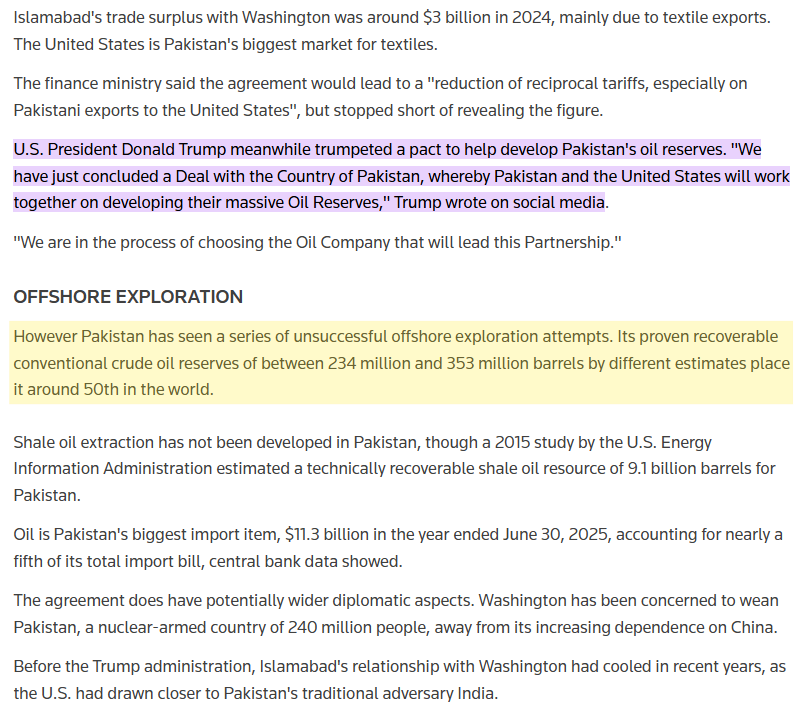
So Trump’s portrayal of “massive” reserves and the oil deal could at best be a smokescreen!
Oil Exploration as a Ruse for Subversion
Through the last 100 years, the offer of oil exploration has been a ruse for massive subversive actions by the US administrations.
Let us assess some examples.
NIGERIA: Oil as a Catalyst for Militarization and Destabilization
In Nigeria's resource-rich Niger Delta, vast reserves of light sweet crude became a catalyst for decades of militarization and strategic destabilization. Dominated by multinational corporations like Shell and Chevron, a post-colonial structure preserved foreign control over the region's wealth, largely ignoring or displacing local communities. This systemic exploitation fueled the rise of militant resistance groups, most notably the Movement for the Emancipation of the Niger Delta (MEND).
This local unrest provided the perfect pretext for a violent security response. Oil companies created their own private security arms, bolstered by Western mercenaries and contractors, while the Nigerian military launched brutal crackdowns, like the infamous 1999 Odi massacre, all under the official guise of protecting vital oil infrastructure.
The real objective, however, was never simply security; it was the consolidation of foreign corporate control over land, pipelines, and ports. Western governments backed corrupt local elites to ensure this exploitative status quo remained intact, while intelligence agencies used oil blocks as cover for clandestine surveillance operations.
IRAQ: The Invasion Disguised as Liberation (2003)
The 2003 invasion of Iraq, publicly justified by the hunt for Weapons of Mass Destruction that were never found, is viewed by many critics as a textbook case of resource warfare. The official pretext proved baseless, but the economic motives were clear: Iraq possesses the world’s fifth-largest oil reserves, and Saddam Hussein had directly challenged the U.S. petrodollar system by threatening to sell oil in euros.
The invasion’s true priorities were starkly revealed on the ground. As Baghdad’s National Museum was left to be looted, U.S. forces moved decisively to secure the Oil Ministry. In the war's aftermath, American oil giants like ExxonMobil, Chevron, and Halliburton gained access to fields that had been closed to them for decades. This was followed by a strong U.S. push for the 2007 Iraqi Oil Law, a policy aimed at privatizing the industry and granting long-term contracts to Western firms.
While the operation plunged Iraq into a devastating sectarian civil war, it was a success for corporate interests. Western companies like Shell and BP secured lucrative deals as permanent U.S. military bases were established near critical oil infrastructure. Critics often point to the operation's alleged early name, "Operation Iraqi Liberation" (OIL), as a Freudian slip revealing the war's true, resource-driven agenda.
So, the U.S. claim of discovering massive oil fields in Pakistan, a nation not known for major commercial reserves, appears to be a strategic pretext echoing historical playbooks.
This narrative strongly mirrors the WMD myth used to justify deploying advanced military equipment into Iraq. It also recalls how militancy in Nigeria was used as a pretext to militarize key oil corridors and ports, a model that could easily be applied to Gwadar.
The physical presence of oil is irrelevant; the only prerequisite is the narrative of its discovery.
Once the story of "oil exploration" begins, a predictable sequence is set in motion. Drones arrive, officially for "surveying," but actually for military reconnaissance. Advanced weaponry is imported under the euphemism of "pipeline protection gear." Sophisticated surveillance hubs are established, masked as "data analysis centers."
Ultimately, this entire military and intelligence apparatus is legitimized. Destabilization ceases to be a covert action and becomes an open policy, justified under the unimpeachable guise of "protecting foreign investment."
Now, let us revisit history and examine another aspect: the financial cloak for subversion.
Another time when a massive financial vehicle was created on global scale that facilitated CIA's crimes along with the terror network of Pakistan, Iran and the Middle East.
BCCI and its Web of High Crime Backed by CIA
The Bank of Credit and Commerce International (BCCI) was a multinational bank founded in 1972 by Agha Hasan Abedi, a Pakistani financier. It was headquartered in Luxembourg with major offices in Karachi and London. BCCI was touted as a bank with a mission to serve the economic development of the Third World. It grew rapidly, expanding into 73 countries with over 400 branches and reportedly over $20 billion in assets at its peak. (Source: The Guardian)
The Bank of Credit and Commerce International (BCCI) was arguably the most sophisticated financial crime network in modern history, deeply intertwined with Pakistani intelligence, CIA covert ops, Gulf royal families, arms dealers, and terror networks. It was instrumental in the funding of jihadi operations in Afghanistan during the 1980s.
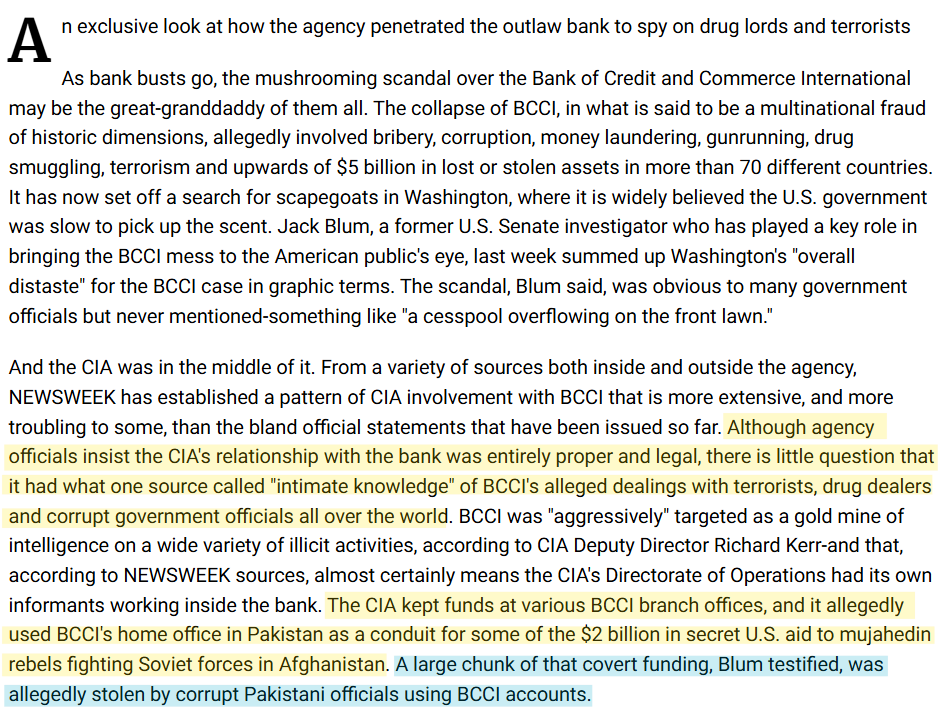
Despite sanitized versions of the story of CIA and BCCI, the Senate Foreign Relations Subcommittee on Terrorism's hearings acknowledged "a wide disparity between the CIA's official account of critical relationships between BCCI and persons associated with the CIA, and the information available from other sources, including BCCI's own records."
The then senator John Kerry shared his verdict on the BCCI.
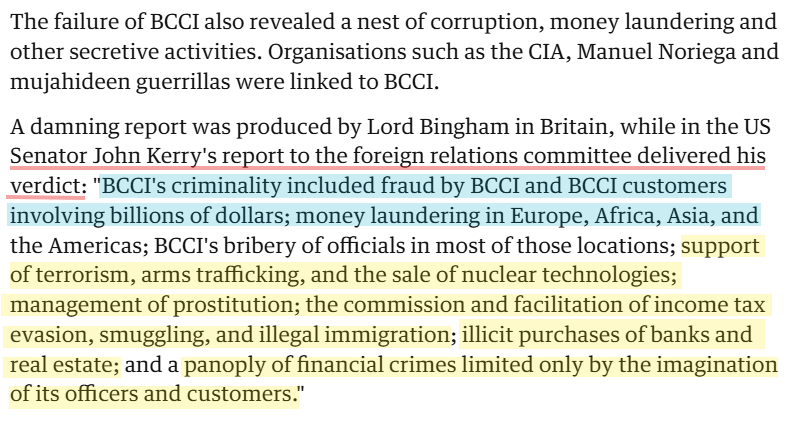
There was no crime imaginable that this BCCI had not facilitated and funded.
And, Pakistan's terror network was its greatest beneficiary.
What role, if any, BCCI may have played in Pakistan's maelstrom of drugs, guns and money has been the subject of considerable speculation during the last several weeks. Several U.S. senators and a congressional investigator have charged that BCCI may have helped Pakistani army officers steal weapons from the U.S. covert pipeline to Afghan rebels or that the bank may have helped Pakistani officers launder heroin profits. (Source: "Pakistan's Illicit Economies affect BCCI" / Washington post)
Zia-ul-Haq, the Pakistani dictator, was especialy close to the BCCI.
Indeed, foreign dictators couldn’t get enough of BCCI’s services; at one point, according to one analysis, BCCI grew so close to Pakistani despot Muhammad Zia-ul-Haq that “it is almost surprising that the dictator himself didn’t get a job with the bank.” (Zia’s son ended up getting a job as vice president with Bank of America, which was one of BCCI’s American partners.) (Source: The Dictator-Run Bank That Tells the Story of America’s Foreign Corruption / Foreign Policy)
Heck, every smuggler, trafficker, and arms dealer was using BCCI as the bank of choice.
Both Saudi businessman Adnan Khashoggi and Iranian arms merchant Manucher Ghorbanifar were central agents of the United States in selling arms to Iran in the Iran/Contra affair. According to the official chronologies of the Iran/Contra committees, Khashoggi acted as the middleman for five Iranian arms deals for the United States, financing a number of them through BCCI; and Ghorbanifar was the individual who conceptualized the arms-for-hostage negotiations, and provided the initial channel to the "Iranian moderates" with whom the Reagan Administration negotiated prior to delivering shipments of U.S. TOW missiles and HAWKs to Iran in 1985 and 1986. Khashoggi was served as the "banker" for arms shipments as the undercover scheme developed in 1985 and 1986. Khashoggi himself said he advanced $1 million in August 1985 to "get the deal going." According to his own and other published accounts, he provided some $30 million in loans altogether, depositing money in a Swiss bank account controlled by Lake Resources, the company run by former White House aide Oliver North, who played the pivotal role in the operation involving the arms sales and diversion of funds to Nicaraguan Contra rebels. Both Khashoggi and Ghorbanifar banked at BCCI's offices in Monte Carlo, and for both, BCCI's services were essential as a means of providing short-term credit for sales of arms from the U.S. through Israel to Iran. Khashoggi's use of BCCI for the Iranian arms sales was first described, in passing, in an Iran/Contra committee deposition on June 8, 1987, describing the movement of $10 million from Credit Swisse which would to through BCCI four times to produce $40 million of sales "and therefore, additional profit." In the same deposition, the witness, Khashoggi business manager Emanuel Floor, described Ghorbanifar as stating, "these are my associates," and writing down the name, "BCCI." Floor described BCCI as acting not merely as Ghorbanifar and Khashoggi's bank for the purpose of these transactions, but as an actual partner in the Iranian arms deals. (Source: Subcommittee hearings on BCCI, The CIA and Foreign Intelligence)
CIA station chiefs used BCCI branches.
Richard Kerr, the C.I.A.'s deputy director, told a student audience that the agency had used the international bank for normal legal transactions. "In terms of using B.C.C.I., we, C.I.A., used it as anybody would use a bank, not in any illegal way and not in any way that the bankers knew the objective of it," Mr. Kerr said in response to a question posed by a student at the annual meeting of the National Young Leaders' Conference, a group of high school seniors from around the country. It was the first time that a C.I.A. official had openly confirmed the agency's use of the bank, although the connection has been reported in newspapers, including The New York Times. Describes Use of Bank. Mr. Kerr, who is the second-highest official in the C.I.A., added that the agency used the bank "the same way if you have a bank account, you use your bank, as a way to move money." (Source: "Intelligence Agency Used B.C.C.I., Official Says" / New York Times)
The whole talk about "normal legal transactions" and positioning BCCI as a "normal bank" is clearly dishonest characterization given the revelations that have been detailed out in several reports.
Some have naively asked - "How come the CIA and other intelligence agencies missed the whole BCCI game that was going on?"
Short answer is - They didn’t!
It existed as long as it was useful in bleeding the USSR, empowering Pakistan’s ISI, and maintaining covert influence in Asia and the Middle East. Once the Cold War ended and the damage became indefensible, it was allowed to die.
U.S. Federal Reserve, Bank of England, and New York DA Robert Morgenthau all raised concerns from the early 1980s. But investigations were stonewalled, slowed, or buried.
 Victor F. Zonana
And then in 1991, BCCI was suddenly brought down.
End of Usefulness - as the Soviet Union Collapsed
By 1991, the geopolitical landscape had undergone a fundamental change.
This shift allowed investigators, who had been stonewalled for years, to act finally. Key figures, such as Manhattan District Attorney Robert Morgenthau and investigative journalists, including Jonathan Beaty of Time Magazine, had been pursuing the bank relentlessly. With the political and intelligence cover removed, their efforts gained traction.
In July 1991, the Bank of England, armed with an auditor's report confirming massive fraud, finally moved to freeze BCCI's assets and shut down its operations globally.
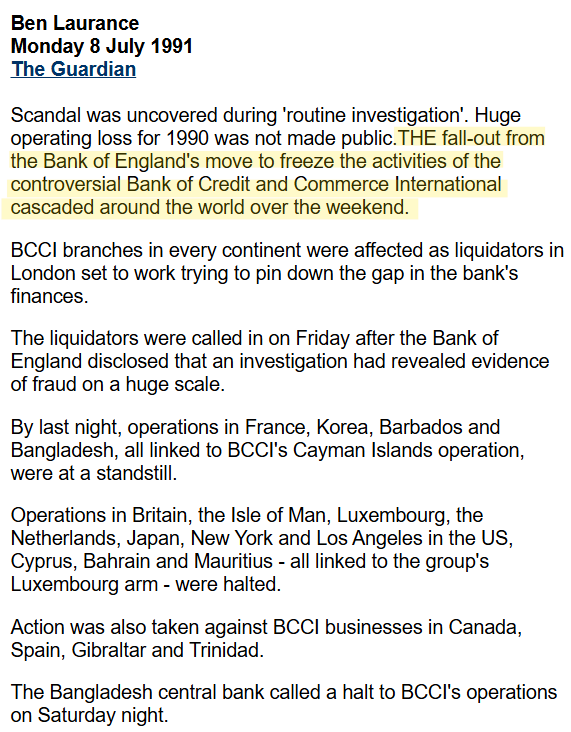
We want to share some authentic sources for this topic that we have also perused.
CIA Involvement: The Kerry Committee Report confirmed that the CIA used BCCI accounts for numerous purposes, including paying informants and funneling millions of dollars to the Mujahideen in Afghanistan to support their war against the Soviet Union.
Lack of Audit Trails: The primary appeal of BCCI to intelligence agencies and criminal organizations alike was its global reach and deliberate lack of transparency. It was specifically designed to operate in the shadows, making it the perfect vehicle for "black ops" that required no official paper trail.
Cold War Financial Hub: Your summary is accurate. BCCI effectively became the unofficial bank for a range of covert Cold War operations, connecting the CIA, Pakistani intelligence (ISI), and Saudi funds to arm and support anti-Soviet forces.
Excerpt: “The CIA's use of BCCI was extensive and often knowingly in violation of both law and internal regulation. The agency knew BCCI was laundering money and still used it to funnel funds to the Afghan rebels and others.”
BOOK - "Dirty Money" by Mark Pieth (2007) Key Insights:
Financial Engine for CIA/ISI: It is well-documented that BCCI was the primary financial institution used by both the CIA and Pakistan's Inter-Services Intelligence (ISI) to channel funds and weapons to the Mujahideen during the Soviet-Afghan War.
Strategic Priority: The statement that "Western intelligence often looked the other way" because defeating the Soviet Union was a higher priority is the central conclusion of most serious analyses of the scandal. This view is strongly corroborated by official sources, including the 1992 U.S. Senate Kerry Committee Report, which detailed how the imperative of the Cold War led intelligence agencies to ignore and, in effect, sanction the bank's massive criminal activities.
With this background, let us ask the question that needs asking.
Is Trump's Pakistani Crypto the new BCCI?
Look closely and you will see that the cryptocurrency ecosystem that WLF led consortium is building along with the Pakistan Crypto Council (PCC) is rapidly evolving into a modern-day Bank of Credit and Commerce International (BCCI), creating a new architecture for shadow finance.
Today’s crypto deals, if designed to bypass accountability and fund covert operations, mirror BCCI’s architecture. If not countered, a new digital BCCI may be in the making. Without borders, without branches, and with exponentially faster damage potential.
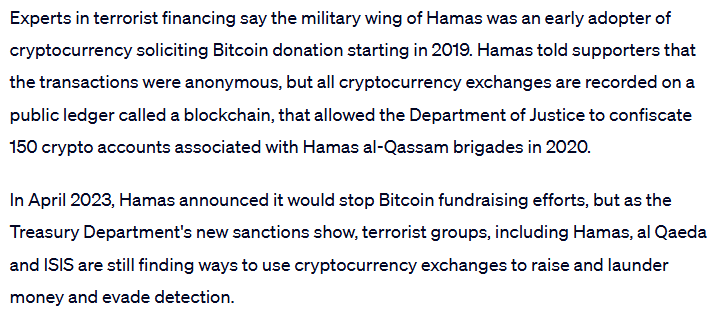
The mechanism has shifted from physical bank branches to borderless code; stablecoins like Tether provide dollar-pegged liquidity, while privacy coins and anonymous wallets ensure transactions remain untraceable.
Terror groups and rogue states have already adopted this digital frontier for laundering funds and financing global operations.
It's like deja vu!
The alleged involvement of new influential players, such as Trump-linked financial ventures, suggests a contemporary evolution of this playbook.
Ultimately, this trend highlights the crucial role of shadow finance in geopolitical maneuvering.
Just as BCCI operated as a state-corporate-intelligence project, today’s crypto underground provides the plausible deniability and untraceable funding required for covert actions and modern "empire games."
The technology has changed, but the strategic need for an unregulated financial back-channel endures.
What about China?
The question that we will all have is where is China in all this?
That's a fascinating exploration for us.
According to recent reports, Binance founder Changpeng Zhao (CZ) has been appointed as an "informal advisor" to Pakistan's nascent Crypto Council. Concurrently, Binance's platform reportedly facilitated a critical stablecoin conversion funnel for Pakistani traders and their intermediaries in the Gulf states.
This arrangement has led some analysts to suggest that Binance’s vast infrastructure may have been co-opted or, at the very least, surveilled by cyber-intelligence units linked to the Chinese state. The situation mirrors the long-standing allegations against Huawei, where a nominally private technology giant has been widely suspected of acting as a data sieve and strategic instrument for the Chinese Communist Party.
So the question is - Is China colluding with the US in Pakistan?
First, both superpowers share a common goal of containing Russia.
Moscow's re-emergence as a trans-Asian energy and arms supplier threatens U.S. global influence and China's dominance in Central Asia. A potential Russian southern corridor to the Indian Ocean through Pakistan or Iran is a scenario that both Washington and Beijing have a vested interest in preventing.
Second, this arrangement functions as a "divide-and-control" strategy in Pakistan. By jointly managing the country's stability through a "dual-key" crypto channel—where U.S.-linked entities might provide capital while China-linked platforms like Binance offer technical infrastructure—they prevent each other from gaining full control. This system creates a fragile, mutually dependent balance of power.
Finally, this is underpinned by converging financial interests. U.S. elites in the Beltway and Silicon Valley are heavily invested in crypto, making a managed, cooperative approach to giants like Binance preferable to a destabilizing crackdown. For Beijing, this partnership provides a crucial tool to monitor financial flows from the Gulf and Pakistan, while also creating a potential back-channel for financial diplomacy with Washington.
matters
Reality of China-Russia "romance"
China and Russia, in reality, aren't what they seem to be in public.
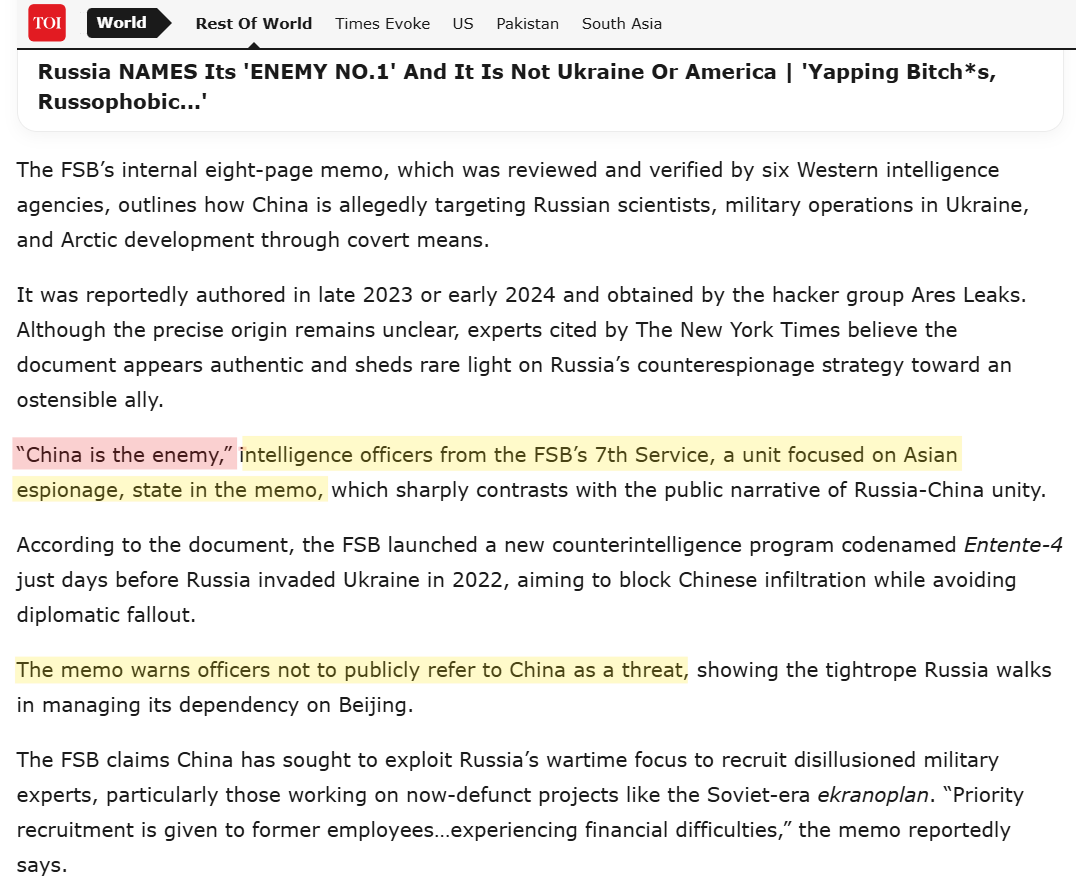
Behind the façade of their strategic partnership, significant friction is reportedly emerging between Moscow and Beijing. According to an internal Russian intelligence document recently obtained by The New York Times, some Russian officials now view China as "the enemy." They believe Beijing is quietly laying the groundwork to support future territorial claims against Russia.
These concerns are amplified in the digital realm. Cyberanalysts report a marked increase in hacking activities by Chinese government-linked groups targeting Russian entities. These cyber operations appear designed to gather critical intelligence on Russia’s military operations in Ukraine and its sensitive defense technology developments.
A Chinese commentator, who discusses matters related to China has also discussed how China was planning to carve out Russia post Ukraine war loss.
China also has its sights on the Arctic, just as the West has.
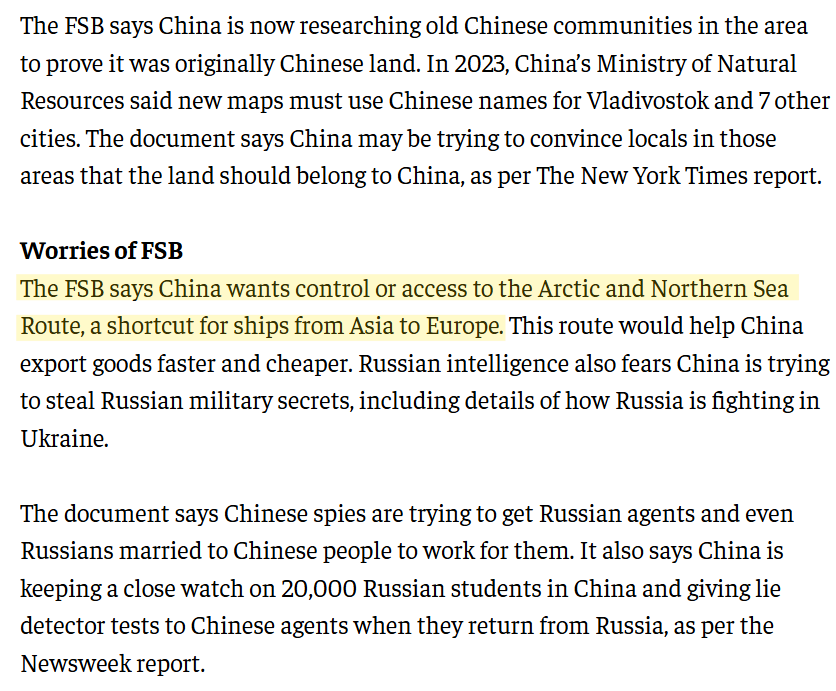
While China is demonstrating its great friendship with Russia, it is also preparing for the time when it assumes Russia will break up following the Ukraine war and Putin's ouster.
That is when China will enter in to carve out Russian territory to give it access to the Arctic directly!
The Real Game behind Trump's "Madness"!
So what is the real game here?
On the surface, it’s a story of economic modernization, highlighted by the recent agreement between Pakistan's new Crypto Council and World Liberty Financial (WLF).
Yet, Drishtikone's analysis suggests this is the public face of a sophisticated deep-state strategy designed to militarize Pakistan, establish untraceable financial channels, and strategically stall India’s geopolitical ascent.
The BCCI scandal of the 1990s revealed a global nexus of intelligence agencies and financial crime, and this new crypto framework aims to replicate its utility for the modern era.
By utilizing stablecoins and private digital wallets, the U.S.-Pakistan collaboration establishes a financial superhighway that circumvents traditional SWIFT and FATF surveillance. This "whitewashes" black money flows under the guise of financial innovation, providing a sanctions-proof architecture for terror financing, covert arms purchases, and illicit political influence.
This financial maneuver is coupled with a military deception. The sudden U.S. interest in "oil exploration" in Pakistan—a country with no known major exploitable reserves—serves as a thin pretext.
The real purpose is to create a plausible cover for embedding U.S. military advisors and contractors in strategic regions like Baluchistan. Under the guise of "protecting energy assets," this allows for the construction of logistical corridors and the clandestine import of advanced military hardware disguised as civilian infrastructure, such as dual-use radar systems or drone launchers.
The objective of this covert build-up is to surreptitiously install specialized systems to neutralize India’s growing military superiority.
The endgame is designed to corner India. When New Delhi inevitably moves to counter the threat, Pakistan will respond under the pretext of defending its new "strategic assets." The U.S. can then publicly call for restraint while privately ensuring its Pakistani client state has the means to withstand pressure, effectively checking India’s rise and preventing the final collapse of a key, albeit volatile, American proxy in the region.
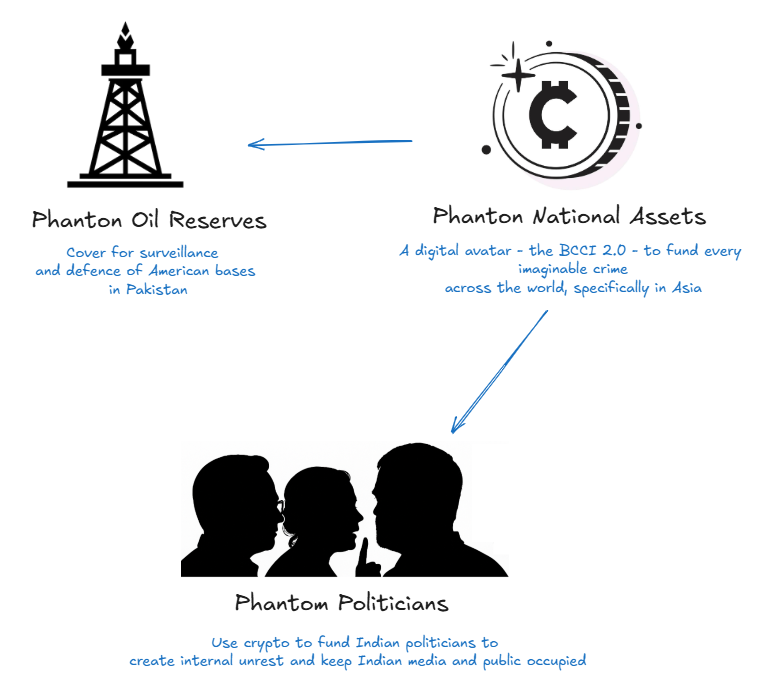
As dastardly a plot as it seems, we are already seeing its pieces unfold in front of our eyes. The sheer implausibility of the bizarre actions on the Oil exploration and the Crypto front by the Trump government point to only one direction - an era of financial crimes and subversion of India.
What options does India have in this scenario? To counter this multi-domain threat, a robust four-pronged strategy is essential.
First, on the financial front, India must use AI-driven on-chain forensics to track stablecoin flows from the Gulf, Turkey, and the U.S. into Pakistan, while simultaneously tightening its own crypto regulations with a counter-intelligence priority.
Second, for military and logistical surveillance, drone and satellite assets must be deployed over strategic zones in Baluchistan, Gwadar, and Sindh. This must be paired with the expedited deployment of deterrent systems like BrahMos-II and S-400 batteries to key border sectors.
Third, the narrative war must be preemptively neutralized. This involves diplomatically exposing the crypto-military linkage while taking legal action against hostile foreign-funded NGOs and media.
Finally, internal security requires dismantling domestic networks that are being cultivated to instigate civil unrest, thus securing India from both external and internal threats.
The plays by the three actors in this case are clear.
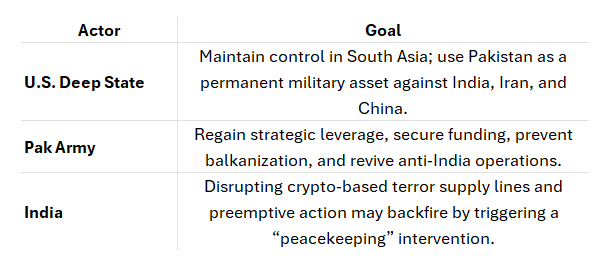
This situation is not about oil or crypto; it is a sophisticated campaign of geo-financial warfare and covert militarization.
For India, a purely military response is insufficient. The counter must be preemptive, asymmetric, and decisive. This requires deploying financial chokeholds to disrupt illicit funding, launching diplomatic offensives to expose the strategy, and establishing narrative clarity on the world stage.
What are the next steps that one can see coming from the different actors?
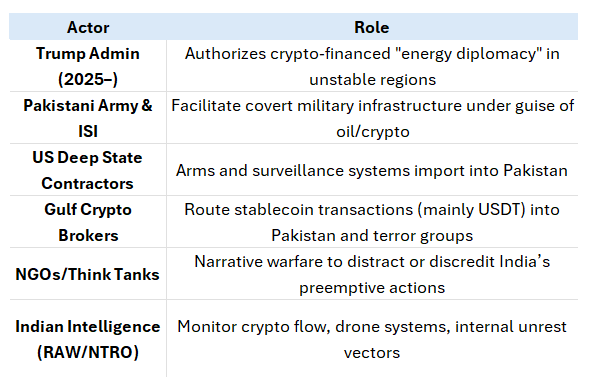
These calculated maneuvers by the US and Pakistan serve four main American goals against its geopolitical rivals.
- First, it seeks to block any potential Indian balkanization of Pakistan, thereby capping India’s regional dominance.
- Second, it strategically cuts off Russia's southern access to the Indian Ocean.
- Third, it works to dismantle China's economic and logistical hold on the CPEC corridor and Gwadar port. The ultimate objective is to install a permanent, NATO-grade drone and intelligence outpost at Asia's geopolitical heart.
Let us now assess the outcomes that will impact India.
Starkest Outcomes for India
The scenario unfolding in Pakistan (a phantom oil exploration narrative coupled with a crypto-based digital takeover) represents the most significant strategic threat to India in a generation.
This gambit, allegedly born from a tacit collusion between U.S. deep state actors and Chinese opportunists, extends far beyond border disputes, cutting into India’s strategic depth, cyber-sovereignty, and internal cohesion.
For decades, Indian strategic planning operated on the assumption that Pakistan might eventually collapse under its own contradictions, creating a strategic opportunity.
This possibility is now being deliberately subverted. Instead of a demilitarized failed state, Pakistan is being re-engineered into a digitally managed, foreign-controlled buffer.
It is being balkanized not into independent nations, but into militarized "crypto-colonies" in regions like Pakistan-Occupied Kashmir (POK) and Balochistan, governed via smart contracts and foreign security providers. The result for India is the loss of its western strategic buffer, replaced by a permanent, programmable proxy-run state designed to deny India access and initiative.
This new entity serves as a permanent, high-tech platform for anti-India hybrid warfare.
The "oil security" mission provides the perfect cover for importing advanced military hardware, including surveillance grids and sensor nets designed to counter India's strategic assets like the BrahMos missile system and military satellites. Simultaneously, the integrated crypto infrastructure provides an untraceable, off-ledger channel for terror financing, creating a deniable and perpetual threat. India's entire western military posture risks being neutralized by this invisible, digitally managed fortress.
Furthermore, this crypto-financial network directly targets India's internal stability. The system enables a "Hawala 2.0," allowing for untraceable, anonymized cross-chain payments to be funneled to sleeper cells, NGOs, and separatist elements in Kashmir and other border states. This decentralized flow of covert funding is designed to overwhelm India's regulatory and domestic security agencies, fueling disinformation and internal conflict from abroad.
The final, devastating layer is the potential for a U.S.-China "dual-key" control system. If China is a secret beneficiary through proxies like Binance, a nightmare scenario emerges where the U.S. controls the physical military infrastructure while China controls the underlying digital and financial network rails. This would leave India completely encircled—physically and digitally—by its two primary adversaries. Such an outcome would not only block potential partners like Russia from the region but would permanently reshape the subcontinent's balance of power to India's detriment.

Comments ()