
The Alaska Summit Explained: Trump, Putin, and the Future of NATO
The Trump–Putin Alaska Summit was more than pageantry—it signaled shifting alliances and deepening cracks in the Transatlantic order. Europe fumes, Ukraine feels betrayed, China recalculates, and India weighs its options. A new geopolitical chessboard is being drawn.
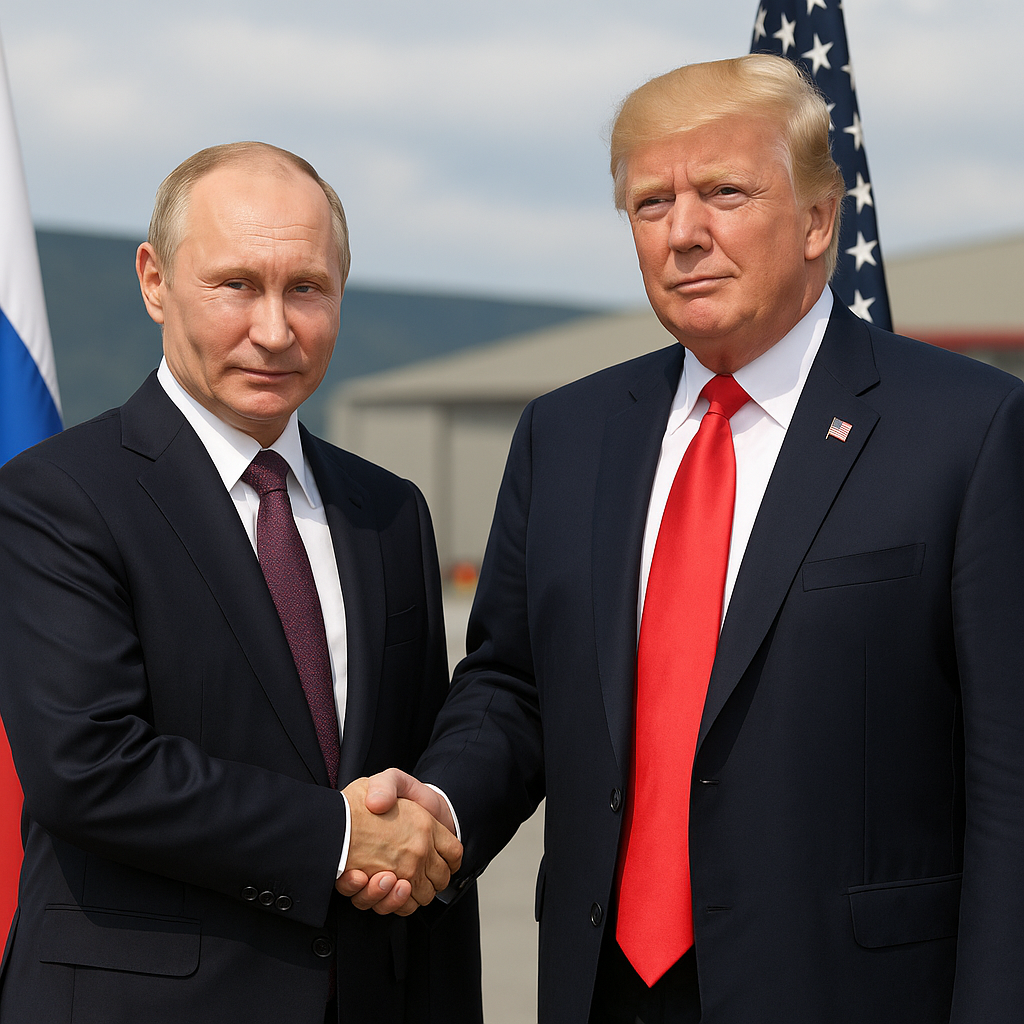
Two kings met upon a glacier at the roof of the world.
One king arrived with drums and banners, rolling carpets over the ice so that his steps seemed firm. The other came with silence in his eyes, watching the fog drift between mountains.
The first king smiled and declared, “See how we welcome each other! The world will know this meeting as a triumph.” He raised his voice so the valleys below could hear.
The second king only nodded. “Yes,” he said, “but snow remembers no footprints. It melts.”
Down in the valley, three groups of villagers listened.
- The villagers of the west quarreled: some believed the banners meant safety, others feared their roofs would collapse from the weight of more snow.
- The villagers of the east grew uneasy, for the silent king’s stillness hinted at alliances yet unspoken.
- In a faraway village, a wise farmer planted quietly, knowing that whichever way the glacier melted, his crops must feed his people.
When the kings descended from the glacier, they carried nothing but words. Yet the echoes of their gathering rolled through the mountains, loosening stones, shifting rivers, and awakening avalanches no one could control.
The monks who lived in a cave nearby said only this:
“When two men meet on ice and mistake ceremony for warmth, the wise should watch the currents below. For it is not the handshakes of kings that shape the valley, but the hidden melt that follows.”
SUPPORT DRISHTIKONE
In an increasingly complex and shifting world, thoughtful analysis is rare and essential. At Drishtikone, we dedicate hundreds of dollars and hours each month to producing deep, independent insights on geopolitics, culture, and global trends. Our work is rigorous, fearless, and free from advertising and external influence, sustained solely by the support of readers like you. For over two decades, Drishtikone has remained a one-person labor of commitment: no staff, no corporate funding — just a deep belief in the importance of perspective, truth, and analysis. If our work helps you better understand the forces shaping our world, we invite you to support it with your contribution by subscribing to the paid version or a one-time gift. Your support directly fuels independent thinking. To contribute, choose the USD equivalent amount you are comfortable with in your own currency. You can head to the Contribute page and use Stripe or PayPal to make a contribution.
Pageantry and the Bonhomie
It was the kind of entrance you’d expect at the Oscars—if the Oscars were held at Andrews Air Force Base and headlined by two men with a shared love of theatrics. Vladimir Putin touched down in Washington, and before his jet’s wheels had even cooled, a red carpet was unfurled with all the reverence of a visiting monarch. Only this time, instead of polite clapping or a marching band, the skies split open with the unmistakable thunder of B-2 stealth bombers flying overhead. Nothing says “welcome, comrade” quite like multi-billion-dollar aircraft designed to sneak into enemy territory.
Donald Trump, stationed at the carpet’s far end, was already basking in the pageantry. He beamed as if he had personally scheduled the bomber flyover on his old reality show: “Tonight, on The Apprentice: Strategic Air Command.” Putin, for his part, stepped onto the carpet in his trademark brisk stride, only pausing once to adjust a jacket that looked like it could repel both bullets and awkward questions.
The handshake was predictably prolonged, somewhere between a sumo match and a hand massage, while photographers strained to capture that perfect shot of two men convinced they were in charge of global destiny. From there, the pair disappeared inside for what official briefings called “constructive dialogue.”
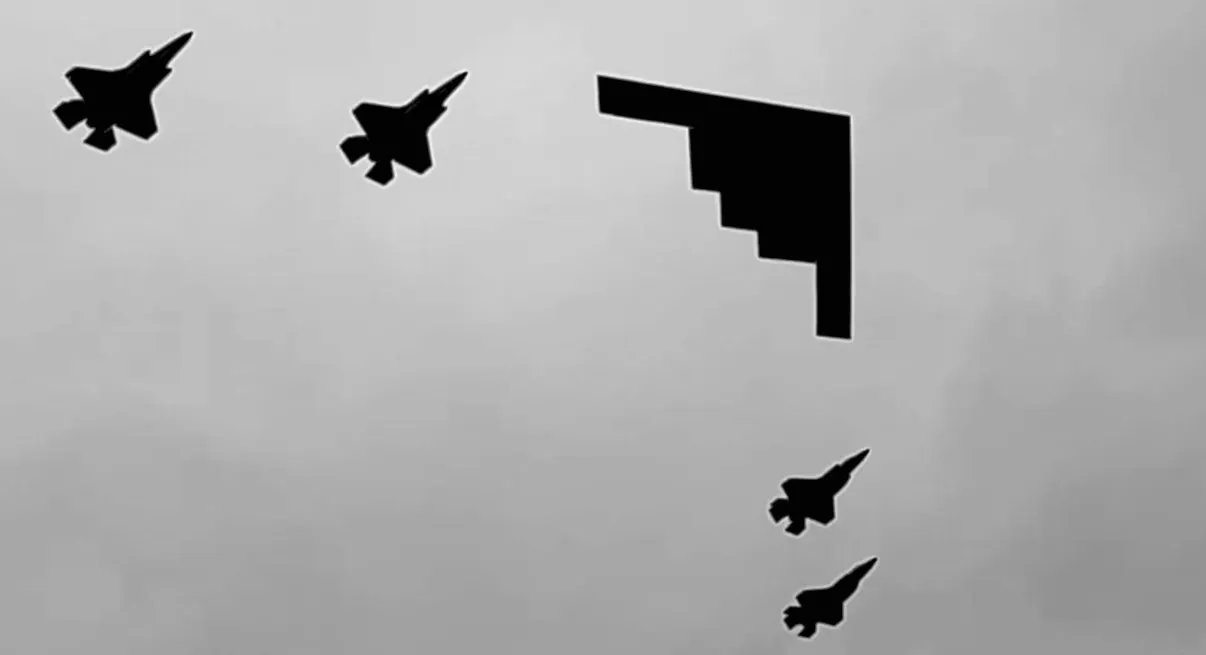
Unofficially, bystanders speculated the meeting involved arm-wrestling over sanctions, a spirited exchange of anecdotes about riding things shirtless, and perhaps—just perhaps—a joint brainstorming session on who looked better under a military flyover.
Even before Putin had set his foot on the Alaskan soil, his arrival in the airspace was marked by an unprecedented aerial display: U.S. F-22 Raptors escorted his aircraft alongside a B-2 bomber and F-35s, forming a rare, high-powered honor guard. As Air Force protocol dictated, the American jets handed off seamlessly to accompanying Russian Su-35S fighters near international airspace on the way back!
🚨⚡️ STUNNING DISPLAY:
— RussiaNews 🇷🇺 (@mog_russEN) August 16, 2025
U.S. F-22 jets escorted Putin’s plane from Alaska, forming a historic honor guard with a B-2 bomber and F-35s—before handing off to Russia’s Su-35S fighters.
Putin isn’t new to elite escorts: China (J-20), Turkey (F-16), UAE & Saudi skies (Su-35S). pic.twitter.com/9gvgj9U7dA
Apart from the pageantry, the meal time was made special as well.
The Meal
The setting was nothing short of arctic-chic, with the hospitality of Joint Base Elmendorf-Richardson dialed up to full diplomatic splendor. Here, under the helpful glow of fluorescent conference hall lighting and the unblinking gaze of security personnel who may or may not moonlight as Olympic powerlifters, two world leaders sat down for luncheon. If the Great Game is to be played anywhere, why not an Alaskan military base with a name so stately it practically demands you wear a medal just for entering?
But wait, as per an NPR report there was a major security breach as several pages were left back in a public printer with details on locations and timings of the all the events during the summit.
Eight pages, that appear to have been produced by U.S. staff and left behind accidentally, shared precise locations and meeting times of the summit and phone numbers of U.S. government employees. (Source: Government papers found in an Alaskan hotel reveal new details of Trump-Putin summit / NPR)
That is how we know what Trump and Putin had for luncheon.
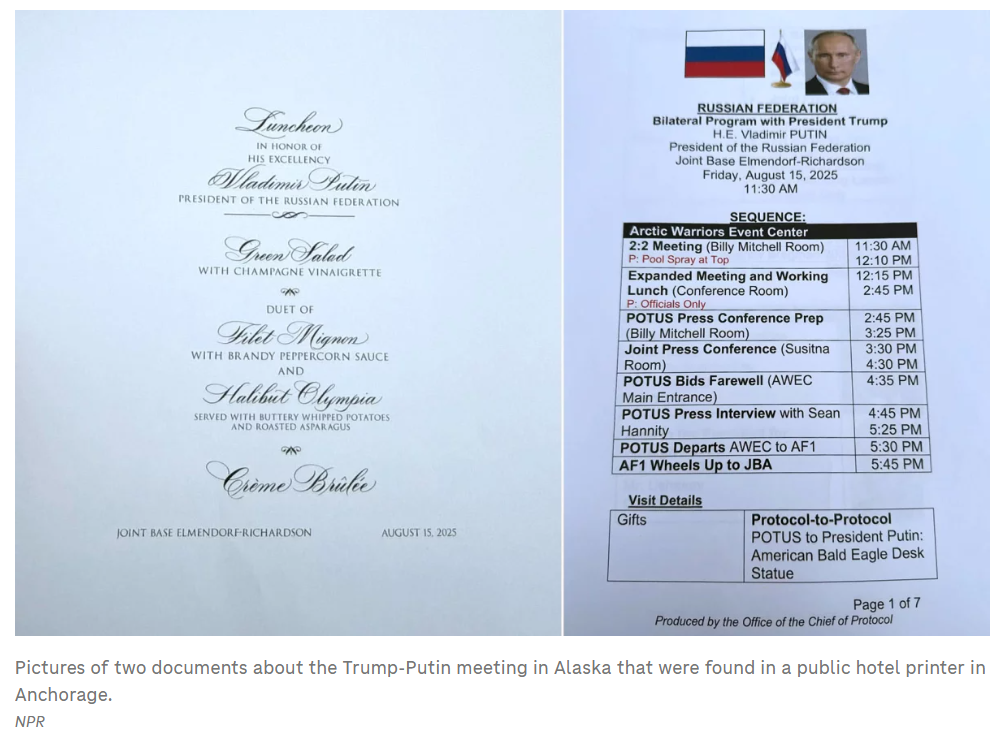
Let's talk about the menu!
No bowls of borscht or quarter-pounders here.
Dining in honor of Vladimir Putin meant a parade of culinary gravitas: the opening salvo, a regal green salad with champagne vinaigrette—because nothing says "complicated global entanglements" like leafy greens drizzled with the bubbles of bygone celebrations.
The main event was a diplomacy duet, as if wartime and peacetime had called a truce just for lunch: tender filet mignon in an opulent brandy peppercorn sauce sidled right up to the culinary intrigue of Halibut Olympia, buttery potatoes and asparagus standing sentry.
Dessert brought crème brûlée, that classic of international summitry—where the only thing more satisfying than cracking the caramelized top is the feeling of having survived three rounds of press conferences with egos fully intact.
All this on plates likely guarded as securely as state secrets, with staff darting about as efficiently as covert operatives. It was a meal fit for presidents, generals, and anyone who’s ever wondered what global power tastes like (spoiler: it’s rich, delicate, and thoroughly prepared for protocol).
The exchange between the two and their speeches in front of the press was specifically significant.
The Peace Letter
One striking moment came when President Donald Trump personally handed Vladimir Putin a letter written by First Lady Melania Trump. Framed as a gesture of warmth, it appeared oddly trivial against the backdrop of a high-stakes meeting that produced no concrete outcomes. The following day, the first lady’s office even amplified the moment by reposting a Fox News article showcasing the brief note.
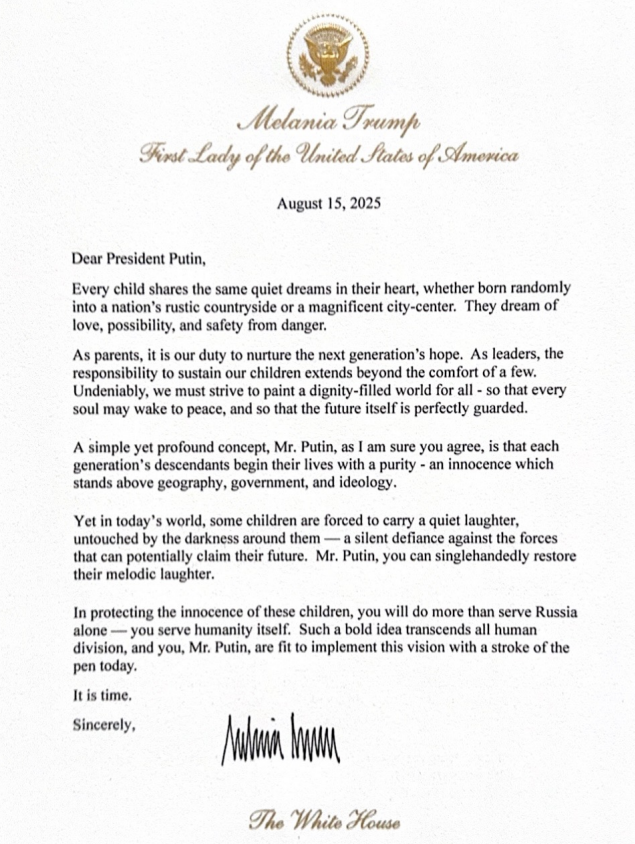
What was presented as diplomacy instead underscored the summit’s imbalance.
Simply, grand displays and personal tokens standing in for the hard realities of negotiation.
The Rising US-Russia Trade - Interesting!
During the recent Alaska summit, President Putin highlighted that U.S.–Russia trade has increased by 20% since President Trump’s administration took office—a notable reversal after years of drastic declines amid sanctions and tensions.
According to recent trade figures, total bilateral trade reached $2.78 billion in the first half of 2025, representing a 31% increase over the same period in 2024. Imports from Russia jumped by about 33%, while U.S. exports to Russia rose by over 21%, albeit from a relatively low base compared to pre-Ukraine-invasion years.
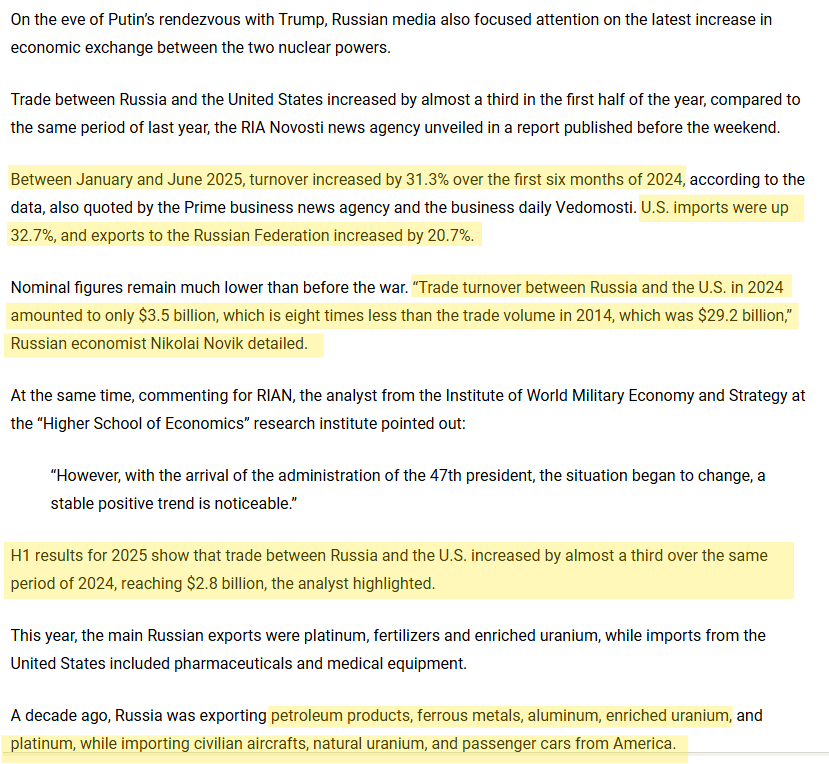
For perspective, trade between the two countries in 2024 totaled roughly $5.2 billion in goods and services, which was already a steep drop from earlier in the decade.
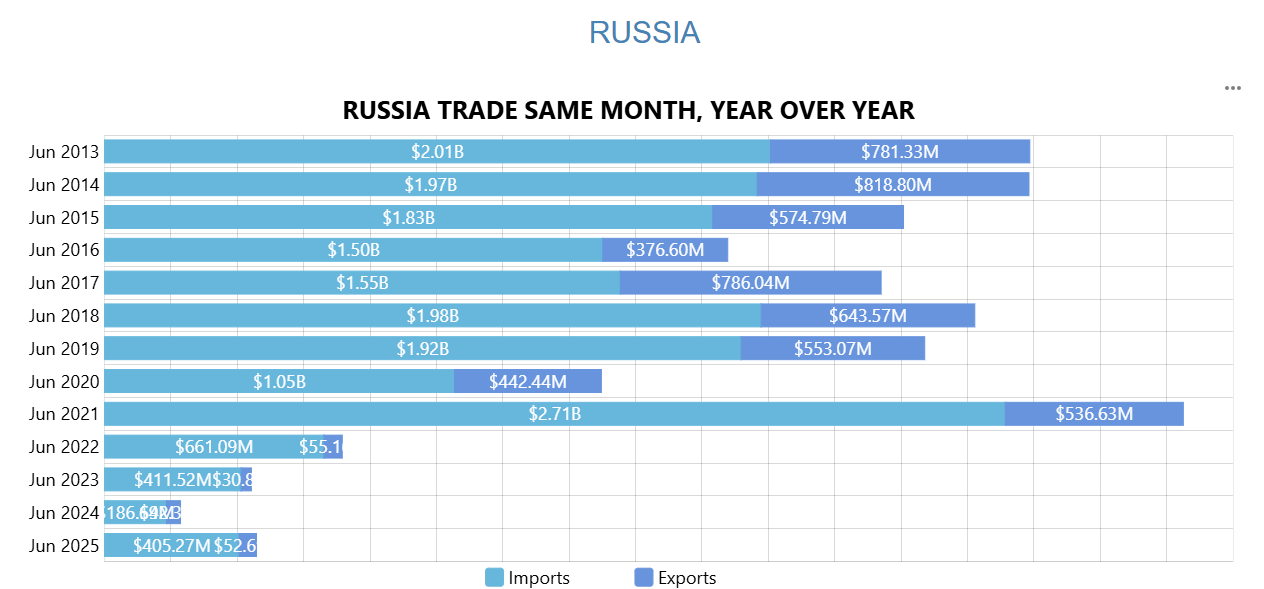
The rise in 2025, although still “symbolic” compared to the $29.2 billion peak of 2014, underscores modest but visible positive momentum. This growth has been driven by energy-related goods (such as enriched uranium), fertilizers, and precious metals from Russia, and pharmaceuticals and medical equipment from the U.S.
Sounds interesting huh?
The very country and President - Trump - who was so strongly anti-Putin and Russia that any contact was proof of a sin, has been openly doing business at an ever increasing clip.
Trump's leverage over India was completely destroyed by that one statement from Putin. Even when it was made to look like a normal compliment by a visiting leader, that one phrase destroyed (quietly of course) entire narrative of Trump against India.
Wins and consequences
This high-profile summit between Russian President Vladimir Putin and U.S. President Donald Trump at Joint Base Elmendorf–Richardson in Anchorage, Alaska, as much as it was a spectacle of pageantry and symbolism, was nevertheless punctuated by a lack of substantive diplomatic breakthroughs.
This meeting, despite its limited achievements on paper, marks a watershed moment that carries profound implications for global geopolitics, U.S.-Russia relations, Ukraine, transatlantic unity, and international norms.
Symbolism Over Substance — Diplomatic Theater
The summit was meticulously staged, replete with red carpet welcomes, military flyovers, and choreographed greetings. Signals of warmth between Putin and Trump dominated the optics: extended handshakes, shared limos, and cordial press moments. Yet, beneath the spectacle, the actual talks—lasting about two and a half hours—yielded no breakthrough agreements.
No ceasefire, peace treaty, or new commitments to end the conflict in Ukraine materialized. In this sense, the summit stands as a classic example of "summit theater": political leaders amplifying their stature through grand displays while meaningful results remain elusive.
The summit’s pageantry was carefully staged, not mere spectacle. Every gesture was designed to reassure supporters at home, unsettle rivals abroad, and project an image of decisive leadership, even if the substance behind it was hollow.
The contrasting absence of concrete commitments underscored structural divides between the sides and highlighted how global affairs can be shaped as much by symbols and gestures as by finalized treaties.
Putin’s Return to the Western Stage: Ending Isolation
This meeting marked Vladimir Putin’s first visit to a Western country since Russia’s full-scale invasion of Ukraine in 2022. Since the onset of war, Russia has been subject to a de facto diplomatic quarantine, shunned from most Western capitals and major international summits.
The Alaska invite, therefore, represented a reversal—if not of policy, then of posture. In inviting and hosting Putin, the U.S. provided him with precisely the symbolic recognition and global validation he had long sought. Even critics in the West called this a "vindication" for the Russian leader, allowing him to showcase himself at home as once again recognized and indispensable to world affairs.
Putin seized the opportunity, declaring the meeting a success and promoting a narrative of measured, pragmatic dialogue. He left Alaska with renewed credibility among his base and leverage for future negotiations. The summit thus complicates Western efforts to keep Russia diplomatically isolated as punishment for its aggression in Ukraine.
Trump’s Strategic Pivot: Peace Agreement Before Ceasefire
One of the most consequential signals from the summit was a shift in the U.S. negotiating approach. Previously, the U.S.—like its European allies and Ukraine—had maintained that any talks required a ceasefire as a starting point. Trump’s new stance favored negotiating a peace agreement first and then organizing a ceasefire around its terms.
This pivot may reflect Trump’s classical dealmaking ethos—seeking the grand bargain rather than incremental measures. However, it also hands significant initiative to the war’s aggressor. During the summit, Putin offered a framework: full Russian control of Donetsk and Luhansk in exchange for freezing the front lines elsewhere. Trump’s restrained, receptive response—combined with the deferral of key decisions to Ukrainian President Zelenskyy—suggested a more flexible (and potentially more Russia-friendly) U.S. approach than previously signaled.
The shift put Ukraine, and especially its leader, at the diplomatic crossroads, intensifying pressure to accept territorial compromises.
The Ukrainian Perspective: Shock, Anger, and Exclusion
Nowhere was the sense of betrayal felt more acutely than in Kyiv. Both government officials and ordinary citizens were openly appalled by the ceremonial welcome extended to Putin. After months of hard-fought resistance to Russian attacks and deep losses on the battlefield and at home, the optics of red carpets and photo ops were deeply galling.
More critically, Ukraine was not included in the substance of the negotiations. Working-level contacts between the U.S. and Ukraine remain, but the summit's format—bilateral, with plans for a later, trilateral dialogue—pushed Ukraine to the sidelines, leaving it without a direct voice in discussions over its own territorial integrity. This raises uncomfortable historical echoes of 20th-century great power deals at the expense of smaller nations.
Ukrainian leadership responded by redoubling calls for steadfast support from the West, making clear its unwillingness to countenance territorial concessions under duress.
European Alarm: Unity Tested, Norms Defended
Reactions in European capitals ranged from cautious skepticism to open frustration. Leaders across the continent reiterated two red lines: Ukraine must be fully involved in any talks about its future, and there can be no endorsement—explicit or tacit—of territorial changes secured by force.
European Union and NATO officials stressed that any agreement must entail strong and credible security guarantees for Ukraine, suggesting models similar to NATO’s Article 5 mutual defense provision, in order to deter future aggression. The Alaska summit, in their view, tested Western resolve and unity, challenging the decades-old commitment to a rules-based order.
Some feared that the U.S. pivot signaled a weakening of transatlantic cohesion. Others viewed the summit as a possible opening to serious talks, provided Ukraine’s core interests are not traded away for expediency.
Restoration of Great Power Diplomacy—But at What Cost?
The summit underscored the resilience of great power diplomacy—even amid war, sanctions, and escalated tensions. For much of the international community, the imagery of Washington and Moscow back at the bargaining table is a reminder that the world’s most pressing security issues often return to deals struck among the largest players.
Yet, the price of this engagement risks being paid by smaller states, those whose sovereignty and territorial integrity form the bedrock of international stability. The summit’s optics and Trump’s strategic shift threaten to relegate Ukraine’s interests to the background, raising the perennial question: Who speaks for nations caught between imperatives of peace and precedents of justice?
Potential for Diplomatic Momentum—Or Stagnation
Looking forward, the summit’s consequences remain uncertain. On one hand, there is potential for follow-up diplomacy: Trump referenced plans for a trilateral meeting involving Ukraine and (possibly) European partners. If these talks produce a settlement that restores peace and sovereignty, the Alaska summit could serve as an inflection point.
On the other hand, the lack of immediate progress—combined with public disagreements, diverging objectives, and continued fighting—could simply entrench the status quo. In that case, the event will be remembered as elaborate theater, more useful for domestic political posturing than for solving Europe’s gravest security crisis in a generation.
Message to the World: Optics and Realities
Finally, the summit sent outsized messages far beyond Europe and the post-Soviet space. Autocrats and would-be aggressors may perceive the spectacle as a signal that force and persistence, in the end, win recognition and dealmaking. Allies and partners, by contrast, are left to question the durability of American commitments and the steadiness of Western leadership.
Markets reacted with caution, as uncertainty continues to hover over energy prices, arms deliveries, and the architecture of sanctions enforcement. Non-aligned nations observed closely, recalibrating their diplomatic strategies in light of what appears to be the slow rehabilitation of Russia’s international standing.
The Putin–Trump Alaska summit of August 15, 2025, is a study in the power and peril of diplomatic theater. Carefully choreographed for the world’s cameras yet short on concrete deliverables, the meeting restored Putin to the center of world affairs, shifted American diplomatic priorities, and triggered frustration in Kyiv and European capitals.
Whether the absence of a deal represents prudence or paralysis remains to be seen. What is clear is that the summit’s symbolism will resonate in global politics long after the ceremonial champagne vinaigrette has been cleared away. As history has shown time and again, the substance and shadow of great power summits often linger—shaping events in ways that are only understood with the passage of time.
Blast from the Past and Putin's Soul
The pageantry and the pomp of this summit was unmistakable. It was a recalibration of geopolitical optics, where signals carried as much weight as substance, and where symbolism outpaced strategy.
The red carpet for Putin ended a long cycle of isolation of Russia.
Long back almost 24 years back, another US President had joined hands with Vladimir Putin for a summit. The Slovenia Summit 2001 was a summit meeting between George W. Bush and Vladimir Putin. Afterwards, when asked whether he could trust Putin, Bush said, "I looked the man in the eye. I found him very straightforward and trustworthy – I was able to get a sense of his soul."
Putin is where he is - putting Russia back in play and making it stronger. The reactions and stances from the US and its allies have gone through shifts.
Trump’s Fickleness and Strategic Calculus
Let us look at the geopolitical calculus that is in front of us now. We will carefully analyze the different aspects and players.
Trump's fickleness and the Strategic Calculus
Donald Trump has always thrived on transactional unpredictability. His actions—whether the sudden imposition of a 25% tariff on India for trading with Russia, or the equally swift embrace of Moscow despite years of bipartisan consensus against it—reflect not strategy but impulse. And yet, impulses have geopolitical consequences.
This exposes the hypocrisy of Washington’s stance and reduces its credibility with partners like India, who now must weigh long-term commitments against American volatility.
Trump’s fickleness may weaken the consistency of American foreign policy, but it also creates space for fluid alignments. By opening the door, however slightly, to Moscow, Trump forces Europe, China, and India to rethink their strategic calculus.
The Angry Europeans and fuming Donald!
Even before the summit had started, the European leaders ganged up on Trump in a long phone call where they gave Trump a piece of their mind.
That left Trump fuming!
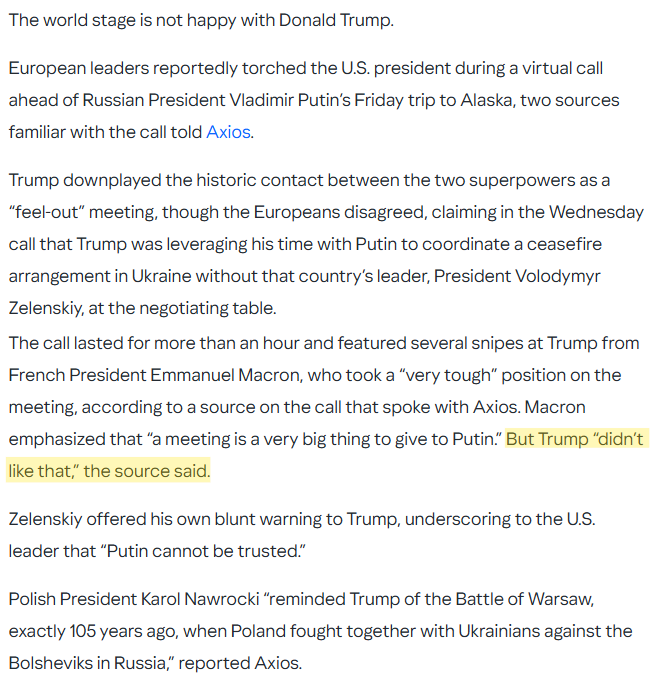
Post the summit, the Europeans are still playing the "paint Putin black" game of war. They don't have many ideas on how to stop the war or to ensure that Russia's concerns are also heard. They want to villainize Putin so they can keep the war going.
The leaders of Denmark, Norway, Sweden, Iceland, Finland, Estonia, Latvia, and Lithuania stated in a joint declaration that "experience has shown that Putin cannot be trusted," adding that it is "Russia's responsibility to end its blatant violations of international law." (Source: Ukraine: European leaders react to Trump-Putin summit / DW)
Mid- and Eastern European states—Poland, the Baltics, Romania—feel the ground slipping. Their front-line status against Russia is now anxiety-inducing, and many are ramping up arms purchases, not just from the U.S. but also from Korea and Israel, hedging in case the U.S. security umbrella becomes a sieve.
Meanwhile, European Commission President Ursula von der Leyen will meet Trump along with other European leaders at the White House.
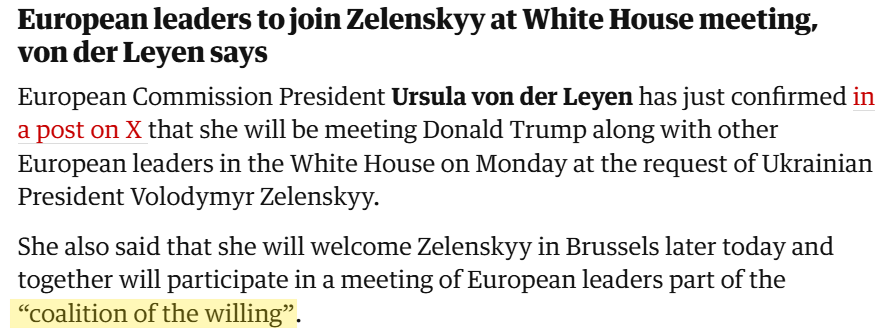
It is quite obvious that no region emerged more rattled from the Alaska summit than Europe.
For years, the European project has been sustained by the belief that America will shield it against Russia. Yet Trump’s red-carpet treatment of Putin sans any concrete demands for ceasefires or accountability, signaled that Washington may no longer view Moscow as the primary adversary.
European leaders, already stretched by energy costs, defense spending, and internal political instability, now face a sobering reality:
- Energy Dependency: Europe cannot wish away its reliance on Russian energy. LNG imports from the U.S. cost multiples of pipeline gas, and the $750 billion bill that Trump insists Europe must pay Washington underscores the transactional nature of this dependency.
- Military Vulnerability: European forces are not prepared for a direct confrontation with Russia. Lacking serious offensive capability, NATO’s deterrence is dependent almost entirely on U.S. guarantees—guarantees Trump has shown willingness to dilute.
- Political Fractures: Eastern Europe, terrified of Russia’s power, wants unrelenting confrontation. Western Europe, crippled by economic stagnation, seeks accommodation. Trump’s summit has almost certainly deepened these divides.
Quite simply, the summit risks transforming cracks into continental schism.
The central question is whether Europe, furious at Trump yet unwilling to concede to Russia, begins to chart its own path.
This may mean doubling down on anti-Russian policies out of political inertia, even at the cost of strategic ruin. Or it may mean the birth of a more autonomous Europe, forced into hard choices that the post-WWII order had long deferred.
The Self-destructive Russia-Hate of Europe
The hatred of Russia is not merely about Ukraine. It is historical, civilizational, and ideological.
- Historical Memory: From Napoleon to Hitler, Europe’s great powers were broken on the steppes of Russia. The cultural memory of defeat, humiliation, and Russian resilience still scars Europe’s strategic imagination.
- Civilizational Clash: Russia has always been the “other Europe”—Christian yet not Western, powerful yet non-conformist, civilizationally Eurasian. This identity defies Europe’s liberal cosmopolitan project.
- American Overlay: Since 1945, U.S. influence has hardened anti-Russian sentiment into a defining pillar of Western identity. To hate Russia is to affirm loyalty to the Atlantic alliance.
Europe’s animosity is not merely strategic anymore. It is existential.
The summit exposed this deep bias: even when its survival depends on Russian energy or goodwill, Europe prefers self-harm to strategic compromise.
Of course, at this moment in history, European hatred could be masking another reality - the coming geopolitical irrelevance if Russia remains intact under Putin. Why? Because of the control over the Arctic.
Ukraine War is not about Ukraine. It is about the Arctic Circle and its dominance. If one looks at the stakes, positions and the stances, then it Arctic's crucial importance becomes clear.
 Desh Kapoor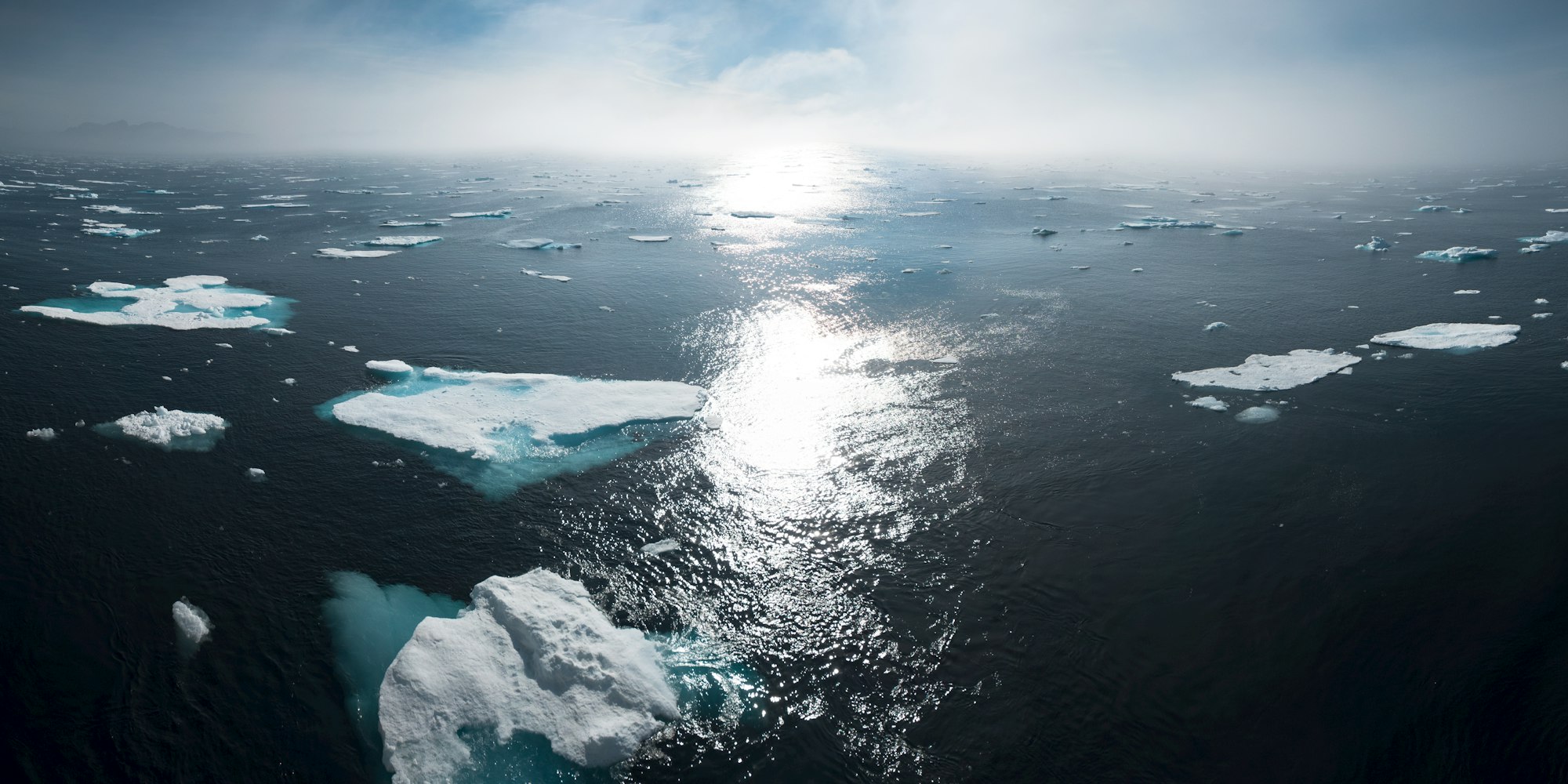
Also check this.
 Desh Kapoor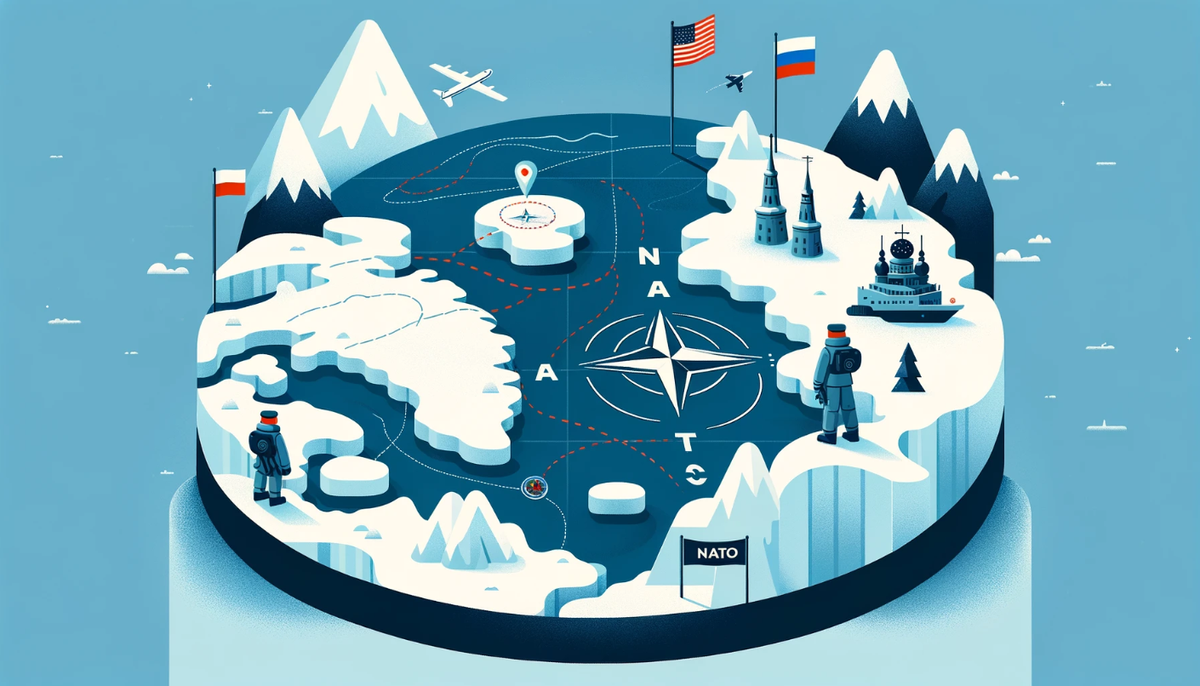
There is another player who would be feeling sidelined in this entire drama. The turn of events will leave it outside of any way to influence the world.
China’s Dilemma: Partner or Outsider?
The Alaska summit casts a shadow over Beijing. For years, China has relied on Russia as a junior partner in its anti-U.S. strategy. But if Trump and Putin forge even limited cooperation, China risks being left out in the cold.
- Strategic Anxiety: A U.S.–Russia thaw could tilt the global balance, isolating Beijing as the sole challenger to American power.
- Economic Calculus: China is still dependent on Russian energy and resources, but if Moscow diversifies toward Washington and Delhi, Beijing loses leverage.
- Potential Pivot: This may push China to court Europe more aggressively, presenting itself as the rational alternative to both Trump’s chaos and Putin’s aggression. Ironically, Europe and China—long wary of each other—may find common cause in resisting a U.S.–Russia axis.
China watches the U.S.-Russia rapprochement with wariness and calculation. Beijing’s long game where it is a rival and partner to Moscow, economic juggernaut, strategic rival to Washington, depends on keeping both off balance.
An American-Russian thaw is both opportunity and threat: it weakens transatlantic unity and could unmoor NATO’s reach but also threatens to relegate China to a secondary regional actor, especially if Moscow shifts westward for strategic or economic necessity.
China’s response will be to deepen pragmatic ties with Russia (technology, resources, military exercises) while courting Europe economically.
If Washington’s caprice continues, Beijing and Brussels may find points of common cause in defending multilateralism, trade, and climate ambitions, even as their interests often diverge.
India’s Role: The Balancing Power
India sits uniquely at the crossroads of this geopolitical shuffle.
For India, the stakes are high:
- Strategic Autonomy: India must maintain its delicate balance between Moscow (its defense partner), Washington (its technology and trade partner), and Beijing (its adversary).
- Economic Leverage: India’s growing market gives it bargaining power. It can refuse American hypocrisy, while quietly deepening ties with Russia and diversifying toward Europe and the Global South.
- Civilizational Anchor: Unlike Europe, India has no historical hatred of Russia. This allows it to play the role of mediator, an honest broker between East and West.
India’s likely path is multi-alignment: leveraging contradictions among major powers to advance its own development, security, and global voice.
India will, therefore, deepen transactional diplomacy, leveraging strategic autonomy for best advantage in every crisis. Which is precisely what Moscow, Washington, Beijing, and Brussels dread.
The Coming Times
0–3 months: Shock, spin, and positioning
Let us now look at each player and what they are likely to do in the next 3 months.
United States
- Washington policy stays ambiguous: Trump touts “relationship” and “peace agreement,” not a ceasefire; sanctions talk cools. Internal debate heats up in Congress/NATO policy circles.
Europe
- Political backlash intensifies. Expect louder calls for “European strategic autonomy,” but practical dependence on U.S. security persists. Coalition frictions sharpen (Baltics/Poland vs. France/Germany over escalation vs. sustainability).
- Energy anxiety flares ahead of winter inventories; LNG dependence keeps costs elevated. Economic burden brings the financial impact to the citizens who wonder what this is all about and show their displeasure politically.
Russia
- Kremlin banks the optics win and probes for leverage: pushes the Donbas-for-freeze formula in back-channels and information ops. No incentive to rush concessions.
Ukraine
- Zelenskyy hardens “no territorial concessions” stance; intensifies outreach to Congress and EU capitals to keep aid flowing and veto any off-ramp over Kyiv’s head. Destruction continues.
China
- Watches for a U.S.–Russia “temperate thaw.” Quietly reassures Moscow while accelerating EU outreach (trade, EVs, green tech) to hedge against a U.S.–Russia surprise.
India
- Reaffirms multi-alignment: keeps Russian energy/defense channels open, signals to Washington on tech/FDI, and frames U.S. tariff unpredictability as a reason for autonomy. (Putin’s “trade up 20%” rhetoric with the U.S. is leveraged in Delhi’s talking points.)
Leading indicators to watch (0–3 mo.)
- Any U.S. proposal that resembles a “freeze for land” blueprint; readouts after a Trump–Zelenskyy meeting.
- EU statements on Ukraine security guarantees separate from NATO Article 5; budget fights over ammo/industrial ramp.
- Russian tempo around Donetsk/Avdiivka vs. frontline “pauses.”
3–12 months: Fracture management or drift toward a freeze
Base case (≈50%) — “Messy drift”
- War dynamics: Neither a formal ceasefire nor big offensives; a low-burn conflict with periodic spikes. Moscow pushes for recognition of Donbas gains while offering a Zaporizhzhia/Kherson line freeze.
- Transatlantic politics: More cracks, not a break. Europe funds Ukraine and rearmament, but grumbles loudly at U.S. ambiguity; some capitals push “security guarantees lite.”
- U.S. posture: White House triangulates. Talks up “deal-making,” avoids new bite-hard sanctions, and nudges Kyiv toward talks without forcing it.
- Russia: Consolidates occupied terrain; leverages energy, grain, and maybe push propaganda to widen EU splits.
- China: Increases mediation theatrics and EU trade courtship to keep Europe from falling fully back into U.S. arms.
- India: Expands defense co-prod with the West while protecting Russian spares/energy; positions as acceptable intermediary between camps.
Upside case (≈25%) — “Cold peace framework”
- U.S. and EU converge on a monitorable front-line freeze plus multi-year Ukraine rearmament and insurance-style guarantees; Donbas status parked in an Oslo-style limbo. Sanctions are compartmentalized (humanitarian/energy waivers).
- Europe moves faster on munitions industry scaling and air defenses; U.S.–EU political relations stabilize (resentment lingers, rupture avoided).
- Russia gets optics of parity; Ukraine gets money, air defenses, and time.
Triggers: A visible battlefield stalemate + sustained U.S. pressure for a package deal + EU consensus that an interim freeze beats industrial exhaustion.
Downside case (≈25%) — “Aid cliff / escalation scare”
- U.S. domestic politics stall Ukraine funding; EU capacity can’t fully backfill; Russia pushes a localized breakthrough.
- Panic in Europe: energy price spikes + refugee flow + market jitters; NATO hardens posture near Suwałki/Baltics; accident risk rises. Major war escalation looms.
Triggers: U.S. appropriations shock; a major Russian push; a black-swans (attack on energy infra, maritime incident).
1–3 years: Re-ordering the order
Scenario A (≈40%) — “Fragmented West, managed conflict”
- Transatlantic: The alliance persists but is more transactional. Europe spends more, talks autonomy, still relies on U.S. ISR/airpower. Divergences over sanctions and China policy become chronic.
- Russia: Lives with a militarized buffer and partial sanctions; turns deeper to Asia/Global South financing and sanctions arbitration.
- China: Exploits Western incoherence; cements economic inroads in Southern Europe and CEE logistics; calibrates aid to Moscow to avoid secondary sanctions.
- India: Emerges as a central “swing balancer”—anchors BRICS+ finance flows while deepening Quad tech/defense corridors; becomes a preferred venue for quiet contacts.
Scenario B (≈35%) — “Cold Peace 2.0”
- A supervised freeze hardens into a long truce. Ukraine is armed to the teeth under a guarantee regime short of NATO; EU defense industry matures; U.S.–EU relations re-normalize (with scars).
- Russia pockets territory de facto but pays with long-term technological isolation from the West; hydrocarbons re-routed to Asia with discounts.
- China adjusts to a more cohesive West on export controls; leans harder into dual-use indigenization.
- India leverages stability to scale manufacturing + defense exports; balances energy ties with Russia and tech/market access with the West.
Scenario C (≈25%) — “Shocks and hard breaks”
- A major incident (missile strike spillover, maritime clash in the High North/Black Sea, domestic political crisis in a NATO state) snaps the drift.
- Europe moves to emergency footing; U.S. re-asserts leadership or—if domestic constraints bite—outsources more burden to EU ± UK/Poland bloc.
- Russia tests NATO edges while keeping nuclear thresholds intact; China distances publicly but backfills discreetly; supply chains fragment further.
- India doubles down on self-reliance (defense + semis + energy diversification), offering selective cooperation to both camps.
We should all keep our eyes and ears open. Let us look at what signals we should be looking at.
“Tell me early” dashboards (practical signals)
- Policy: A U.S. paper that formalizes a “freeze + guarantees” concept; EU Council conclusions on long-range strike and air defense funding.
- Battlefield: Sustained reduction in strike tempo near Zaporizhzhia/Kherson vs. intensified pushes around Donetsk.
- Optics: More leader-level Putin photo-ops in Western venues (Putin “back on the stage”) = Moscow confidence; protests in Kyiv and EU capitals = political cost.
Bottom line: The summit didn’t deliver policy, it delivered leverage. Mostly to Moscow.
The near-term game is about who converts optics into structure: a managed freeze (best realistic case) or a grinding drift with widening Western cracks (base case). China hedges.
India, if disciplined, has the room to turn everyone’s contradictions into its own compounding advantage.
“When two men meet on ice and mistake ceremony for warmth, the wise should watch the currents below. For it is not the handshakes of kings that shape the valley, but the hidden melt that follows.”
Comments ()