
The Daily Geopolitics Brief # 7
Trump says the US leaves Iran in 2 weeks — but deploys more troops. Iran puts Apple, Google & Microsoft on its April 1 hit list. Pakistan cuts salaries 30%. Egypt goes dark at 9 PM. The world economy is breaking. Day 32.
"All of those countries that can't get jet fuel because of the Strait of Hormuz, like the United Kingdom, which refused to get involved in the decapitation of Iran, I have a suggestion for you: Number 1, buy from the U.S., we have plenty, and Number 2, build up some delayed courage, go to the Strait, and just TAKE IT... Iran has been, essentially, decimated. The hard part is done. Go get your own oil!" — President Donald J. Trump, posted by @WhiteHouse on X, March 31, 2026
What This Signals
This post is operationally significant on multiple levels — a victory lap, a geopolitical threat, and an inadvertent strategic confession, all in one. Let's unpack it.
Has Iran actually been "decimated"? Significantly degraded — but not finished, and Trump's own behavior proves it. CENTCOM reports over 11,000 targets struck. But the nuclear program specifically reveals the rhetorical overreach: analysts, lawmakers of both parties, and military insiders believed Trump's earlier claims that it was "obliterated" were exaggeration — strikes were widely thought to have set Iran back at least a year, but not to have destroyed it. Even more telling: the Trump administration has made clear that removing Iran's enriched uranium stockpiles must be part of any peace deal — you don't negotiate for the removal of something already destroyed. Iran continues to fire missiles and drones. Trump's own statement, "I'm still not declaring it over," is the tell.
The damage to Western unity may outlast the war itself. The explicit singling out of the UK — by name, on official White House channels — for not "participating in the decapitation of Iran" is unprecedented in its nakedness. The underlying damage to habits of consultation, to assumptions of shared purpose, is real and will not dissolve once the crisis passes. The deeper implication of "go get your own oil" is that Washington is explicitly withdrawing the security umbrella that has underwritten European and British energy import security for 80 years.
The internal contradiction: Trump declares Iran "decimated" and "the hard part is done," yet the Pentagon is simultaneously weighing sending 10,000 additional combat troops. You don't send 10,000 combat troops to mop up a decimated enemy. The troop deployment is the operational signal that contradicts the political rhetoric.
The Mosaic Model is the most consequential dimension. Iran's decentralized military was built precisely for decapitation scenarios — where losing the center doesn't stop the war, it distributes it. Iran's foreign minister confirmed on March 1 that "our military units are now independent and somehow isolated, and they are acting based on instructions — general instructions — given to them in advance." Trump's "go get your own oil" taunt now gives every autonomous IRGC provincial commander an ideological frame — proof of imperial contempt to fight against.
Story #1: Trump Says US Will Leave Iran in 2–3 Weeks — But Nobody Believes It
The Full Picture
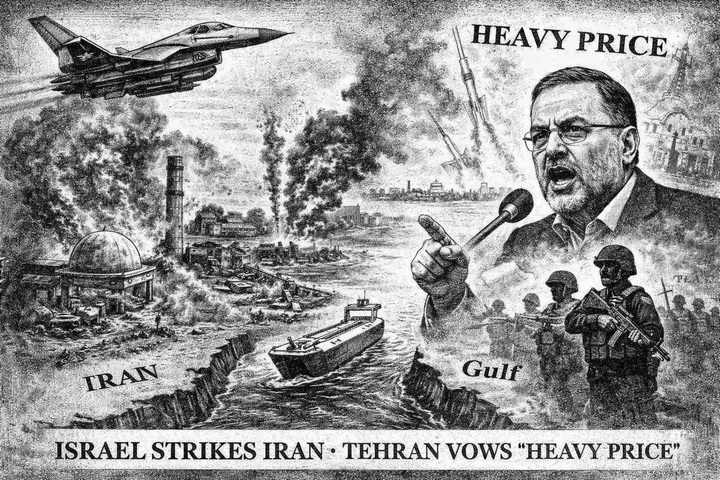
In a White House briefing on Tuesday, President Trump told reporters the US would leave Iran "within two weeks, maybe two weeks, maybe three," suggesting the military had largely accomplished its goals and would leave it to other nations to resolve the Strait of Hormuz crisis.
"We'll leave because there's no reason for us to do this," Trump told reporters in the White House on Tuesday. He stated that his one goal was getting Iran to not have a nuclear weapon, "and that goal has been attained." When asked about rising gas prices, Trump said, "All I have to do is leave Iran."
The credibility problem is acute. White House Press Secretary Karoline Leavitt said "the President and the Pentagon predicted it would take approximately 4-6 weeks to achieve this mission. Tomorrow marks week 3" — a statement that simultaneously claims the mission is succeeding while acknowledging it is not yet over. Trump suggested the US had largely accomplished its military goals and would leave it to other nations to resolve issues with the Strait of Hormuz.
The Wall Street Journal had already reported that Trump told aides he is willing to end the campaign even if Hormuz remains largely closed — meaning the crisis that triggered the war may persist after the war ends. Gulf states, according to the Associated Press, are privately pushing Trump to continue — believing Iran has not been weakened enough and that this moment is a strategic window that cannot be recreated.
Iran has responded by denying any direct negotiations and continuing missile and drone strikes. What's happening in reality: the US is simultaneously discussing exit while deploying more troops, extending deadlines, and watching Iran formalize control of Hormuz through parliamentary legislation.
🇮🇳 How This Impacts India
A US exit without resolving Hormuz is the scenario that most concerns India.
India's Foreign Ministry and NSA Ajit Doval must treat the next two to three weeks as a critical diplomatic window. India has unique leverage: it is on Iran's "friendly nations" list, it has deep ties with the Gulf, and it has a long-standing relationship with Washington and Tel Aviv. India should be actively mediating for a structured resolution rather than waiting for outcomes imposed by others.
📎 References: Bloomberg | The Hill | NPR | Time
Story #2: Iran Targets Silicon Valley — Apple, Google, Microsoft, Nvidia on IRGC Hit List
The Full Picture
The war crossed a threshold it has never crossed before on March 31: Iran's Islamic Revolutionary Guard Corps issued an explicit strike threat against 18 major US technology companies across the Middle East, with a deadline of 8 PM Tehran time on April 1 — today.
Iran's military issued a new threat to 18 U.S. companies in the Middle East on Tuesday, pledging to strike "espionage entities" associated with the "warmongering government of the United States." The new threat specifically calls out tech companies like Apple, Google, Meta, and Microsoft, which Iran says has assisted in "US-Israeli terror operations" since the war against the country was launched Feb. 28. The IRGC also named Meta, Nvidia, Oracle, Tesla, HP, Intel and IBM. The only non-US company on the list appears to be the UAE's AI champion G42.
The IRGC warned employees of the named institutions to "leave their workplaces immediately to save their lives." Residents around these "terrorist companies in all countries in the region should also leave their places within a radius of one kilometer and go to a safe place."
The rationale: The Guards' statement said the US government and tech giants had "ignored our repeated warnings regarding the necessity" of halting operations targeting top Iranian officials, alleging that the tech firms are the "main element in designing and tracking assassination targets."
This is not merely rhetoric.
The broader strategic logic is clear: Iran is trying to impose costs on the entire US corporate and technological ecosystem operating in the Gulf — not just military installations. This makes every multinational with a Middle East presence a potential casualty of a war they have nothing directly to do with.
🇮🇳 How This Impacts India
This story has profound implications for India's own digital economy and its relationship with US Big Tech. Many of India's largest tech companies — Infosys, TCS, Wipro, HCL — operate delivery centers and business units that serve major US tech clients including Apple, Google, Microsoft, and Oracle. If IRGC strikes damage Gulf-based tech infrastructure, the knock-on effects on cloud services, data routing, and enterprise software platforms used by Indian companies could be immediate. India's own data center industry, which has been rapidly expanding in Mumbai and Chennai, partly serves Gulf-region cloud demand. India's cybersecurity agencies must treat this as a high-alert moment: Iranian state-affiliated hacking groups are among the world's most active, and any escalation against US tech infrastructure is likely to include significant cyber components targeting adjacent networks globally.
📎 References: The Hill | Gizmodo | Tom's Hardware | Ynet News
Story #3: The Global South Is Breaking — Pakistan, Egypt, Russia, and the Domino Effect
The Full Picture
While attention is fixed on bombs and warships, the Iran war's most under-reported story may be the cascading economic collapse it is triggering across three continents — from South Asia to North Africa to the heart of Eurasia.
Pakistan is in war-economy mode. Pakistan has ordered sweeping emergency austerity and fuel conservation measures after a disruption in oil and gas supply. Prime Minister Shehbaz Sharif warned that disruptions to maritime traffic in the Strait of Hormuz had placed Pakistan's economy under direct threat. Officials with salaries between Rs2 million and Rs3 million face 25% deductions, and those earning above Rs3 million face a 30% reduction. All deducted amounts will be deposited into the Prime Minister's Austerity Fund 2026. The government approved a 50 percent reduction in fuel allocation for government vehicles and ordered 60 percent of the fleet grounded for the next two months. Pakistan's fuel prices have jumped 20% in a week — the largest increase in the country's history.
Egypt has gone further. Egypt has introduced a broad set of emergency energy-saving measures for the next month, ordering shops, restaurants, cafes, shopping centres, cinemas, theatres, and wedding halls to close by 9 pm each night — a direct consequence of the ongoing Iran war and its devastating impact on global oil supply. Starting April 5, all public and private sector employees will work from home every Sunday for one month. Egypt's monthly energy bill has effectively doubled from $1.2 billion to $2.5 billion. Egypt's Prime Minister Madbouly has explicitly described the country as being in "war economy mode." Cairo — a city that famously never sleeps — now dims its lights at 9 PM.
Russia is quietly preparing its own capital controls. President Putin signed decrees restricting cash and gold exports. Under one decree, carrying ruble cash across the border to the Eurasian Economic Union will be prohibited in amounts exceeding $100,000 from April 1. The other decree bans the export of gold bars weighing more than 100 grams starting May 1. Russian Deputy Finance Minister Alexei Moiseev said gold is increasingly being used as a substitute for foreign exchange in illicit transactions, fuelling capital flight and money-laundering activities. With a net cash outflow of $13.2 billion from Russia's banking system in January 2026 alone, the decrees signal that Moscow is battening down its financial hatches — even as it profits from elevated oil and fertilizer prices.
Beyond these three: Bangladesh is days from running out of fuel reserves. Ethiopia has citizens sleeping in their cars queuing for petrol. Vietnam is suspending domestic flight routes. The Philippines declared a state of emergency. Sri Lanka has introduced a mandatory fuel pass. The global energy crisis is not a crisis for rich nations alone — it is a survival emergency for dozens of developing economies, most of whom had nothing to do with starting the war.
🇮🇳 How This Impacts India
India sits directly in the path of this domino effect. The collapse of Pakistan's economy — India's nuclear-armed neighbour — into a war-economy austerity mode raises serious regional stability concerns. A financially distressed Pakistan with a population facing fuel shortages and salary cuts is unpredictable. Egypt's crisis matters to India because Egypt is a critical transit point for Indian exports to Europe and a major wheat market. Russia's gold and cash export controls are significant for Indian bullion traders (India is one of the world's largest gold importers) and for the growing number of Indian businesses using ruble-based trade settlements for Russian oil purchases. India's own economic management — with petrol at ₹94.77/L in Delhi while crude surges above $113/barrel globally — is at a tipping point. The government's excise duty cuts are providing temporary relief, but without a resolution to Hormuz, they are burning fiscal reserves.
📎 References: Al Jazeera — Pakistan Austerity | Egypt War Economy Mode | Russia Gold/Cash Decrees — Anadolu Agency | Al Jazeera — Global South
Story #4: US F-35 Crashes in Nevada — America's Overstretched Military Shows the Strain
The Full Picture
In a moment that crystallised the toll of a month-long, multi-front war on US military readiness, an F-35A Lightning II stealth fighter — one of America's most advanced and expensive combat aircraft — crashed in the Nevada desert on March 31.
An F-35 from Nellis AFB crashed north of Las Vegas, within the controlled airspace and restricted federal property of the Nevada Test and Training Range. The aircraft crashed approximately 25 miles northeast of Indian Springs, Nevada. The pilot ejected and is being treated for minor injuries. Sources told local media the pilot had reported trouble maneuvering before the crash.
The 57th Wing, which oversees the major USAF installation near Las Vegas, confirmed the F-35A was permanently assigned to Nellis. The Nevada Test and Training Range is a large complex of restricted airspace covering some 5,000 square miles and over 2.9 million acres of land, providing simulated threats, weapons ranges, and airspace for aircraft to hone tactics and supports major exercises such as Red Flag.
The F-35 is not just another aircraft — it is the backbone of US and allied fifth-generation air power. The Nellis-based fleet includes aircraft assigned to the 57th Wing's adversary and tactics development mission, making each individual airframe particularly high-value. Every F-35 lost in training is one fewer available for combat in an already strained fleet that is simultaneously flying missions over Iran. The US military is also simultaneously dealing with the confirmed total loss of an E-3 AWACS at Prince Sultan Air Base in Saudi Arabia to Iranian strikes — the simultaneous degradation of both training and surveillance assets signals a military that is under unusual structural stress.
🇮🇳 How This Impacts India
India's Air Force and Navy both operate F-35 partner-nation adjacencies — including platforms and systems developed in collaboration with the same US defence industrial base. More directly: India operates 36 Rafales, a growing fleet of P-8I maritime patrol aircraft, and is negotiating for several major US systems including additional helicopters and surveillance aircraft. Any systemic disruption to US defence manufacturing capacity — caused by a war that is consuming ammunition, aircraft parts, and maintenance resources at an extraordinary rate — could delay Indian deliveries and affect joint programmes. India must diversify its defence supply chain and accelerate indigenisation of critical platforms. The Make in India defence initiative needs urgent resource infusion, particularly for ammunition production and spare parts manufacturing.
📎 References: The War Zone | Air and Space Forces Magazine | Stars and Stripes
Story #5: Tariffs + War = Bankruptcy Wave — The American Middle Class Is Breaking
The Full Picture
While the Iran war dominates global headlines, a parallel economic crisis is silently detonating inside the United States — and its consequences will reshape American politics and global trade for years.
According to a new poll by financial services company JG Wentworth, conducted in February 2026 and surveying 1,421 US adults, almost half of all personal bankruptcies are due to the cost of living and tariff costs. When asked what contributed most to their bankruptcy, 43.4 percent of respondents cited the cost of living crisis, making it the most common factor. Increased tariffs followed closely, mentioned by 41.7 percent.
Non-business bankruptcy filings rose by 10.8 percent between September 2024 and September 2025, reflecting mounting pressure on American households. American families paid an estimated average of about $1,745 in tariff-related costs between February 2025 and January 2026.
Now add the Iran war's economic overlay. Jet fuel prices have more than doubled. Gas prices in Los Angeles County have hit $5.99 per gallon. United Airlines alone faces an additional $11 billion in annual fuel costs if prices remain at current levels. The average transcontinental flight has more than doubled in price. And this is happening simultaneously with the Supreme Court's ruling that Trump's IEEPA tariffs were unconstitutional — creating a chaotic situation where businesses that paid billions in tariffs are seeking refunds, while the administration announces new tariff structures to replace the struck-down ones.
Corporate bankruptcies surged in 2025, rivaling levels not seen since the immediate aftermath of the Great Recession, as import-dependent businesses absorbed the highest tariffs in decades. At least 717 companies filed for bankruptcy through November, according to data from S&P Global Market Intelligence.
The compound effect of tariff-driven inflation, war-driven energy costs, healthcare cost increases from the rollback of ACA subsidies, and rising interest rates is creating what economists are calling a "perfect storm" of financial stress for American households. The war and tariffs together are doing what neither could accomplish alone: breaking the financial resilience of the American middle class at scale.
🇮🇳 How This Impacts India
A financially stressed America has direct consequences for India. The US is India's largest export market, absorbing over $75 billion in Indian goods annually. If American consumers are filing for bankruptcy at record rates, spending on discretionary goods — including Indian textiles, gems, machinery, and pharmaceuticals — will fall. India's IT exports, which are heavily dependent on US corporate spending, are also at risk if American companies face margin compression and freeze discretionary tech spending. More structurally: a US consumed by internal economic distress and a Middle East war is a US that is less focused on the Indo-Pacific, less able to push back against Chinese assertiveness, and less reliable as a strategic partner. India must accelerate its trade diversification — deepening economic ties with Europe, ASEAN, and Africa — rather than remaining overly dependent on the US market.
📎 References: Newsweek | Washington Post — Corporate Bankruptcies | House Budget Committee Analysis
Story #6 (Future Watch): Brainless Human Clones — The Most Unsettling Tech Story of the Year
The Full Picture
Buried beneath war news and energy crises, a story broke this week that, in a different news cycle, would have dominated every front page on earth: a billionaire-backed Silicon Valley startup has been secretly pitching the creation of brainless human clones as backup bodies for wealthy individuals seeking radical life extension.
R3 Bio, a California startup, recently announced that it was raising money to develop non-sentient monkey "organ sacks" — an eyebrow-raising alternative to animal testing. Such structures would contain all typical organs excluding the brain, ultimately serving as a source for donor organs and tissues. But according to a sprawling follow-up investigation by MIT Technology Review, R3 Bio's founders secretly have a far more ambitious goal in mind: creating entire "brainless clones" of the human body that aging or ill individuals could one day transplant their brain into.
MIT Technology Review found that founder John Schloendorn privately outlined a radical concept he calls "full body replacement": growing human clones lacking higher brain structures — cloned human bodies engineered as immunologically perfect organ sources or, ultimately, as hosts for brain transplants in pursuit of radical life extension. Since artificial wombs don't exist yet, brainless bodies can't be grown in a lab, so he's said the first batch of brainless clones would have to be carried by women paid to do the job.
R3 Bio is backed by investors from the longevity tech world, including links to Tim Draper's network and the "immortality" investment community. MIT Technology Review found no evidence that R3 has yet created an "organ sack," much less a brainless human clone. Human cloning is illegal in many countries, it's unsafe, and few competent experts would want, or dare, to participate. For the moment, Harvard geneticist George Church said brainless human bodies are "not very useful, in addition to being repulsive."
The story sits at the intersection of biotech, longevity research, ethics, and the extraordinary concentration of wealth in Silicon Valley. The real question it poses is not whether R3 Bio's technology will work — it almost certainly will not in the near term — but what it signals about where billionaire capital is flowing and what values are driving the frontier of human biotechnology.
🇮🇳 How This Impacts India
India is one of the world's leading destinations for medical tourism, organ transplant procedures, and pharmaceutical manufacturing. The emergence of "bodyoid" and cloned organ technology — even if years away from commercial viability — has significant implications for India's medical ecosystem. India's organ shortage is acute: there are approximately 500,000 patients waiting for organ transplants annually, with only around 15,000 transplants conducted each year. Any technology that could expand the organ supply would be transformative for India's healthcare system. India's biotechnology sector and government research funding agencies should actively monitor and selectively engage with the scientific developments in this space — even while maintaining strict ethical guardrails. The opportunity for India to become a regulatory and scientific centre of excellence for ethical organ regeneration technology is real, if pursued strategically.
📎 References: Futurism | MIT Technology Review | Wired | Silicon Canals
The Dispatch: Editor's Synthesis — April Fool's Day Is Not a Joke This Year
Today is April 1. There is a grim irony in the fact that the day traditionally associated with pranks and hoaxes has arrived in a year when global reality has become stranger than any fiction.
- The IRGC has set a deadline of today — 8 PM Tehran time — for beginning strikes on Apple, Google, and Microsoft.
- Trump says the US will leave Iran in two weeks, even as the Pentagon deploys more troops. Jet fuel has doubled.
- Pakistan has cut government salaries by 30%. Egypt has a 9 PM curfew.
- Russia has banned gold exports.
- And a Silicon Valley startup is pitching brainless human clone bodies to billionaires.
For India, the synthesis is this: the world is being remade in real time, and the new architecture will not wait for India to decide which side it is on. The next two weeks — as Trump moves toward a military exit from Iran and April 6 deadline passes or doesn't — will determine whether the Hormuz crisis becomes a permanent feature of global energy markets or a temporary shock that passes.
Comments ()