
The Isfahan Operation
Evaluating discussions assessing Mission Failure, Strategic Deception, and the Architecture of a New Civilizational War
What follows is not a conventional military analysis. It is an attempt to think clearly — across multiple layers simultaneously — about an episode that the American establishment has framed as a triumph, its critics as a farce, and neither of which adequately captures it.
The events of April 3-5, 2026, in Isfahan province, Iran, represent something more consequential than a daring rescue or a botched operation.
They are a window into the strategic condition of American power at a hinge moment in history: operationally overstretched, politically deluded, rhetorically self-defeating, and potentially initiating a civilizational conflict it lacks the coherence to manage.
This note synthesizes the analytical threads that have emerged across the past 72 hours of serious inquiry — from the forensic details of the aircraft wreckage to the behavioral psychology of a president posting profanity on Easter Sunday, from Iran's intelligence architecture to the long-term civilizational consequences of a Defense Secretary who carries a Bible stamped with the Crusader motto Deus Vult into Pentagon prayer services. Each thread, examined alone, raises questions. Examined together, they form a pattern that demands honest assessment.
I. The Official Narrative — and Its Architecture of Implausibility
The American government's account of what happened between April 3 and April 5 runs as follows. An F-15E Strike Eagle from the 494th Fighter Squadron was shot down over southwestern Iran. Both crew members ejected. The pilot was rescued quickly, though that rescue was not publicly acknowledged to protect the ongoing search for the second crew member. The weapons systems officer — a colonel, according to President Trump — spent more than 36 hours evading Iranian forces in the Zagros Mountains, hiding in a mountain crevice despite serious injuries. A CIA deception campaign confused Iranian forces about his location.
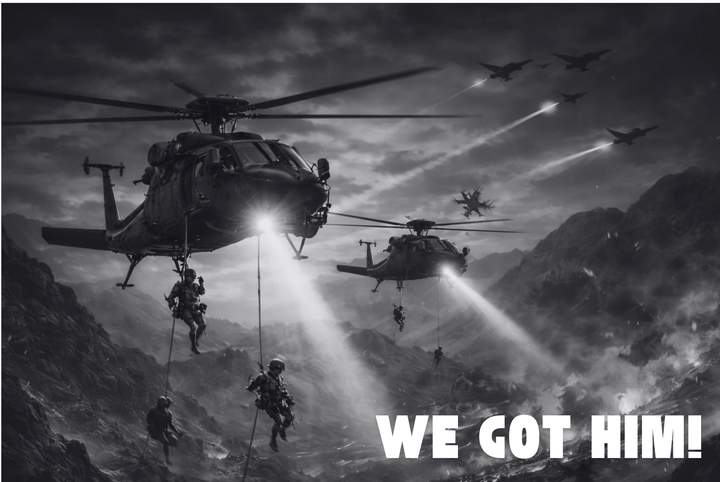
SEAL Team Six and Delta Force operators, supported by MC-130J Commando II aircraft, established a Forward Arming and Refueling Point (FARP) at an abandoned agricultural airstrip 200 miles inside Iranian territory near Isfahan. The colonel was extracted after a massive firefight. Two MC-130Js became stuck in soft ground and were destroyed in place to prevent capture. Three additional aircraft flew in to complete the extraction. No Americans were killed or wounded, according to the President. The mission was, in Trump's words, "one of the most daring Search and Rescue Operations in U.S. History."
This narrative contains verifiable facts. The F-15E was genuinely shot down — Iranian footage of the wreckage, confirmed by independent geolocation, establishes this. The airstrip near Shahreza City in southern Isfahan was used by American forces — satellite imagery published by CNN and others confirms the location. Destroyed aircraft are visible in Iranian state media footage. The CIA deception operation is corroborated by multiple senior administration officials across different news organizations. A massive firefight occurred — videos of missile strikes in Kohgiluyeh County are independently verifiable.
But the narrative also contains a structural problem that grows more serious the more carefully you examine it: the asset profile assembled for this operation is categorically disproportionate to the stated objective of recovering one seriously injured man from a mountain crevice.
The aircraft inventory alone tells the story. The MC-130J is not a standard rescue platform. It is the Joint Special Operations Command's dedicated clandestine infiltration-and-exfiltration aircraft, specifically designed for deep-penetration special operations in denied environments. The MH-6 Little Bird is the 160th Special Operations Aviation Regiment's signature assault insertion helicopter — the aircraft used for direct action raids, hostage rescue, and target seizure. These are not CSAR assets that happened to be available. They are the specific tools of a specific kind of mission: a ground assault on a high-value target.
A retired Special Operations officer who examined the wreckage photographs from the Isfahan airstrip made an observation that deserves particular attention.
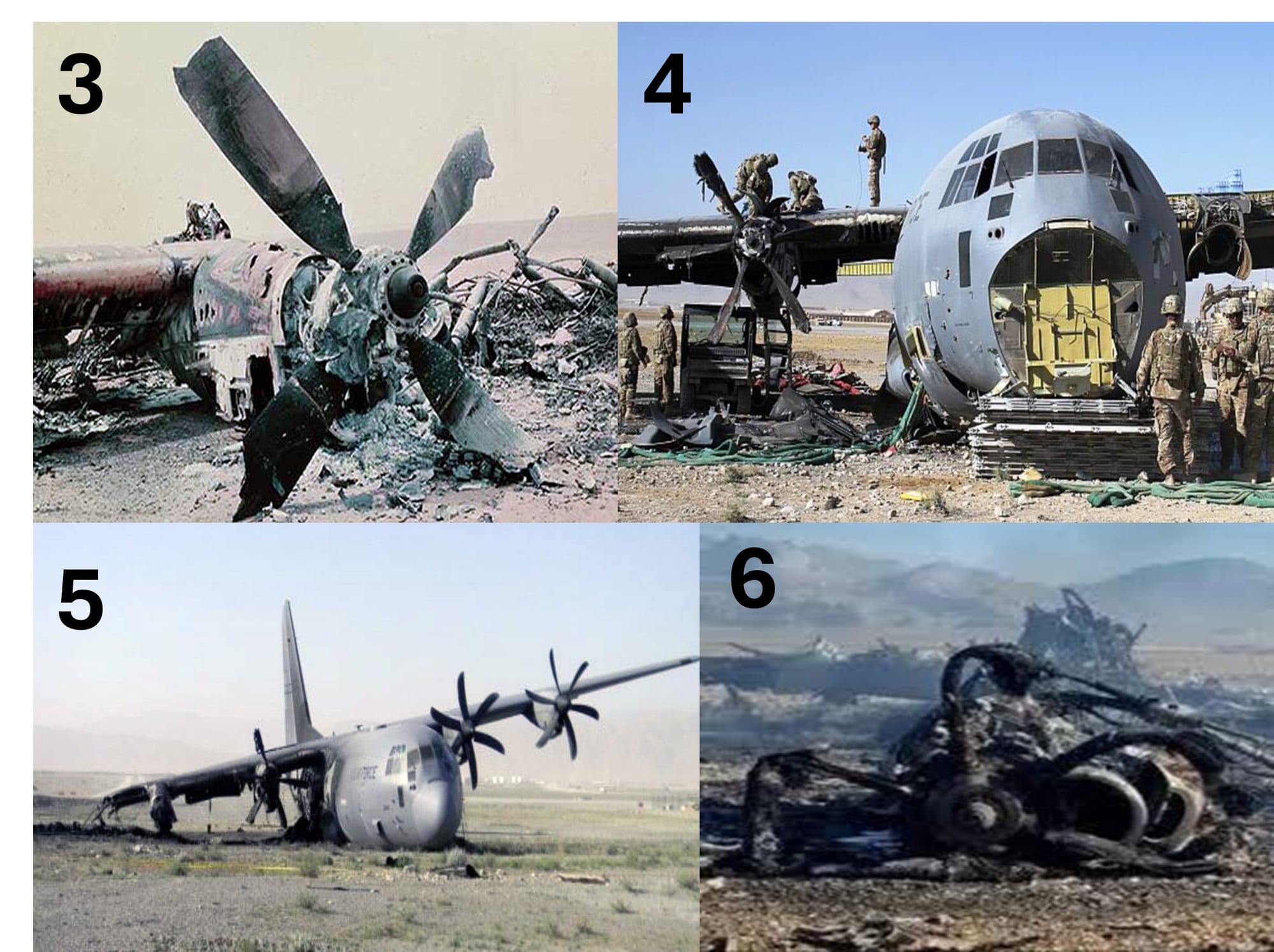
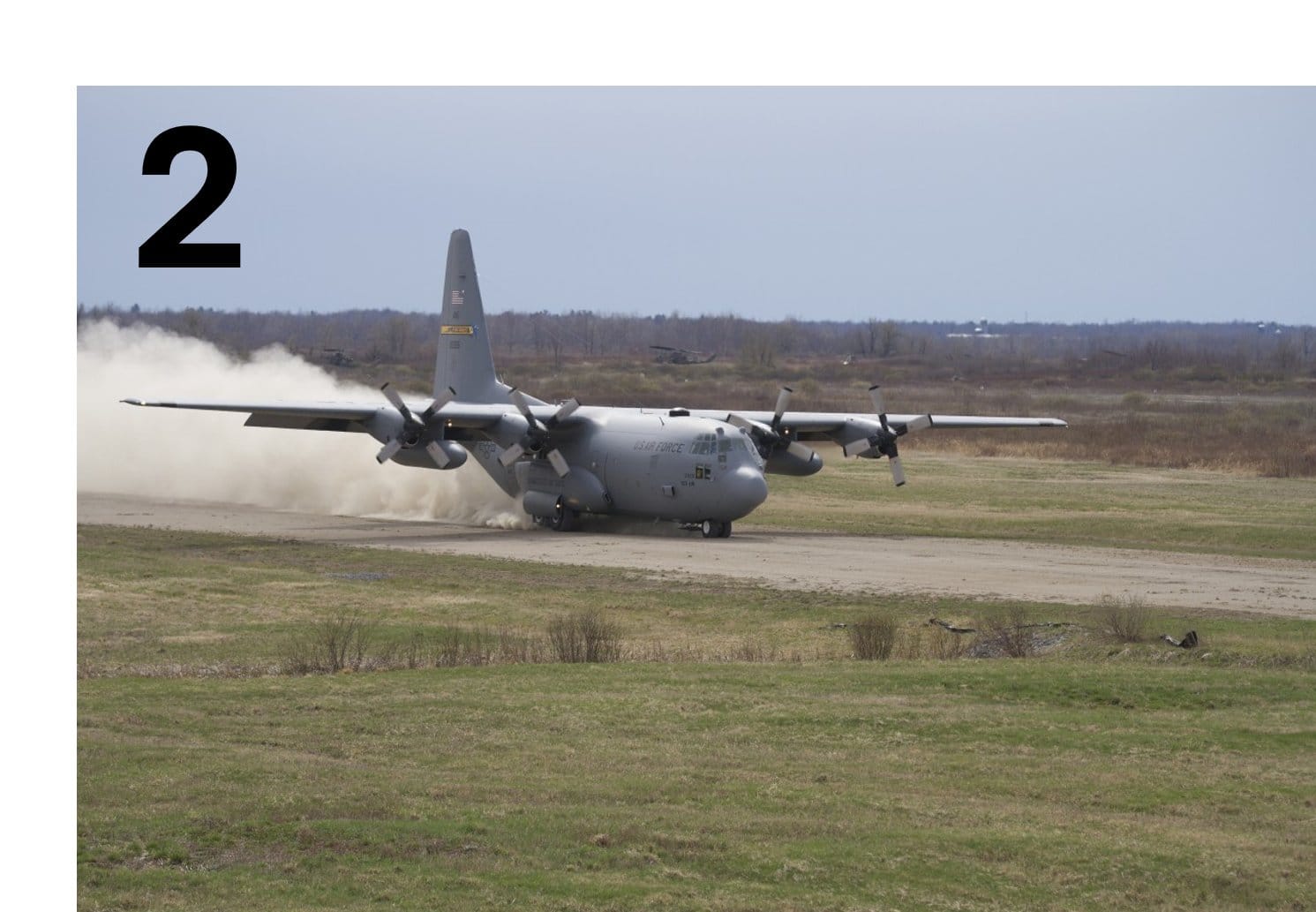
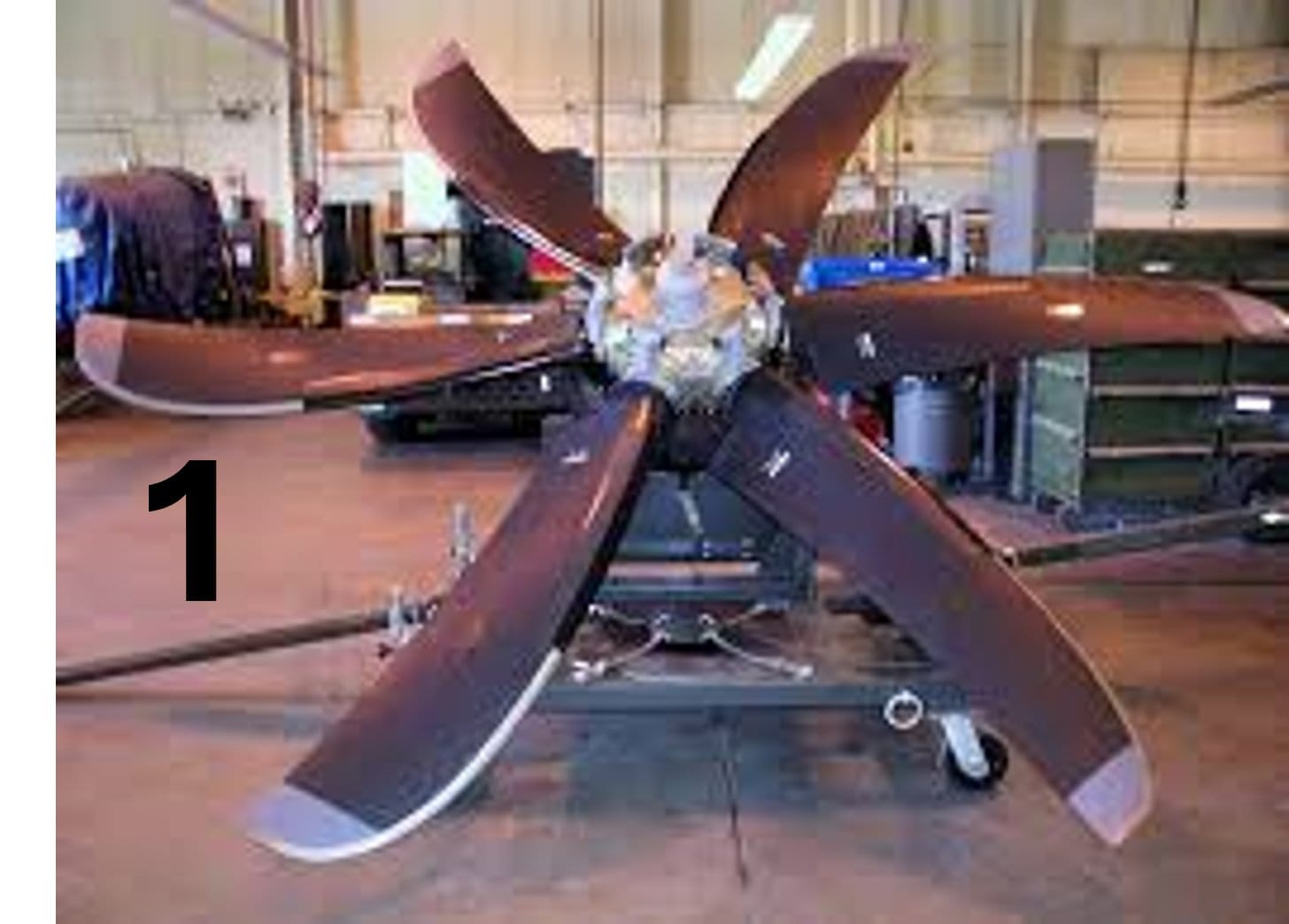
The destroyed aircraft showed six-bladed propellers — identifying them definitively as MC-130Js with Dowty R391 composite blades, not standard C-130 aluminum variants. Composite blades melt and shatter in fire rather than snap or bend.
The condition of the blades in the wreckage photographs is consistent with Blown In Place demolition followed by intense fire, which is consistent with both the official story of self-destruction and the alternative hypothesis of aircraft damaged on entry and then destroyed to conceal evidence. The propeller evidence does not resolve which scenario is true.
But it confirms that the deployed package was not a standard rescue package. It was a JSOC direct action capability — the most sophisticated and lethal ground assault apparatus the United States possesses.
II. The Primary Objective — Uranium Retrieval
The geographical fact at the center of this analysis is not incidental.
This is not a coincidence of terrain. It is a coincidence of intent.
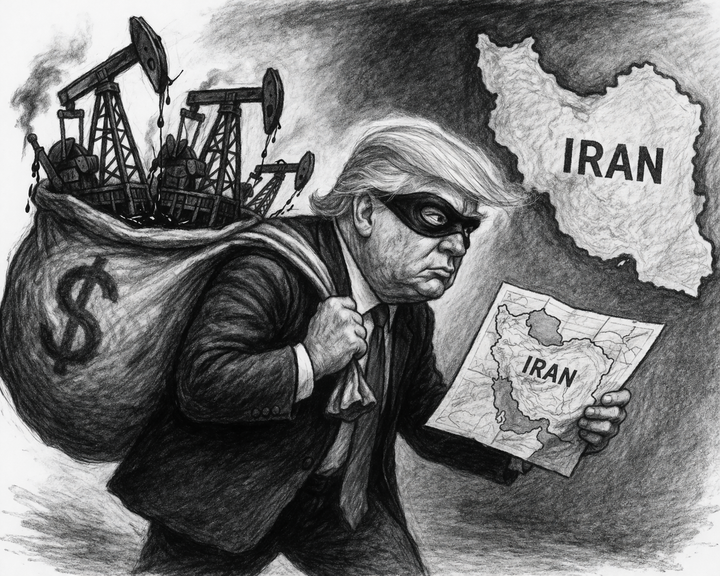
In the days before this operation, the Washington Post reported that Trump had been briefed on a military plan to seize Iran's stockpile of highly enriched uranium by force. The IAEA has assessed that approximately 450 kilograms of 60-percent-enriched uranium is stored in tunnels at Iran's nuclear complex near Isfahan and Natanz — enough material, if further enriched, for multiple nuclear weapons. Experts briefed on the plan told the Post that a ground seizure operation would require over 1,000 military personnel, helicopters to transport heavy excavation equipment, the construction of an improvised airstrip near the nuclear sites, and special forces working in tandem with nuclear technical experts. The operation would take weeks and carry enormous risks.
The logical conclusion — advanced not by conspiracy theorists but by retired Special Operations officers and former CIA analysts examining the open-source evidence — is that the CSAR operation and the uranium seizure mission were not separate events with the former being a cover for the latter. They were a single dual-purpose operation, with the uranium retrieval as the primary objective and the CSAR as both a genuine secondary mission and a ready-made cover story in the event of failure.
The Iranian military spokesman's statement is telling in this regard. He said the operation was "planned as a deception and escape mission at an abandoned airport in southern Isfahan under the pretext of recovering the pilot of a downed aircraft."
Source: X Post
Iran's characterization of the CSAR as the pretext rather than the purpose aligns precisely with the structural evidence from the asset profile.
Iran — which was monitoring American activity in the area and scrambling its own forces throughout the 36-hour window — appears to have understood what was actually happening even if the American public was not told.
The retired SOF officer's hypothesis, therefore, deserves to be stated clearly: it was intended as the opening ground assault in a uranium-seizure operation.
The F-15E shootdown — genuinely unplanned — provided both the trigger and the cover. American forces were inserted, established the FARP, and moved toward their objective. Iranian resistance was fiercer and better coordinated than anticipated. The MC-130Js were either stuck or damaged — the distinction matters but may never be publicly resolved. The operation failed to achieve its primary objective. The CSAR narrative was then amplified to explain the hardware losses and the presence of hundreds of special operators 200 miles inside Iranian territory.
If this hypothesis is correct, it has an immediate, urgent implication: where is the rescued colonel?
The anonymity of the recovered airman — no name, no photograph, no medical update, no unit identification, no interview — is now six days old. Operational security explains some of this. It does not explain all of it.
If the mission failed, and if the CSAR was the cover story, then the question of whether the colonel was actually recovered becomes not a secondary detail but the central evidentiary question.
III. How Iran Defeated American Military Superiority
The question that most disturbs serious military analysts — and the one that mainstream Western coverage is almost completely avoiding — is not whether the mission failed. It is how it failed. The United States deployed its absolute best: the most elite operators, the most sophisticated insertion aircraft, real-time satellite and drone coverage, an active CIA deception operation, and Israeli intelligence support. Against this, Iran — a country whose air defenses have been described as "100% annihilated" by the President of the United States — was able to mount a response fierce enough to destroy or disable multiple aircraft, force the abandonment of the FARP, and apparently prevent the achievement of the primary objective. How?
The answer is not simple, and it operates across several domains simultaneously.
The Mosaic Defense Doctrine
Iran has spent four decades studying exactly how to defeat American military superiority without matching it symmetrically.
American military power is devastatingly effective against centralized command structures. It can eliminate leadership, destroy communications networks, and suppress radar-guided air defenses with precision and speed. What it cannot do is eliminate a defense that has no center — one that functions not as a single organism but as thousands of autonomous cells, each capable of independent action, coordinated not by command but by shared doctrine and local knowledge.
Applied to the Isfahan operation: Iran did not need a centralized command to respond to the American insertion. Local IRGC units, Basij militia, and — critically — Bakhtiari nomadic tribesmen who have lived in the Zagros Mountains for generations were already present, already armed, and already motivated.
Every unfamiliar vehicle, every low-flying aircraft, every unusual pattern of movement was noticed and communicated through a human network that requires no satellites, no digital communications, and no chain of command.
The Intelligence Penetration Problem
A uranium seizure operation of the scale described — involving hundreds of personnel across JSOC, CIA, CENTCOM, NSC, and the Israeli liaison — cannot be kept within a small operational cell. Every additional person read into the planning is a potential vector for compromise. Iran has had 47 years since the Islamic Revolution to build human intelligence assets inside the American national security establishment, its regional partners, and the Gulf states whose cooperation any major regional operation requires.
The reverse intelligence problem is equally significant. Iran's retreat to analog communications — driven by well-founded fear of Israeli electronic penetration — may have made its ground-level IRGC units harder for American forces to monitor in real time.
You cannot intercept what is not being transmitted digitally. The sophisticated Israeli-American SIGINT apparatus that proved so effective in mapping the locations of IRGC commanders during the opening strikes of the war may have had far less visibility into the autonomous, low-tech response network that Iran activated in Isfahan province.
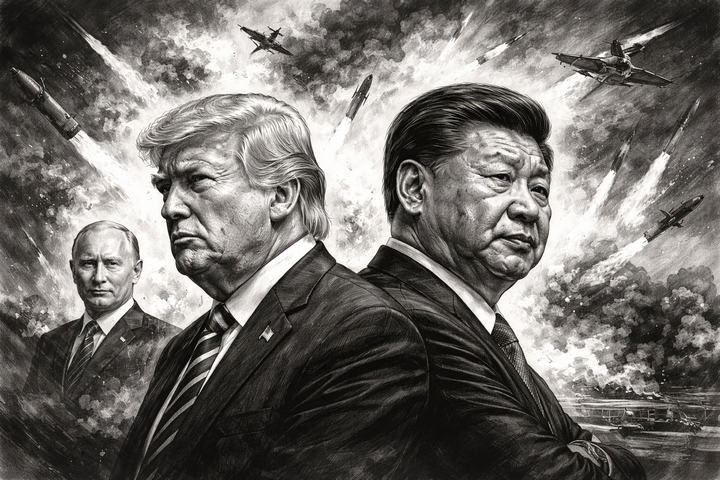
And there is the Russian dimension — the one that Western analysis almost systematically ignores. Russia has a global signals intelligence capability and satellite coverage of the Persian Gulf theater. It has every strategic interest in ensuring that an American ground operation to seize Iranian nuclear material fails.
If Russian ISR detected the MC-130J flight profiles, the FARP establishment, or the special operations insertion into Isfahan province, Moscow had both the capability and the motive to pass that intelligence to Tehran in real time.
The Asymmetry of Existential Stakes
This is the Clausewitzian dimension that American planners consistently underweight. For Iran, defending the nuclear sites against a ground seizure operation is an existential priority — the regime's entire deterrence posture depends on maintaining its nuclear leverage. Iranian forces will accept enormous losses to prevent that seizure, because the alternative is existentially worse. For the United States, even a high-value special operations mission operates under rules of engagement, casualty constraints, and domestic political pressures that Iran exploits as a structural advantage. Iran can throw everything available at the FARP and the insertion zone. The US operates under constraints that limit the violence it can apply in response. That asymmetry is not a tactical detail. It is the fundamental strategic reality of any American ground operation inside Iran.
IV. Trump's Psychological Profile — Reading the Easter Sunday Post
At this point, it is imperative that we also consider the messenger's psychological state. To facilitate that effort, we will start with this evaluation by Jeffrey Sachs, professor at Columbia University.
Intelligence professionals have a term for unguarded statements made under emotional pressure: leakage.
When a person's emotional regulation breaks down under stress, the unconscious content of what they actually feel breaks through the surface of what they intend to project.
The behavioral cluster that Trump produced on Easter Sunday, April 5, 2026 — in the hours immediately following what he was simultaneously claiming as a historic military triumph — is one of the clearest examples of leakage in recent presidential communication.
The full text of the Truth Social post deserves to be read carefully, not for its content but for its psychological signature:
This was posted on Easter Sunday morning — a day of religious significance to the Christian nationalist worldview that saturates this administration — hours after Trump had publicly announced the rescue of the colonel, which he called "one of the most daring Search and Rescue Operations in U.S. History." A man who has genuinely just achieved what he claims to have achieved does not produce this communication. Winners consolidate. They project calm. They let the victory speak. This post does none of these things.
Parse each element.
- The three exclamation marks after "There will be nothing like it" — on Easter Sunday morning, from a sitting president in the middle of a war — signal emotional dysregulation, not triumphalism. A commander who just executed one of the most daring operations in military history does not need to manufacture anticipation for the next strike. The claimed victory should be sufficient. Its insufficiency reveals that something else is happening beneath the surface.
- "You crazy bastards" — the dehumanizing register of this phrase is the tell. Professional wartime communication, even when threatening, maintains a controlled register that signals authority and confidence. Profanity and name-calling at this level are what people do when they are angry and cannot say why. Anger in a genuine winner is performative. Anger in someone who has just absorbed a significant setback and cannot acknowledge it is reactive and unguarded.
- "Praise be to Allah" — signed at the end of a presidential threat on Easter Sunday — is petty mockery wearing the costume of trolling. It serves no strategic purpose. It alienates the Muslim allies whose cooperation any regional strategy requires. It hands Iran's information warfare apparatus a gift that will be broadcast across the Islamic world. A president in control of events, processing a genuine victory, does not need to do this. A man whose nose has been rubbed in the sand — to use your precise phrase — and who cannot publicly acknowledge it, reaches for whatever is available to assert dominance. This is what was available.
The behavioral pattern across the day compounds the diagnosis. Trump told Fox News he was "considering blowing everything up and taking over the oil."
He told ABC News, "I have no idea with these people. There could be a deal, and there could also not be a deal."
These statements, made within hours of each other, represent rapid cycling between rage, bravado, and genuine uncertainty — the behavioral signature of someone processing a shock they cannot publicly name.
Compare this to Trump's communication pattern following genuine victories: settled, repetitive, self-congratulatory but calm. The Easter Sunday cluster has none of that settled quality. It vibrates with barely contained fury.
The deadline pattern confirms the reading.
A president who has just demonstrated overwhelming military superiority inside Iranian territory does not need to keep resetting deadlines.
The repeated extension pattern, combined with the emotional register of the Easter post, tells a consistent story: the operation to force Iran's compliance failed, and the man at the top knows it and cannot say so.
V. The Crusader Frame — How America Is Losing the War It Is Not Fighting
There is a layer to this conflict that current Western analysis is almost completely ignoring — one that may prove more consequential than any tactical outcome in Isfahan province. It concerns the religious framing of the war, who initiated that framing, who has embraced it, and what the long-term strategic consequences are for Western societies with large Muslim populations.
Iran understands that it cannot defeat the United States in a sustained kinetic confrontation.
What it can do is change the nature of the battlefield — from one where American hardware and training dominate, to one where the contest is fought in the realm of identity, solidarity, and civilizational loyalty across 1.8 billion Muslims worldwide.
The trap required a specific condition to become lethal: the American side had to accept the frame.
The Trump administration has not merely accepted it. It has enthusiastically collaborated in constructing it — apparently without understanding what it is doing.
The Hegseth Architecture
Pete Hegseth, the Secretary of Defense who prefers the title Secretary of War, is the most consequential figure in this story — not because of his operational decisions, but because of his ideology and what it broadcasts to the world. The evidence is not subtle.
- His book is titled American Crusade.
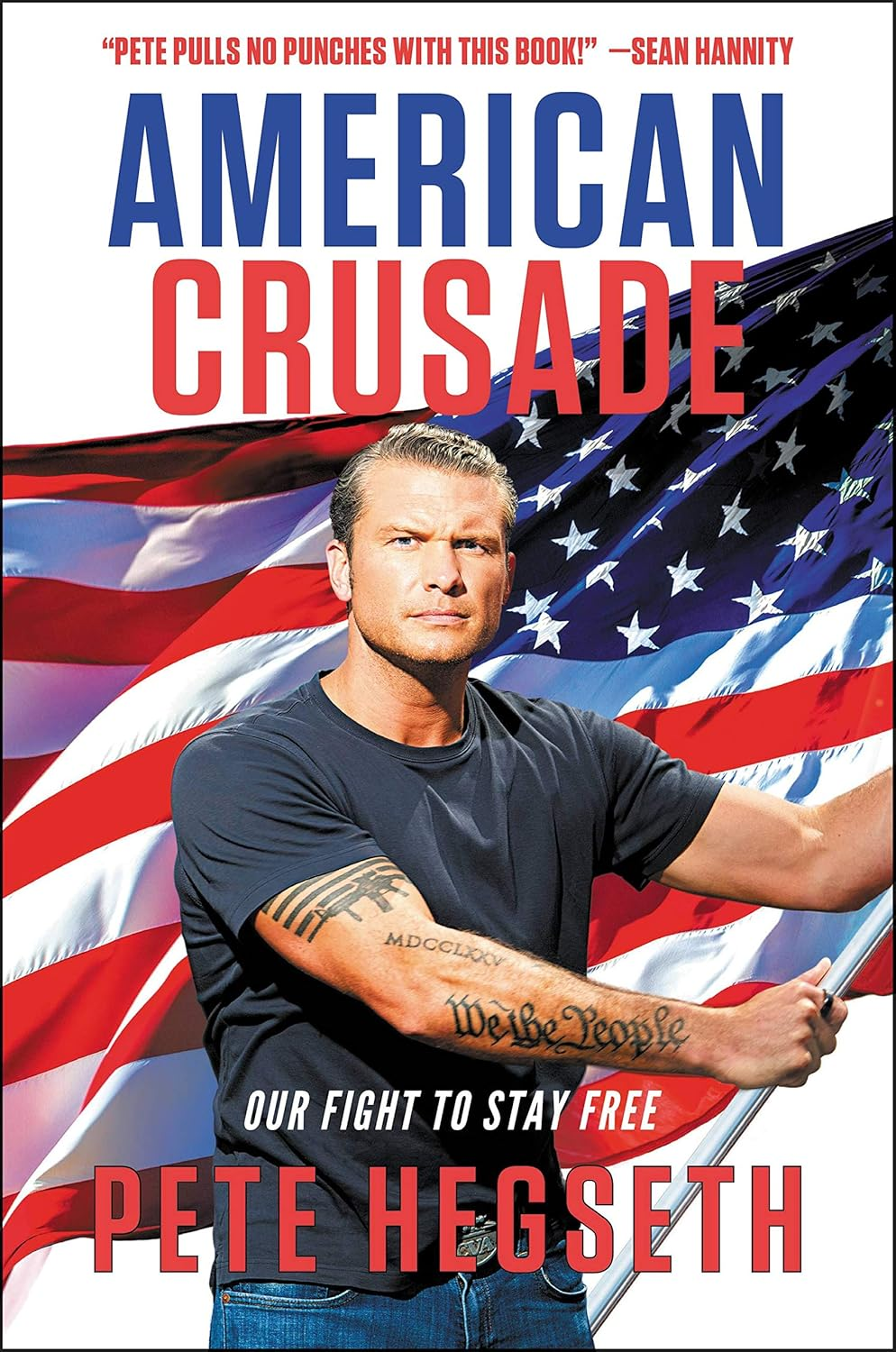
- He has the Jerusalem Cross and the phrase Deus Vult — God wills it, the battle cry of the First Crusade in 1095 — tattooed on his body.
- He carried a Bible stamped with these same Crusader symbols to a Pentagon prayer service in March 2026 and prayed for "overwhelming violence of action against those who deserve no mercy" and for the enemy to be "delivered to the eternal damnation prepared for them."
Look at how the Trump administration is willingly walking into Iran's theological trap.
Hegseth's own words confirm the framework.
Hegseth has a history of defending the Crusades, the brutal medieval wars that pitted Christians against Muslims. In his 2020 book "American Crusade," he wrote that those who enjoy Western civilization should "thank a crusader." Two of his tattoos draw from crusader imagery: the Jerusalem Cross and the phrase "Deus Vult," or "God wills it," which Hegseth has called "the rallying cry of Christian knights as they marched to Jerusalem." (Source: "Pete Hegseth's Christian rhetoric reignites scrutiny after the U.S. goes to war with Iran" / PBS)
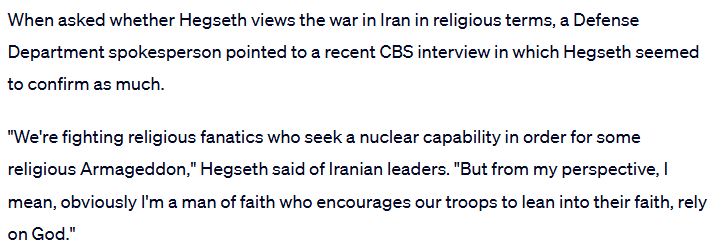
When asked whether he views the war in religious terms, his defense department pointed to his CBS interview in which he said: "We're fighting religious fanatics who seek a nuclear capability in order for some religious Armageddon."
He has prayed in Jesus' name at Pentagon briefings.
His pastor — Doug Wilson, a Christian nationalist who believes America should be a Christian theocracy — was invited to address the United States military.
The Military Religious Freedom Foundation has received over 200 complaints from more than 50 military installations that commanders have been invoking Christian rhetoric in describing the war, including an NCO report that troops were told the Iran war is part of "God's plan" and that Trump was "anointed by Jesus to light the signal fire in Iran to cause Armageddon."
The institutional alarm is already sounding from within.
The military archbishop — the head of the Archdiocese for the Military Services USA, who had previously praised Hegseth — stepped forward publicly to signal that the rhetorical line between faith-informed leadership and sectarian war justification has, in his judgment, been crossed.
Pope Leo XIV, in his Easter address, said directly: "Jesus rejects war, whom no one can use to justify war."
The contrast between the Pope's words and Hegseth's prayer could not be more complete.
The Symmetry Trap
What Hegseth and Trump do not appear to understand — or do not care to understand, which is strategically identical — is that the religious framing of this war serves Iran's strategic interests far more than America's. Iran needs this to be seen as a war against Islam.
It needs the 1.8 billion Muslims who have no affection for the Iranian theocracy, who are predominantly Sunni, who are in many cases secular, and who fled precisely the kind of religious authoritarianism that Tehran represents, to nonetheless feel that their civilization is under assault.
For that, Iran needs a Crusader enemy. Hegseth is providing exactly that — not as a propagandistic invention but as genuine documented reality, broadcast globally in real time.
The deep irony is that Hegseth's Christian nationalism and Iran's Islamic revolutionary framing are not opposites.
They are collaborators.
Each needs the other to be true. Each validates the other's worldview. Each provides the other with the domestic political base it requires.
The Western Muslim Population — The Strategic Variable Nobody Is Modeling
Europe has approximately 26 million Muslim residents. The United Kingdom has roughly 4 million. France has a Muslim population of 5 to 6 million, the largest in Western Europe. The United States has 3.5 million Muslim Americans.
These communities are not monolithic, and the vast majority have no sympathy for the specific ideology of the Iranian theocracy. Many are Sunni. Many are secular. Many arrived in the West specifically because they rejected the kind of religious authoritarianism that Tehran represents.
But the question that matters strategically is not: do you support the Iranian government?
The question is: do you believe this war is a war against Islam?
Every time Hegseth prays for the annihilation of enemies who deserve no mercy at a Pentagon worship service — broadcast globally through social media — every time Trump writes "Praise be to Allah" as a taunt on Easter Sunday, every time Deus Vult appears on the Bible carried to the podium of the American defense establishment, the answer to that second question shifts.
It is confirmation of what he already feared.
It maps directly onto his existing experience and tells him: this is what they think of you. This is what you are to them. An enemy deserving no mercy, to be delivered to eternal damnation.
This is precisely the raw material of radicalization — not radicalization directed by Iran, not organized through any network, but the spontaneous, autonomous, cell-by-cell radicalization of individuals who feel their civilization is under existential assault. The pattern is historically documented across every major Western military intervention in Muslim-majority countries since 2001.
The Iraq War produced a generation of radicalized Western Muslim youth. The Afghanistan occupation produced another.
The specific feature that makes this moment different — and more dangerous — is that the civilizational framing is coming not from jihadi propaganda but from the official communication of the United States Secretary of Defense.
VI. The Kunduz Parallel — A History of Strategic Concealment
The possibility that a catastrophic military failure is being concealed behind an official narrative of success is not a novel hypothesis about American military operations. It is a documented historical pattern.
The Kunduz airlift of November 2001 remains one of the most consequential and least examined episodes of the post-9/11 era. With Northern Alliance forces having cornered thousands of Taliban and Al Qaeda fighters at Kunduz — fighters who included commanders who had planned the assassination of Ahmad Shah Massoud just days before 9/11 — Pakistani aircraft were allowed to evacuate an unknown number of those fighters to Pakistan.
Estimates of how many were evacuated range from hundreds to several thousand.
The operation occurred with the knowledge of American military and intelligence officials. It was concealed from the American public.
The fighters evacuated from Kunduz formed the core of the reconstituted Taliban that would fight American forces for the next twenty years.
The Kunduz airlift is not a fringe allegation. It has been reported by Seymour Hersh, confirmed by Pakistani officials, and acknowledged indirectly by multiple American officials.
It represents a case where the official narrative of a military operation — the surrender and defeat of enemy forces — concealed a strategic decision whose full dimensions were not disclosed. The lesson is not that American military failures are always concealed.
The lesson is that they have been concealed before, at the highest levels, for political and strategic reasons.
Applied to the Isfahan operation, the concealment hypothesis does not require bad faith across the entire American security apparatus.
It requires only that the decision-makers — faced with the failure of a high-risk, high-value operation involving $400 million in hardware, the exposure of a classified nuclear seizure program, and the political consequences of admitting that Iran defeated American special operations forces on their own territory — chose to amplify the CSAR narrative and suppress the rest.
That is not an extraordinary decision. It is the decision that institutions make when the alternative is an accounting they are not prepared to provide.
VII. Synthesis — The Strategic Architecture of a Coming Catastrophe
Draw the threads together and what emerges is not a collection of separate analytical puzzles. It is a single coherent picture of strategic failure operating simultaneously at the tactical, operational, and civilizational levels.
At the tactical level: a high-value special operations mission — likely the opening ground assault of a uranium seizure operation — was inserted into Iranian territory, encountered a response that was better coordinated and more ferocious than anticipated, lost multiple aircraft worth hundreds of millions of dollars, apparently failed to achieve its primary objective, and was then narratively reconfigured as a search and rescue operation whose principal subject remains, six days later, anonymous, unverified, and invisible to the public. The tactical failure is being managed as an information problem rather than a military reckoning.
At the operational level: Iran demonstrated that American special operations forces, deployed with every advantage of technology, training, and air support, can be stopped inside Iranian territory by the combination of terrain familiarity, decentralized human intelligence networks, existential motivation, and — very possibly — real-time intelligence support from a peer-level adversary watching the operation unfold from orbit.
This is not a one-time anomaly. It is a demonstration of what any American ground campaign inside Iran would encounter at scale, on every axis of advance, against an adversary that has spent four decades preparing for exactly this scenario.
Each of these failures compounds the others.
The tactical failure serves Iran's propaganda. The propaganda is amplified by Hegseth's Crusader rhetoric. The Crusader rhetoric alienates the Muslim populations of Western allies, whose political support any sustained conflict requires. The political erosion forces further escalation to demonstrate resolve. The escalation runs into the same operational limitations that stopped the Isfahan mission. The cycle continues.
The most dangerous moment in this trajectory is not the next missile strike or the next failed special operation. It is the point at which the accumulated frustration of tactical failure, combined with the inflammatory religious framing, produces the first major domestic terrorist attack in a Western city by someone who has understood himself as a soldier in the civilizational war that Hegseth has been publicly declaring.
That attack, when it comes, will be treated as confirmation that the war was necessary and that domestic Muslim communities require further surveillance and restriction. That response will radicalize the next cohort. The cycle that Samuel Huntington described as a civilizational clash will not have been inevitable. It will have been manufactured jointly, by Iranian theocrats who needed it to be true and by American Christian nationalists who needed it to be true — and paid for in blood by people in cities on multiple continents who had no voice in the decision.
The retired Special Operations officer who examined the Isfahan wreckage photographs ended his analysis with a reference to Clausewitz: a ground war into Iran will be a tactical, operational, and strategic failure. He was writing about the military dimension. The assessment extends further. The civilizational war that is being constructed — through the combination of military overreach, strategic concealment, and religious inflammatory rhetoric — is a failure of a different and deeper order. Military failures can be recovered from. Civilizational wars, once ignited, burn for generations.
VIII. What Needs to Be Watched
Serious analysis does not end with conclusions. It identifies the specific threads that will confirm or refute the hypothesis as events develop. Here are the threads that matter.
- First, the colonel. If a verifiable identity, photograph, medical update, or unit acknowledgment surfaces within the next two to three weeks, the CSAR narrative gains significant credibility. If the anonymity holds indefinitely — if no family statement, no congressional briefing, no confirmation of military records emerges — the silence itself becomes evidence for the cover story hypothesis.
- Second, the Tuesday strikes. Trump announced that Tuesday would be "Power Plant Day and Bridge Day" in Iran. If those strikes materialize at the scale threatened, they represent a potentially decisive escalation — and targeting civilian infrastructure at that level would constitute a war crime under international humanitarian law, which multiple legal experts have already noted. If the deadline is extended again, the pattern of empty ultimatums is confirmed and Iran's reading of American resolve is validated.
- Third, the Strait of Hormuz. The entire strategic logic of the operation — whether CSAR, uranium seizure, or both — depends on resolving the Hormuz closure. Iran has said the strait will not reopen until it is fully compensated for war damages. The gap between that position and America's is unbridgeable through military pressure alone. Watch whether any genuine diplomatic channel opens, and whether it does so through the Gulf state intermediaries — Qatar, Oman — who retain relationships with both sides.
- Fourth, the Western Muslim street. The radicalization dynamic does not produce visible indicators quickly. But watch for the political temperature in France, the UK, and Germany — the countries most exposed to the combination of large Muslim populations and governments that are currently supporting or acquiescing to American policy. Watch the statements of Muslim community leaders, the tenor of Friday sermons, the volume and intensity of protest activity. These are leading indicators, not lagging ones.
- Fifth, the Russian intelligence dimension. If it becomes clear — through leaks, congressional testimony, or allied intelligence sharing — that Russian ISR assets provided Iran with real-time information about the Isfahan operation, the strategic implications extend far beyond this conflict. It would mean that American special operations cannot be conducted in any theater where Russian satellites have coverage without assuming that the adversary has been warned.
That is a profound constraint on the operational freedom that American military planning has assumed for three decades.
Bottomline
What happened in Isfahan province between April 3 and April 5, 2026 is not yet fully known. It may never be fully known — the layers of operational classification, political incentive, and narrative management that now surround it are formidable. But what can be assessed from the available open-source evidence is this:
- the official account does not hold together at the structural level.
- The asset profile exceeds any plausible CSAR requirement by orders of magnitude. The proximity to Iran's nuclear infrastructure is not incidental.
- The president's behavioral profile on Easter Sunday is not the profile of a man processing a victory.
- The colonel does not exist as a verifiable public fact.
- And the Crusader framing of the war — deployed by the Secretary of Defense with apparent conviction and without apparent strategic awareness — is constructing exactly the civilizational conflict that Iran needs and that Western societies are not prepared to manage.
The story that is waiting to blow up is not just about one operation in one province. It is about whether the United States, led by men who believe they are anointed by God to light signal fires in Iran, has the strategic coherence to understand what it has set in motion — and whether it has the wisdom to stop before the fires spread to streets it cannot police and hearts it has already lost.
That is the analysis. Watch the threads. The next 30 days will be clarifying.
Comments ()