
The War Beneath the War
The Iran war is not a Middle East conflict. It is a simultaneous battle for energy corridors, rare earth materials, monetary architecture, and AI compute supremacy — with four powers, two resource paradigms, and a fracturing world order as the stakes.
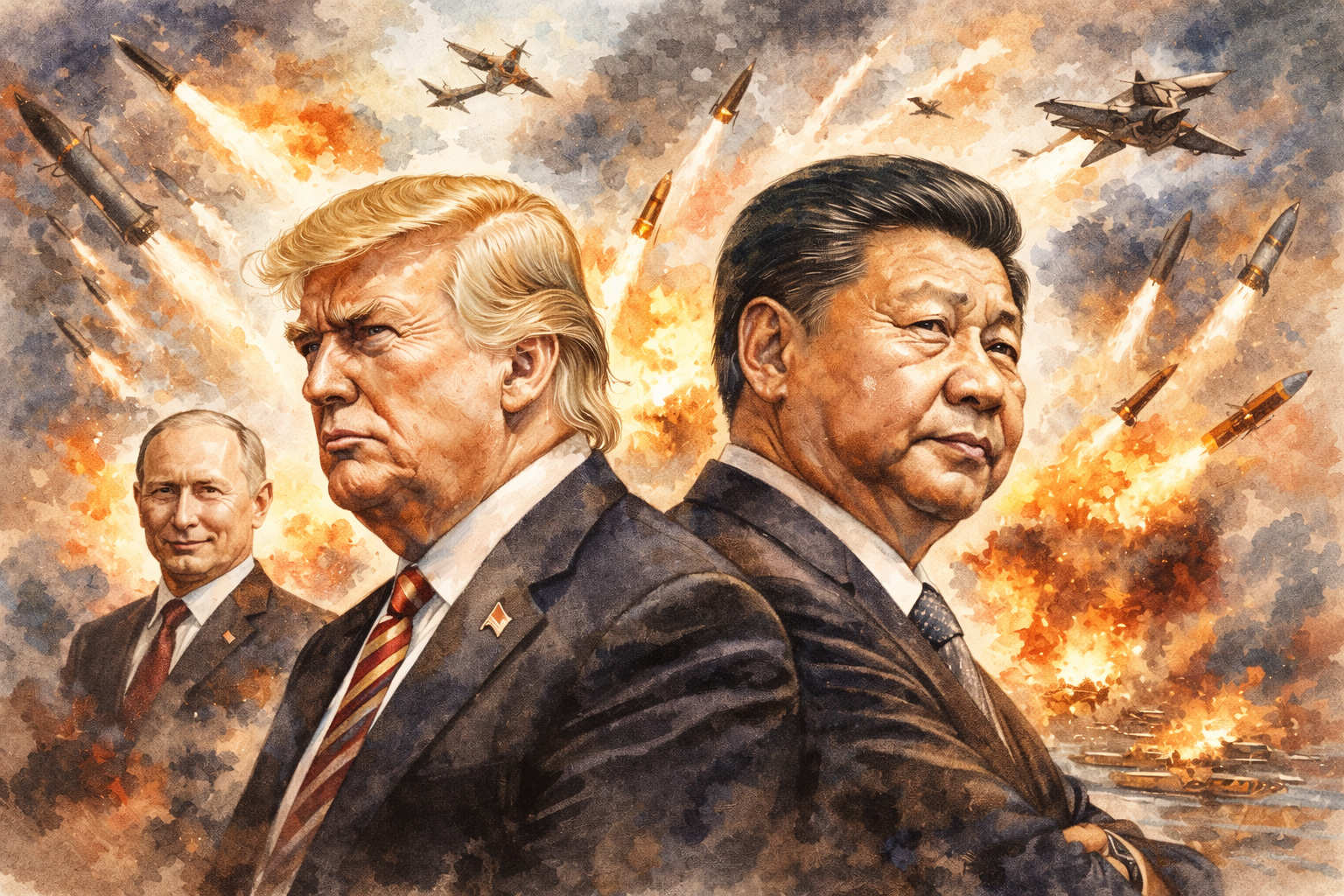
The Two Masters and the Valley Between Mountains
In a valley between two great mountains, there was a monastery whose monks had studied the art of water.
For ten generations, the Abbot of the Western Mountain had understood one truth above all others: he who controls the river controls the valley. And so, across many patient decades, he had rerouted streams, dammed tributaries, and built great stone channels through which all water in the valley now flowed — downward, always downward, and always through cisterns that he owned.
The farmers below could not irrigate their rice without his permission. The western villages could not brew their tea without his grace. Even the sky seemed to consult him, for his monks read clouds and sold their predictions at market price.
The Abbot of the Eastern Mountain watched all of this and said nothing.
He spent those same decades walking. He walked into the earth itself — down into mines, into caves, into places where the mountain held its secrets. What he found there, he did not sell. He cataloged.
He learned the name of every stone. He learned which stones, when heated, produced metals that no river could dissolve and no dam could hold. He learned that the tools required to work iron, to shape a wheel, to temper a blade, all began in darkness — not in water.
The valley farmers, caught between the two mountains, learned to be very quiet and very small.
One spring, the Western Abbot made his great move.
He dammed the primary river entirely. The valley choked. Rice fields cracked. The price of water rose until only the wealthiest merchants could afford it, and those merchants paid in the Western Abbot's preferred currency: bolts of silk, which he alone could redeem for grain in distant provinces. The valley had been thirsty before. Now it was captive.
This, announced the Western Abbot from his high terrace, is the completion of what was always destined. Water is life. I hold water. Therefore—
But here the Eastern Abbot finally spoke, from very far away, in a voice that carried no urgency whatsoever.
Your monks, he said, are making a new type of blade. A blade that can cut stone itself, reopen rivers, reroute channels. But this blade requires a metal found only in my mines. Last week I stopped the shipments.
The Western Abbot paused.
Furthermore, continued the Western voice, the locks on your cisterns — the mechanisms your monks invented thirty years ago — are made of a particular alloy. It comes from the same mine. When the existing locks corrode, as all locks do, you will need replacements. There are no replacements available.
The valley farmers looked up from their cracked fields and said nothing.
There was a third figure in this story, though he rarely appeared in either abbot's plans.
He was not an abbot at all. He was a wandering monk who had, long ago, refused to join either monastery. He lived in a cave at the far northern end of the valley, where neither river nor mine could reach — but where, in the winter, a vast ice shelf descended from the Arctic heights and revealed, in its slow grinding, veins of both water and metal unlike anything the southern mountains contained.
The northern monk had been watching both abbots for generations. He understood — as the farmers in the valley were beginning to understand — that the Eastern Abbot and the Western Abbot were not actually fighting over the valley. They were fighting over something neither of them could name: the right to be the one who decides what the valley needs next.
The northern monk said nothing. He counted his veins of ice. He waited.
Below, in the valley, a young farmer named Dhruva had been sitting very still.
Dhruva's grandmother had once told him: When two elephants fight, the grass suffers. But the grass that has deep roots and many seeds survives. The grass that has only one kind of root and one kind of seed does not.
Dhruva had understood this. Over many years, while the abbots maneuvered, he had done something neither of them had considered: he had collected seeds. Not rice seeds only — seeds for plants that need very little water. Seeds for plants whose roots themselves loosen stone, releasing trace minerals that could be traded with anyone. He had learned, slowly and imperfectly, to read his own clouds.
He had also made friends with the farmers in the next valley, and the valley after that, and the one beyond the eastern pass. None of them was powerful. All of them were tired of thirst.
One autumn morning, the Western Abbot opened his great cistern gates to discover that the water, though plentiful, now had nowhere worth going. The merchants who had depended on his currency had found, with Dhruva's help, that they could trade directly with one another using a measure of grain that needed no silk intermediary. The dependency the Abbot had spent thirty years building had developed, quietly and without drama, a crack.
One winter morning, the Eastern Abbot emerged from his mines to discover that Dhruva's coalition of small farmers had located a modest deposit of the same rare metals in the floor of the eastern pass — not as rich as his own, not controlled by him, but sufficient. Sufficient was the word that had always frightened the Eastern Abbot most. Sufficiency was the enemy of monopoly.
The northern monk, hearing all of this, smiled and returned to his ice.
The Zen master who told this story to his students was asked: Who won?
He was quiet for a long time.
The valley, he finally said, is still thirsty. The mines are still dark. No one has won. But ask me again in fifty years, and I will tell you whether the grass put down its roots, or whether it waited for one of the abbots to decide that grass deserves water.
A student asked: Is there a teaching here?
The master said: The one who controls the river believes he controls life. The one who controls the stone believes he controls the future. Both are correct. Both are incomplete. The one who controls neither, and has learned to need both less than anyone expects — that one is the question none of us have answered yet.
Another student asked: What about the northern monk with the ice?
The master picked up his bowl of tea.
He is the one everyone forgot to worry about, he said, until they needed him. That is always when you discover what something is really worth.
The Two Hits
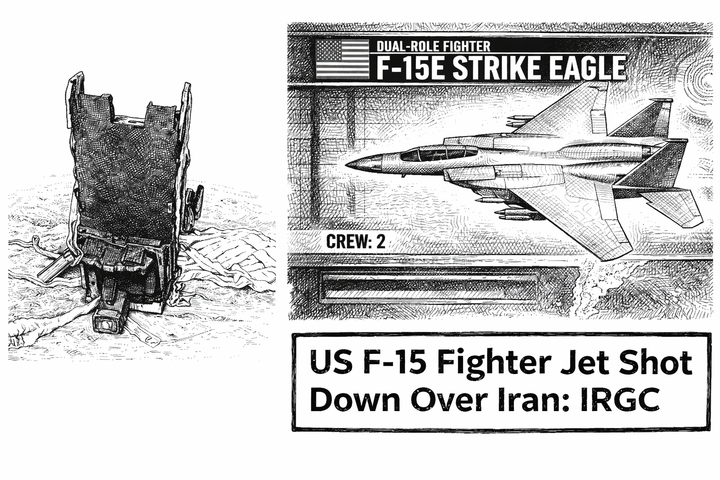
The most significant event of current West Asian war has been the hits on two US aircrafts: an F‑15E Strike Eagle fighter jet shot down over Iran, and an A‑10 Thunderbolt II attack aircraft.
While an A‑10 is much easier to hit than an F‑35 or even an F‑15, it is, however, built in a way to survive the hits. The A‑10 is slow and usually flies low, which makes it more vulnerable to short‑range air defenses (MANPADS, IR SAMs, AAA) than high-speed jets.
The incredible quality of an A-10 is that it can fly on one engine, with half a tail or wing missing, and its cockpit sits in a titanium “bathtub” designed to withstand up to 23 mm hits. So tactically speaking, “getting a missile on an A‑10” is not especially hard for a reasonably equipped defender; achieving a clean shoot‑down that forces ejection is much harder and typically requires a good missile hit plus some bad luck for the pilot.
So, how did Iran bring down the A-10 Warthog? Public reporting so far indicates the A‑10 was brought down by short‑range Iranian air defense fire—most likely a heat‑seeking (infrared) surface‑to‑air missile or MANPADS—while it was flying low in or near Iranian‑controlled airspace around the Strait of Hormuz. What we know so far is that a single‑seat A‑10C was operating near the Strait of Hormuz on the same day the F‑15E was shot down over Iran. As per American reports, U.S. officials say the A‑10 was “hit by incoming fire” over Iran or in the Persian Gulf region, then crashed outside Iran (reports differ whether it went into the Gulf or a nearby allied country’s territory).
The pilot maneuvered the damaged aircraft toward Kuwait and then ejected. He was recovered by the US forces.
Meanwhile, Iranian military and state media claim their air defenses “targeted” the A‑10 in waters south of the Strait of Hormuz and released IR footage showing a missile launch and hit on what they say is the Warthog.
While much of Iran’s larger radar‑guided SAM network was degraded by U.S.–Israeli strikes, analysts say Iran is leaning heavily on passive IR‑guided systems and MANPADS that home on engine heat and require no radar emissions.
Iran appears to be compensating for the loss of many big radars by dispersing compact, mobile IR SAMs and MANPADS in expected flight corridors—Strait of Hormuz, CSAR axes, tanker orbits—essentially running air ambushes rather than a classic IADS. Because these systems are passive (no radar), they are hard to detect and suppress until they shoot, which narrows the advantage of U.S. stealth and electronic warfare and increases the risk to low‑flying platforms like the A‑10.
So in other words, Iran most likely did not “beat” the A‑10’s ruggedness; it exploited the aircraft’s low‑altitude mission and used cheap, dispersed, heat‑seeking missiles in the right place at the right time, forcing a loss after a successful hit on a vulnerable engine zone.
The other hit on the F-15E Strike Eagle was even more significant. Why? Because the F‑15E is a cornerstone deep‑strike / air‑dominance platform, and losing one to Iranian defenses punctures the narrative of uncontested U.S. air supremacy and exposes real risk in operating over Iran.
This is the first confirmed shoot‑down of a U.S. manned combat aircraft by Iran in the current conflict, after weeks of U.S.–Israeli strikes that were framed as having “decimated” Iranian air defenses. It is obvious that Iran can still impose substantial costs on high-end US assets. It also shows that the "one-sided punishment" narrative of the US may not be that one-sided after all. It is now a contested airspace in some manner.
Worse, this loss came just days after Trump publicly claimed Iran’s ability to launch missiles and drones had been “dramatically curtailed” and that the U.S. would “return them to the Stone Ages” within weeks.
The F‑15E can fly long range, at low altitude, at night and in bad weather, carrying roughly 23,000 lb of precision and unguided munitions while still retaining strong air‑to‑air capability.
We have to remember that the F‑15 family has an almost mythic combat record with extremely few losses to enemy fire. So, a Strike Eagle being shot down by a regional power’s defenses is psychologically and doctrinally jarring.
The two‑person crew ejected; one was quickly recovered, but the second triggered a high‑stakes search‑and‑rescue operation inside Iran, with tankers, HC‑130s, and HH‑60 rescue helicopters operating in hostile airspace.
It is now being reported that the second crew member has also been recovered after a firefight by the American forces.
How did the Iranians hit the F-15E Strike Eagle?
Based on the reports, one can say that a medium/long‑range Iranian SAM (Bavar‑373/S‑300‑class or a Sayyad‑series missile) may have been used to engage the F-15E, which was on a predictable deep‑strike route at medium altitude, with IR/EO and radar cueing from within Iran’s still‑intact air‑defense pockets.
Iran may have used its Bavar‑373 long‑range SAM system (Iran’s S‑300 analog) or another Sayyad‑series missile as the most plausible attack mechanism.
Bavar‑373 reportedly uses phased‑array radar and Sayyad-4-class missiles with ranges on the order of 200 km, designed to target high‑value aircraft such as strike fighters and AWACS.
A Sayyad‑type missile launches on a lofted trajectory, climbing, then descending toward the F‑15E at high supersonic speed, guided by mid‑course updates and its own seeker in the terminal phase. In the final seconds, the missile’s seeker (likely active radar, possibly with home‑on‑jam capability) resolves the F‑15E and detonates its warhead via proximity fuse, sending fragments through wings, control surfaces, or engines.
Damage reports (complete loss, both crew ejection, rapid crash) are more consistent with a large fragmentation warhead causing catastrophic control/structural loss than with a smaller, short‑range IR missile.
The Viral Chinese Engineer Video
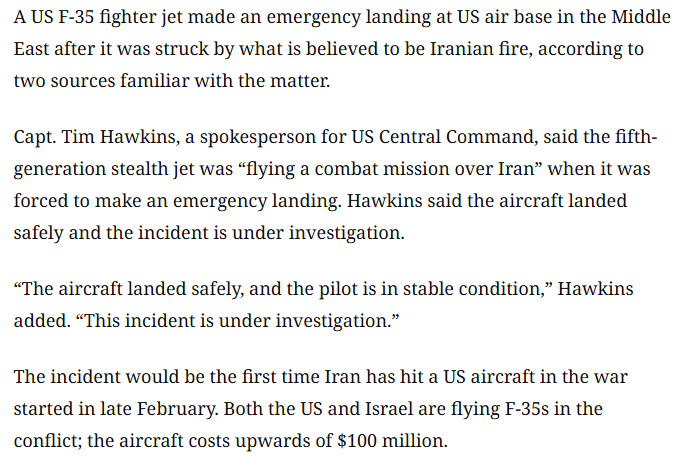
Just five days before Iran claimed to have struck a U.S. F-35 stealth fighter, a Chinese social media account shared a detailed tutorial that explained how such an attack could be carried out.
The Chinese engineer’s video (Laohu Talks World) lays out exactly the kind of concept Iran is now using: low‑cost, low‑emission sensors, dispersed short‑range missiles, and terrain/ambush tactics to erode the stealth advantage and force closer engagements.
Stealth and modern EW normally push the engagement envelope strongly in U.S. favor, especially against older radars and missiles; that is why the viral Chinese “how to shoot down an F‑35 over Iran” tutorial is so resonant.
The video, posted on March 14 by an account named "Laohu Talks World," explained how Iran could use affordable systems to find and attack America's most advanced fighter jet. The video was watched tens of millions of times. On March 19, Iran said its air defenses had hit a U.S. F-35A during a pre-dawn mission over central Iran, forcing it to make an emergency landing.
The timing was so striking that it was described as ‘prophetic’ in Chinese online circles. However, this is not the only example.
This video provides a clear explanation of the mechanism Iran may have used to strike the F-35A fighter aircraft.
Source: X Post - Idris
Iran appears to have damaged an F‑35A and shot down an F‑15E, but those two jets are not similar in stealth; the mechanisms Iran likely used against them exploit different vulnerabilities.
Let us understand these two aircraft.
F-35A: Has been designed from the ground up for low observability: aligned edges, internal weapons, RAM coatings, and IR management reduce its radar cross‑section to something on the order of a very small object (often described as “golf‑ball/insect‑like”). Its stealth is optimized against radar. However, (as the video above discussed) it can still be seen in other ways (infrared, visual, passive RF), especially if it flies predictable routes or uses afterburner.
F‑15E Strike Eagle: is essentially a non‑stealth 4th‑gen jet: big intakes, external stores, and overall shape give it a large radar cross‑section “tens of feet” across, easily tracked by modern radars at long range. It relies on speed, altitude, electronic warfare, and SEAD/DEAD support—not signature reduction—to survive in heavy SAM environments.
So from a survivability standpoint, the F‑35A and F‑15E are not comparable: the F‑35’s core defense is being hard to see on radar; the F‑15E’s is fighting from within a well‑suppressed, well‑jammed corridor.
Now, let's ask the obvious question that seems hidden in this entire episode and then widen that investigation further.
Is China Helping Iran?
The Yahoo report cited earlier has an interesting part that can easily be missed.
Since the Operation Epic Fury started, more Chinese civilians with science, technology, engineering, and math backgrounds have been sharing military analysis online to help Iran counter U.S. airpower. These posts include technical explanations of weapons and tactical advice, and are shared without pay or official support. This trend shows a new kind of informal, decentralized knowledge sharing during wartime. Some contributors seem to have real technical expertise with military equipment and are using open-source information to help a country facing one of the world's most powerful air forces. (Source: "Chinese engineer shared trick to shoot F-35 fighters just days before Iran’s strike" / Yahoo News)
The Chinese engineer making the video on how to target an F-35 stealth aircraft is not a singular incident.
The DIY tutorials are happening in full public view.
The support from China for Iran may be much deeper and more extensive than some engineers giving internet tutorials on how to bring down the American aircraft and weapon systems.
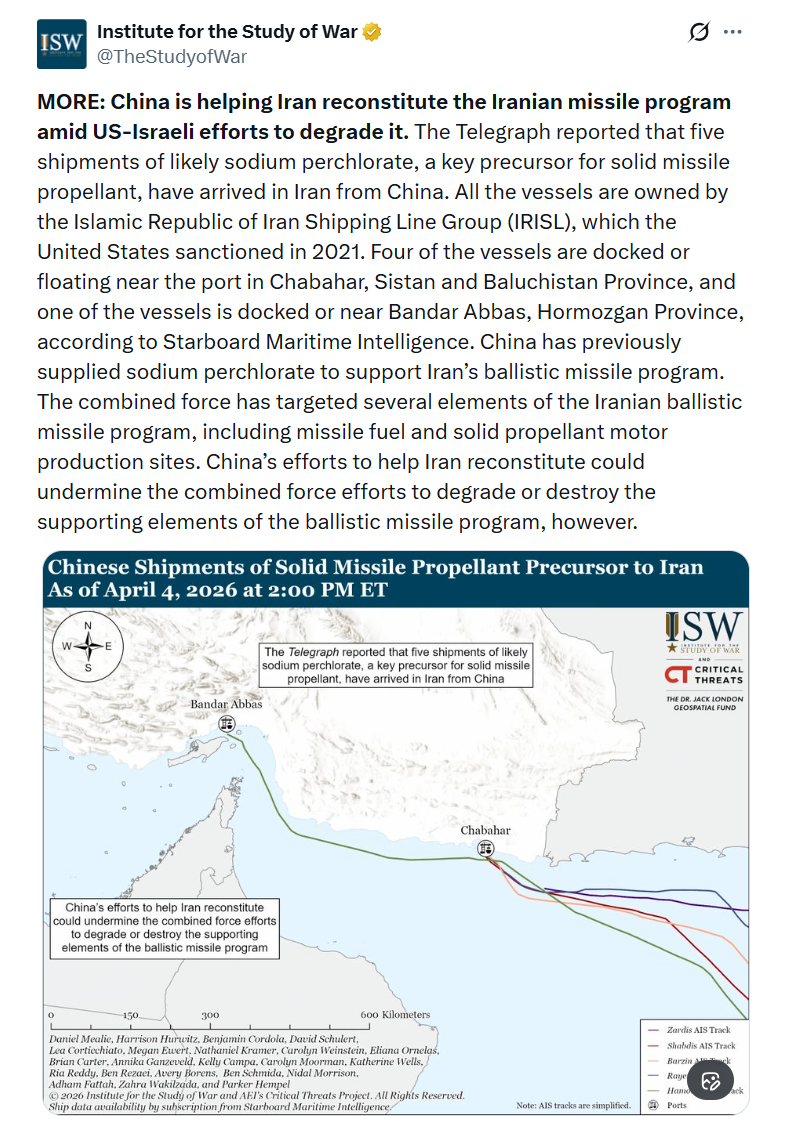
China is helping Iran reconstitute the Iranian missile program amid US-Israeli efforts to degrade it. Western media reported that China has sent multiple shipments of missile fuel precursor to Iran since the start of the war.
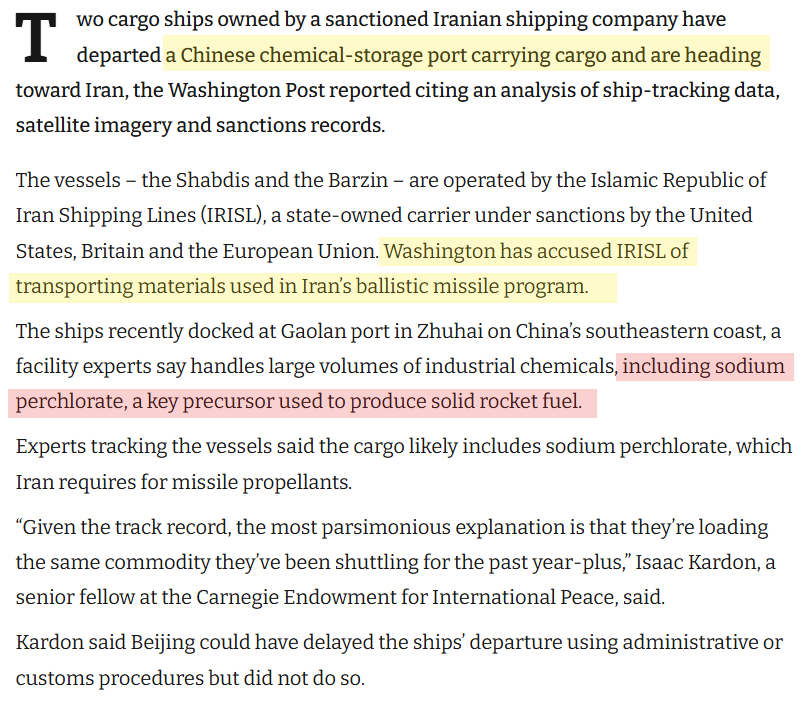
Also see reporting from the Washington Post.
In line with this reporting, the analysis from the Institute for the Study of War confirms that China is helping Iran to "reconstitute the Iranian missile program" while US/Israeli forces are working to degrade it.
China’s engagement with Iran reflects something more structured than opportunistic support—it resembles a “general contractor” model for sustaining controlled instability. Beijing is not merely backing Tehran diplomatically; it is enabling resilience at the systems level. By supplying key missile fuel precursors, dual-use components, and specialized technologies, China helps ensure that any damage inflicted by U.S. or Israeli strikes remains temporary rather than decisive.
In this framework, military action becomes a cost-imposition exercise rather than a solution. Precision strikes may destroy facilities, but they do not eliminate capability. China’s continuous logistics pipeline—industrial inputs, technical expertise, and replacement components—allows Iran to reconstitute critical infrastructure rapidly. Underground facilities, dispersed networks, and hardened supply chains reduce vulnerability while shortening recovery timelines.
The result is a strategic loop where Western powers expend significant resources to degrade capabilities that are quietly and efficiently restored. Over time, this dynamic erodes the deterrent value of conventional strikes. It also shifts the balance from battlefield dominance to industrial endurance—an arena where China excels.
What emerges is not just support for Iran, but a replicable model of asymmetric resilience—one that turns infrastructure destruction into a temporary inconvenience rather than a lasting strategic setback.
One critical aspect of Iran's performance against the American and Israeli air attacks is Iranian resistance. Where does that come from?
Iran may be using a Chinese satellite navigation system to target Israel and United States military assets in the Middle East, intelligence experts say. Former French foreign intelligence director Alain Juillet told France’s independent Tocsin podcast this week that it is likely that Iran has been provided access to China’s BeiDou satellite navigation system because its targeting has become much more accurate since the 12-day war with Israel in June. “One of the surprises in this war is that Iranian missiles are more accurate compared to the war that took place eight months ago, raising many questions about the guidance systems of these missiles,” Juillet, who served as the director of intelligence for the General Directorate for External Security from 2002 to 2003, told Tocsin. (Source: Could Iran be using China’s highly accurate BeiDou navigation system? / Al Jazeera)
Also, read this report from NDTV: Inside China's Relationship With Iran Amid Middle East War
Reports also indicate Iran has received advanced Chinese HQ-9B long-range surface-to-air missile (SAM) batteries, strengthening its air defense against fighter jets, cruise missiles, and drones.
These systems, capable of intercepting threats up to 260km away, were reportedly part of an oil-for-weapons agreement and positioned around key sites like Natanz and Fordow to rebuild capacity.
 admin
admin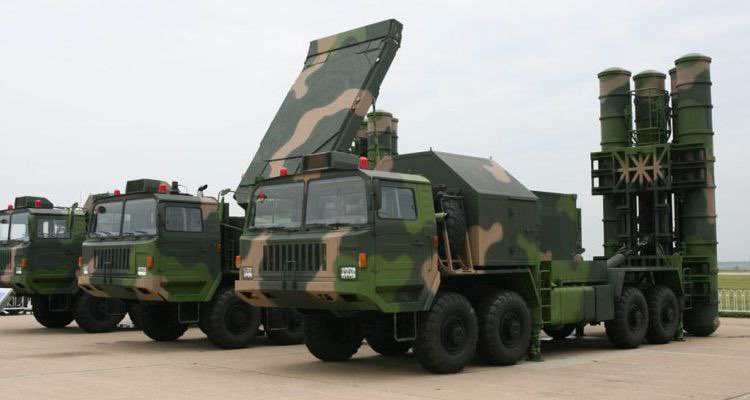
And this brings us to a critical linkage between the Iran war and India’s Operation Sindoor—one that is often missed in surface-level analysis.
With Pakistan having deployed Chinese-origin HQ-9B air defense systems during Operation Sindoor, recent combat offered a rare real-world stress test of these platforms. Reports indicate that these systems struggled under coordinated Indian strikes, particularly when faced with electronic warfare, precision munitions, and drone saturation tactics. In several instances, key installations were hit despite the presence of layered air defense, raising serious questions about both system integration and battlefield resilience.
Tehran appears to be watching closely.
Iran’s own air defense architecture now includes similar Chinese-origin systems like the HQ-9B, alongside legacy Russian platforms and indigenous solutions. The lessons from South Asia are therefore directly transferable. Pakistan’s experience demonstrated not just the capabilities of these systems but, more importantly, their vulnerabilities—especially against modern, multi-domain warfare that combines cyber, electronic, and kinetic elements.
The pattern suggests that Tehran is studying how a peer adversary—India—penetrated and degraded a Chinese-supplied defense network in real combat. That learning curve is likely shaping Iran’s own adaptations: dispersal strategies, redundancy layers, and countermeasures against electronic warfare.
In that sense, Operation Sindoor was not just a bilateral India-Pakistan episode. It became a live demonstration event for a broader network of states aligned through shared military hardware. And Iran, facing sustained Western pressure, is now applying those lessons in real time—adjusting its doctrine based on a battlefield that unfolded thousands of miles away, but within the same technological ecosystem.
Iranian Missiles are just "North Korean missiles painted green"
The missile barrages attributed to Iran—striking U.S. positions from Diego Garcia to Prince Sultan Air Base—are often framed as indigenous achievements. In reality, their lineage tells a different story. In structural and technological terms, much of Iran’s liquid-fuel ballistic missile capability is deeply rooted in North Korean design, engineering, and industrial support.
The Qiam short-range ballistic missile, for instance, bears clear evolutionary links to the Scud-C platform. Beginning in the late 1980s, North Korea transferred not only finished systems—reportedly in the hundreds—but also the production know-how required to localize manufacturing inside Iran. This was not a simple buyer–seller relationship; it was the seeding of an ecosystem. Pyongyang’s role extended to helping establish production facilities, enabling Iran to iterate, modify, and expand its missile inventory over time.
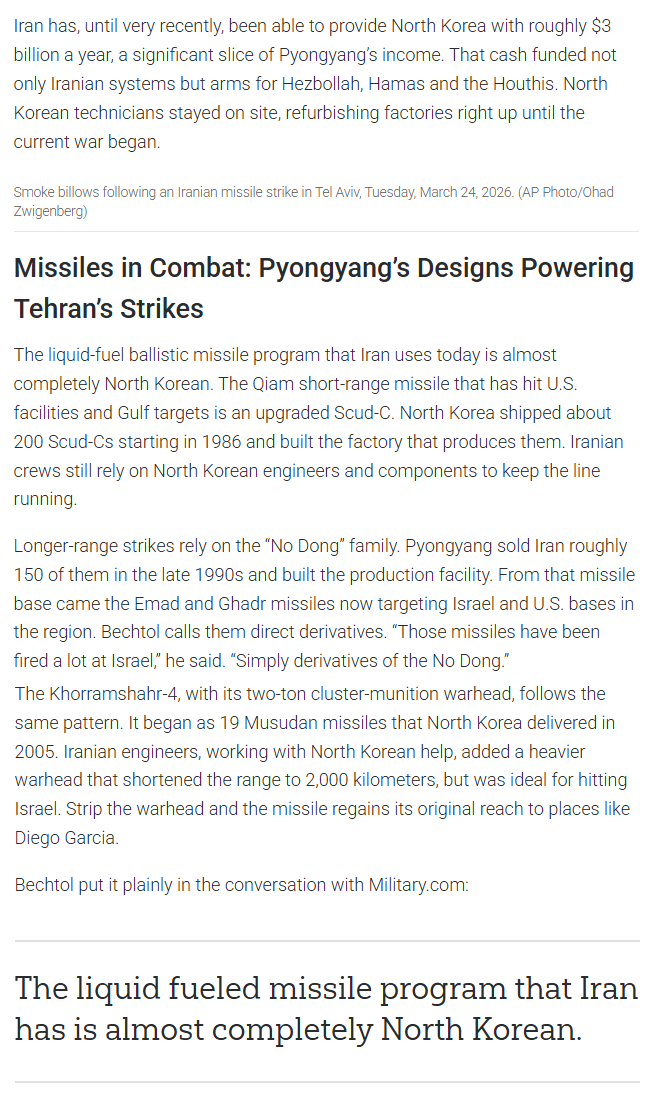
The North Korea-Iran deal is a sweet one - Iran provides the money to a battered economy and that economy provides the former with the missiles.
That collaboration did not remain frozen in the past. It matured into a sustained technical partnership. North Korean assistance reportedly included the construction of key testing infrastructure, such as a major missile test site in Emamshahr in Fars Province, along with tracking and telemetry systems in Tabas, South Khorasan. These are not peripheral assets—they are foundational to developing accuracy, range, and operational reliability.
What this means in practice is straightforward: when Iran launches a missile at distant targets, the hardware may carry Iranian markings, but its technological DNA reflects decades of North Korean input. The battlefield manifestation is therefore less a story of isolated national capability and more one of layered proliferation networks.
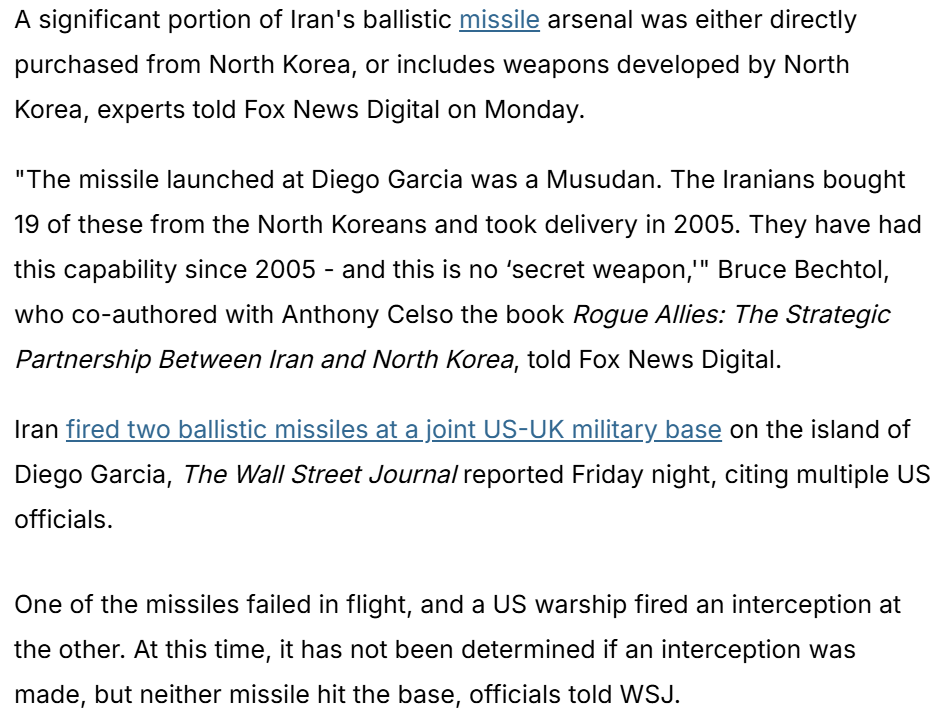
What makes this strategically consequential is the depth of integration. North Korea's mining entities have exported counter-bombardment know-how, digging a network of underground facilities for Iran's defense. Its arms enterprises have supplied Iran with its key long-range offensive weapons class: ballistic missiles.
North Korea’s mining entities have exported counter-bombardment know-how, digging a network of underground facilities for Iran’s defense. Its arms enterprises have supplied Iran with its key long-range offensive weapons class: ballistic missiles. The relationship suggests that ties binding the so-called CRINK — unofficial Western shorthand for the links between China, Russia, Iran and North Korea — remain strong. (Source: Iran bolstered by CRINK partner North Korea with offensive missiles, defensive tunnels / Washington Times)
These tunnels — the reason Iranian launchers can return to operation hours after strikes — are a North Korean signature. The Hermit Kingdom essentially built Iran's survivability doctrine into the physical geography of its missile infrastructure.
Iran’s financial relationship with North Korea has been more than transactional—it has been structurally important. Over the years, Tehran is estimated to have paid roughly $3 billion for weapons systems, components, and technical support. While that figure may appear modest in absolute terms, it represented a critical and steady inflow for an otherwise heavily sanctioned North Korean economy. For long stretches, this revenue stream helped sustain key parts of Pyongyang’s defense-industrial base and, by extension, aspects of state solvency.
That dynamic has evolved. Russia’s war in Ukraine has opened a far larger channel of demand, with estimates suggesting Moscow now pays in the range of $20 billion annually for munitions and military supplies. In pure financial terms, Russia has overtaken Iran as North Korea’s primary customer. But it would be a mistake to view Iran’s role as diminished or irrelevant. On the contrary, Iran’s earlier and more consistent engagement laid the groundwork for North Korea’s export-oriented military ecosystem.
This creates a structural incentive for Pyongyang. Iran is not just a buyer; it is a proving ground and a long-term strategic partner. If Iran were to collapse as a functioning state, North Korea would lose both a dependable client and a critical laboratory for battlefield validation. That risk shapes Pyongyang’s calculus: preserving Iran’s operational continuity is not ideological—it is economic, technological, and deeply strategic.
Russian Intelligence to back it all up
Russia’s primary contribution to Iran’s war effort is intelligence, not the bulk of the missiles or drones themselves — but it may be the most operationally decisive input of all. According to Ukrainian and Western intelligence, Russian military satellites have been deliberately imaging key U.S. and allied targets “in the interests of Iran,” providing Tehran with space-based reconnaissance it cannot generate on its own.
In an Axios exclusive, Zelensky ostensibly shared some explosive intel.
On 24 March, Russian satellites photographed the joint U.S.–U.K. base at Diego Garcia in the Chagos Islands, just days after Iran attempted a ballistic‑missile strike on the facility.
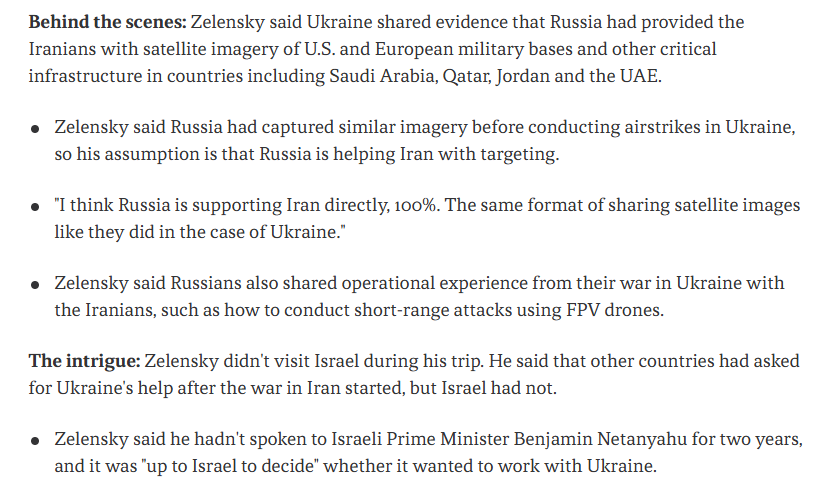
Over the following days, they imaged Kuwait International Airport and parts of the Greater Burgan oil complex, Prince Sultan Air Base in Saudi Arabia, Turkey’s Incirlik Air Base, and Al Udeid Air Base in Qatar — the largest U.S. installation in the Middle East. Several of these locations, including Prince Sultan and Kuwait International Airport, were then hit by Iranian missile and drone attacks that wounded U.S. troops and damaged aircraft, suggesting that repeated Russian imaging was used to refine Iranian targeting.
 Our Foreign Staff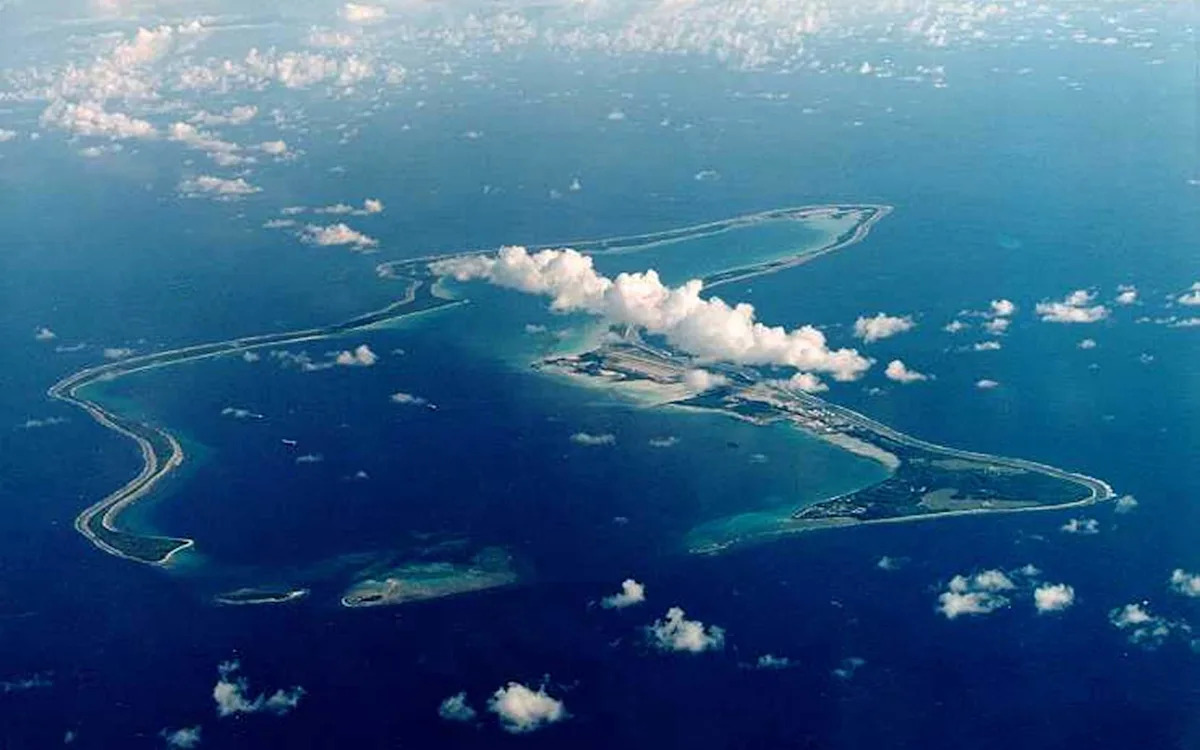
Beyond this immediate campaign, Moscow has been expanding a broader intelligence and military‑technology partnership with Tehran. The Wall Street Journal and other outlets report that Russia is sharing satellite imagery and target data, as well as helping upgrade Iranian Shahed‑series drones with better communications, navigation, and swarming tactics based on Russia’s experience striking Ukraine. Russia has also launched and supported Iranian Earth‑observation satellites such as Khayyam and Pars‑1, deepening an integrated space‑based ISR architecture that can be used against U.S., Israeli, and Gulf assets. For Russia, this “hidden hand” support keeps Iran in the fight, ties down U.S. and allied forces, and drives up global energy prices, all while allowing Moscow to conserve its own weapons stocks and avoid overt escalation.
 Gabriel Honrada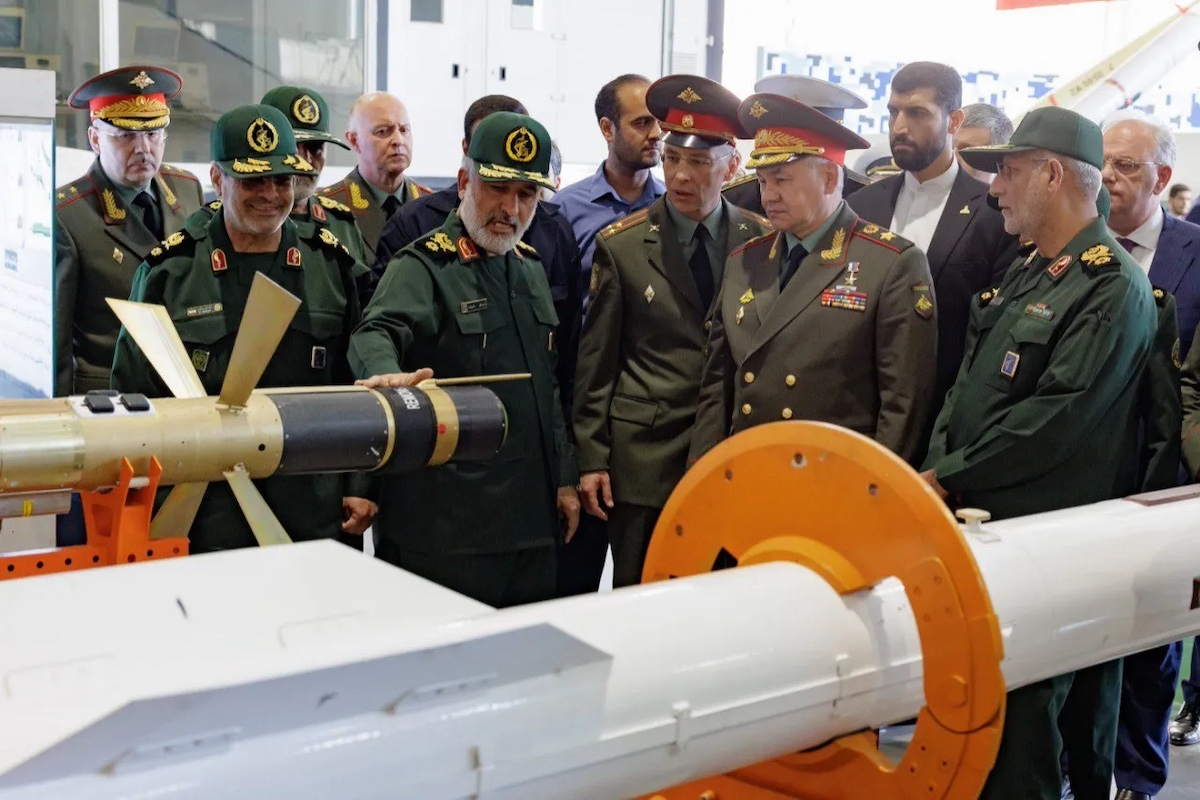
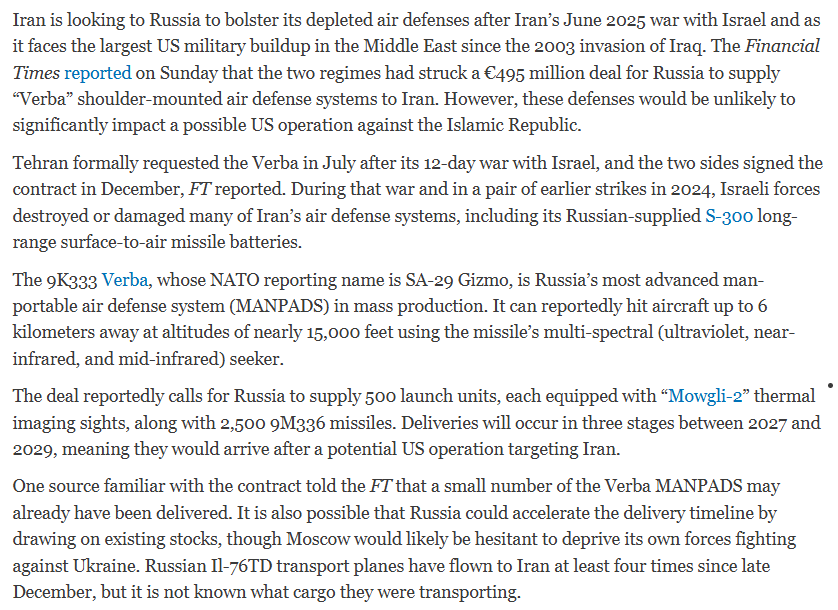
Russia is not only providing intelligence but is also supplying 500 man-portable Verba launch units and 2500 "9M336" missiles.
What does all this bring us to?
The CRINK Axis: Not a Coalition, But a Supply Chain of Resistance
How should we see this war?
As US vs Iran, Israel vs Iran, US vs China, or US-Israel vs Iran-China-North Korea?
The first analytical error in most Western commentary on the Iran war is the dyadic framing — U.S.-Israel versus Iran — that reduces a multi-nodal networked conflict to a bilateral confrontation.
Given our discussion and available evidence, it is clear that this war is much wider than a mere US/Israel vs Iran war.
It is US/Israel vs CRINK (China, Russia, Iran, North Korea) war.
Now a word about CRINK
The first thing to dispense with is the framing of CRINK as an alliance in any traditional sense. It isn't. It's a distributed production network for sustained resistance to Western military primacy — and the Iran war has exposed just how deeply integrated it is.
So the correct framing isn't "US-Israel vs Iran."
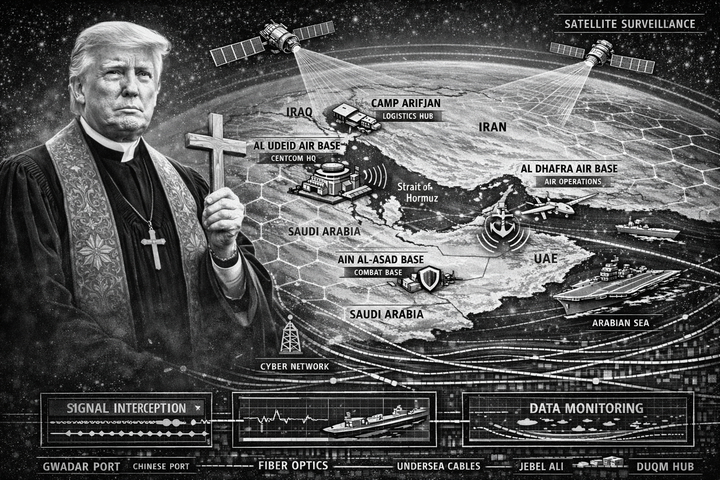
It is: US-Israel vs a distributed logistics-and-intelligence network whose principal nodes are Beijing (industrial reconstitution), Pyongyang (missile DNA and tunnel survivability), Moscow (ISR and diplomatic cover), and Tehran (the operational front).
The more precise description is that Iran is the operational front of a distributed logistics-and-intelligence network whose principal nodes are Beijing (industrial reconstitution), Pyongyang (missile DNA and tunnel survivability), Moscow (ISR and diplomatic cover), and Tehran (the operational front).
Each node contributes a distinct capability layer.
Even though coalition has no formal name, no shared ideology, and no joint command — but it functions with more coherent strategic logic than many formal alliances.
Together they constitute what Western analysts have begun calling CRINK — China, Russia, Iran, North Korea — though 'alliance' is too formal a word for what is better described as a convergent interest structure with shared tactical goals but no unified command.
With Iran being the operational front, the CRINK "alliance" gains a lot.
For example, the strategic logic from Beijing's perspective is elegant: every Patriot interceptor consumed defending Gulf states against Iranian drones costing $20,000-$50,000 each is a Patriot not available for Taiwan.
Every U.S. munitions stockpile depleted in the Middle East is a stockpile not available for Indo-Pacific contingencies. China does not need to fire a shot to benefit operationally from this war. It just needs to maintain the resupply loop — which it is doing.
Is the US implementing the Oil hegemony?
It has become almost conventional wisdom to describe Donald Trump’s style as chaotic, unpredictable—at times even erratic. Allies often appear blindsided, and U.S. policy seems to shift rapidly, sometimes within hours, shaped by statements, signals, and sudden reversals.
But step back for a moment.
What if this is not dysfunction—but design?
Not in the sense of a grand conspiracy, but as a deliberate strategic posture. Beneath the apparent volatility, there may be a more consistent hand guiding outcomes. In that framing, Trump—even as President—functions less as an outlier and more as a highly effective instrument: disruptive, unconventional, and difficult for adversaries to model or predict.
The question then becomes: to what end?
One plausible answer lies in the preservation of oil-linked financial dominance. As conversations around de-dollarization have intensified—particularly with efforts to move energy trade away from dollar-denominated systems—the United States faces a structural challenge to its monetary primacy.
In such a scenario, traditional tools may not suffice.
A more forceful approach would involve reasserting control over global energy flows—either directly or indirectly. This means strengthening influence over key oil reserves and, where control is not feasible, creating conditions where rival-controlled energy assets become unstable, constrained, or economically unviable.
Viewed through this lens, instability in critical energy regions is not merely a byproduct of conflict—it becomes part of a broader strategic recalibration. The objective is not just geopolitical advantage but the reinforcement of a financial architecture in which the dollar remains indispensable.
What appears chaotic on the surface may, in fact, be a different kind of order—one built on disruption rather than predictability.
The Four-Move Sequence
We will now go into the pattern of how it is happening to make sense out of it.
The sequence, when viewed holistically, suggests a layered restructuring of global energy and trade flows.
It begins with Europe. The Ukraine conflict triggered sanctions that sharply reduced Russian pipeline gas flows, forcing Europe to pivot toward liquefied natural gas (LNG). In this transition, the United States emerged as the dominant supplier, with Europe absorbing a majority share of U.S. LNG exports—reaching nearly 68–80% of volumes by 2025–26. What changed was not just supply, but structure. Unlike pipelines, LNG requires long-term contracts, regasification terminals, and fixed infrastructure, locking buyers into durable dependencies that are difficult to unwind on political timelines.
The second shift centers on Syria and the broader Levant corridor. The disruption of the Iran–Iraq–Syria pipeline vision—intended to connect Iranian gas to Europe—effectively removed a key overland alternative to maritime routes. This weakened a critical node in China’s Belt and Road strategy, which seeks to bypass chokepoints like the Strait of Hormuz.
The third development involves Venezuela. Long isolated from Western markets, it has vast heavy crude reserves that remain uniquely compatible with U.S. Gulf Coast refining infrastructure. Any normalization or control over these flows strengthens U.S. positioning in heavy oil markets while constraining alternative supply chains.
The fourth and most disruptive phase is unfolding in Iran and the Strait of Hormuz. This chokepoint handles a significant share of global energy flows, and its disruption has already caused severe supply shocks and price spikes. Strikes on critical assets like the South Pars gas field—the world’s largest—further amplify volatility.
If Iran collapses and Washington helps install a successor regime aligned with U.S. interests, roughly 40–45 million barrels per day of oil output—out of a global total of about 103 million—would fall under effective U.S.-led coalition influence. In that scenario, OPEC’s role as a price-setter erodes, because the American bloc becomes the true marginal producer.
The old petrodollar order rested on Saudi oil being priced in dollars; the emerging hybrid “petro/LNG dollar” rests on U.S. crude and Gulf Coast LNG, for which there is no comparably scaled alternative supplier.
Markets are already moving in that direction: the dollar index has climbed from 96 to 101, while gold and Bitcoin have both dropped roughly 20 percent from their January peaks.
European and Asian institutions are selling hard assets to raise dollars to secure access to what is rapidly becoming the only remaining large-scale, reliable energy supply.
Energy dominance has always been the basis of geopolitical control. But the next theater of global power is not measured in barrels — it is measured in compute, models, and inference capacity.
The United States understands this. Its aggressive posture on oil and gas supply chains is not merely economic — it is structural leverage, the kind that disciplines allies and punishes rivals simultaneously.
Washington is moving to lock that leverage in.
But technology is a different battlefield. AI does not flow through chokepoints the way hydrocarbons do. It does not require tankers or pipelines. It scales through semiconductors, data, and talent — all of which are distributed, contested, and increasingly sovereign.
That is where the American strategy begins to fray.
China has been building its AI stack with deliberate patience — chips, models, data governance, and state integration. Russia brings something different: asymmetric capability, tolerance for risk, and nothing left to lose.
The energy war has rules. The AI war does not.
The AI Infrastructure Dimension: The Deepest Layer
The most strategically significant layer of this analysis — and the one least covered in mainstream commentary — is the connection between energy corridor dominance and artificial intelligence development capacity.
AI is a physical industry.
It runs on power and chips.
Data centers require massive, uninterrupted baseload electricity — primarily natural gas.
Semiconductor fabrication requires helium, rare earths, and industrial gases, with significant portions sourced from Middle Eastern and Central Asian production chains that are now disrupted by the Hormuz closure.
The United States is energy self-sufficient, particularly with newly captured Venezuelan reserves and expanding Gulf Coast capacity running on domestic gas. American data centers can operate at full capacity.
China, by contrast, is deeply import-dependent — every joule of energy it imports now transits chokepoints controlled by the U.S. Navy. Iran was the Belt and Road's overland energy bypass, a corridor that allowed China to partially mitigate the Malacca Trap. With Iran neutralized, that bypass is severed.
China now faces a world in which its computing infrastructure competes for energy in a depleted global LNG market, while American data centers run unconstrained by domestic supply.
The United States is attempting to seize all three simultaneously.
Let us expand our analysis further.
The Rare Earth Counter: China's Orthogonal Weapon
The discussion we have laid out so far has a major blind spot: it implicitly treats China as a passive backdrop to emerging U.S. energy dominance.
Deng Xiaoping’s 1992 remark — that the Middle East has oil, but China has rare earths — was not mere rhetoric.
Please check the earlier newsletter to see how meticulously China has pursued the rare earths strategy.
 Desh Kapoor
It was a 30‑year strategic declaration that most Western observers dismissed as nationalist bravado, and they were wrong.
Today, China controls roughly 60% of global rare earth mining and, more importantly, more than 85% of global rare earth processing capacity.
Mining and processing are separable strategic choke points: ore bodies in Australia, Canada, and the United States are still largely refined in China because Beijing spent three decades and invested heavily in state capital to build the necessary processing base.
That industrial ecosystem cannot be duplicated on any politically relevant timeline.
The Escalation Ladder: China's Calibrated Response
Beijing has been ascending a calibrated export control escalation ladder with disciplined patience. In 2023, it imposed restrictions on gallium and germanium exports — both critical for semiconductor manufacturing. In 2024, it expanded controls to graphite (essential for EV batteries and certain chip processes).
In 2025, antimony restrictions followed. Each move was timed to maximize strategic pressure without triggering the kind of response that would accelerate Western supply chain independence efforts.
The dependency is structural and deeply uncomfortable for American defense planners.
Dysprosium and terbium — both subject to Chinese export controls — are essential for the permanent magnets in U.S. fighter jet actuators, guided missile systems, and naval propulsion.
On April 4, China’s Ministry of Commerce imposed export restrictions on seven rare earth elements (REEs) and magnets used in the defense, energy, and automotive sectors in response to U.S. President Donald Trump’s tariff increases on Chinese products. The new restrictions apply to 7 of 17 REEs—samarium, gadolinium, terbium, dysprosium, lutetium, scandium, and yttrium—and requires companies to secure special export licenses to export the minerals and magnets. (Source: The Consequences of China’s New Rare Earths Export Restrictions / CSIS)
The U.S. can pump unlimited LNG, but if Chinese material controls constrain these inputs, energy abundance does not translate into military-technological superiority. You cannot build an F-35 without Chinese rare earth processing capability. You cannot build the next generation of AI accelerator chips without Chinese-processed specialty materials at multiple points in the supply chain.
The Supreme Battle Frame: Oil/Gas Supremacy vs. Rare Earth Stranglehold
The most analytically powerful way to hold the full complexity of this conflict is through the resource competition lens your framing identifies: a simultaneous battle in two orthogonal resource dimensions, with military conflict as the visible surface layer.
The United States is playing the energy game — control hydrocarbons, control the monetary system built on hydrocarbon pricing, control the physical power supply for compute infrastructure. It is the 20th century's dominant resource paradigm, and the U.S. retains genuine structural advantages: domestic production capacity, Gulf Coast refining infrastructure, established dollar-settlement networks, and naval control of the critical maritime chokepoints.
China is playing the materials game — control the input layer for the technologies that will determine who builds advanced AI, next-generation weapons systems, and the clean energy infrastructure that eventually replaces hydrocarbons. This is the 21st century's resource paradigm, and China has spent 30 years building structural advantages that are not reversible on any timescale relevant to the current conflict.
Russia holds the geographic pivot — Arctic energy reserves and the Northern Sea Route — that gives it leverage over both games simultaneously. The Arctic holds approximately 13% of the world's undiscovered oil and 30% of the world's undiscovered natural gas, as well as significant rare-earth deposits. The Northern Sea Route, which Russia controls and has been aggressively developing, is the only remaining high-volume energy corridor that bypasses both the Malacca and Hormuz straits.
The country that finds a way to bridge these two resource paradigms — or that builds enough allies in the non-aligned middle to constitute a third structural bloc — does not merely win this conflict. It authorizes the next world order.
Europe's Rupture: Appeasement to Strategic Autonomy
Speaking in Brussels on March 9, 2026, Ursula von der Leyen told EU ambassadors that 'Europe can no longer be a custodian for the old-world order' and that Europe must prepare to project power more assertively using economic, diplomatic, technological, and military tools.
This declaration should not be seen merely as a diplomatic formulation. It is a recognition of structural reality forced upon European leaders by the sequence of events since February 28, 2026 — the date U.S. and Israeli forces launched large-scale strikes across Iran, killing Ayatollah Khamenei and senior Iranian leadership, without consulting a single European government beforehand.
The Anatomy of the Breach
The European response to the Iran war has exposed a fundamental incoherence in the transatlantic relationship. Europeans were not consulted at the outset and are not directly participating in offensive military operations — a completely different configuration from Afghanistan, Iraq, or even the June 2025 strikes on Iran's nuclear facilities, in all of which some European partners had roles. This war was designed, launched, and is being prosecuted by Washington and Jerusalem as a bilateral operation. Europe is expected to absorb the consequences: energy shocks, migration pressure, Hormuz disruption, and the Russian opportunism that the war enables.
Trump's response to European frustration has been to demand that European allies take responsibility for reopening the Strait of Hormuz — a closure that resulted directly from a war he launched without their knowledge or consent.
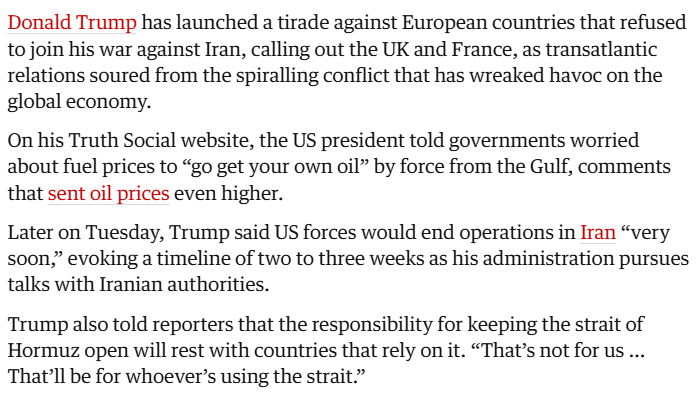
Richard Haass' characterization of this as Trump's 'we broke it, but you own it' position is precisely accurate.
Trump’s attempt to offload responsibility suggests a new doctrine for US policy in the Middle East, said Richard Haass, president emeritus of the Council on Foreign Relations. In an inversion of the old Pottery Barn rule – “you break it, you buy it” – Trump is now telling his European allies: “We broke it, but you own it,” said Haass. (Source: Europe didn’t want an Iran war, yet Trump is saddling it with the consequences / CNN)
Meanwhile, Trump has been 'raging against' European allies for insufficient solidarity on Hormuz while simultaneously excusing Putin's assistance to Iran as symmetrical to U.S. support for Ukraine.
Israel's ambassador to the UN in Geneva was equally blunt from the other direction, telling Euronews in March 2026: 'We hear a lot of calls on diplomacy from the Europeans, but I think this is not the time for diplomacy — this is a time to really end diplomacy and to start seeing a change in Iran.'
The European diplomatic track — which explicitly acknowledges Iranian statehood and seeks a ceasefire framework rather than regime change — is therefore in direct opposition not just to Washington's operational logic, but to Jerusalem's stated war aims.
The Military Preparation Paradox
Europe's rupture with Washington on the Iran question is occurring simultaneously with an acceleration of European military preparedness directed at Russia — a paradox that illuminates how completely the European strategic calculus has diverged from the American one.
 Keir Giles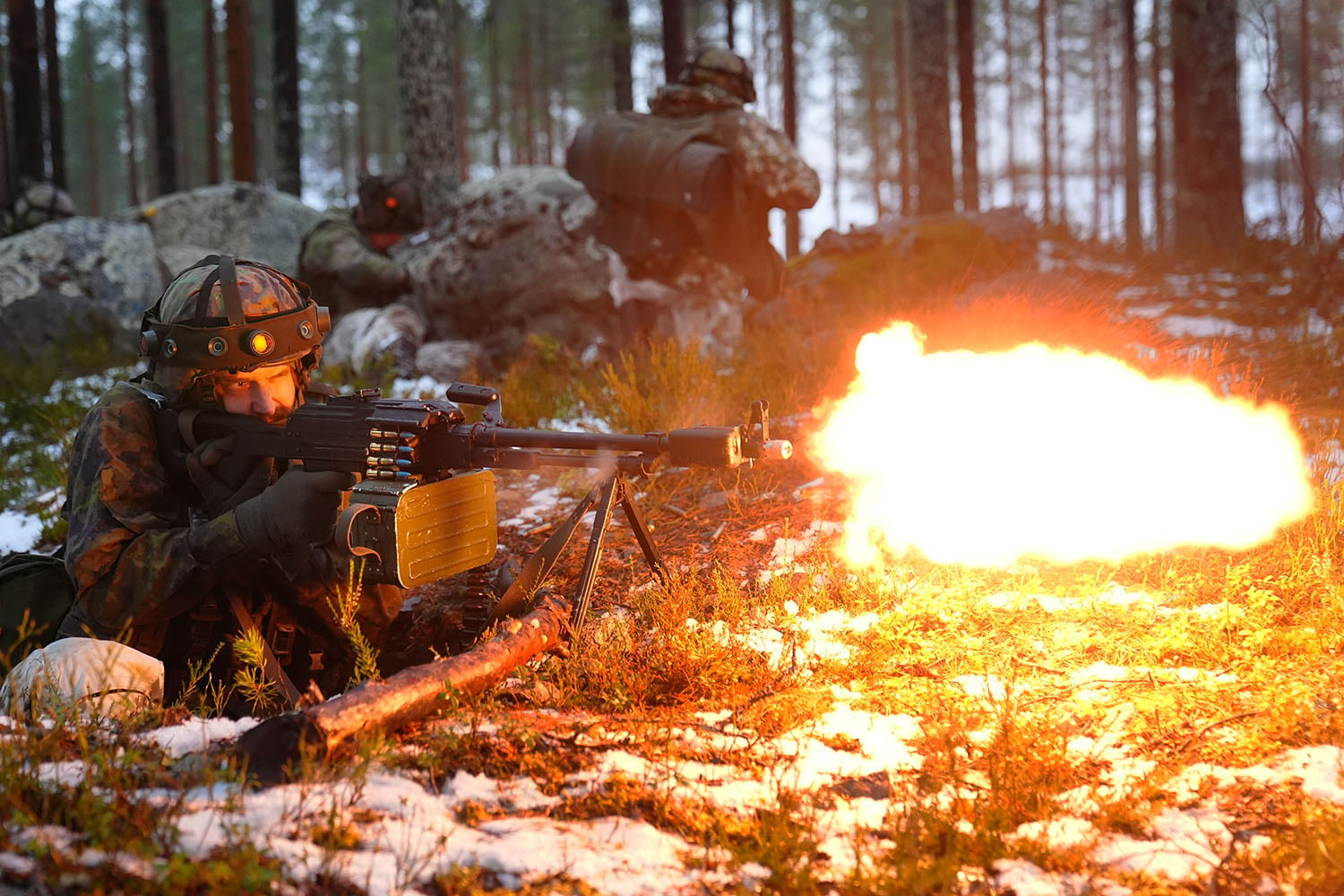
Finland — which shares a 1,350-kilometer border with Russia and has never reduced its military posture even in the post-Cold War years — is now explicitly training conscripts 'for all-out war.' Finnish border guard officials note that Murmansk, home to Russia's nuclear fleet, lies 150-200 kilometers from the frontier. Finland has withdrawn from the landmine treaty, citing the Russian threat.
Finnish preparedness and deterrence against Russian aggression - whether in the form of hybrid attacks, or full-scale invasion, is long-established state practice. Conscripts are trained to be expert snipers; ready for all eventualities at the country's 1,350 km frontier with Russia. Male conscripts are trained by the army to be expert snipers, to be ready for all eventualities at the country's 1,350 km frontier with Russia. (Source: "Finnish conscripts train for all-out war with Russia" / Euro News)
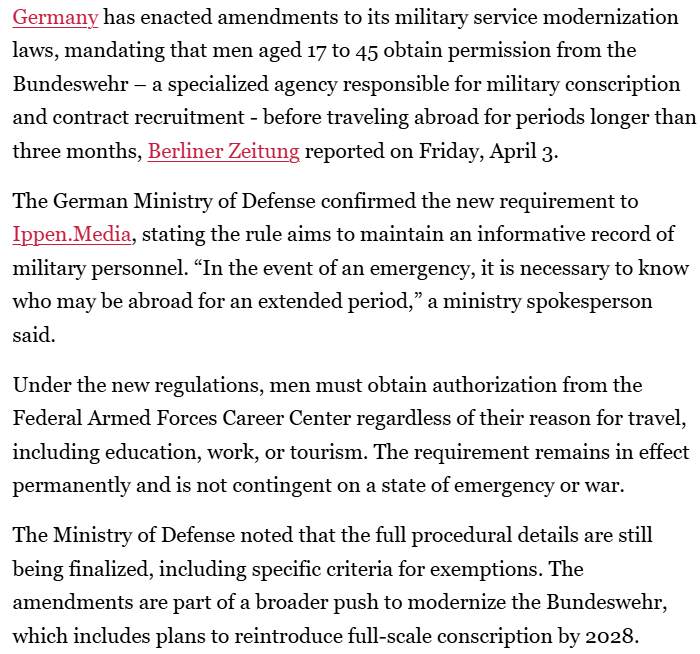
Germany has imposed conscription restrictions on male citizens traveling abroad.
Russia has been reinforcing its nuclear and Arctic assets near Finland's border, according to Finland's defense minister.
The European defense build-up reflects a threat assessment that is diametrically opposed to the Trump administration's: that Russia is watching the attention divide between Hormuz and Kyiv, and calculating the optimal window for either a major Ukrainian offensive advance or Baltic/Arctic hybrid escalation.
The €90 billion EU loan package for Ukraine, concluded in late December 2025 through joint debt issuance, represents the largest collective European financial commitment for defense in the post-war era — and it was constructed entirely without Washington.
This is the real meaning of von der Leyen's statement. Europe is not building a 'new world order group' in some formalized sense. It is recognizing that the old one — premised on U.S. leadership of a unified West, with shared decision-making on the use of force — no longer exists. The question for Europe is whether it can construct a coherent strategic posture in its absence, faster than Russia can exploit the resulting vacuum.
The Iran war has created a two-front attrition dynamic that is structurally advantageous to Russia and structurally dangerous to Ukraine, with the Trump administration's posture actively accelerating the asymmetry.
Russia's Multi-Vector Benefit
Russia's gains from the Iran war are comprehensive and mutually reinforcing.
- First, the oil price windfall: Hormuz closure has driven Brent above $100, generating a revenue stream the Kremlin is explicitly planning around — budget cut plans were dropped in anticipation of the increase.
- Second, Patriot interceptor depletion: every Patriot fired at a $30,000 Iranian drone is a Patriot not available to Ukraine, not replenishable on any short timeline given U.S. manufacturing constraints.
- Third, U.S. political attention and munitions logistics are diverted to the Gulf, reducing the bandwidth for serious Ukraine policy.
- Fourth, Trump's explicit tolerance of Russian ISR assistance to Iran signals to Moscow that there are effectively no red lines for Russian behavior as long as the personal transactional relationship holds.
The deeper structural problem is that a Russia surviving economically via Arctic energy revenues and the Iran war oil windfall has no rational incentive to accept American terms on Ukraine.
The leverage the American mainstream analysis has used prior to the Iran war — 'your economy is about to get crushed, sign the Ukraine deal' — depends on Russia being economically desperate.
Ukraine's Counter-Positioning
Ukraine's response to these structural disadvantages has been characteristically inventive. Long-range Ukrainian drones have been systematically destroying Russian oil export infrastructure on the Baltic coast, reportedly cutting Russian oil shipping capacity by 40% at peak. This serves a dual purpose: reducing Russian oil revenues and demonstrating to potential Gulf state partners that Ukraine's drone industry has capabilities of direct operational value to them.
Zelensky's diplomatic offensive in the Gulf — security cooperation agreements with Saudi Arabia, the UAE, and Qatar, and the provision of Ukrainian air-defense specialists and interceptor drone technology — is the most creative strategic move of the current phase. The arithmetic is compelling: a Patriot interceptor at $3.7 million versus a Ukrainian interceptor drone at $1,000.
Gulf states firing Patriot missiles at Iranian drones are burning through strategic assets at unsustainable rates. Ukrainian expertise, combined with Gulf state investment in Ukraine's drone manufacturing capacity (currently operating at only 60% utilization), creates a mutually beneficial exchange that simultaneously funds Kyiv's war effort and provides Gulf states with a cost-effective air defense solution.
But none of this changes the fundamental structural disadvantage: the Iran war is consuming Western military resources, political attention, and alliance coherence in ways that Russia will seek to exploit, and the window for exploitation may be opening precisely as European military preparedness is still ramping up.
The Alliance Algebra
The broader analysis assumes a world in which American resource leverage translates into diplomatic coherence and allied support. The alliance map is fracturing in ways that run counter to that assumption — and the fracturing is not random. It follows a consistent logic: states that have alternatives are exercising them, and states that have been captive are seeking exits.
The Global South's Inference
The Global South is watching the sequence of events since 2022 — Ukraine, Syria, Venezuela, Iran — and drawing a specific conclusion: the rules-based international order means 'rules that benefit the rule-maker.'
The perception that American power is being wielded without regard for the institutional frameworks that legitimized it does not replace the dollar in a day.
But it accelerates the construction of parallel settlement systems, yuan-denominated oil contracts, BRICS payment infrastructure, and bilateral currency swap agreements — all of which have been expanding rapidly as Washington demonstrates willingness to weaponize the dollar system against perceived adversaries.
India: The Critical Swing Variable
India is the most important non-aligned, or rather strategically autonomous, variable in the current realignment.
It is the world's third-largest oil importer, has been purchasing discounted Russian crude throughout the Ukraine war in explicit defiance of Western pressure, possesses its own rare earth deposits and is building domestic processing capacity, and has a government that has mastered the art of extracting maximum value from simultaneous courtship by both Washington and Beijing.
India's abstention or active non-alignment in a direct U.S.-China resource confrontation could substantially reshape the arithmetic of who controls what share of global demand.
This is the civilizational opportunity that New Delhi's strategic community has understood — at least partially — for several years.
The Gulf States: Damaged Partners, Not Passive Surfaces
The American grand strategy analysis treats Gulf states as passive surfaces absorbing kinetic collateral damage in a conflict whose primary beneficiary is Washington. They are not passive.
Saudi Arabia, the UAE, and Qatar are pursuing independent diplomatic tracks with China, engaging European mediators, and — as Zelensky's Gulf tour demonstrated — building new security relationships that do not require Washington's approval.
Qatar's hosting of Hamas political leadership while simultaneously hosting the largest U.S. military base in the Middle East has always demonstrated Doha's comfort with strategic ambiguity.
A Qatar that has lost 17% of its LNG export capacity for five years has significantly more incentive to diversify its security relationships than one operating at full capacity.
 WATCH LIVE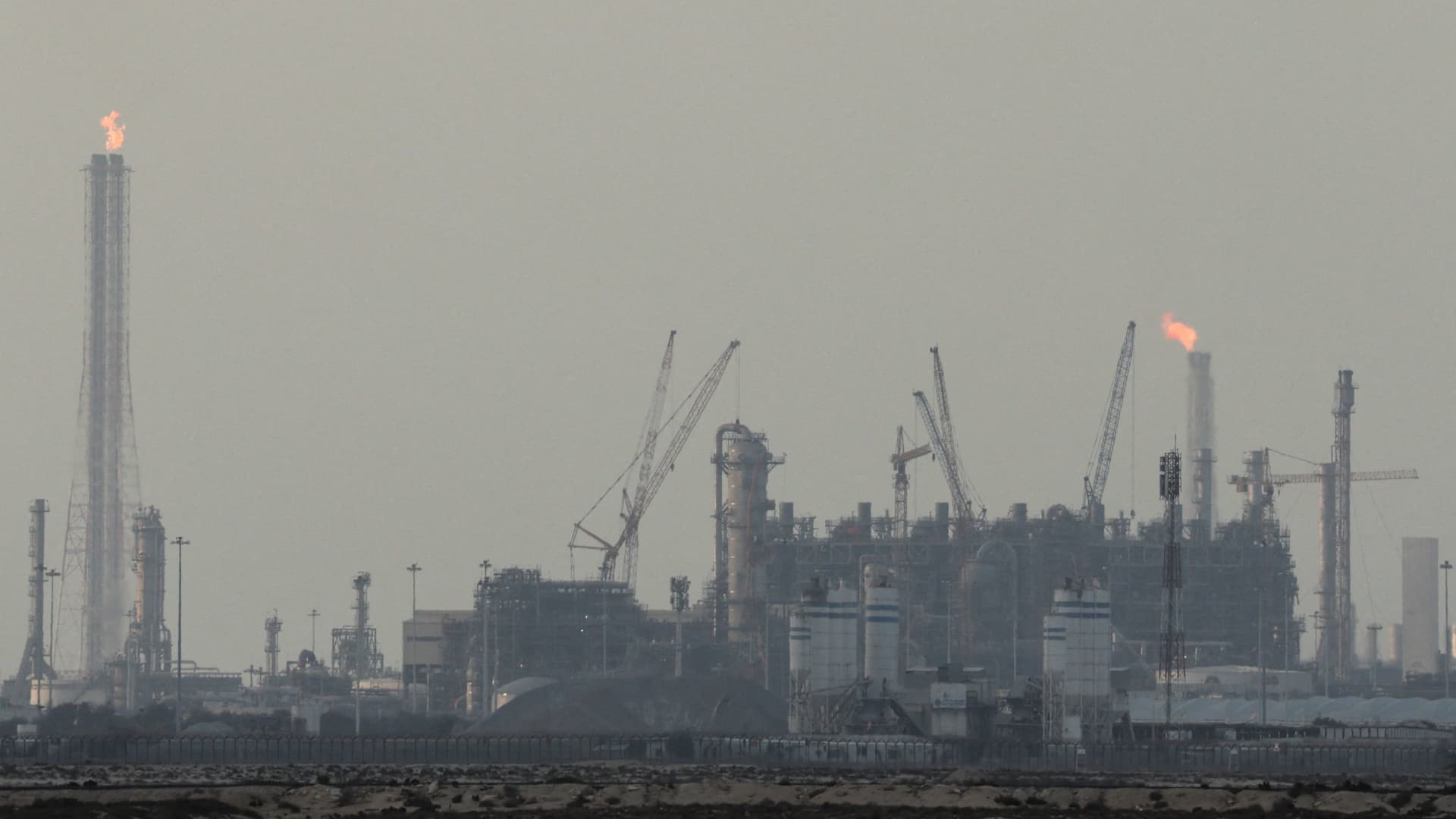
The Gulf states' strategic calculation in the post-war environment will be shaped by a simple question:
Does the American coalition that launched this war intend to provide stable, long-term security guarantees, or is it an episodic actor whose commitments depend on domestic political cycles?
The answer to that question will determine whether the petro/LNG dollar architecture the analysis envisions is stable or inherently fragile.
The Third Vertex: Russia's Arctic Pivot
The Arctic dimension is the structural element most consistently underweighted in analyses of the current realignment — including the energy dominance framework we laid out earlier.
Russia's Arctic position adds a third vertex to the oil/gas versus rare earth resource triangle that neither the American nor Chinese strategic frame fully accounts for.
The Arctic holds approximately 13% of the world's undiscovered oil reserves and 30% of undiscovered natural gas, plus significant deposits of rare earth elements and other critical minerals.
Russia controls the most accessible and developed portions of this resource base.
 Desh Kapoor
More significantly, the Northern Sea Route — which Russia administers, is actively developing, and whose transit has been rapidly increasing — is the only remaining high-volume energy corridor that simultaneously bypasses both the Strait of Malacca and the Strait of Hormuz.
This is the structural incoherence at the heart of the American strategy as currently executed. The grand strategy the analysis describes requires a Russia that is economically cornered and willing to accept diminished post-war terms.
But a Russia that continues receiving ISR-for-oil-revenue arrangement from the current U.S. administration, that holds the Arctic energy pivot, and that controls China's last viable energy bypass route, has no rational incentive to accept those terms.
The Evolving World Order
The question this analysis has been building toward is not 'who wins the Iran war' — that question is too narrow to matter structurally. The question is: what kind of world order emerges from the next 24-36 months of this multi-theater, multi-dimensional competition?
Four structural scenarios are worth holding simultaneously.
Scenario 1: American Energy Hegemony Consolidates
Iran is pacified (not necessarily conquered — compliance under a ceasefire may suffice), the hybrid petro/LNG-dollar architecture stabilizes, European and Pacific allies remain structurally dependent, and China faces a compute-infrastructure disadvantage that compounds over time. This requires the 'Iran falls' assumption to hold, Gulf state compliance despite economic damage, European acceptance of energy captivity despite political resentment, and China's rare-earth counter-leverage to be outweighed by energy dependency. Probability: possible but overstated by the analysis's more maximalist proponents. It requires too many dependent variables to resolve favorably simultaneously.
Scenario 2: The Rare Earth Reversal
China's escalation of rare-earth and critical-mineral export controls imposes sufficient costs on Western defense and semiconductor manufacturing to prompt negotiated de-escalation. The dollar retains reserve currency status but the energy dominance architecture is bargained away in exchange for critical mineral market access. This produces a bifurcated world with two parallel supply chains — messy, inefficient, and expensive for everyone, but structurally stable. Probability: moderate, and likely the equilibrium both sides are implicitly managing toward even as they posture otherwise.
Scenario 3: The Non-Aligned Third Bloc
India, ASEAN, the Gulf states (post-war), Turkey, and African resource powers construct sufficient independent institutional infrastructure — payment systems, security frameworks, energy sourcing — to constitute a genuine third pole that neither Washington nor Beijing can coerce. This scenario would represent the most profound departure from post-1945 international architecture. Its prerequisite is sustained cohesion among actors with historically divergent interests. Probability: structurally plausible but organizationally difficult. The BRICS payment infrastructure and the India-Russia-China trilateral engagement are early institutional foundations.
Scenario 4: Escalation to Direct Great Power Confrontation
The logic of mutual escalation — U.S. energy strikes, Chinese material export controls, Russian Arctic positioning, North Korean proliferation — overshoots everyone's intended de-escalation thresholds and produces a direct confrontation whose geography could be Taiwan, the Baltic, or the Korean Peninsula.
This is the scenario all parties are attempting to avoid while simultaneously taking actions that increase its probability.
The structural risk is that each individual step in the escalation ladder appears rational from within the actor's decision framework, while the cumulative effect is a situation no single actor controls.
The War Within the War
The United States may win the military campaign in Iran while losing the structural war for the international order — because every dollar China spends reconstituting Iranian missile fuel, every tunnel North Korea's engineers dug under Iranian soil, every Russian satellite image of Diego Garcia, and every European diplomatic cable to Tehran that bypasses Washington is a data point in the case that American primacy can be managed, circumvented, and gradually rendered irrelevant. The air strikes are the visible surface.
Comments ()