
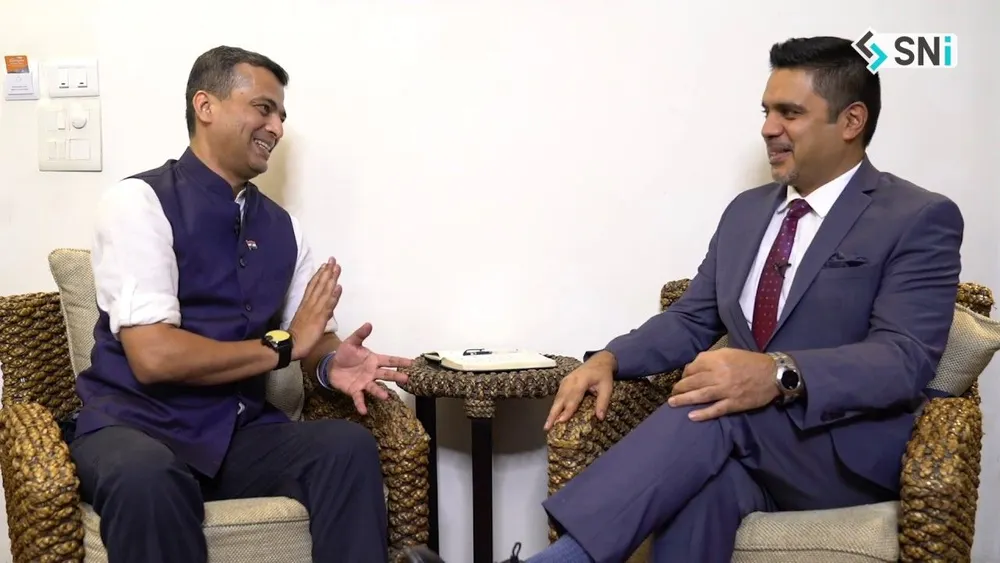
Another attack in Kabul on Monday has killed and injured nearly 100 people including schoolchildren. Many were seen clutching their books and pens while being rushed to hospital. The Taliban claimed the attack even while their leaders continued with the seventh round of talks with U.S. Special Representative Zalmay Khalilzad in Doha. On a private visit to India, Afghanistan’s envoy to Sri Lanka Ashraf Haidari speaks to SNI Associate Editor Amitabh P Revi condemning the zero-sum game that continues to kill civilians every day. He also spoke about President Ashraf Ghani’s recent visit to Pakistan, the role of regional players in the peace process and connectivity between Europe, Central Asia, South and South East Asia through Afghanistan. Ambassador Haidari also talks about the lessons that can be learnt from Sri Lanka’s defeat of the LTTE.
The current envoy in Colombo has served as Deputy Chief of Mission in New Delhi, as DG Policy and Strategy in the Afghan Foreign Ministry, in the NSA’s office and as Chargé d’Affaires in the Washington mission previously. He is also a contributor to SNI.
#Afghanistan #Taliban #TalibanTalks
source


