
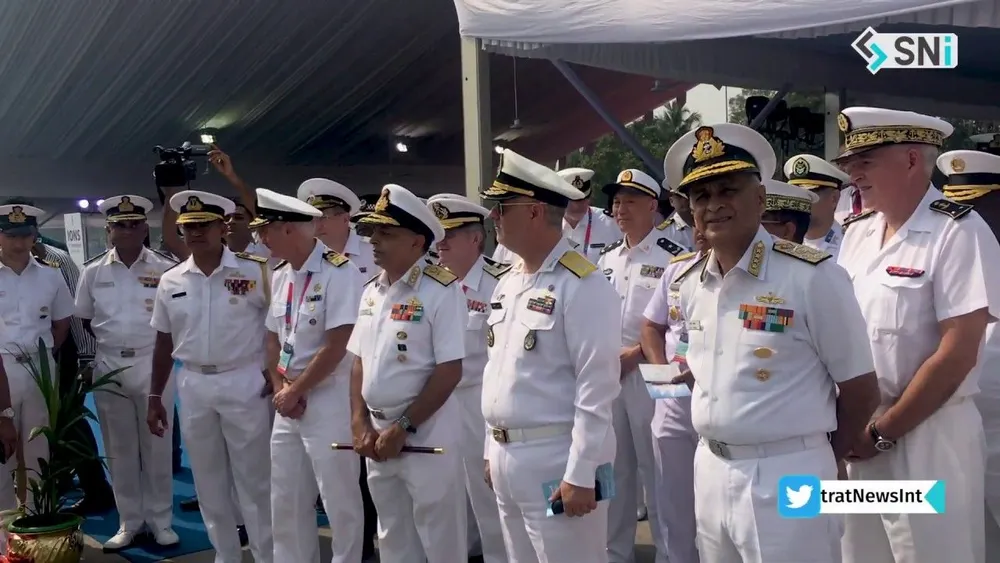
A sail-together of tall ships from Kochi to Muscat—that’s 1200 nautical miles—and back, trying to retrace the ancient maritime trade route between the Malabar Coast and the Persian Gulf. As part of the 10th anniversary celebrations of the Indian Ocean Naval Symposium (IONS), India’s Navy Chief Admiral Sunil Lanba and his Iranian counterpart Rear Admiral Hossein Khanzadi flagged off the event from Kochi on November 14. One Omani vessel, two Indian naval ships and a ‘sea rider’ each from China, Sri Lanka, the United Kingdom, Australia, Bangladesh and Maldives are part of this maritime venture.
source
Public
A Sail-Together Down The Memory Sea Lane

From this writer

Geopolitics
World in Chaos: Four Crises. Who Gains?

United States of America
US Midterms: The Lame Duck Arrives Early

Geopolitics
The American Oil Trap and Prep for War

India
BRICS After Delhi: The Insurance Order and the Future of Multipolarity

Spirituality
The Debasement of a Rite: Shakta and the Bengali Quarrel Over Meat

Geopolitics