The Two Generals and the Bridge
Two generals faced each other across a narrow bridge over a gorge so deep that no one could see the bottom.
The first general controlled the only road that brought water to the second general's city. The second general controlled the only road that brought grain to the first general's army. Each had built walls, trained soldiers, and sharpened weapons for decades, preparing for the battle that everyone said was inevitable.
One autumn morning, the first general crossed the bridge with a gift of flowers and sat down to tea.
He praised the second general's garden at great length. He admired the stonework of the courtyard. He said that the second general's ancestors had clearly been men of extraordinary wisdom and that he himself had much to learn. The second general received all of this with a still face and poured tea with steady hands.
After three hours, the first general departed. He had asked for nothing directly. The second general had given nothing directly.
That evening, the first general's aide came to him in frustration. "General," he said, "you traveled three days to drink tea. The city still thirsts. The army still hungers. Nothing was resolved."
The general looked out at the gorge and was quiet for a long time.
"The bridge is still standing," he finally said.
"It was standing before you went," the aide replied.
"Yes," said the general. "That is what was agreed."
The aide did not understand. He went to sleep puzzled.
In the months that followed, the water began to flow again, slowly, through channels that no one could quite identify the origin of. The grain moved again, through routes that no official communique ever described. The battle that everyone had predicted did not come. The gorge remained. The bridge remained. Both cities survived the winter, each having paid a price that was never stated in any document.
Years later, a young monk asked the second general what had actually been exchanged at that famous meeting.
The general thought for a long moment.
"He needed the bridge not to burn," he said. "I needed the same thing. We drank tea until we were both sure the other understood this. The rest was ceremony."
"And the flowers?" the monk asked.
"The flowers," the general said, "were the message."
The Art of the Welcome
There is a particular kind of diplomatic theatre that great powers perform for each other, and for the world watching, when summits of genuine consequence take place. The staging, the sequence of venues, the visual hierarchy of seating arrangements, the carefully calibrated warmth of toasts: none of it is accidental, and all of it is communicative. Beijing has refined this theatre over millennia of imperial statecraft, and when Donald Trump arrived in the Chinese capital for two days of talks with Xi Jinping in May 2026, China deployed it with a confidence, some would say a deliberateness, that itself constituted a message.
The welcome was, by any superficial measure, extraordinary.
Flag-waving children lined the routes. Military honours were rendered with precision.
Xi personally walked Trump through the gardens of Zhongnanhai, the tightly guarded leadership compound that few foreign visitors ever enter.
A state banquet of considerable grandeur was laid on at the Great Hall of the People.
Xi offered rose seeds as a parting gift, a gesture of horticultural warmth that nonetheless left everything of substance exactly where it had been before Air Force One touched down.
Trump appeared genuinely moved by the pageantry.
He called Xi a "great leader." He said China had left the United States "so far behind." He declined to hold press conferences, stayed largely on script, and refrained from the social media provocations that have punctuated almost every other foreign engagement of his presidency. The man who built a political identity on confrontation arrived in Beijing and chose, conspicuously, not to confront.
Beneath the warmth, those trained to read diplomatic signals were watching something rather different unfold: a masterclass in the quiet assertion of dominance dressed as hospitality. China had prepared not just a welcome but a visual argument. And the argument was delivered in furniture, staffing arrangements, and the precise geometry of where each man sat.
The Chair
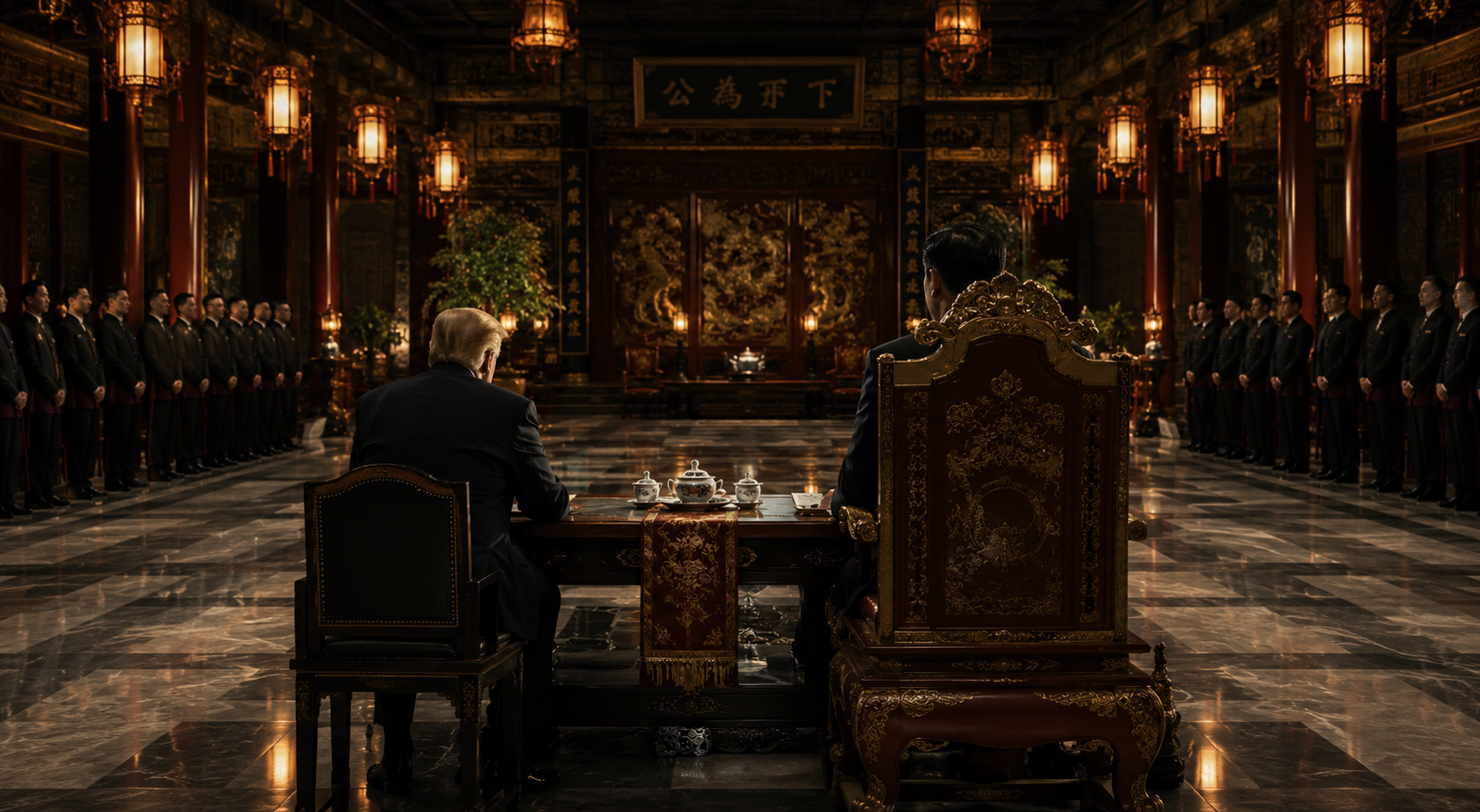
Photographs and footage from the bilateral sessions circulated quickly among protocol observers and diplomatic analysts, and what they noticed was not subtle once seen. Trump was seated in a noticeably smaller chair than Xi.
In the hyper-controlled environment of a Chinese state reception, where every physical detail, down to floral arrangements, is deliberate, this cannot be attributed to oversight.
In the choreography of Chinese statecraft, where the spatial relationship between leaders carries symbolic freight rooted in centuries of imperial reception ritual, chair height is hierarchy made visible. Xi sat as host and sovereign. Trump sat, physically, slightly diminished.
For a visiting American president, historically the unchallenged embodiment of global primacy at any bilateral meeting, to be placed in the subordinate chair in the full glare of cameras and pool photographers is a statement. China was communicating, to its own audience and to the world, that the guest had come to Beijing, that Beijing had received him on its terms, and that the architecture of the room reflected the architecture of the moment.
Trump either did not notice, did not object, or calculated that raising the point would cost more than absorbing it. None of those possibilities reflects well on the American position.
The Staff
There was something else that experienced China hands noted, and that journalists covering the visit discussed in corridors, if not always in print. The service staff deployed throughout Trump's visit, the waiters at the state banquet, the attendants managing protocol transitions between venues, the individuals performing what appeared to be routine hospitality functions, moved with a precision and a situational awareness that went somewhat beyond the requirements of pouring tea elegantly.
This is a long-standing feature of how Beijing manages sensitive foreign delegations. Individuals assigned to seemingly routine roles in proximity to visiting heads of state and their delegations are, by established practice, carefully vetted and, in many cases, connected to the state's intelligence and security apparatus. The waiter who refills a glass is also the person positioned to overhear a conversation between a principal and an aide. The attendant who escorts a delegation member between rooms is also the person who knows the layout of every space that the delegation member passes through. This is standard tradecraft, practiced by major powers including the United States, deployed by China with a thoroughness and institutional infrastructure that reflects decades of refinement.
What made it notable in Trump's case was the choreography's sheer visibility. The staff movements were described by observers as extraordinarily synchronized, almost performative in their precision.
Whether this was a signal of competence, a demonstration of control, or simply the standard operating procedure of the Chinese security state applied to its highest-profile guest of the year is, in one sense, beside the point.
The effect was the same: Trump and his delegation operated for two days in an environment that Beijing had total physical control over, attended by people whose loyalties ultimately ran to the Chinese state.
The rose seeds were a lovely gesture. The chair was shorter. The waiters were watching.
And then the actual diplomacy began.
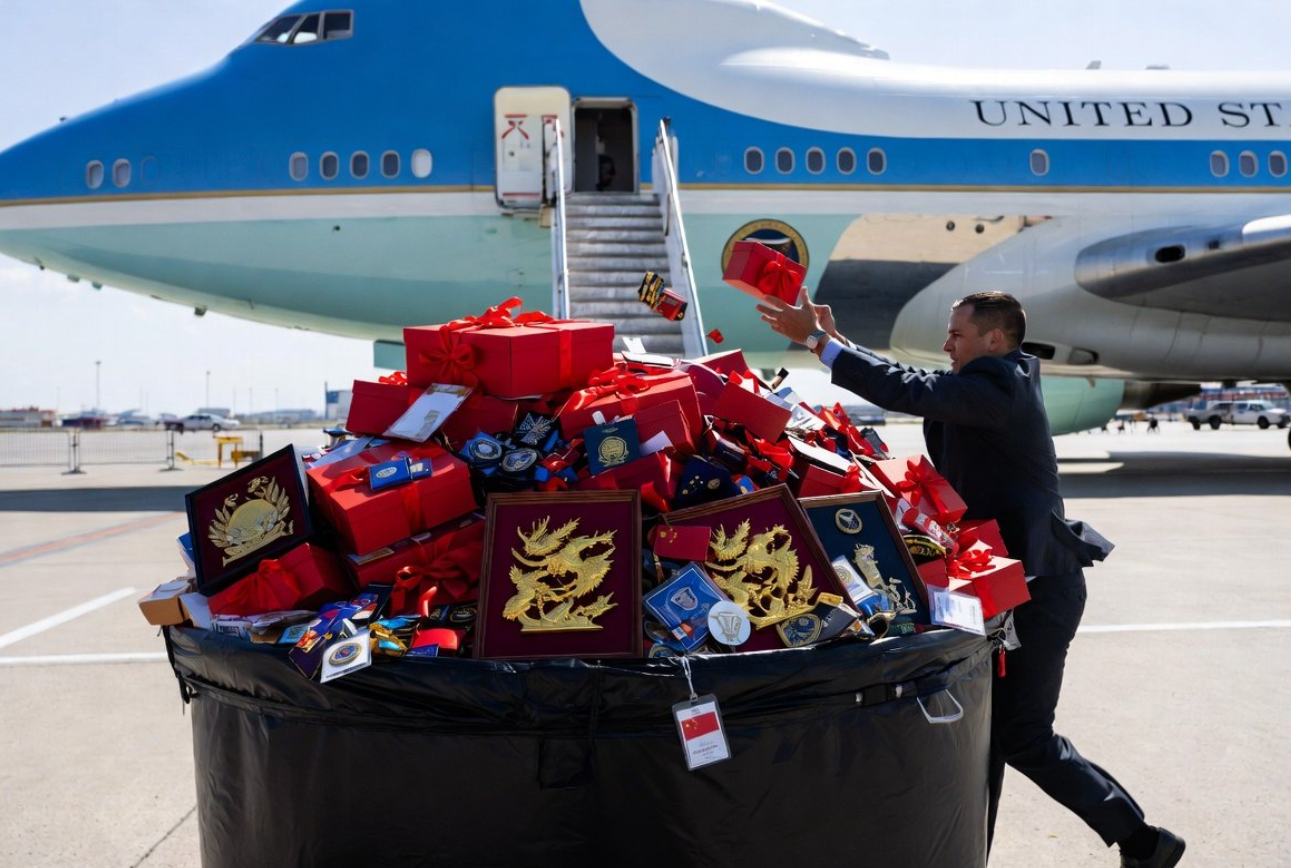
According to reporting cited by the New York Post, members of the U.S. delegation discarded every gift, souvenir, badge, and ceremonial item provided by their Chinese hosts before boarding Air Force One. The instruction was unequivocal: nothing marked “Made in China” was permitted to travel back on the presidential aircraft.
Even more striking was the delegation’s approach to electronic security. Officials did not carry their normal phones, laptops, or personal devices. Instead, they relied exclusively on temporary “clean” devices configured specifically for the trip and intended to be discarded afterward. The assumption was clear: any device brought into China could be compromised through surveillance or cyber intrusion.
These measures are not merely technical precautions; they are symbolic of the profound strategic distrust between the world’s two most powerful nations. Publicly, Washington and Beijing speak the language of cooperation, trade, and stability. Privately, each treats the other as a sophisticated intelligence adversary.
The result is a relationship that increasingly resembles a disciplined cold war—one in which commerce continues, diplomacy proceeds, but every handshake is shadowed by suspicion. (Source X / Issam Saed)
Before we begin our analysis, let us revisit a 'blast from the past,' and see how things have changed since then.
The 2017 Warning and the 2026 Verdict
The reporting by The New York Times from Trump's 2017 visit is striking. What they called a tipping point in 2017 has now, nine years later, fully materialized into a structural reality.
In public, Mr. Trump projected an air of deference to China that was almost unheard-of for a visiting American president. Far from attacking Mr. Xi on trade, Mr. Trump saluted him for leading a country that he said had left the United States “so far behind.” He said he could not blame the Chinese for taking advantage of weak American trade policy. Behind closed doors, American officials insisted, Mr. Trump forcefully confronted Mr. Xi about the chronic trade imbalances between the two countries. He also pressed China to take tougher measures toward North Korea, including a suspension of oil shipments. In neither case did the Chinese make significant concessions, nor did Mr. Trump express dissatisfaction with their response. It was a remarkable moment in the story of China’s rise and America’s response to it, with Mr. Trump’s performance suggesting a tipping point in great-power politics. By concluding that the United States can better achieve its goals by flattering a Chinese leader than by challenging him, Mr. Trump seemed to signal a reversal of roles: the United States may now need China’s help more than the other way around. (Source: "Trump, Aiming to Coax Xi Jinping, Bets on Flattery" / New York Times)
Read that passage again with 2026 eyes:
"By concluding that the United States can better achieve its goals by flattering a Chinese leader than by challenging him, Mr. Trump seemed to signal a reversal of roles: the United States may now need China's help more than the other way around."
In 2017, that was an observation about optics and diplomatic style. It was controversial precisely because it seemed premature — America was still unambiguously the dominant power, China was still an ascending challenger, and the idea that Washington needed Beijing more than the reverse felt like editorial overreach.
In 2026, it is no longer an editorial interpretation. It is the operational reality of the summit that just concluded.
So, in reality, the difference between 2017 and 2026 is the difference between a warning and a verdict.
In 2017, Trump was flattering Xi performatively while pressing him on trade and North Korea — conventional great power bargaining dressed in unusual rhetorical clothes. The underlying assumption was still that America held the structural high ground and was choosing a stylistic approach to extract concessions.
In 2026, Trump went to Beijing because he genuinely needed something.
Hormuz reopened, Chinese pressure on Tehran, an exit from a war that is destroying his domestic political position.
And left without securing any of it in concrete form.
The flattery in 2017 was a tactic. The flattery in 2026 is closer to the truth of the relationship.
What the NYT passage captures, written seven years before the current crisis, is that the trajectory was already visible to those willing to see it. China was not going to remain a rising power forever. It was going to arrive. The question was always when the moment of arrival would become undeniable, and what configuration of events would force Washington to acknowledge it openly.
Who gained what?
Financial Times says it clearly - Trump arrived in Beijing carrying three problems he needed Xi's help to solve:
- the Iran war,
- the Hormuz closure, and
- his domestic economic pain from energy prices.
And honestly, he left with none of them resolved.
Xi, on the other hand, arrived seeking to protect the trade truce and China's leverage over rare earths, prevent any Taiwan arms sale from moving forward, and establish a framework that constrains American behavior for the next three years. On those counts, Xi did considerably better.
Trump arrived in Beijing carrying three problems he needed Xi's help to solve — the war in Iran, the Hormuz closure, and his domestic economic pain from energy prices — and left with none of them resolved. Xi arrived needing to protect the trade truce and China's leverage over rare earths, prevent any Taiwan arms sale from moving forward, and establish a framework that constrains American behavior for the next three years. On those counts, Xi did considerably better. From his first remarks to Trump, Xi sought to portray China as a confident nation at least as powerful as the US and able to defend its interests. He underlined this message with a warning on Thursday that any “mishandling” of Taiwan could result in conflict between the world’s two leading powers. As he flew back to the US on Air Force One, Trump said he had not yet decided whether to press ahead with a planned $14bn arms sale to Taiwan — a comment likely to fuel alarm in Taipei and regional allies.China backs its claim to sovereignty over Taiwan with threats of force and wants the US to oppose any move towards formal independence for the democratic island. But Trump dismissed worries about the potential for conflict.“I think we’ll be fine,” Trump said, adding that Xi “doesn’t want to see a war”, though he had stressed China’s opposition to Taiwan’s independence. “I heard him out . . . I didn’t make a comment,” the US president said.Separately, Trump said he was considering lifting sanctions on Chinese purchasers of Iranian oil, a concession that would be welcomed in Beijing. (Source: "Donald Trump left with little to show for two days of talks with Xi Jinping" / Financial Times)
While Trump got the pageantry he craved, he concluded the summit largely where he began, receiving little help from Xi in dealing with the Iran war and the domestic political pressures it is generating.
 Jeff Mason and Skylar Woodhouse
The asymmetry of need was apparent throughout. Analysts noted that Trump needs Chinese support for opening the Strait of Hormuz, China needs the strait to open for its own energy reasons, but China can simultaneously use this as leverage regarding Taiwan. Beijing played this triangulation with considerable skill.
The Iran-Hormuz Thread: Vague Commitments, No Mechanism
This is the most consequential failure of the summit, given that the Hormuz closure is producing cascading economic shocks globally.
What was agreed amounts to a statement of shared aspiration, not actionable policy. Both sides agreed that the Strait of Hormuz must remain open, Xi opposed the militarization of the energy artery and any tolling system for its use, and China expressed interest in purchasing more US oil to reduce its dependence on Gulf crude. That last item — China buying more American oil — is an economic concession to the US, not a diplomatic intervention in Tehran.
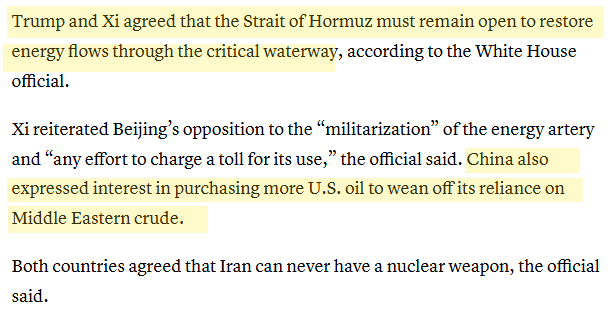
As Donald Trump departed Beijing after nearly forty hours of high-stakes meetings, there was little indication that the United States and China had reached any meaningful understanding on how to defuse the confrontation with Iran or secure the Strait of Hormuz, through which a significant share of the world’s energy supplies continues to flow.
The Story of the Official Readouts
Seventy-seven days into the conflict, the two most powerful nations in the world appeared no closer to a common strategy to end the war or prevent a wider shock to the global economy.
 Sarah Shamim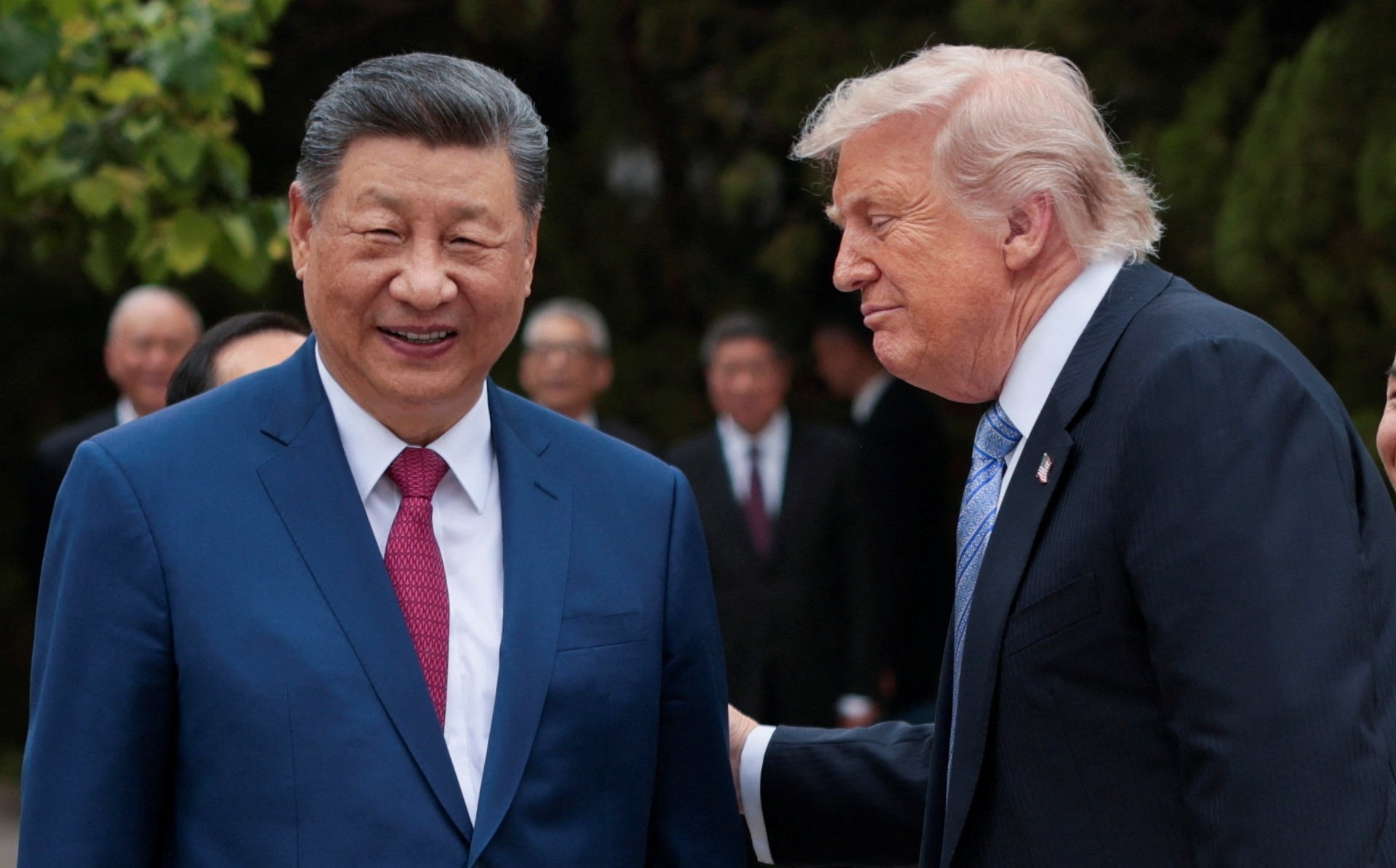
Interestingly, the Chinese and American readouts of the Iran nuclear issue diverged tellingly.
The American statement is remarkably revealing, not so much for what it says, but for what it appears to ask of China.
The text presents the meeting as a broad strategic bargain. Washington highlights expanded market access, Chinese investment in U.S. industries, cooperation on fentanyl, larger purchases of American agricultural products, and even increased Chinese purchases of American oil. In return, the statement underscores two urgent U.S. priorities: keeping the Strait of Hormuz open and ensuring that Iran does not obtain a nuclear weapon.
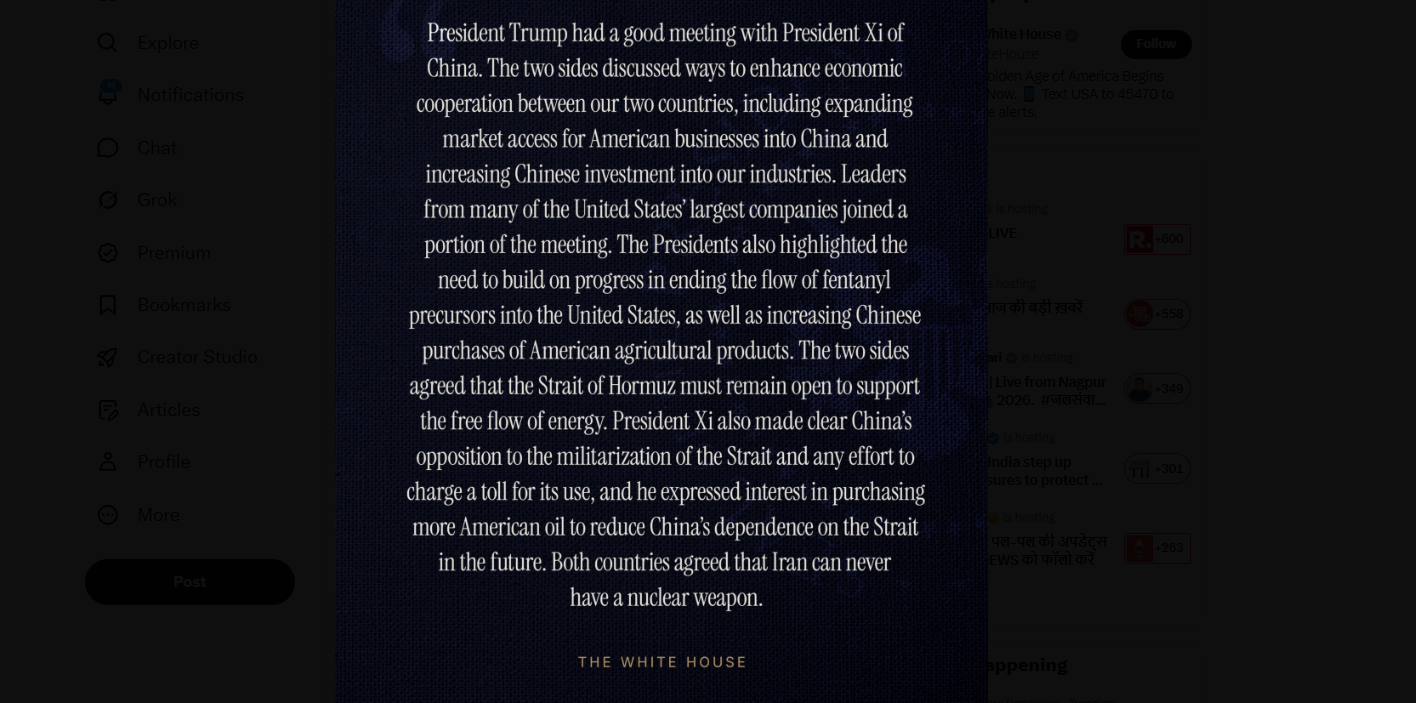
The implication is significant. The United States appears to be signaling that it needs China's leverage over Iran and over global energy flows. By tying security concerns to trade and investment, Washington seems to be offering a wider economic accommodation in exchange for Chinese cooperation on a critical geopolitical crisis.
In essence, the statement suggests that the U.S. approached Beijing not simply as a rival, but as an indispensable power whose support is necessary to stabilize the Middle East and protect the global economy. That is an obvious acknowledgment of China's strategic weight.
Now read the Chinese statement issued by its Foreign Ministry.

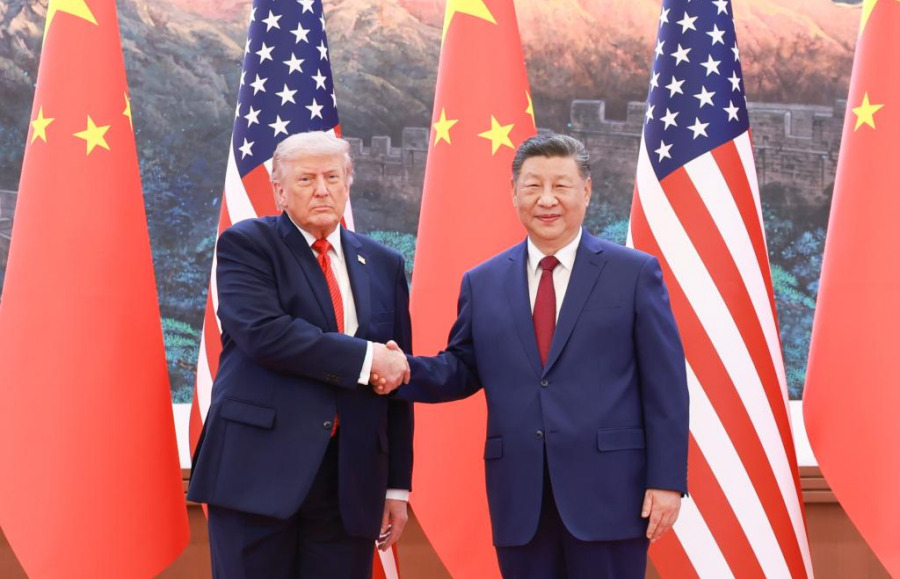
You will see that China chose not to frame the meeting around Iran at all. In the statement above, Beijing did not mention Iran by name, did not refer to the Strait of Hormuz, and avoided any discussion of nuclear issues.
Instead, the statement emphasized the broader architecture of Sino-American relations, such as trade, diplomacy, military communication, and long-term strategic engagement. The conflict in the Middle East was relegated to a single, almost perfunctory line noting that the two presidents had “exchanged views on major international and regional issues.”
The message was subtle but unmistakable. Beijing was signaling that it would not allow Washington to define the relationship solely through the lens of an immediate crisis. China was effectively saying that the United States might need Chinese cooperation on Iran and global energy security, but such cooperation would occur only within the context of a much larger and more balanced strategic relationship. In diplomatic terms, China was declining to appear as a supplicant and instead presenting itself as an equal power whose assistance, if offered, would come on its own terms.
Trump said Xi assured him China would not provide military equipment to Iran, calling it "a big statement." Well nothing that Xi said on record or his ministry stated seems to align with that narrative.
But even this "assurance" stopped short of addressing broader questions about Chinese support for Iran, including intelligence sharing, electronic exports, or other material support.
We all know that China has been supplying weapons material to Iran and also helping it with intelligence to fight the war.
Following their summit meeting in Beijing, Trump told Fox News that Xi would like to help resolve the conflict and reopen the narrow waterway through which roughly a fifth of the world’s oil and gas supplies pass. “He said, ‘I would love to be a help, if I can be of any help whatsoever,’” Trump said. Trump added that Xi assured him that China would not provide military equipment to Iran. “He said he’s not going to give military equipment,” Trump told Fox News. “That’s a big statement.” The assurance, however, stopped short of addressing broader questions about Chinese support for Iran, including intelligence sharing, electronics exports, or the enormous revenues Iran derives from oil sales to Chinese buyers. (Source: "Trump Says Xi Offered To Help Broker Peace With Iran" / Time)
Meanwhile, the Hormuz situation on the ground remained unchanged. Chinese vessels began passing through the strait following an understanding over Iranian management protocols, while Iran has largely blocked shipping since the outbreak of war with the US and Israel on February 28.
China, in other words, has quietly negotiated its own bilateral passage arrangement with the IRGC, which is precisely the kind of deal the US is refusing to accept for its own vessels.
The bottom line is that Beijing is managing the crisis on its own without being pulled into Washington's coalition.
The Rubio damage-control spin afterward was revealing. Secretary of State Rubio told NBC News that Trump "didn't ask them for anything" on Iran. "We're not asking for China's help. We don't need their help." That statement, made hours after the summit ended, is the clearest signal that the US came away without what it wanted and needed to manage the optics of that failure.
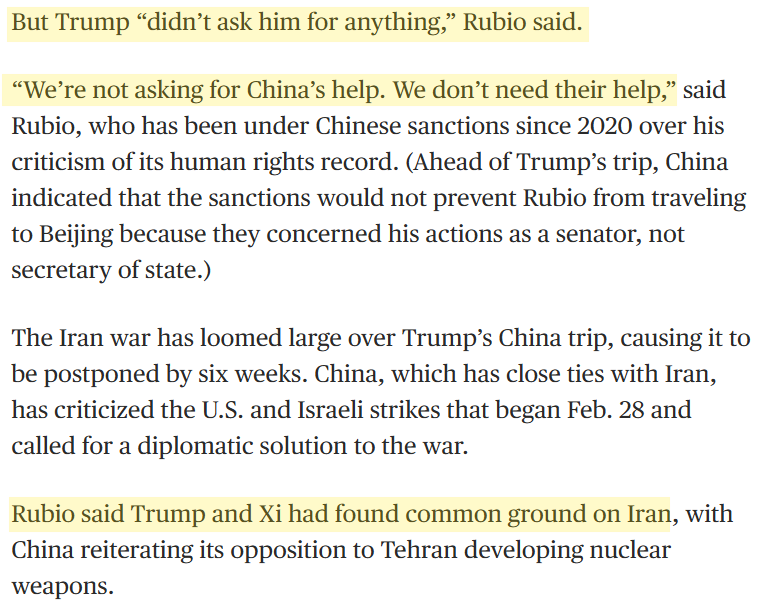
Nice try.
The "Strategic Stability" Framework: Xi's Conceptual Capture
This is the most underappreciated outcome of the summit, and potentially the most consequential over the medium term.

Xi said the US and China agreed to "constructive strategic stability" as a framework for the next three years, according to Chinese state media. Analysts noted this framework could become a baseline for dealing with Beijing that the next US president would also inherit.
This is sophisticated Chinese statecraft.
Xi has taken Trump's transactional instinct, comprising his preference for stability and deal-making over structural confrontation, and converted it into a named framework with a three-year horizon, which outlasts Trump's term.
Xi also invoked the Thucydides trap.
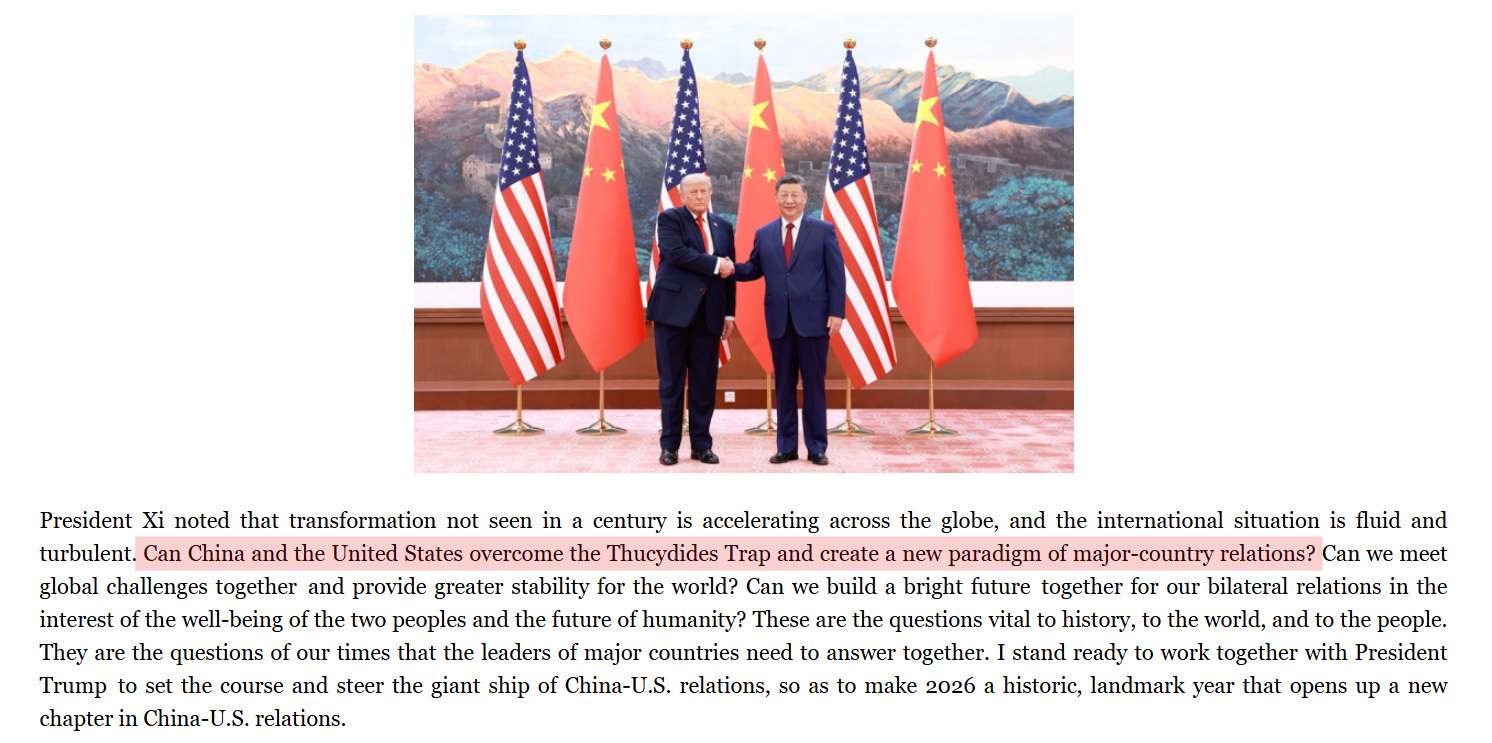
The invocation of the Thucydides Trap was also deliberate.
Xi raised it not as an academic curiosity but as a warning. He was framing China as the rising power and the US as the incumbent hegemon that must manage the transition gracefully. That is a significant rhetorical repositioning from a Chinese leader who has previously resisted the trap framing.
Taiwan: The Silent Concession
This thread is the most dangerous long-term outcome of the summit.
Trump said he has not made a decision on whether to move forward with the $14 billion arms package for Taiwan after hearing Xi's concerns, adding: "I think the last thing we need right now is a war that's 9,500 miles away."
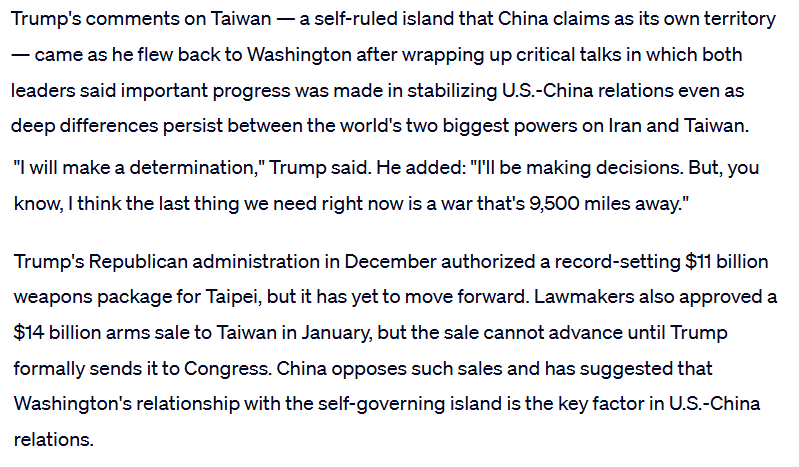
That is a devastating comment in terms of signal. The Taiwan Relations Act binds the US to providing defensive arms, but Trump has effectively signaled to Beijing as well as to Taipei that the war in Iran has made him less willing to absorb confrontation costs on Taiwan.
Chinese sources told CNN that Beijing cautiously views its adversary's months-long conflict with Iran as having potentially strengthened its negotiating position on Taiwan.
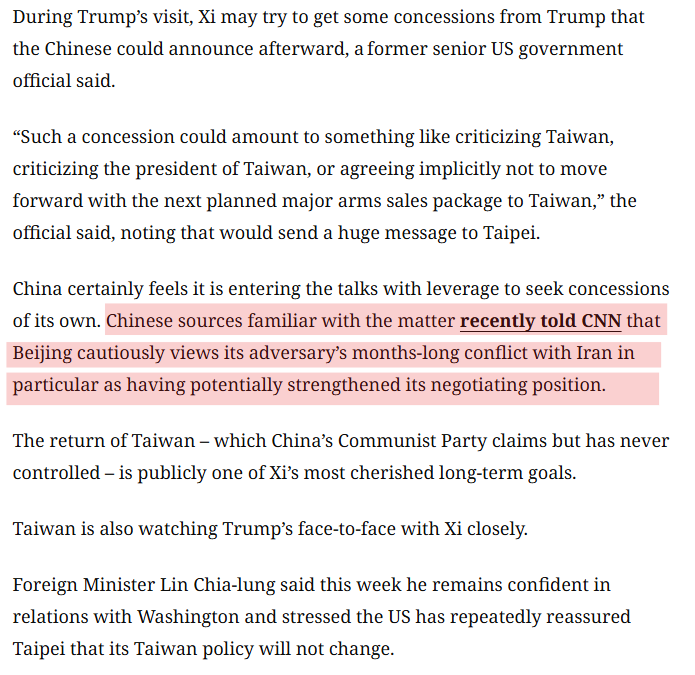
Xi also went ahead and warned Trump during private talks that their differences on Taiwan could hurtle the two dominant powers toward "clashes and even conflicts" if handled poorly.
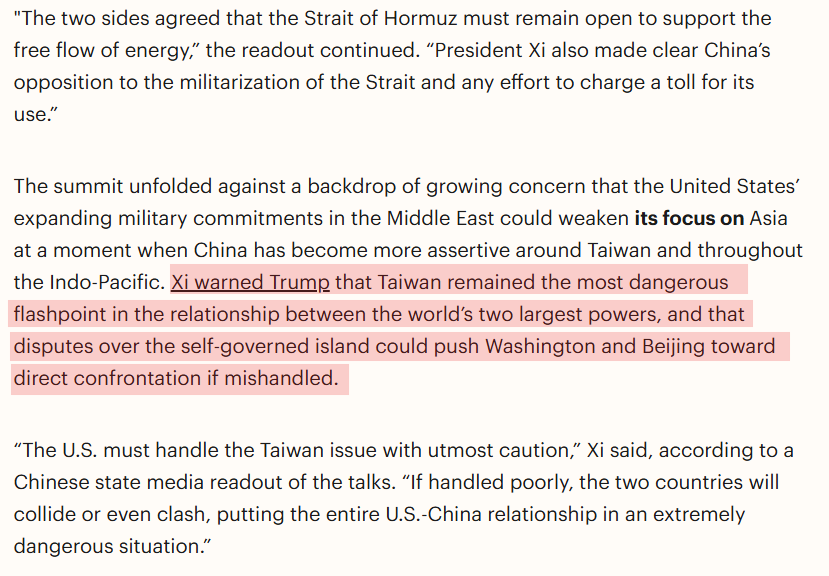
Xi used the Iran quagmire as implicit context — if you are already overextended in the Middle East, can you really afford a confrontation over Taiwan?
Trump's response ("I think we'll be fine") was breezy reassurance, not strategic commitment.
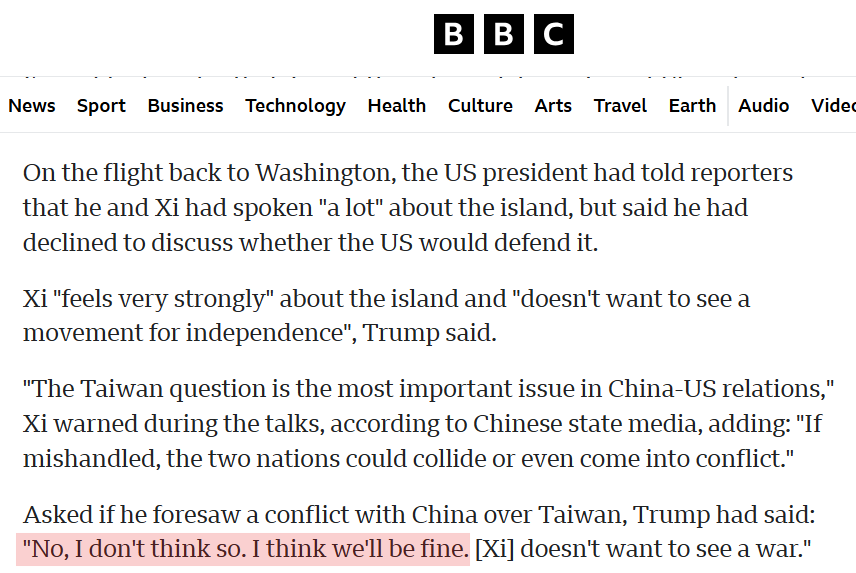
For Taiwan itself, the $14 billion arms sale hanging in suspension is troubling. Taiwan's Foreign Minister acknowledged anxiety surrounding the summit while saying he remained confident in relations with Washington. His deputy was more candid. The fear in Taipei is that Trump is using Taiwan as a bargaining chip in a broader transactional arrangement with Beijing, and this has not been allayed by anything that has emerged from Beijing.
The GCC and Regional Energy Dimension
This is the thread that received the least attention in bilateral coverage but has the most structural significance for the Gulf monarchies.
The Hormuz closure has placed the GCCs in an acute bind. Their oil revenues, and the entire architecture of petrodollar recycling that funds their sovereign wealth, social stability, and US arms purchases, depend on free navigation.
But the closure has also revealed something more uncomfortable: the US, for all its naval presence, cannot reopen the strait unilaterally without Iranian consent, and the one power that might be able to influence Iran (China) has quietly arranged its own passage while leaving the problem formally unresolved.
The GCCs watched this summit closely and would have noted three things.
- First, China got its ships through via IRGC protocols, demonstrating that Beijing has a working channel with Tehran that Washington does not.
- Second, the US-China agreed statement on Hormuz is declaratory, not operational, as there is no joint enforcement mechanism.
- Third, Trump's wavering on the Taiwan arms sale signals that his commitments are subject to renegotiation under pressure, which is a lesson not lost on Abu Dhabi, Riyadh, and Doha as they think about their own security guarantees.
The energy price shock is also reshaping Gulf economic planning.
The Iran war has produced exactly the high-oil-price environment that benefits upstream Gulf producers in the short run but destabilizes demand and accelerates the energy transition in ways that harm them structurally.
The GCC states that have invested heavily in economic diversification (the UAE above all) are watching the global growth slowdown with alarm.
Why Trump Went to Beijing? And What Was Really Exchanged
Strip away the ceremony - the flag-waving children, the rose seeds, the Temple of Heaven walkabout, the lavish state banquet - and what happened in Beijing was something far more structured and deliberate than a diplomatic visit.
It was a mutual extraction exercise between two powers, each holding leverage that the other urgently needed, neither of whom was willing to announce what they were actually trading.
To understand why, you have to start not with diplomacy but with energy architecture because Hormuz is where the entire logic of this war, this visit, and this moment in geopolitics converges.
I am sharing this insightful conversation with Professor Jiang. We will use Jiang's analysis as the basis of our discussion, because it is incisive and sharp in logic.
The Jiang Framework Applied: How This Sequence Was Always Predictable
Professor Jiang's core argument, irrespective of whatever one thinks of his more speculative claims, rests on a structural observation that has held up with considerable precision:
The United States attacked Iran not because of any immediate provocation, but because the logic of petrodollar primacy made it necessary.
If Russia, China, and Iran were allowed to build an integrated Eurasian energy trading bloc, connected by rail and pipeline, insulated from American maritime choke-point power, and conducting transactions in non-dollar currencies, the dollar's reserve currency status would erode structurally and irreversibly.
The American response to the Russia-Ukraine war in 2022 (freezing Russian assets, expelling Russia from SWIFT, and sanctioning sovereign wealth that was supposed to be politically neutral) shattered the foundational guarantee of the dollar system: that it would remain an apolitical medium of exchange.
The moment Washington weaponized the dollar against a G8 economy, every other state holding dollar reserves had to ask whether its own reserves were truly safe. The drift toward BRICS settlement mechanisms, yuan-denominated oil contracts, and bilateral currency swaps accelerated not because of ideology but because of rational insurance behavior.
Iran was the node that made the Eurasian alternative real. The 25-year Iran-China cooperation agreement, signed in 2021, secured oil for China at below-market prices in exchange for infrastructure investment and security cooperation, giving Beijing a discounted energy backstop that sat entirely outside the dollar system.
Iran's geography, the Jiang analysis shows, also makes it the indispensable transit corridor for both Russia's North-South Corridor to the Indian Ocean and China's Belt and Road Initiative westward into the Middle East and Africa.
To strangle the Eurasian alternative before it became irreversible, the United States had to remove Iran from the equation. Operation Epic Fury on February 28 was not an impulsive decision. It was the culmination of a strategic logic that had been building for years.
China's Real Position: The Strangled Giant
Now let us analyze this further.
Half of China's oil imports and nearly one-third of its LNG imports transit the Strait of Hormuz. China had 1.39 billion barrels of oil in storage as of early March, sufficient to cover approximately 120 days of net crude oil imports at 2025 levels. There were also more than 46 million barrels of Iranian oil in floating storage in Asia and in bonded storage at Chinese ports. Those buffers bought time, but they are finite.
Although 45-50 percent of China’s crude oil imports transit the Strait of Hormuz, China is well-prepared to weather a multi-month disruption of its crude oil supplies from the Middle East because of its substantial oil stockpiles, the large volume of Iranian barrels on the water and in bonded storage in China. As of March 2, China had 1.39 billion barrels of oil in storage, according to Kayrros, a geospatial analytics company, which would cover 120 days of net crude oil imports at the 2025 level.[1] There are also more than 46 million barrels of Iranian oil in floating storage in Asia and more in bonded storage in the ports of Dalian and Zhoushan, where the National Iranian Oil Company leases tanks. (Oil in bonded storage has not been cleared by customs.) Additionally, Saudi Arabia and the United Arab Emirates have the capacity to reroute a combined 5 million bpd to avoid the Strait of Hormuz, and some of that oil will likely flow to China. China’s options for addressing a disruption of the 30 percent of its LNG imports that arrive via the Strait of Hormuz (supplies from Qatar and the United Arab Emirates, but not Oman), especially in the short term, are limited to consuming less or paying more, with lower consumption likely to be the dominant approach given the limited appetite for higher import bills. (Source: "Implications of the Conflict in the Middle East for China’s Energy Security" / Center on Global Energy policy, Columbia University)
China's oil imports from the Gulf, trapped in the Strait of Hormuz, are at least double those from Russia, approximately 5.4 million barrels per day transiting Hormuz, compared to around 2.1 million barrels per day from Russia. In the first two months of 2026, China surged oil imports by 16 percent for stockpiling, anticipating exactly this scenario.
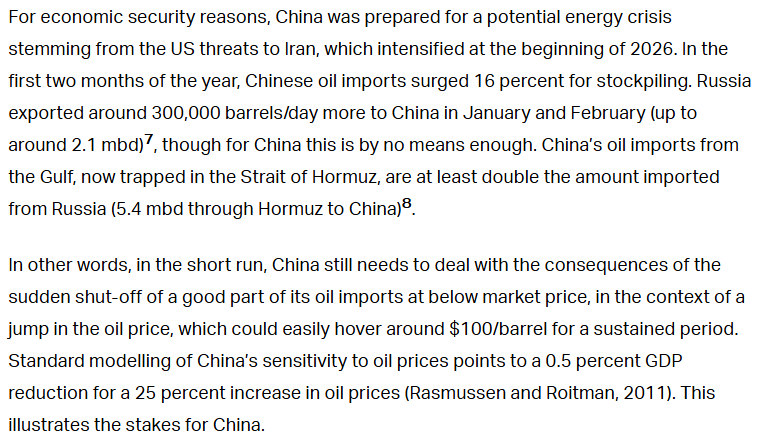
Iran had long served as a vital, discounted source of energy for China, especially since 2021, when the Iran-China 25-year cooperation agreement secured $400 billion of oil at below-market prices in exchange for investment in Iran's infrastructure and security cooperation.
The Hormuz closure did not just cut off Iranian oil, it cut off Qatar's LNG, the UAE's crude exports, Kuwait's and Iraq's production flowing seaward, and Saudi Arabia's primary export route.
The oil production of Kuwait, Iraq, Saudi Arabia, and the UAE collectively dropped by a reported 6.7 million barrels per day by March 10, and by at least 10 million barrels per day by March 12.
For China, this meant its access to cheap, discounted, yuan-settled Iranian oil was gone. And its access to Gulf Arab oil, at any price, was simultaneously throttled.
The situation is particularly significant for China, the world's largest methanol buyer, where port inventories could fall from comfortable levels toward below-warning thresholds if Middle East exports remain curtailed, raising costs for producers of plastics, paints, and synthetic fibers. This is not just energy, it is the petrochemical feedstock for China's downstream manufacturing, which is the engine of its export economy.
The strategic picture becomes stark when you combine these elements.
The US, through the Iran war and the Hormuz closure it triggered, had simultaneously:
This is what Jiang means when he says America attacked Iran to cut off China's energy. He states it somewhat bluntly, but the structural logic is real even if the intentionality is debatable. Whether it was the primary design or a strategic co-benefit, the effect is identical.
Iran's Counter-Strategy: The Mosaic Doctrine and the War of Attrition
Jiang's description of Iran's decentralized military doctrine, which he calls the Mosaic strategy, comprising 31 provincial command structures with localized control that cannot be decapitated from above, aligns precisely with what the operational record shows.
Iran has two parallel military structures:
- the regular Artesh military and
- the IRGC, which has a more ideological character and a direct role in regime security, with the IRGCN assigned sole responsibility for the Persian Gulf.
This is the fundamental asymmetry that Trump's decapitation strategy failed to account for: you can kill leaders, but you cannot kill an ideology distributed across 31 autonomous command structures embedded in mountainous terrain.
Iraq was flat and centralized. Shock and awe worked. Iran is the inverse on both dimensions.
Iran established the Persian Gulf Strait Authority on May 5, creating a formal bureaucratic structure to authorize and regulate maritime transit. Essentially institutionalizing its control of the strait as a permanent governance mechanism rather than an emergency measure.
No matter what many US analysts may think, this is not the behavior of a regime about to capitulate.
It is the behavior of a state that has decided the strait is now permanently leverage, to be managed and monetized indefinitely.
The IRGC's eschatology, as Jiang correctly identifies, means that no political deal between the Iranian government and Washington can be implemented without IRGC buy-in, and the IRGC sees this as a civilizational war rather than a geopolitical dispute.
They are not playing to a ceasefire. They are playing for regional hegemony, the displacement of the GCC monarchies, and ultimately the humbling of American power in the Islamic world. That is not a negotiating position. It is a mission.
Why Trump Really Went to Beijing
Trump went to Beijing because he is stuck.
The Iran war has produced none of the rapid victory he anticipated, fuel prices are devastating American consumers, his domestic political coalition is beginning to fracture under inflationary pressure, and the one lever that might unlock an Iranian exit, Chinese pressure on Tehran, sits in Xi's hands.
But here is the subtlety that elevates this beyond a simple "Trump needed help" narrative: the transaction being proposed was not articulated, because it could not be.
What was actually on the table was something like this:
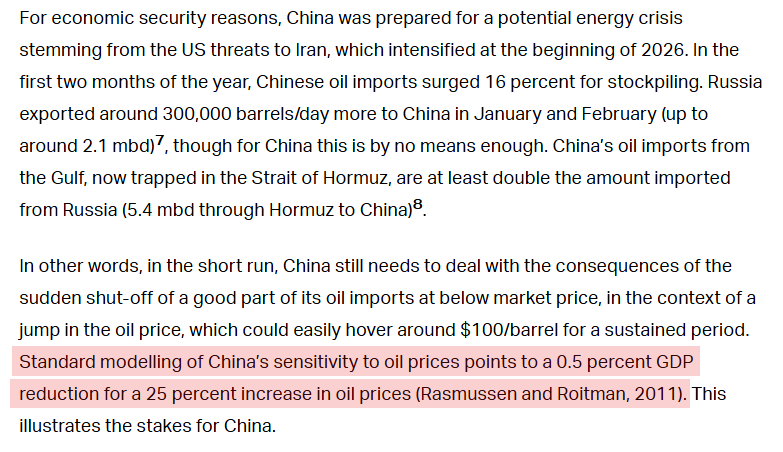
In exchange for relieving this pressure — by reopening Hormuz, which requires ending or de-escalating the Iran war — Beijing would need to use its influence over Tehran. China is Iran's financial lifeline. It buys Iran's oil, provides its industrial inputs, and keeps its banking system connected to the outside world. Without Chinese economic sustenance, Iran's capacity to sustain this war on multiple fronts would compress significantly.
But Xi could not deliver this publicly without appearing to capitulate to American pressure, sell out an ally, and destroy China's credibility as an alternative power center in the Global South. And Trump could not publicly ask for it without appearing weak and admitting that his war strategy has no exit.
So what happened instead? Both sides agreed that the Strait of Hormuz must remain open; Xi opposed militarization and any tolling system; and China expressed interest in purchasing more American oil to reduce its dependence on Gulf crude. That last element is the tell.
China buying American oil is Beijing signaling that it will begin to structurally reduce its dependence on Iranian energy, which is exactly what reduces its incentive to protect Iran's position
The "constructive strategic stability" framework — Xi's conceptual offering — gave both leaders a face-saving architecture: we are not bargaining over Iran; we are establishing a long-term framework for major-power relations. Within that framework, China's behavior toward Tehran can evolve without being presented as a concession.
Chinese vessels had already begun passing through the strait following an understanding over Iranian management protocols, a bilateral arrangement quietly negotiated with the IRGC. China has, in other words, already separated itself from Iran's blockade in practical terms. Its ships move. American ships do not.
The Beijing summit was where this implicit bargain was given diplomatic cover.
What Comes Next: The Forward Logic
Jiang's most consequential, and perhaps the most structurally grounded, prediction is that this war becomes indefinite, not because either side wants it to, but because the structural incentives of every major player push toward continuation.
America benefits from the energy squeeze; it can supply the alternative for.
The military-industrial complex benefits from sustained conflict.
Trump benefits, as long as he can frame it as strategic dominance rather than a quagmire.
Iran's IRGC benefits as well because, after all, this is their eschatological moment.
Israel benefits from the continued degradation of every regional adversary.
China benefits from watching America bleed internationally, as long as it can manage its own energy costs, which the Beijing deal has begun to address.
Russia's entry, which Jiang argues is structurally inevitable, would transform the entire geometry.
Iran's foreign minister had recently visited Moscow, where Putin personally received him and expressed admiration for Iranian resolve.
If Russia extends its nuclear umbrella over Iran, the tactical nuclear option that Israel and America might otherwise contemplate becomes unavailable.
And if Russia begins resupplying Tehran through the Caspian, bypassing both the naval blockade and the Hormuz closure, the American three-pronged strangulation strategy (economic blockade, ethnic destabilization, capital strangulation) begins to fail along all three axes simultaneously.
That is when the logic of escalation becomes genuinely dangerous.
Because America cannot accept defeat in Iran, the petrodollar logic that drove it there in the first place means retreat is existentially costly, but it also cannot escalate to the level required to actually break Iranian resistance, especially with Russian cover in place.
What the Beijing summit may have done, and this is its real significance, beneath all the ceremony, is to establish the back-channel through which an exit will eventually be negotiated, in a form that allows all parties to claim what they need to claim.
America claims it forced open the strait. China claims it brokered regional stability. Iran claims it survived and retained its nuclear program in ambiguous form.
The IRGC continues to operate. The GCC monarchies get their food and water back.
Nobody wins. Nobody loses in a way they cannot live with.
And the world pays an enormous price in the interval.
In energy costs, food security, human displacement, and the accelerated collapse of the rules-based order that underpinned the relative stability of the post-Cold War decades.
That is what the Beijing summit was actually about.
Not the Boeing jets. Not the rose seeds. Not the Zhongnanhai garden walks.
In that narrow sense, both got what they needed. The world got rather less.