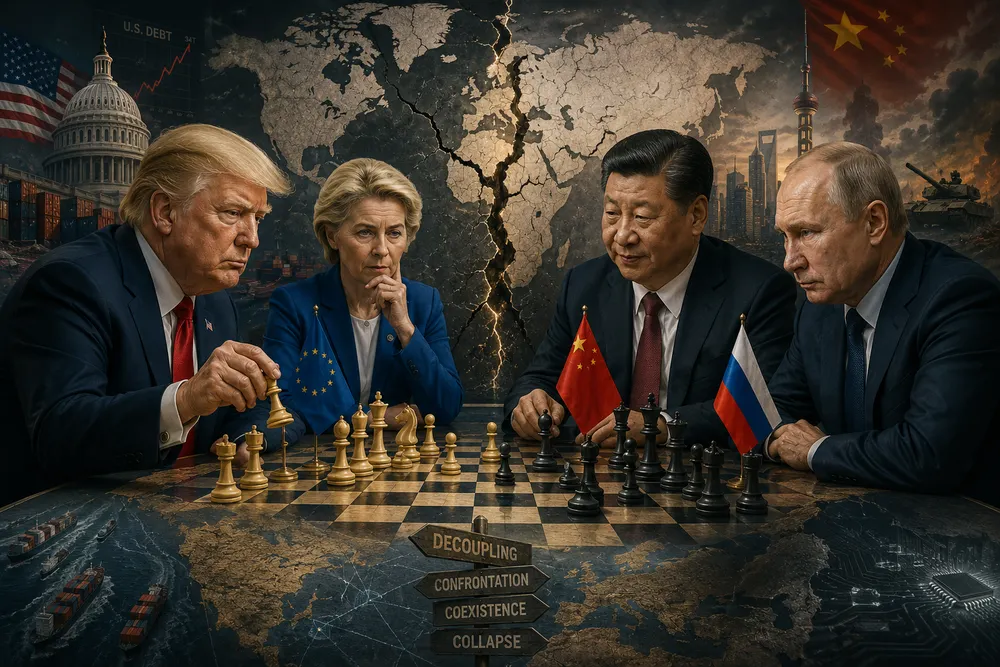
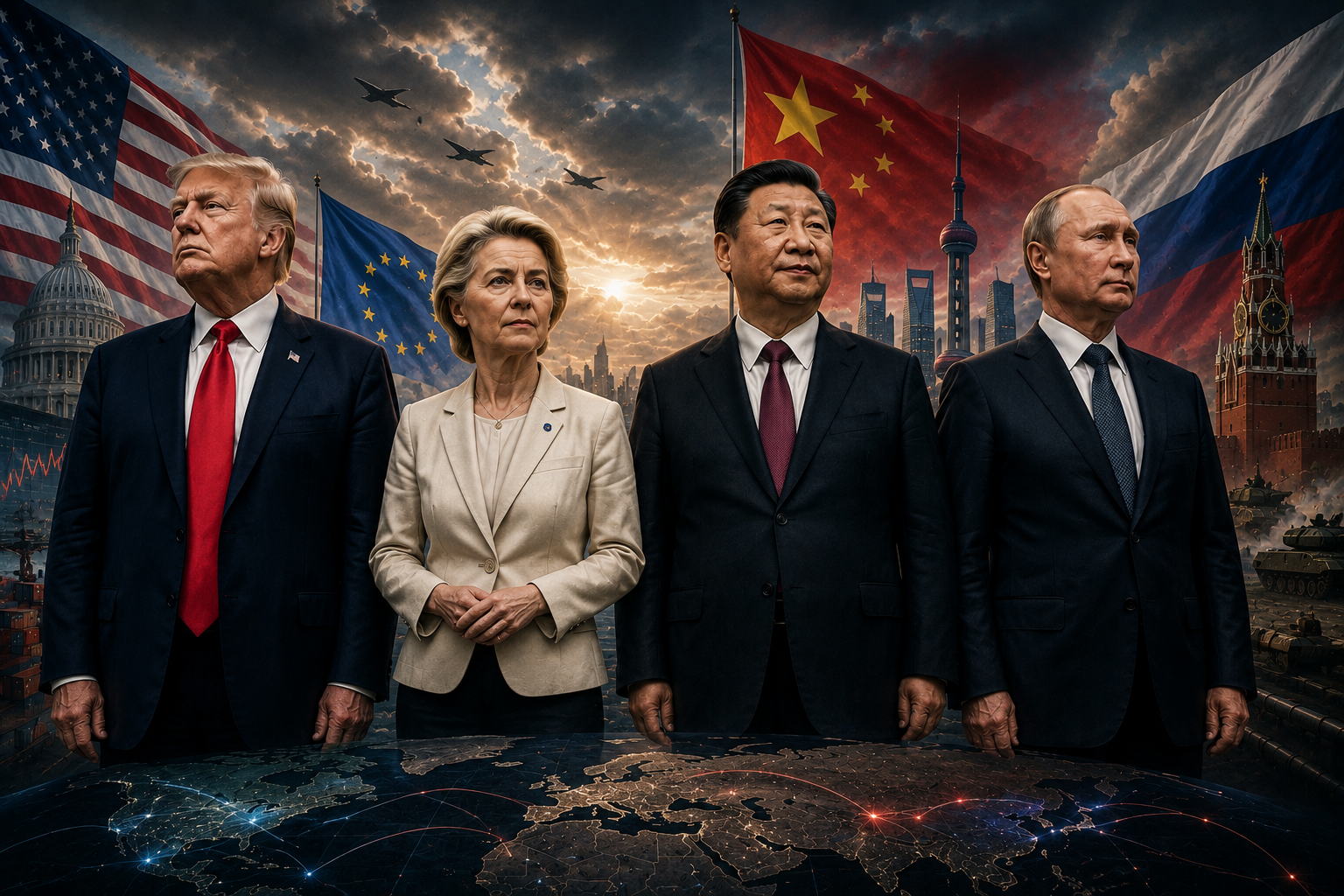
The Emperor, the Merchant, and the Monk
An emperor once summoned the wisest monk in his kingdom.
"Tell me," said the emperor, "which of the great powers will rule the world a hundred years from now?"
The monk smiled but did not answer. Instead, he led the emperor to the marketplace. There they found a merchant counting gold coins.
The merchant said proudly, "My wealth grows every day. Soon I shall own half the city."
The monk nodded.
They walked farther and found a general inspecting soldiers.
The general declared, "My army is the strongest in the kingdom. No enemy can challenge us."
Again, the monk nodded. Finally, they came to a river where an old fisherman sat quietly watching the water.
The monk asked him, "What do you see?"
The fisherman replied, "The river."
The emperor grew impatient. "What does this have to do with my question?"
The monk pointed upstream. A tree that had stood for centuries was slowly collapsing into the water.
He pointed downstream. New saplings were emerging from the riverbank.
Then he said: "The merchant believes he owns the future because he counts today's coins. The general believes he owns the future because he counts today's soldiers. Neither notices that the river beneath them has changed course."
The emperor frowned. "And who owns the river?"
The monk laughed. "No one owns the river. The wise do not ask who will rule forever. They ask who can cross the river when its course changes."
The emperor stood silent. Years later, the merchant lost his fortune.
The general lost his wars. The river changed course three times.
Only the fisherman remained. For he had never mistaken the riverbank for the river itself.
The Walmart Aisles and the Slogans
The week President Trump traveled to China to meet Xi Jinping, discussions about US-China competition, strategic rivalry, and the possibility of economic decoupling once again dominated headlines. Analysts debated tariffs, supply chains, technology restrictions, and the prospect of a new Cold War. Yet, by coincidence, that same week I was doing my routine grocery shopping at Walmart and Costco.
As I walked through aisle after aisle in two of America's largest retail chains, I began paying attention to country-of-origin labels. The result was striking. Whether it was household goods, electronics, kitchenware, toys, tools, seasonal products, furniture, or countless everyday items, an overwhelming majority still traced their origins to China. While some manufacturing had shifted to Vietnam, Mexico, India, or other countries, much of the supply chain remained deeply connected to Chinese factories, components, and industrial ecosystems.
It left me wondering how a genuine economic decoupling could occur without imposing enormous costs on American consumers and businesses. The reality on store shelves seemed very different from the rhetoric in Washington.
At the geopolitical level, the United States has increasingly tested China's strategic red lines. Pressure on Iran, sanctions on Venezuela, restrictions on advanced technology, and efforts to reshape global supply chains all affect key Chinese interests. Yet Beijing has largely avoided direct retaliation, preferring patience over confrontation. This should not be mistaken for passivity. Great powers rarely advertise their preparations. While avoiding open conflict today, China is almost certainly using the time to strengthen its military capabilities, secure critical resources, harden its economic resilience, and prepare options for a future in which the rivalry becomes far more intense. The competition is already underway; the most important moves may simply be taking place below the radar.
Missile Complex in the Middle of Xinjiang Desert
One of the clearest indicators of how seriously Beijing is preparing for a prolonged era of great-power competition is unfolding far from the world's attention in the deserts of Xinjiang. Satellite imagery has revealed a vast network of military infrastructure built over the past six years near the Hami nuclear silo fields, which are home to some of China's longest-range strategic missiles.
According to Pentagon reports, China is expanding its nuclear capability faster than any other nation and, despite a recent slowing in production, is well on track to reach 1,000 warheads by 2030. It has also been boosting its early warning capability, underpinned by Huoyan-1 satellites, which can detect an incoming ICBM within 90 seconds of its launch and alert a command centre within three minutes, giving time for the country to fire its own weapons before they are hit. But despite China’s ‘no first use’ policy, diplomats believe it cannot be ruled out that Beijing would use nuclear coercion to deter any possible foreign intervention in Taiwan. (Source: "Satellite images show China is building nuke launch pads and bunkers" / Metro UK)
According to recent reports, more than 80 launch-related facilities and support sites have been developed across thousands of square kilometers. The network includes hardened installations, airfields, railheads, large military vehicle facilities, and distinctive octagonal compounds believed to house personnel and operational support assets. The scale of construction suggests that this is not merely an expansion of existing capabilities but part of a broader effort to ensure a survivable and credible nuclear deterrent.
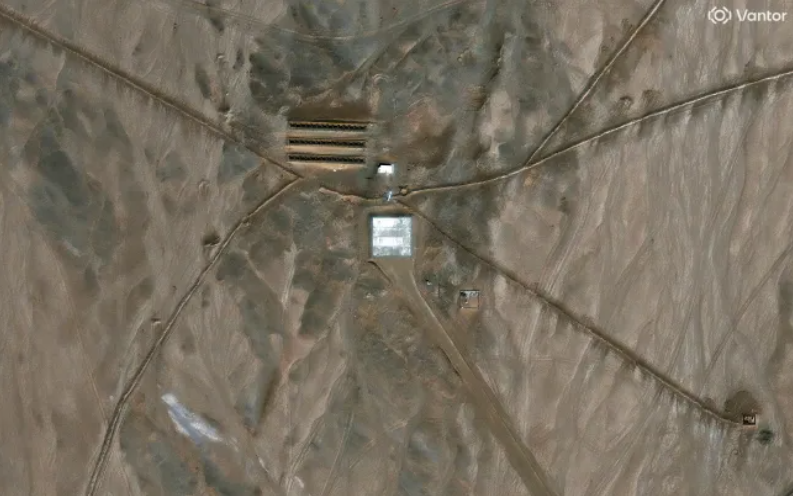
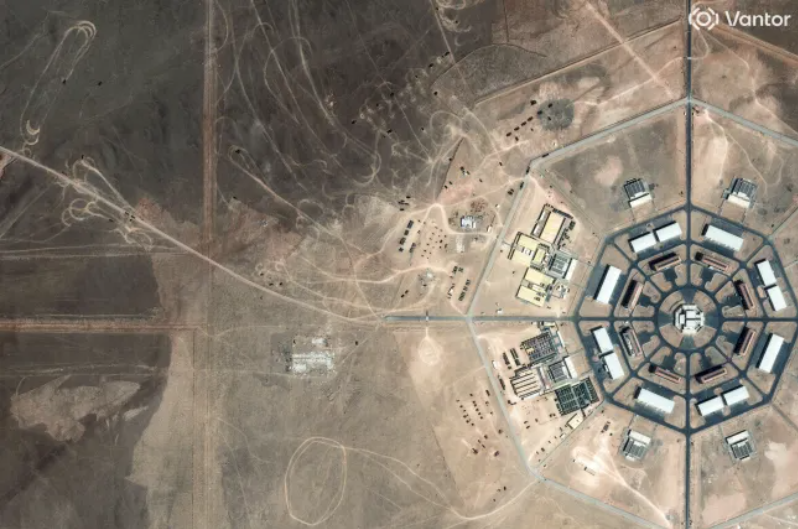
An image showing what experts believe is a launchpad which could be used to fire air defense missiles connected to a sprawling military network spanning thousands of square kilometers (On left) | A satellite showing one of the huge octagon structures at the heart of China’s military network in Xinjiang province (On Right) - Images courtesy Reuters
For decades, China's nuclear strategy emphasized a relatively small arsenal and a minimum-deterrence posture. The Hami expansion signals a shift toward a more robust second-strike capability. One designed to survive a first attack and still retaliate decisively.
In an era of growing US-China rivalry, missile defense advancements, and increasing geopolitical uncertainty, Beijing appears determined to eliminate any doubt about the survivability of its strategic forces.
The significance extends beyond the missiles themselves. Nuclear-capable systems were prominently displayed during the military parade marking the 80th anniversary of the end of World War II, underscoring the importance Beijing now places on strategic deterrence. Whether viewed as a defensive measure or as preparation for a more contested global order, the message is unmistakable: China is investing heavily to ensure that its nuclear forces remain credible, resilient, and central to its long-term security strategy.
What threats does China see for itself? Or rather, how does China evaluate the future and what role does it see for itself?
Let's start with the document that lays it out - the 15th Five-Year Plan. Approved by the National People’s Congress, China’s 15th Five-Year Plan (FYP) for the 2026–2030 period serves as the country’s core strategic blueprint. It focuses on technological self-reliance, developing "new quality productive forces" (NQPF), upgrading manufacturing, expanding domestic consumption, and establishing stronger early-warning systems against global and domestic risks.
What is NQPF and what is its significance?
Some of the top plans for Beijing are:
- China is prioritizing security and resilience over rapid growth
- AI and advanced manufacturing are becoming instruments of state power
- Beijing aims to reshape global supply chains around Chinese standards
So China's latest Five-Year Plan reflects a leadership that has become increasingly cautious about the direction of the international system. Beijing now views the global environment as entering a period of heightened uncertainty, fragmentation, and geopolitical instability, marked by great-power competition, supply chain disruptions, economic nationalism, and weakening confidence in the post-Cold War order.
Yet Chinese policymakers do not see this turbulence solely as a threat. They also view it as an opportunity. As the existing international framework comes under strain, Beijing believes there is space to advance its own vision of global governance, centered on the concept of a "Community of Common Destiny for Mankind." This framework seeks to promote a more multipolar world order in which China's economic weight, diplomatic influence, and institutional leadership play a larger role in shaping global norms and decision-making.
The Five-Year Plan suggests that China will continue pursuing this objective through existing international institutions rather than attempting to replace them outright. In particular, Beijing sees the United Nations and its affiliated agencies as key platforms through which it can expand influence, shape international standards, build coalitions across the Global South, and gradually embed elements of its preferred governance model within the evolving global order.
From Beijing's perspective, instability in the current system is not merely a challenge to be endured; it is a strategic opening through which a new international architecture can be constructed.
China - and its Challenges
If we strip away daily headlines and look at China's strategic planning horizon—say 2035 to 2050—the Chinese leadership likely sees threats in a hierarchy. Europe and the United States occupy very different places in that hierarchy.
Under Xi Jinping, China's long-term objectives appear to be:
- Preserve CCP rule.
- Prevent internal fragmentation.
- Achieve technological self-sufficiency.
- Become the dominant industrial power.
- Secure energy and resource supply chains.
- Ensure Taiwan cannot become a permanent US military outpost.
- Reduce dependence on the US dollar system.
- Become a peer or superior power to the United States.
The rest of the things will feed in to these main concerns.
Let us understand the main threats embedded in the list above.
Threat One: Technological Encirclement Before Self-Sufficiency is Achieved: This is Beijing's most urgent operational threat. China's entire national development trajectory, the 15th Five-Year Plan's emphasis on advanced manufacturing, AI, and biotechnology, its goal of achieving self-reliance and self-strengthening in science and technology, rests on closing the gap with the United States in semiconductors, AI chips, and the manufacturing equipment required to produce them. The American export control regime is specifically designed to freeze that gap before it closes. If Washington succeeds in maintaining semiconductor denial for long enough, China's military modernization timeline, its AI competitiveness, and its ability to indigenize critical technology all slip. This is certainly beyond just a commercial concern. It is a civilizational timeline concern for Xi's project.
Threat Two: Internal Confidence Collapse Preceding External Consolidation: The $1 trillion capital outflow, the destruction of the property market, the deflationary spiral, and the emergency capital controls all point to a threat originating within China's own political economy.
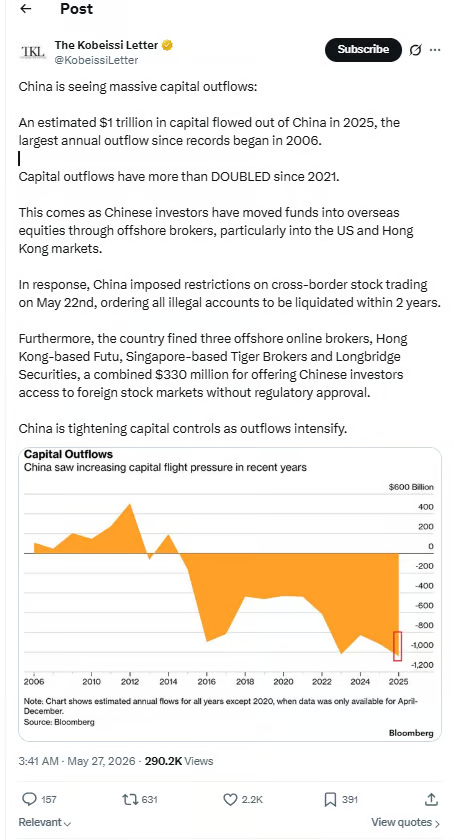
The Party knows it needs the vitality of markets to unleash the animal spirits of private entrepreneurs and local officials, but it fears the flip side of bottom-up dynamism: the potential erosion of control. Xi needs the private sector to innovate while ensuring it does not accumulate independent political power that could challenge Party authority. Those two imperatives are structurally contradictory, and the capital flight is the market's verdict on which imperative is currently winning. Leadership that must use face-scanning technology to prevent its own citizens from moving money abroad is not managing a healthy economy for strategic competition. It is managing a confidence crisis while simultaneously trying to project external strength.
Threat Three: The Taiwan Clock Running Against Military Readiness: Taiwan is simultaneously China's most important unresolved national interest and a potential catastrophic trap. Taiwan tensions are ranked number one in Beijing's own top ten geopolitical risks for 2026. The Central Military Commission (CMC) purges add a dangerous dimension: the sweeping purge suggests Xi is unlikely to pursue near-term military escalation, since with the CMC effectively reduced to two members and command chains hollowed out, the PLA needs time to rebuild systems, making short-term adventurism risky and difficult to control.
The paradox is acute: Xi has publicly committed to Taiwan's reunification as an "unstoppable" goal, domestic nationalist sentiment has been mobilized around that commitment, and yet the military instrument available to pursue it has just been subjected to the most extensive shake-up of the armed forces in roughly half a century, with two dozen senior military figures removed, including former defense ministers and vice military chiefs. The political clock and the military readiness clock are running at different speeds.
Threat Four: The Internal Political Threat Xi Has Created by Eliminating Institutions: The purge has reached figures long assumed to be politically untouchable, exposing the central paradox of Xi's system: the more power is concentrated, the less secure the leader becomes. Xi has dismantled the collective leadership model that buffered the CCP from single-point failures, purged the military to the point where the CMC is a collective defense decision-making organ in name only, with the chief of staff position vacant for the first time since the Cultural Revolution. He told military delegates in March 2026 that "there absolutely cannot be anyone in the military who harbors disloyalty to the Party," a warning that itself signals awareness of disloyalty as a live concern. The institutional architecture that would have distributed risk, absorbed shocks, and provided clarity on succession has been systematically dismantled in the name of consolidating loyalty. What remains is a system that is maximally centralized and therefore maximally brittle. Any serious external shock, a military failure, an economic crisis, or a sudden health event affecting Xi personally, hits a system with no institutional shock absorbers.
Threat Five: The Second China Shock Triggering Coordinated Protectionism: An expansion of the US-led technology containment strategy and global narratives around a "second China shock," tied to China's persistent trade surpluses, may intensify protectionism in the US, EU, and beyond, according to Beijing's own think tanks. This is a threat China has partially created through its own response to the property crisis: using export volume as a growth substitute for collapsed domestic demand. The more aggressively Chinese manufacturing floods global markets, the more rapidly it consolidates the political coalition in Washington, Brussels, Delhi, and Tokyo that justifies systematic protectionism. China's industrial overcapacity is both its greatest short-term economic tool and the mechanism generating its most dangerous long-term strategic environment. Every subsidized EV that displaces a German worker or an American factory job accelerates the political consensus that treating China as a normal trading partner is no longer viable.
Now, let us pivot to how China's relationships with US and Europe are. Two of the largest economic powers along with China.
China - US and Europe
China's relationships with the United States and Europe are fundamentally different because Beijing views the two through entirely different strategic lenses.
US - the only power to stop China
For China, the United States is not merely a competitor; it is the only power capable of preventing China's emergence as the dominant power in Asia and a peer global superpower.
From Beijing's perspective, no other nation possesses the unique combination of military superiority, global alliance networks, reserve-currency dominance, technological leadership, financial-sanctions capability, and naval control of critical maritime chokepoints.
The United States sits astride nearly every major vulnerability in China's strategic architecture. Taiwan remains the most immediate flashpoint, but Chinese planners are equally concerned about technology restrictions, dollar-based financial pressure, alliance-based containment, and the US Navy's ability to disrupt China's access to global trade and energy flows. In short, Washington has the capability not merely to slow China's rise, but potentially to derail it.
Europe - Market and Western Alliance Partner and Competitor
Europe occupies a very different category in Chinese strategic thinking. Beijing does not view Europe as a military threat, a civilizational rival, or a peer strategic competitor. Instead, Europe is seen primarily as a wealthy export market, a source of advanced technology and investment, and a potential counterweight to American influence within the Western alliance system. China would prefer a Europe that remains economically intertwined with Chinese manufacturing, politically autonomous from Washington, militarily limited, and internally divided on China policy.
This distinction explains the contrast in Beijing's approach. Toward America, China pursues deterrence, competition, and strategic confrontation. Toward Europe, it emphasizes diplomacy, market access, investment, and political engagement. China confronts the United States because it sees Washington as the principal obstacle to its ambitions. It manages Europe because it sees the continent as an important economic partner whose alignment with America would significantly complicate China's long-term strategic objectives.
So what about the emerging trade war against Europe?
Europe-China Trade War
There is a genuine trade war brewing between China and Europe, close on the heels of the trade war between the US and China.
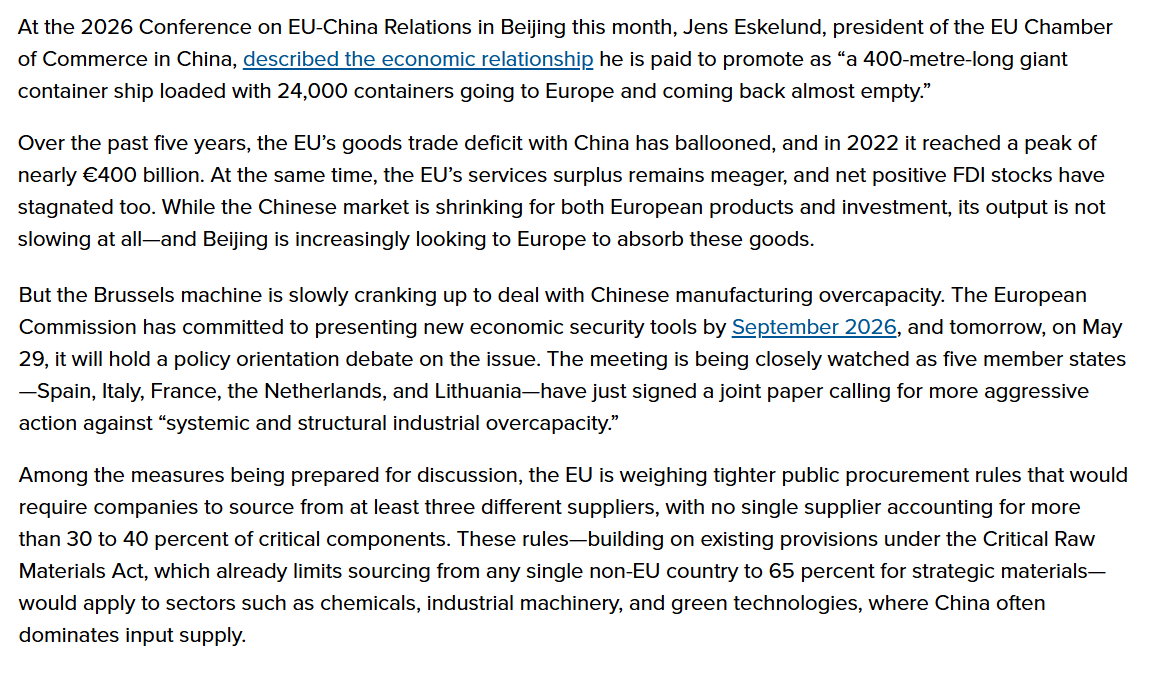
The emerging Europe-China trade war, however, is fundamentally different from the US-China trade war. The United States is confronting China because it sees Beijing as a strategic rival capable of challenging American global leadership. Europe, by contrast, is increasingly confronting China because it fears for its own industrial survival.
For years, Europe benefited from access to Chinese markets while importing inexpensive Chinese goods. That balance is now breaking down. China's slowing domestic economy, property crisis, and weak consumer demand have pushed Beijing to rely even more heavily on manufacturing exports. As Chinese electric vehicles, batteries, chemicals, machinery, solar equipment, and other industrial products flood European markets, policymakers in Brussels increasingly fear that entire sectors of European industry could be hollowed out. Europe's trade deficit with China has ballooned to well over €360 billion, while Chinese imports continue to rise.
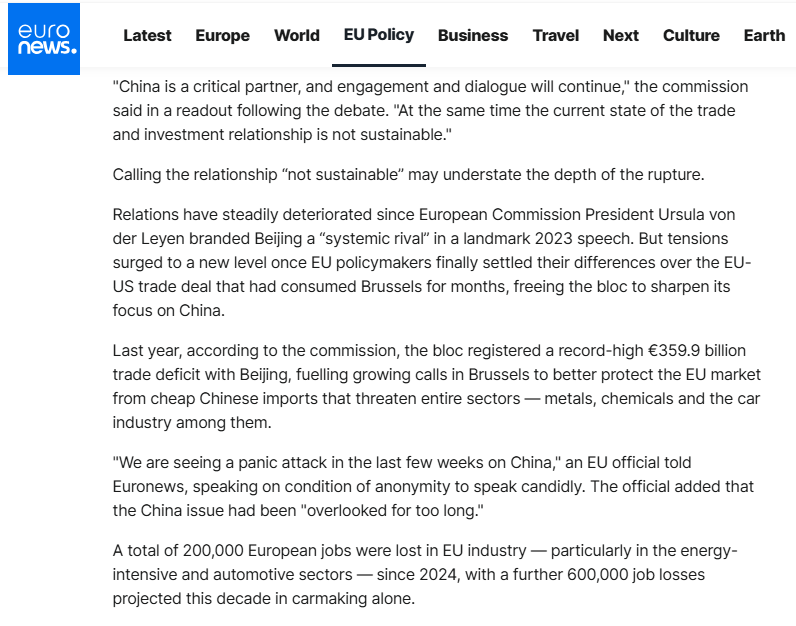
From Beijing's perspective, Europe has traditionally been viewed as a lucrative export market rather than a strategic adversary. But Europe is beginning to adopt tools once associated with the United States—tariffs, investment screening, procurement restrictions, industrial subsidies, and supply-chain diversification. The irony is that Brussels may end up borrowing elements of Washington's economic playbook after years of criticizing it.
So what do we have here?
The result is a slow-motion economic confrontation that could reshape global trade over the next decade, even if neither side wants a full-scale trade war.
Europe - The Imputer Power
For three decades following the Soviet collapse, European powers operated under what can only be called imputed power: strategic credibility not earned through independent military capacity or genuine economic sovereignty, but borrowed wholesale from American security guarantees, a dollar-denominated financial architecture, and NATO's Article 5 umbrella.
The European Union constructed an elaborate institutional edifice, the Brussels regulatory machinery, the euro, the Single Market, the pretense of a common foreign and security policy, and mistook the facade for the structure behind it.
The first term of the Trump presidency stress-tested this arrangement. The second term shattered it.
When Trump applied economic and diplomatic pressure on European leaders, it became unmistakably clear that Europe had no autonomous response.
Germany, the closest approximation to a genuine economic power within the EU, runs an export-dependent manufacturing economy whose markets are America and, increasingly, China. France maintains a nuclear deterrent and a seat on the UN Security Council, but cannot project force at scale without American logistics.
The rest, from Poland to Portugal, were essentially American protectorates dressed in the language of European solidarity.
The most striking moment came when the EU rushed to negotiate what was breathlessly described as the 'mother of all deals' with India, a clear pivot away from over-reliance on American economic favor. The irony was sharp: the EU's supposed demonstration of strategic autonomy was triggered precisely by the easing of Trump's pressure, not by any inherent European capability. The moment American focus drifted, Europe scrambled to find alternative anchors, which proved the dependency rather than resolving it.
Except for Germany's industrial base, which is itself hollowing out under energy-cost pressures following the Nord Stream destruction and the sanctions-driven gas cutoff from Russia, no European economy has built out a serious GDP-producing industrial capacity capable of sustaining genuine geopolitical weight.
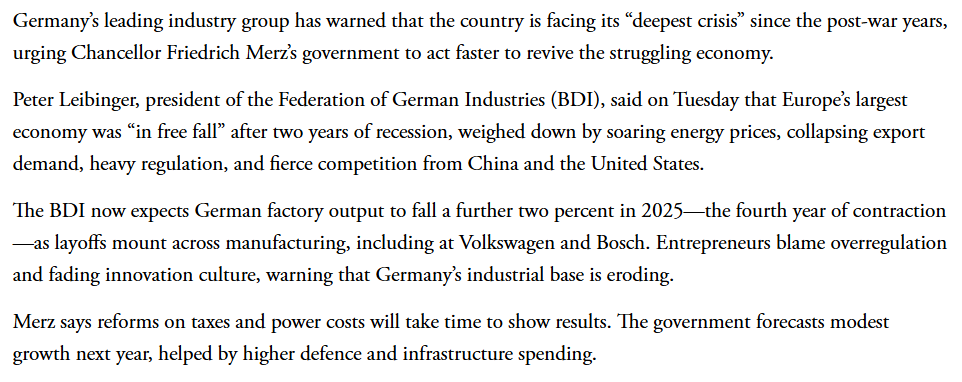
The service economies of France, Spain, Italy, and the Netherlands are sophisticated but not capable of waging war. Defense spending announcements are largely promissory notes on future budgets that historically get raided for social spending the moment electoral pressure mounts.
Europe announced it was rearming. What it actually announced was that it had finally noticed it had nothing.
Russia's calculations
The Russia-Ukraine war has entered a phase that fundamentally changes its risk profile. Both sides are now conducting deep strikes into each other's territory using large swarms of long-range drones, a tactical evolution that has compressed the distinction between the front line and the strategic rear.
Russia has launched barrages involving hundreds of drones and dozens of missiles against Kyiv and other Ukrainian cities, killing civilians and damaging residential and industrial areas. Ukraine, in parallel, has struck oil depots, refineries, and logistics infrastructure deep inside Russian territory, including a tanker in the port of Taganrog and facilities in Armavir in the Rostov and Krasnodar regions.
Ukrainian drone strikes caused fires at more Russian oil facilities overnight into Saturday, Russian officials said, in what appeared to be the latest attack on Moscow’s vital oil industry. Authorities in Russia’s Rostov region said falling drone debris sparked a fire that damaged an oil depot and tanker in the port of Taganrog, while officials in the neighboring Krasnodar region reported a fire breaking out at an oil depot in Armavir for the same reason. “Another facility of Russia’s oil industry has been reached — Armavir,” Ukrainian President Volodymyr Zelenskyy wrote on X, referring to the Krasnodar attack, and noting that Armavir is “500 kilometers from our state border.” “We are rightfully bringing the war back to where it came from,” he wrote. Ukraine has expanded its mid- and long-range strike capabilities, deploying drone and missile technology that it has developed domestically to battle Russia’s 4-year-old invasion. Attacks on Russian oil assets that play a key part in funding the invasion have become almost daily occurrences. (Source: "Ukraine keeps up assault on Russian oil sites as Kyiv expects more strikes" / AP)
The most consequential escalatory signal came in late May 2026 when a Russian Shahed-type drone, part of a larger swarm aimed at Ukraine, crashed into a residential apartment building in Galati, Romania, injuring two people and triggering a fire.
Russia’s war with Ukraine spilled into Romania, a member of NATO, on Friday when the Romanian authorities said that a Russian drone had hit an apartment building in a major port city, wounding two people. It was the first known time that a Russian drone had caused damage and injuries in a major urban area on the territory of the Western military alliance. Russian drones have repeatedly crashed without causing casualties along the Danube River border between Romania and Ukraine since 2023. But the drone crash on Friday, on the roof of a residential compound in the port city, Galati, sharply escalated tensions between NATO and Moscow. (Source: Russian Drone Hits Romanian Apartment Building, Officials Say / New York Times)
NATO confirmed the drone was Russian. Romania declared Russia's ambassador persona non grata, expelled the Russian consul in Constanta, and formally demanded accelerated transfer of anti-drone capabilities from NATO allies. The UN Secretary-General warned that escalating attacks risk spiraling out of control with unknown and unintended consequences.
Russia's formal characterization of Ukrainian drone strikes on Moscow as 'terrorist acts' while simultaneously framing its own massive barrages as 'retaliatory strikes' reveals the internal logic Moscow is operating under. The Kremlin has told foreign diplomats to leave Kyiv and issued explicit threats toward European states whose territory or manufacturing capacity is involved in drone production for Ukraine, warning that NATO membership may not constitute adequate protection.
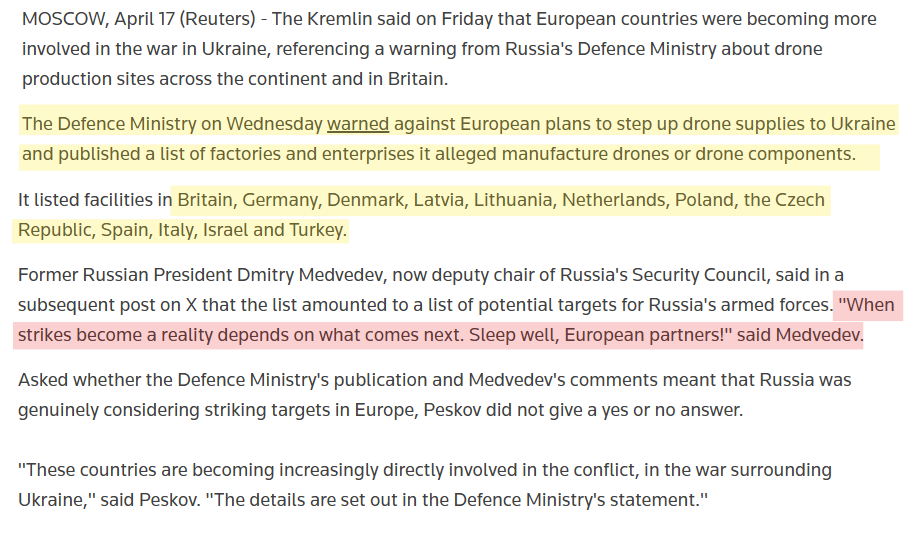
It is too stark to be mere rhetoric. They represent a studied attempt to separate the threat of Western supply from the formal Article 5 deterrent, to find the seam between collective defense and individual vulnerability.
The critical question for Russia is the threshold of patience. Moscow has already demonstrated it will accept enormous economic and human costs to continue. The pressure point, ironically, is not battlefield reversal but domestic political strain and the growing gap between what the Russian leadership promised the public and what the war has delivered. Drawn-out attritional conflicts historically generate the conditions precisely, domestic pressure combined with battlefield stalemate, that incentivize dangerous escalatory gambles. Russia now has a demonstrated willingness to let ordnance reach NATO territory. Whether that remains accidental or becomes deliberate is the central risk variable.
Meanwhile, Faltering American Power
Trump's US had gone to Iran with the explicit mission to obliterate the regime and remove its nuclear threat.
The regime is still there, though players have changed. The nuclear threat is there, maybe more potent now. And the world is reeling under tremendous pressure.
Amid all this, there is reporting on a possible US-Iran deal. The emerging US-Iran Memorandum of Understanding is one of the most revealing documents of the current strategic moment, not for what it achieves militarily or diplomatically, but for what it exposes about American strategic overreach and its costs. A draft MOU reported by The New York Times on May 28, 2026, includes a proposed $300 billion postwar fund for Iran's reconstruction, framed by American negotiators as an 'international investment fund' that Washington would help facilitate, deliberately avoiding the language of reparations or compensation that Tehran originally demanded and that would have been politically toxic in the US Congress.
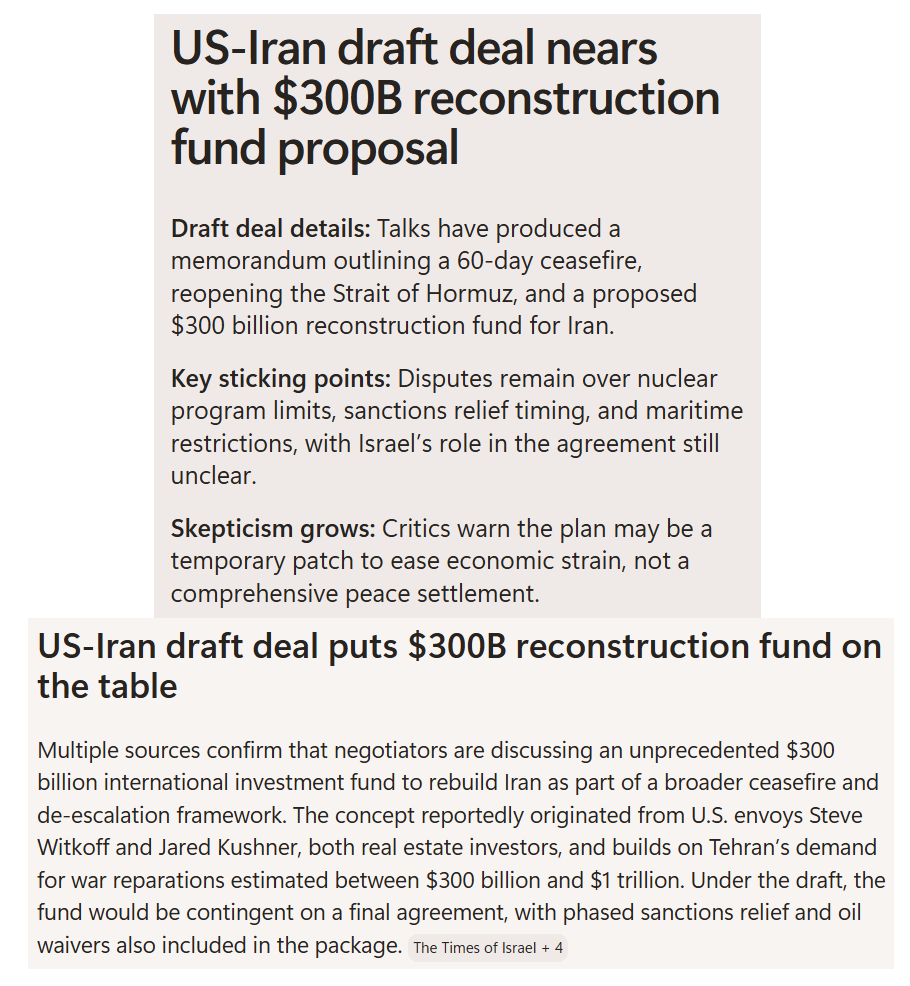
The fund's parentage is itself revealing. According to reporting across multiple outlets, the concept originated not in the State Department or National Security Council but with Steve Witkoff, Trump's Special Envoy, and Jared Kushner, both real estate investors. The instinct was transactional in the most literal sense: frame the payment as an investment opportunity rather than a liability, avoid the word 'reparations,' and structure it so no single line item reads as American taxpayer money going to Tehran.
Trump, who built his brand on never giving Iran a cent, is now the architect of the largest financial commitment to Tehran in American history. Provided nobody calls it what Iran originally asked for.
Trump himself posted on Truth Social that 'no money will be exchanged, until further notice,' while insisting on three conditions: no nuclear weapon, Strait of Hormuz open with no tolls in both directions, and removal of sea mines.
What does this inversion mean structurally? It means that the United States attacked Iran, damaged Iranian infrastructure, imposed enormous human costs on the Iranian population, and is now on a path toward paying Iran something close to what Iran demanded in reparations, rebranded so American domestic politics can absorb it. The military campaign achieved neither regime change nor confirmed nuclear dismantlement. The Strait of Hormuz remained a pressure point throughout, and Iran's exclusion of military vessels from any Hormuz commitment reveals it retains deterrent leverage even in a weakened state.
Iran's reconstruction fund, if it materializes, will almost certainly involve Chinese and Russian participation, given existing economic relationships.
Chinese investors fleeing domestic deflation will find Iranian reconstruction assets, priced low after bombardment damage and carrying high future yield potential, attractive. American-facilitated reconstruction capital flowing into Iran may well be intermediated in part by Hong Kong-based Chinese capital that originated as outflows from the mainland.
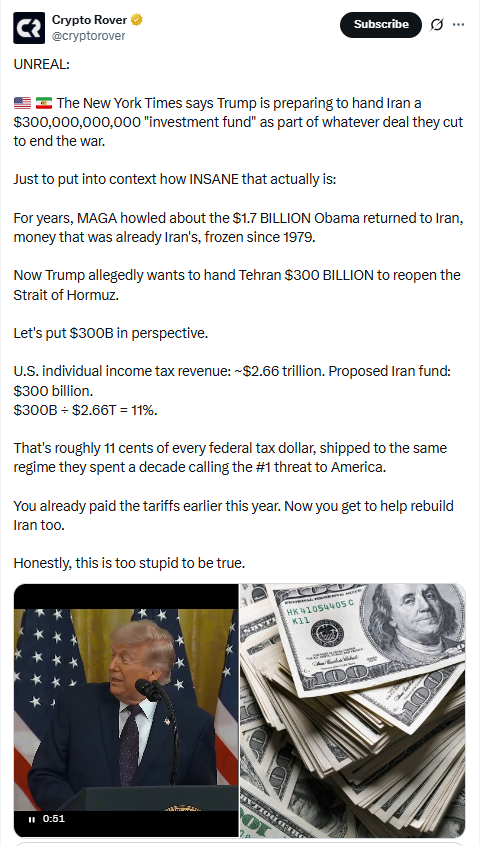
The American public and commentators are not excited about this.
As we look at this geopolitical game, there is another player that is rarely discussed but we want to lay out its story - Japan.
Between the two powers - the US and China- the three states that will, in the end, turn out to be most consequential are Russia, India, and Japan. We always discuss India and Russia. Japan is not fully understood, nor is its role appreciated. So, let us look at Japan.
Japan - From Imperial Power to a Vassal
The transformation of Japan after World War II remains one of the most remarkable geopolitical reversals in modern history. Before 1945, Japan was an imperial power that had defeated Russia, built a vast colonial empire across East Asia, and challenged Western dominance in the Pacific. By the end of the war, however, Hiroshima and Nagasaki had been destroyed, its empire dismantled, and the country placed under American occupation.
The cornerstone of this transformation was Article 9 of Japan's postwar constitution, drafted during the US occupation. It renounced war as a sovereign right and prohibited Japan from maintaining military forces for offensive purposes. While the Self-Defense Forces later emerged, Japan's security became fundamentally dependent on the American military umbrella. In exchange, Japan was allowed to focus its resources on economic reconstruction, leading to one of the greatest economic miracles in history. By the 1980s, Japan had become the world's second-largest economy, but it remained strategically constrained. It was rich, technologically advanced, and globally influential, yet unable to exercise military power commensurate with its economic weight.
Critics argue that this arrangement effectively converted Japan from an independent great power into a highly prosperous American protectorate. For decades, Tokyo's foreign and security policies operated within limits largely defined by Washington. The Japanese public, having internalized postwar pacifism, also became psychologically resistant to the normalization of the military.
Former Prime Minister Shinzo Abe sought to change this trajectory. He argued that Japan needed to become a "normal nation" capable of collective self-defense and a more autonomous security policy. Abe reinterpreted Article 9, expanded defense cooperation with partners, and laid the intellectual groundwork for constitutional revision. Although he was assassinated before completing that project, his successors have continued along the path he charted.
As of late May 2026, Japan, under Prime Minister Sanae Takaichi (LDP, in power since October 2025), is actively pushing to advance constitutional revision, with Article 9 (the war-renouncing pacifist clause) at the center. Takaichi's LDP secured a historic supermajority (over two-thirds) in the February 2026 snap lower house election, providing the votes needed in the Diet to propose amendments for a national referendum.
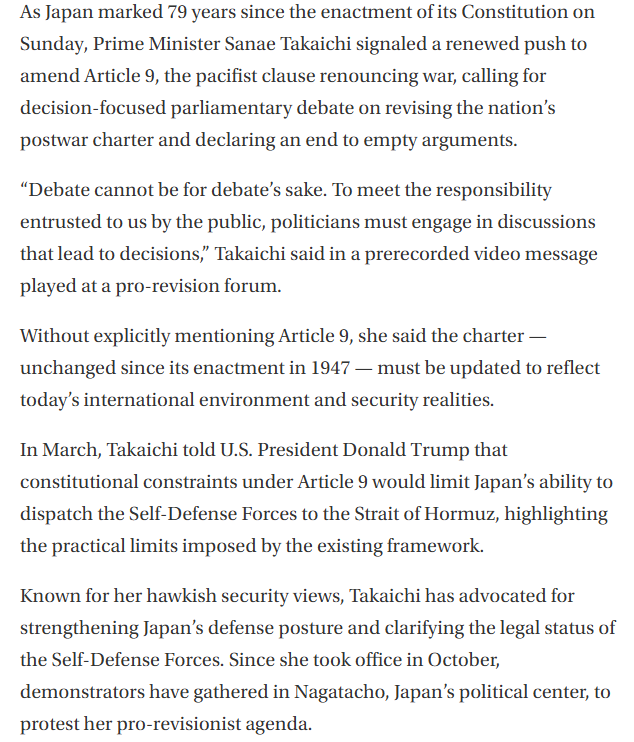
Today, growing concerns about China, North Korea, and regional instability have accelerated Japan's rearmament. Defense spending is approaching 2 percent of GDP, long-range strike capabilities are being developed, and public attitudes toward national security are evolving. Yet transforming Japan from a protected economic power into a fully autonomous strategic actor remains a generational project. The legal, institutional, and psychological legacy of the postwar settlement continues to shape Japan's choices nearly eight decades after its defeat.
Synthesizing the Issues
The United States remains the master architect of the existing Western power ecosystem.
American financial infrastructure, military logistics, intelligence networks, and reserve currency status cannot be replicated by any other actor on a relevant timescale. Even in decline, American hard power vastly exceeds any European combination or even China.
This is not changing in the next decade.
European institutional power is largely performative in hard security terms. The NATO alliance functions as an American security guarantee, not as genuine burden-sharing.
European defense industries are fragmented, undersupplied, and have atrophied under decades of peace-dividend politics. This structural deficit is real and will take fifteen to twenty years of sustained political will and industrial investment to meaningfully correct, assuming that will exists at all.
China's economic embeddedness in American consumer supply chains is not reversing rapidly. Even with tariffs, export controls, and political pressure, the production ecosystem, logistics intelligence, tooling, and precision manufacturing capacity remain concentrated in China and Chinese-adjacent supply chains. Complete decoupling would cost the American economy hundreds of billions in foregone GDP and purchasing power, a cost no administration has been willing to impose on its own consumers.
Russia will absorb enormous costs before it decides to inflict real pain on the West. Specifically Europe. And even the US.
The Assumptions
The assumption that nuclear deterrence remains stable at current force levels and postures needs revision.
China's Xinjiang buildup is the clearest signal yet that Beijing has concluded the current strategic balance is insufficiently stable for the level of competition ahead. When a major power undertakes construction of this scale and complexity to harden its second-strike capability, it is signaling that it has assessed the risk of first-strike scenarios as non-negligible. That assessment, regardless of its accuracy, changes the strategic environment.
The assumption that NATO's Article 5 functions as a reliable deterrent against Russian escalation requires revision. The Romanian incident is not an isolated accident in the strategic sense. It is a probe, whether accidental or deliberate in its immediate execution, that tests the collective response threshold. Russia's explicit threats against European drone manufacturing facilities and its willingness to issue nuclear-force signaling toward NATO states suggest Moscow is actively exploring the space between Article 5 guarantees and exploitable gaps.
The assumption that economic coercion, sanctions regimes, and financial exclusion constitute reliable strategic tools against major powers requires fundamental revision. The Iranian case is the most recent demonstration. Sanctions did not produce regime change, nuclear capitulation, or a fundamental reorientation of Iranian foreign policy. They produced economic pain, domestic suffering, and ultimately a negotiated arrangement in which the sanctioning party is now contemplating a $300 billion reconstruction fund. The Russian case shows the same pattern: sanctions accelerated Russian economic reorientation toward China rather than producing political concessions.
The original analysis characterized China as operating from a position of growing strategic confidence. The capital flight data requires this to be revised to a more qualified position: China is advancing militarily and technologically while experiencing a serious internal confidence deficit among its own wealth-holding class. This dual reality is itself an unstable condition. A government that must force-recapture its own citizens' savings through emergency capital controls to fund domestic investment is not projecting strength from a stable base. It is racing an internal clock whose alarm time is unclear even to Beijing's planners.
Finally, the assumption that the existing international order will remain the default framework for resolving disputes requires revision. What China's nuclear buildup, Russia's territorial war, Iran's resistance calculus, Europe's strategic bankruptcy, and Chinese capital's own flight from the domestic system collectively signal is that multiple actors, including China's own investor class, have concluded the existing arrangements are inadequate. They are building, or fleeing toward, alternative structures. The parallel order is being constructed not just by governments but by the wealth-holding classes of the countries those governments claim to represent.
Where to from here?
The most honest assessment of the current geopolitical moment is neither optimistic nor apocalyptic. The world is not collapsing, but it is not operating under a stable and coherent order either.
What we are witnessing is what historians have often described as an interregnum. A period in which the old order is no longer capable of organizing international affairs, while the new order has yet to fully emerge. Such periods are historically dangerous not because conflict is inevitable, but because uncertainty becomes the dominant condition.
The post-Cold War era was defined by a relatively simple structure. American military power underwrote global security, the dollar anchored international finance, globalization integrated supply chains, and major powers largely accepted the broad architecture of the international system. That era is ending. The United States remains the world's most powerful state, but it no longer enjoys uncontested primacy. China has emerged as a peer competitor. Russia has demonstrated its willingness to challenge the Western security order by force. Europe is struggling to reconcile economic dependence with strategic vulnerability.
Meanwhile, regional powers such as India, Turkey, and Saudi Arabia are increasingly pursuing independent paths rather than fully aligning with any bloc.
The most stable scenario for the coming decade is one of managed multipolar competition. In such a world, the United States and China continue to compete intensely in technology, military power, trade, and influence, but both sides avoid crossing thresholds that would trigger a direct confrontation. Taiwan remains the most sensitive flashpoint, but mutual economic dependence and nuclear deterrence act as restraints. Ironically, some of the recent signs of economic weakness inside China may support this outcome. A China dealing with capital flight, slowing growth, and domestic confidence challenges has powerful incentives to avoid a military crisis that could trigger financial and economic rupture.
Yet the most dangerous scenario remains that of a cornered power seeking to compensate for domestic weakness through external strength. History repeatedly shows that governments facing internal pressure sometimes take risks abroad that they would otherwise avoid. Russia's war in Ukraine demonstrates how strategic calculations can evolve when leaders perceive limited alternatives. Similar dynamics could emerge elsewhere if economic pressures, legitimacy concerns, or security fears intensify.
For India, this interregnum represents both a challenge and an opportunity. India's geography exposes it to energy vulnerabilities, particularly through the Persian Gulf and the Strait of Hormuz. Yet India also occupies a uniquely advantageous strategic position. Unlike most major powers, India maintains functional relationships with competing blocs simultaneously. It works with the United States through the Quad, purchases Russian energy and defense equipment, engages the Gulf monarchies, maintains ties with Europe, and competes with China while remaining economically connected to it. In a fractured world, such strategic flexibility becomes a major asset.
This is particularly important because global capital increasingly seeks stability. As geopolitical risk rises and investors search for alternatives to concentration in any single market, countries capable of providing legal certainty, political stability, demographic growth, and economic opportunity become natural destinations. India has the potential to become one of those destinations. But potential alone is insufficient. Realizing that opportunity requires institutional reforms, infrastructure development, legal predictability, and the capacity to absorb large-scale investment productively.
China illustrates both the strengths and contradictions of the emerging order. The vast military infrastructure being constructed in Xinjiang, including hardened nuclear facilities and associated support networks, signals Beijing's determination to secure a survivable second-strike deterrent and prepare for a prolonged era of great-power competition. These projects communicate confidence, capability, and strategic patience.
At the same time, another signal is emerging from within China itself. Reports of approximately $1 trillion in capital leaving the country in a single year represent something more than a financial statistic. They represent a confidence indicator. Wealthy individuals, entrepreneurs, and investors appear increasingly interested in diversifying their assets beyond the mainland economy. For Beijing, this creates a dilemma. Military power can be expanded through state direction. Investor confidence is much harder to command.
The strategic danger for Washington lies in focusing exclusively on China's military modernization while overlooking signs of economic and social strain. The strategic danger for Beijing is the opposite: to focus on military capabilities while underestimating the significance of domestic confidence erosion. Great powers rarely fail solely because of external pressure. More often, they struggle when external competition intersects with internal contradictions.
The United States faces its own contradictions. Its economy remains deeply intertwined with Chinese manufacturing despite years of rhetoric about decoupling. Its alliances remain powerful but increasingly costly to maintain. Its political system often struggles to sustain the long-term strategic focus required for multi-decade competition. Europe faces a different challenge. Decades of peace and prosperity created an assumption that security could be outsourced indefinitely. The return of geopolitical competition has exposed vulnerabilities that many European leaders assumed belonged to history.
What emerges from all of this is a picture that is both more complex and more unsettling than traditional narratives of decline or ascent. No major power appears entirely comfortable. No major power appears entirely confident. The fractures are not merely between nations; they increasingly run through nations themselves. Economic inequality, political polarization, demographic change, capital flight, institutional distrust, and social fragmentation are becoming common features across multiple systems.
The interregnum will eventually end. A new order will emerge. But the transition will not be determined solely by missiles, trade balances, or military doctrines. It will be determined by whether major societies can preserve the confidence of their own citizens while navigating a world that is becoming more fragmented, more competitive, and more uncertain than at any time since the end of the Cold War.