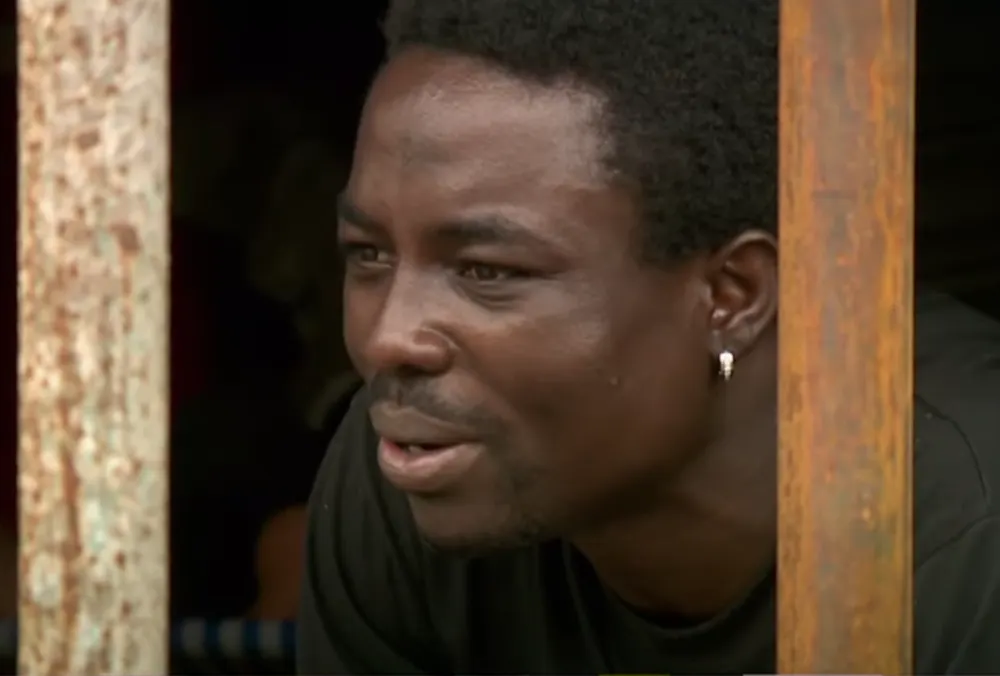
In a remarkably heartless display of extreme xenophobia, Africans in China – specifically Guangzhou – have been evicted from their hotels, apartments and barred from entering restaurants. Many of them have found themselves sleeping on the streets as a result.
“I’ve been sleeping under the bridge for four days with no food to eat … I cannot buy food anywhere, no shops or restaurants will serve me,” Tony Mathias, an Ugandan student, told Agence France-Presse (AFP) in an article published Saturday. “We’re like beggars on the street.”
Many Africans are being subjected to inhumane treatment by the Chinese.
This is nothing short of a human right abuse situation in China.
Africans living in the southern Chinese city of Guangzhou say they have been evicted from their apartments and refused entry to restaurants as part of a xenophobic campaign against black people that is ostensibly aimed at curbing the transmission of coronavirus. Other black residents in a part of the city known as “Little Africa” are being forced to remain inside their apartments – even if they have not traveled anywhere that would warrant quarantine – and required to submit to coronavirus tests. (Source:
Worse is that the the restaurants have been asked not to serve people from Africa.
Africans have become targets of suspicion, distrust and racism in China and now authorities have ordered bars and restaurants not to serve clients who appear to be of African origin.Nairobi News
As the Chinese city bans Africans, it is becoming a big issue in Africa back home. That will have ramifications for the future relationship that China may want in there.
The post-Cold War order is fading, but the next world order has yet to emerge. As America, China, Europe, and Russia reposition for an uncertain future, old assumptions are collapsing. This is the story of borrowed power, strategic decline, rising rivals, and a world caught between eras.
When Trump flew to Beijing carrying an unwinnable war, rising fuel prices, and a closed strait he could not reopen alone, Xi gave him pageantry with a twist. Nothing was signed. Yet, perhaps everything was decided.
Xi Jinping enters the May summit having brokered a ceasefire Trump credited publicly, weaponized Taiwan's opposition for diplomatic cover, and — per US intelligence — quietly arming Iran through cutout channels. This is not three stories. It is one architecture.
Applying Graham Allison's Thucydides Trap to the 2026 Iran war. Blending asymmetric war economics, $3T market distortions, alliance fractures, and revealing the deeper US-China power struggle beneath the conflict.
The post-Cold War order is fading, but the next world order has yet to emerge. As America, China, Europe, and Russia reposition for an uncertain future, old assumptions are collapsing. This is the story of borrowed power, strategic decline, rising rivals, and a world caught between eras.
For eighty years, the cross and the agency have traveled together. Missionaries mapped territories, pacified populations, and laundered political operations as charity. When India asks where was the money used, Washington sends a Secretary of State to make the question stop.
When Trump flew to Beijing carrying an unwinnable war, rising fuel prices, and a closed strait he could not reopen alone, Xi gave him pageantry with a twist. Nothing was signed. Yet, perhaps everything was decided.
From a tea stall to three terms as Prime Minister, Narendra Modi has faced coordinated destruction from every direction and responded by building. Today we explore what he truly represents for India, for its civilization, and to its poor, and to its long-humiliated Hindu majority.