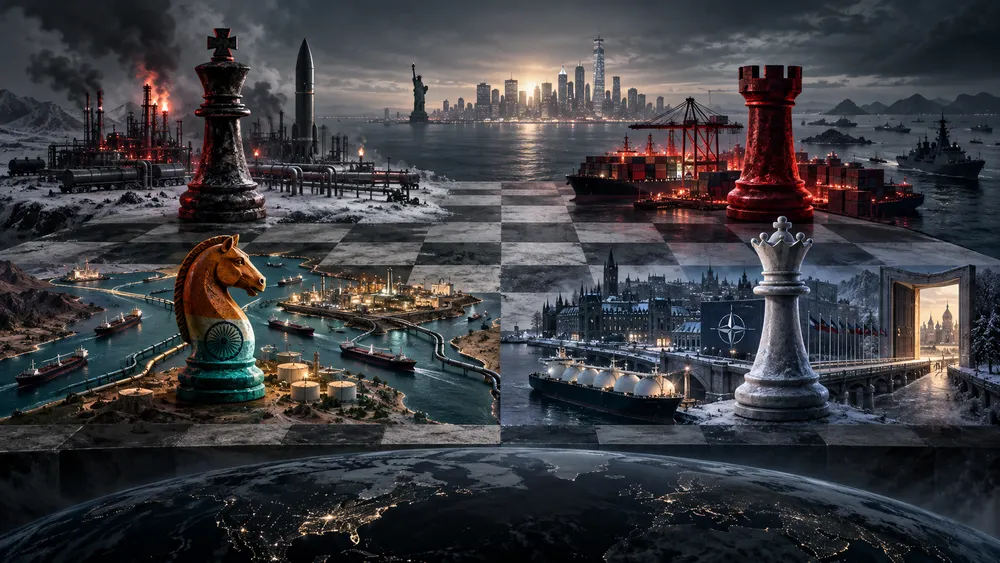
Control Creates Power and War
At the foot of a mountain, four villages drew water from different rivers. One summer, a powerful merchant bought the bridges, guarded the wells, and told the villagers, “You may drink, but only from my cup.”
The northern village sharpened its swords. The eastern village dug a hidden canal. The southern village carried water between rival wells, promising friendship to none. The western village built higher walls and waited for the merchant’s protection.
An old monk watched them prepare.
“Master,” asked a child, “who will win?”
The monk placed four empty bowls beneath a leaking roof.
“Whichever village understands that thirst is stronger than obedience,” he said.
That night, lightning struck the merchant’s warehouse. His guards ran to the rivers, but every bridge was blocked by men carrying swords.
Only the canal reached the flames.
By morning, the warehouse was ash.
The monk smiled: “Control creates power; dependence creates rebellion.”
Swiss Prepare for War?
Read this rather cryptic post by the Swiss Federal Government. It shows the government's concern but doesn't sound alarming.
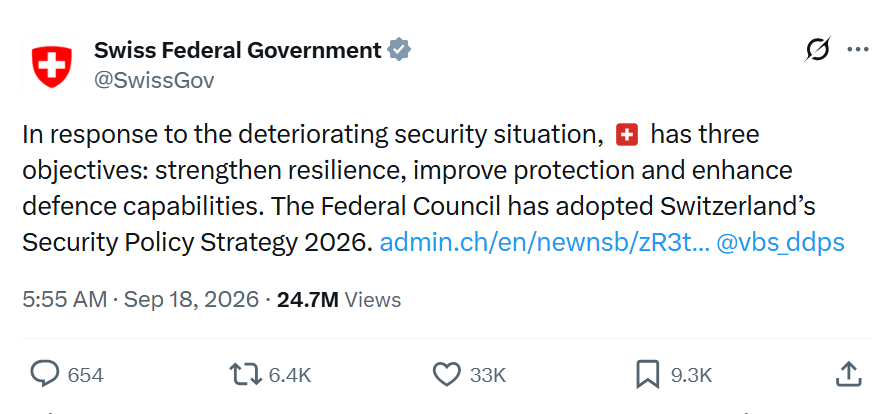
What we do see there - when we read the linked Security Strategy is that Switzerland is not predicting an imminent invasion. What it is doing is perhaps far more consequential in a different way. It is formally adapting its security doctrine to a Europe in which major-power war, long-range strike systems and hybrid coercion can no longer be treated as remote contingencies.
On September 18, 2026, Switzerland’s Federal Council adopted the country’s new Security Policy Strategy 2026.
A document that signals a marked change in how neutral Switzerland assesses its strategic environment.
The short official social-media message emphasized three goals: resilience, protection and stronger defense capabilities. But the full strategy is considerably more revealing.
It reflects a Swiss government conclusion that the country’s post-Cold War security assumptions no longer hold.
Bern now judges that its security environment has “drastically deteriorated,” above all because Russia’s war against Ukraine has returned major interstate war to Europe, weakened the rules-based order and intensified confrontation among great powers.
The document’s central message is not that Switzerland expects Russian forces to invade tomorrow. In fact, it explicitly says that “a direct, armed attack on Switzerland is unlikely in the foreseeable future.” But it also insists that low probability cannot justify low preparedness: strategic conditions can deteriorate rapidly, while the capabilities needed to defend a country—from air defence and ammunition stocks to resilient infrastructure and military command arrangements—take years to build.
That distinction is critical. Switzerland is planning against a worsening European war scenario. It is not necessarily forecasting one.
Switzerland states that it should be able to defend itself “as autonomously as possible against an armed attack.” But it adds a second, equally important principle: if an attack exceeds Swiss capabilities, defense in cooperation with other countries must be possible, and prepared in advance.
What does that mean? It means that Swiss government recognizes that modern air defense, intelligence, logistics, command-and-control, cyber defence and long-range strike warning cannot be improvised after a crisis begins.
The strategy’s three pillars, therefore, are:
| Strategic direction | What it means in practice |
|---|---|
| Resilience | Reducing critical dependencies and strengthening the ability of the state, economy and society to continue functioning under coercion or disruption |
| Resistance and protection | Better protection of civilians, institutions and critical infrastructure; stronger capacity to repel or mitigate attacks |
| Defence capability | Rebuilding the military capacity to deter and fight an armed attack, while establishing arrangements for cooperation with partner states in advance |
The framework translates these priorities into 10 objectives and 46 measures. Among the measures identified in the strategy are improving cyber capabilities, raising critical-infrastructure protection standards, strengthening economic and technological security, modernizing warning and security-communication systems, closing capability and equipment gaps in the armed forces, acquiring longer-range capabilities, improving military command structures, expanding multinational training, and exchanging air-situation data with partners.
In that sense, this security document is an attempt to orient Swiss procurement, civil defense, intelligence, industrial policy and international cooperation toward a more dangerous decade.
Neutrality is evolving, not disappearing
The geopolitical significance lies in how the strategy updates the meaning of Swiss neutrality.
Switzerland is not joining NATO, abandoning permanent neutrality, or accepting an automatic obligation to enter another state’s war. Its official doctrine remains one of armed neutrality: Switzerland maintains armed forces precisely to preserve its independence and defend its territory. The strategy also frames neutrality as a security- and foreign-policy instrument that has historically evolved with changing conditions.
Yet the 2026 strategy makes the practical limits of purely autonomous neutrality much clearer.
Switzerland is geographically embedded in the European security space. It borders France, Germany, Italy, Austria and Liechtenstein; all except Austria are NATO members. The government openly acknowledges that Switzerland benefits from the defense and security efforts of NATO, the European Union and its European neighbors. It also recognizes that those states increasingly expect Switzerland to contribute to European security rather than remain simply a passive beneficiary of the surrounding security architecture.sepos.admin+1
The logic is therefore evolving
That does not mean alliance membership. It means Switzerland is moving toward what might be called networked armed neutrality.
That will entail retaining political non-alignment and freedom from automatic war commitments while making its military, intelligence, air-surveillance, civil-protection and procurement systems more interoperable with European partners.
The distinction is legally and politically important. Switzerland can cooperate through exercises, training, procurement, intelligence exchange, crisis-management arrangements and air-situation data without becoming a treaty ally obligated to fight in wars unrelated to its own defence. The strategy’s emphasis is specifically on cooperation in the event that Switzerland itself faces an armed attack.
Does that mean that Bern expects Russian tanks to cross Swiss territory in the near term? Certainly no.
This means that Switzerland is preparing for the possibility that a wider European war could create direct military, technological and societal consequences for the country. The strategy warns that Europe could face a “window of vulnerability” from 2028 onward if European defense capability has not matured sufficiently while Russia continues to expand its war economy and the reliability of US support remains uncertain.
Looking at the legendary Swiss neutrality, one can see that it is being reconceived as a political framework within which Switzerland must become more resilient, more militarily credible and better connected to the European security environment around it. That is a meaningful doctrinal evolution, even if it falls well short of abandoning neutrality.
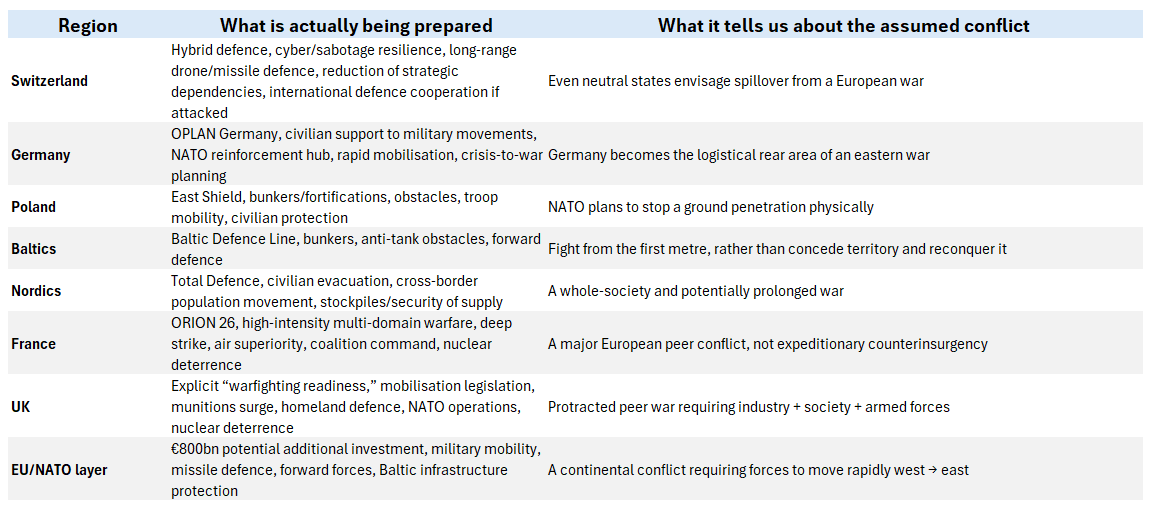
Whole Europe is Preparing for a War!
Meanwhile, reports from Europe point to a disturbing picture.
Europe is doing substantially more than merely increasing defense budgets. It is rebuilding the physical, industrial, logistical and civilian architecture required to function during a major interstate war.
Germany: its classified Operational Plan Germany is more than 1,000 pages and explicitly coordinates the military, government and private sectors across scenarios ranging from hybrid threats through crisis and war.

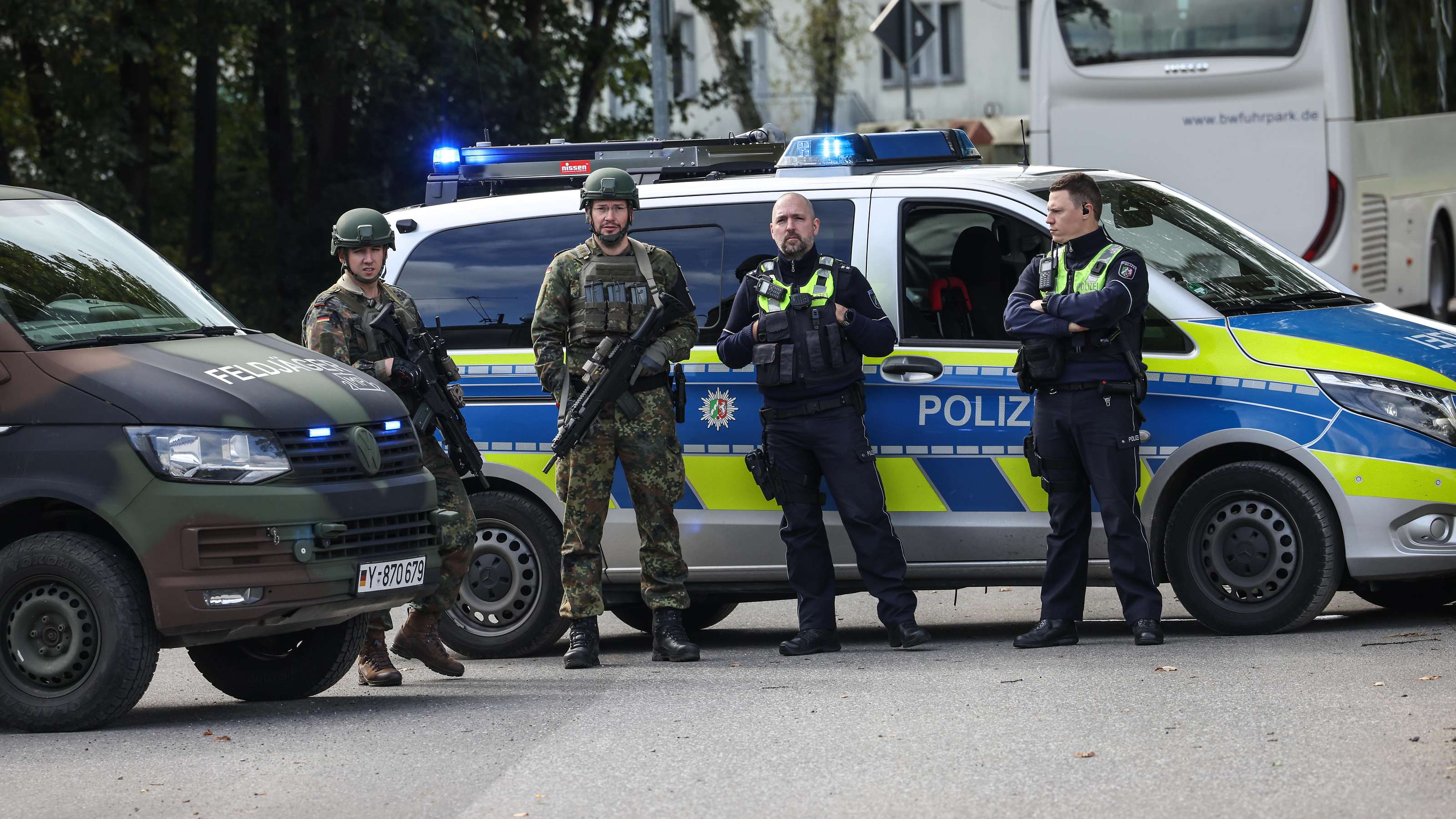
Agreements involve railways, highways, logistics companies and military staging areas. The Bundeswehr describes civilian preparedness for war as necessary to maintain basic services and defense capability.
Germany's Quadriga 2026 exercise is particularly revealing.
Quadriga 2026 is a massive German-led NATO military exercise designed as an operational rehearsal for high-intensity warfare. Spanning Germany, Lithuania, and surrounding regional seas, this comprehensive cluster prepares the Bundeswehr to achieve full war readiness by 2029 to deter potential Russian aggression.
The exercises transition traditional routine drills into active, real-world defense operations. Key components include CIMIC Quadriga 2026, a 28-nation civil-military logistics drill, and Medic Quadriga 2026. During these medical drills, military authorities and civilian groups like the German Red Cross practice evacuating up to 1,000 wounded soldiers per day from NATO's eastern flank back to German civilian hospitals.
Ultimately, Quadriga 2026 tests Germany's strategic capacity as NATO’s central European logistical hub. It forces domestic civilian infrastructure, power grids, and medical networks to adapt to wartime realities. This involves expanding trauma training, stockpiling emergency medicines, and upgrading Cold War-era bunkers against modern hybrid and sabotage threats.
The Bundeswehr says it is no longer treating Quadriga simply as a collection of exercises but as an operation conducted under conditions designed to approximate an actual emergency, without the normal long preparation period.
And Germany is reconsidering shelters. Of the country's former 1,967 public shelters, only 579 remain, and the government says they are presently not operational—a Cold War capability Berlin is now reconsidering.
Germany is developing a nationwide shelter framework—Schutzraumkonzept. It provides for a network of accessible shelter spaces where people live, work, study, or spend a significant part of their day. As of summer 2026, the core principles of the concept have been established: the foundation of the future system centers on a decentralized approach with a high density of rapid-shelter spots, while the final document is being coordinated with state governments. The scale of upcoming changes is reflected in the "Civil Protection Pact" approved by the government on May 20, 2026: presented by Interior Minister Alexander Dobrindt, the initiative allocates nearly €10 billion in investments through 2029 for a broad range of measures—from alert systems and rescue service equipment to THW development, backup power and water supplies, and incorporating public shelter guidance into the NINA app. (Source: How Germany Is Rebuilding Its Shelters | Shelters of Europe. Overeview No. 4 / Bunker-ok)
Germany’s hospital preparations are a sobering indicator of how European security planning is changing. This is not proof that war is imminent; rather, it reflects a return to contingency planning for threats once considered unthinkable: drone strikes, infrastructure disruption and large numbers of casualties during a regional conflict.
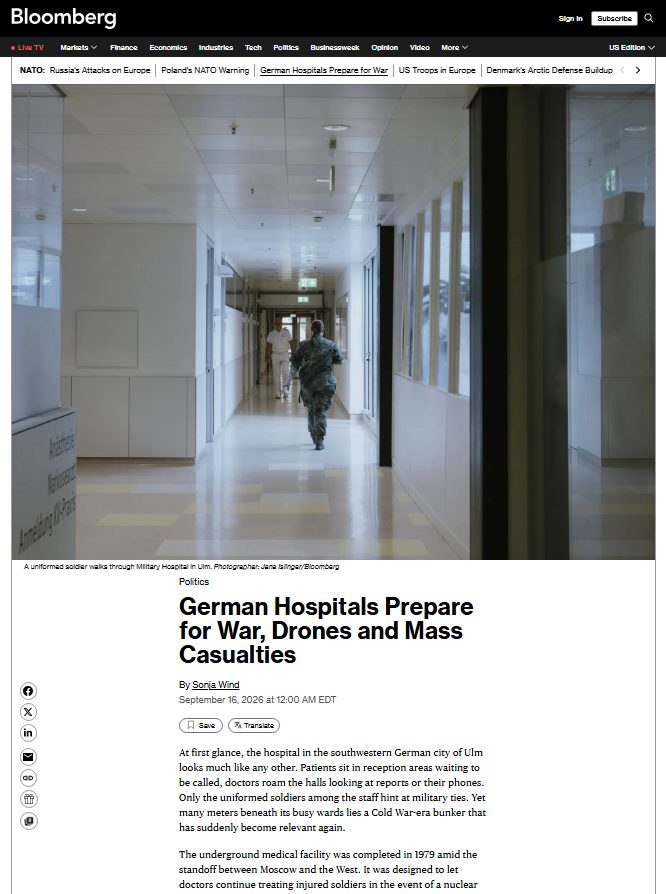
Germany is rediscovering civil defense after decades in which its health system largely planned for peacetime emergencies.
One does not seem this piece to sound alarmist so what we at Drishtikone will assert is that this points to an important institutional shift. It is not necessarily a predictive one.
Intriguingly though, the military readiness now increasingly includes hospitals, emergency logistics, protected facilities and surge capacity. Alongside Switzerland’s new strategy, it shows Europe preparing for a harsher security environment.
Poland: this is even more physical. Poland's East Shield is constructing defensive infrastructure along the Russian and Belarusian borders: fortifications, prepared obstacles, reconnaissance and surveillance systems, communications infrastructure and civilian-protection facilities.
The East Shield (Tarcza Wschód) initiative includes:
- Border Coverage: Poland has secured over 60 kilometers of the frontier. Defense officials have committed to fortifying more than 200 kilometers of critical border sections by the end of 2026.
- Mass Barriers: Over 300,000 concrete anti-tank hedgehogs are being actively distributed to designated northern and eastern military warehouses and deployment sites.
- Rapid Minefields: Following Poland's formal exit from the Ottawa Convention in early 2026, Warsaw has integrated rapid scatterable mine-laying systems (like the Baobab and Bluszcz systems). This permits defensive forces to establish continuous mine barriers along the border within 48 hours if a military threat emerges.
- Project Completion: The overarching network—spanning nearly 700 kilometers of physical obstacles, anti-tank ditches, and forward logistics hubs—is on track for full completion by 2028.
As late as January 2026, Warsaw described East Shield defense program as being in an intensive implementation phase.
 Eric Kliszcz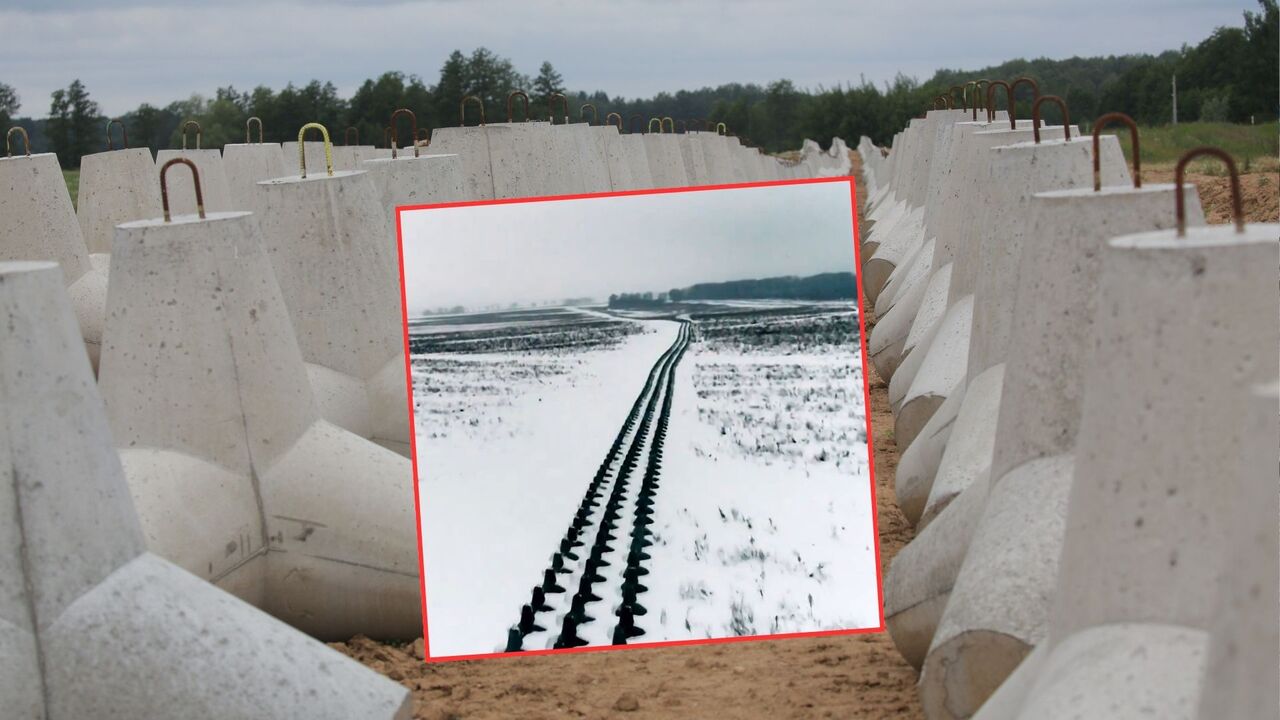
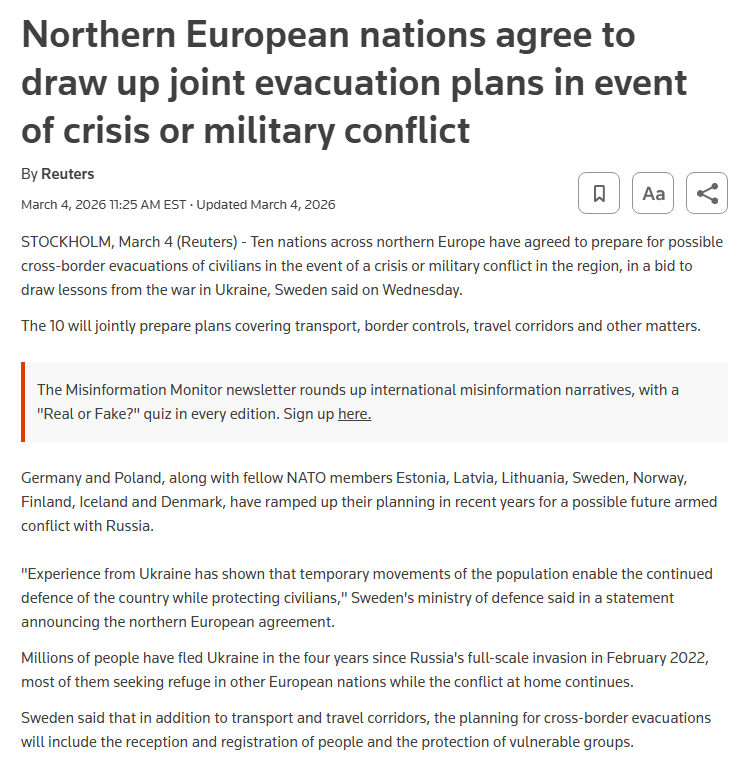
Nordics and Baltics: Sweden, Finland, Norway, Denmark, Iceland, Estonia, Latvia, Lithuania, Poland and Germany signed an agreement this year on protecting civilian populations—including arrangements enabling people to cross borders during a conflict.
Then, just this month, the Nordic governments signed a joint Security of Supply declaration specifically intended to guarantee essential goods and services during peacetime crises, security crises and, explicitly, war. This involved the five Nordic states along with Greenland, the Faroe Islands and Åland.
Its most consequential sentence says that maintaining critical supplies is necessary for the “reinforcement and sustainment of forces for defending NATO’s external border.”
That places the initiative firmly inside NATO’s operational planning—not just civilian emergency management.
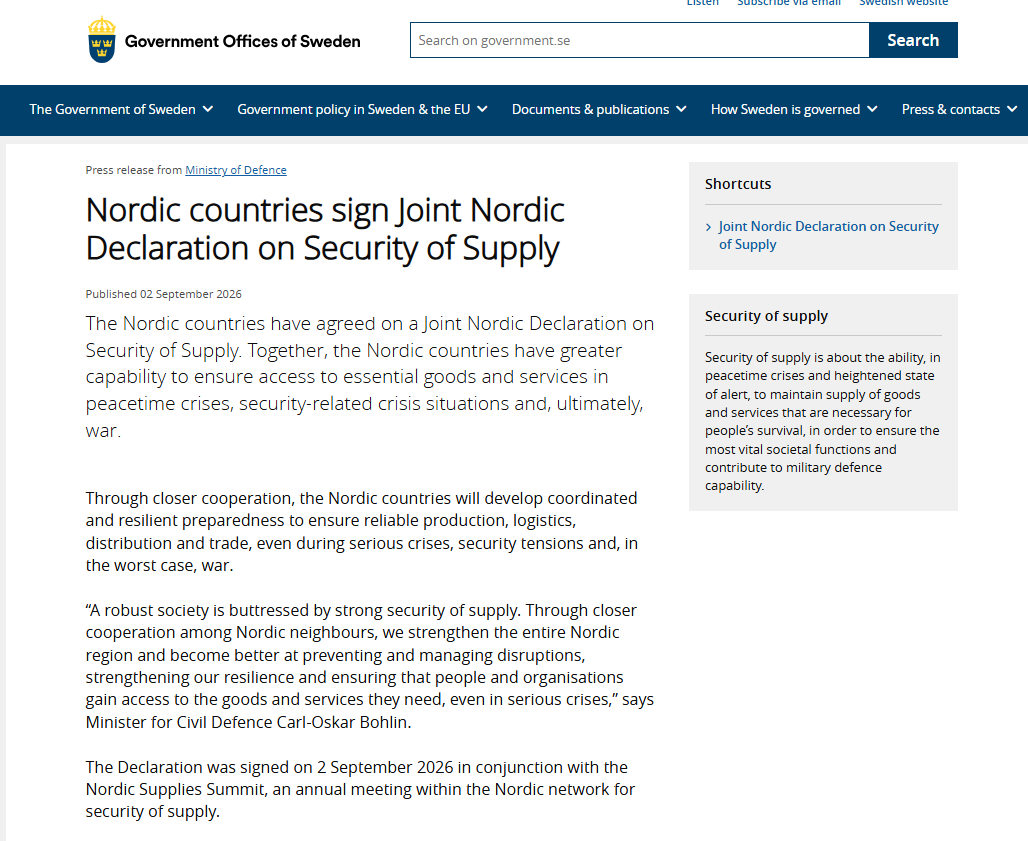
This is the beginning of a Nordic wartime economic and logistical system designed to keep both populations and NATO forces supplied during a prolonged confrontation.
It is significant that the Nordic governments are gradually treating the region as one integrated strategic theatre.
NATO's eastern flank: NATO says it now has more combat-ready forces there and has developed its most comprehensive defense plans since the Cold War.
And above all of this sits the EU's Readiness 2030 program.
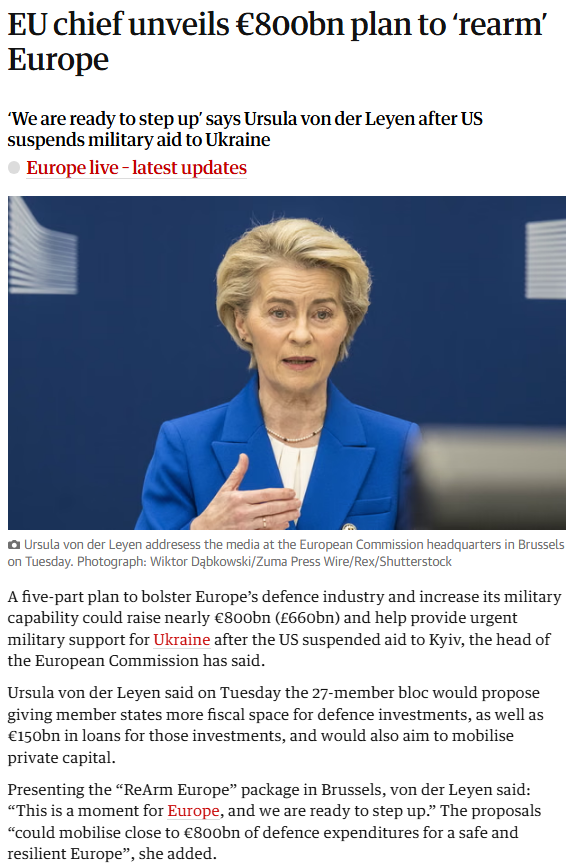
The EU is trying to mobilize as much as €800 billion in additional defence expenditure, including €150 billion through SAFE. Priorities include missile defence, drones, cyber, military mobility, industrial production and ammunition. It intends to establish an EU-wide military-mobility system by 2027 so forces and heavy equipment can move rapidly across Europe.
What do all these reports point to?
This may not mean that the European governments have decided such a war is now inevitable. But it definitely means that war has moved from an extremely remote contingency to an explicit planning scenario.
Putin's warning
Putin issued a very explicit warning on September 14 concerning the possible deployment of European troops into Ukraine.
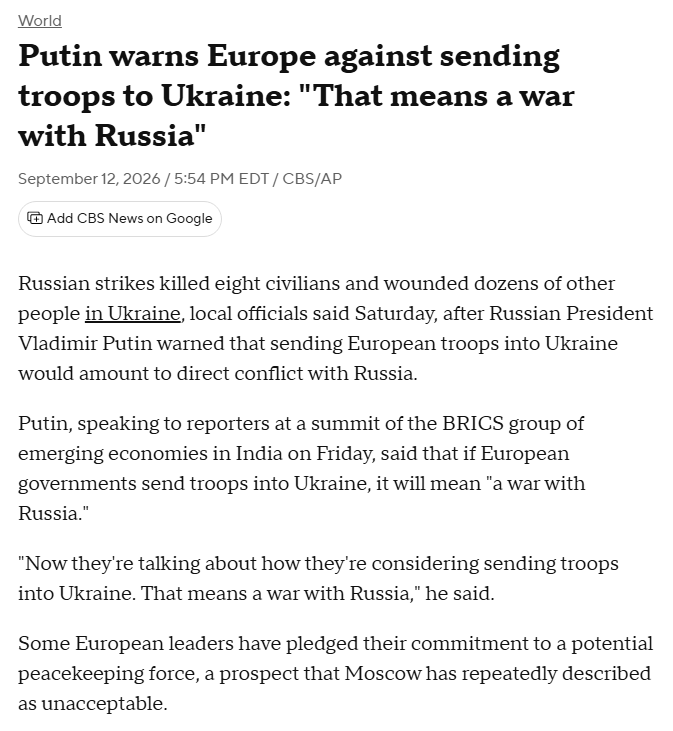
His position was that deployment of European forces, even forces described as peacekeepers, could constitute war with Russia.
Britain and France have previously contemplated forces in Ukraine after a peace settlement as part of security guarantees.
Whether Putin's warning is to be regarded as deterrence, coercion or genuine red-line signaling is an analytical question that needs to be properly interpreted by the European leaders.
Dominant Europe Vs Escalation?
On September 17, Polish Prime Minister Donald Tusk told parliament that intelligence assessments point to a dangerous period through the coming winter, including Russian hybrid attacks and drone operations against Poland and other supporters of Ukraine. It was a serious warning—but it also illustrates the two competing interpretations shaping Europe’s response.
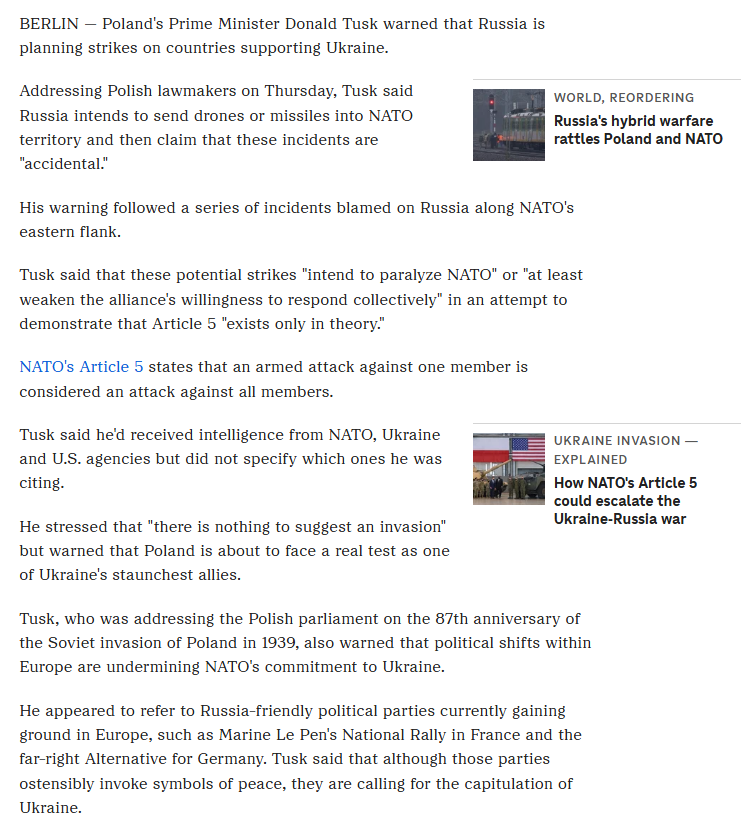
The dominant European view begins with Russia’s invasion of Georgia in 2008, annexation of Crimea in 2014 and full-scale invasion of Ukraine in 2022. European leaders therefore argue that weakness invites coercion.
The counterargument is that this can produce a classic security dilemma:
This does not prove either side wants wider war. It shows how deterrence can become escalation, and why diplomacy, signaling and communication become indispensable as military capabilities accumulate.
War vs Diplomacy?
There are really three different things required for managing this confrontation:
Deterrence: If you attack us, the cost will be unacceptable.
Defense: If deterrence fails, we can fight.
Diplomacy: Here are our interests, here are our red lines, what are yours, and where is the space in which neither of us has to fight?
Europe is investing enormously in the first two.
It has mechanisms for the third, and support for renewed negotiations has grown during 2026, but the European debate shows that direct political engagement with Moscow remains controversial and comparatively under-institutionalized.
So if you closely see, we will find that two clocks are going off at the same time:
The military clock is accelerating: European defense industrial capacity, German operational planning, Polish fortifications, Nordic civil defense, NATO eastern-flank readiness, air/missile defense and EU military mobility.
The diplomatic clock has restarted, but much more slowly: discussions of direct Russia-Ukraine negotiations, European participation and reopening higher-level European channels with Moscow.
America's Oil Hegemony?
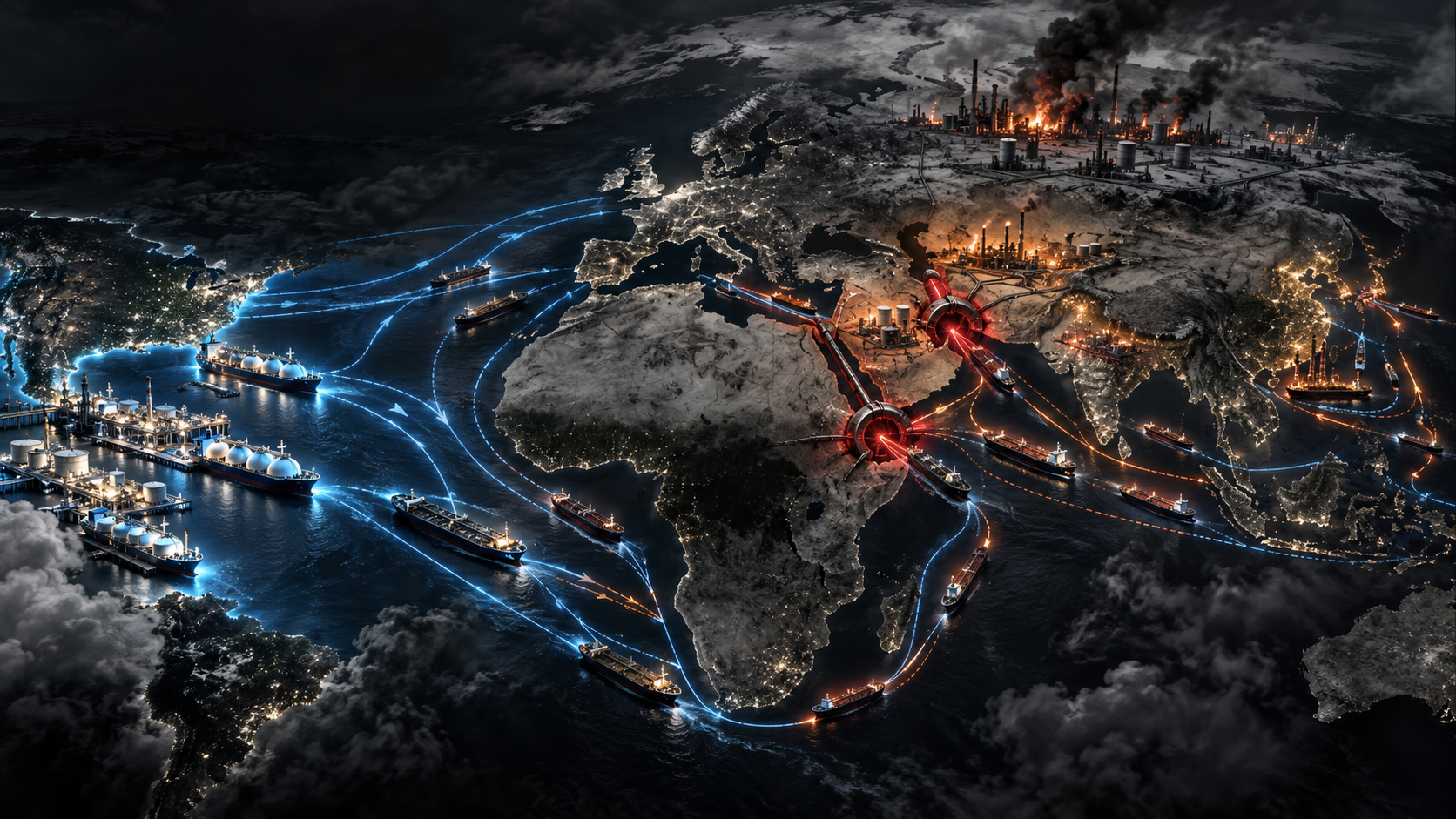
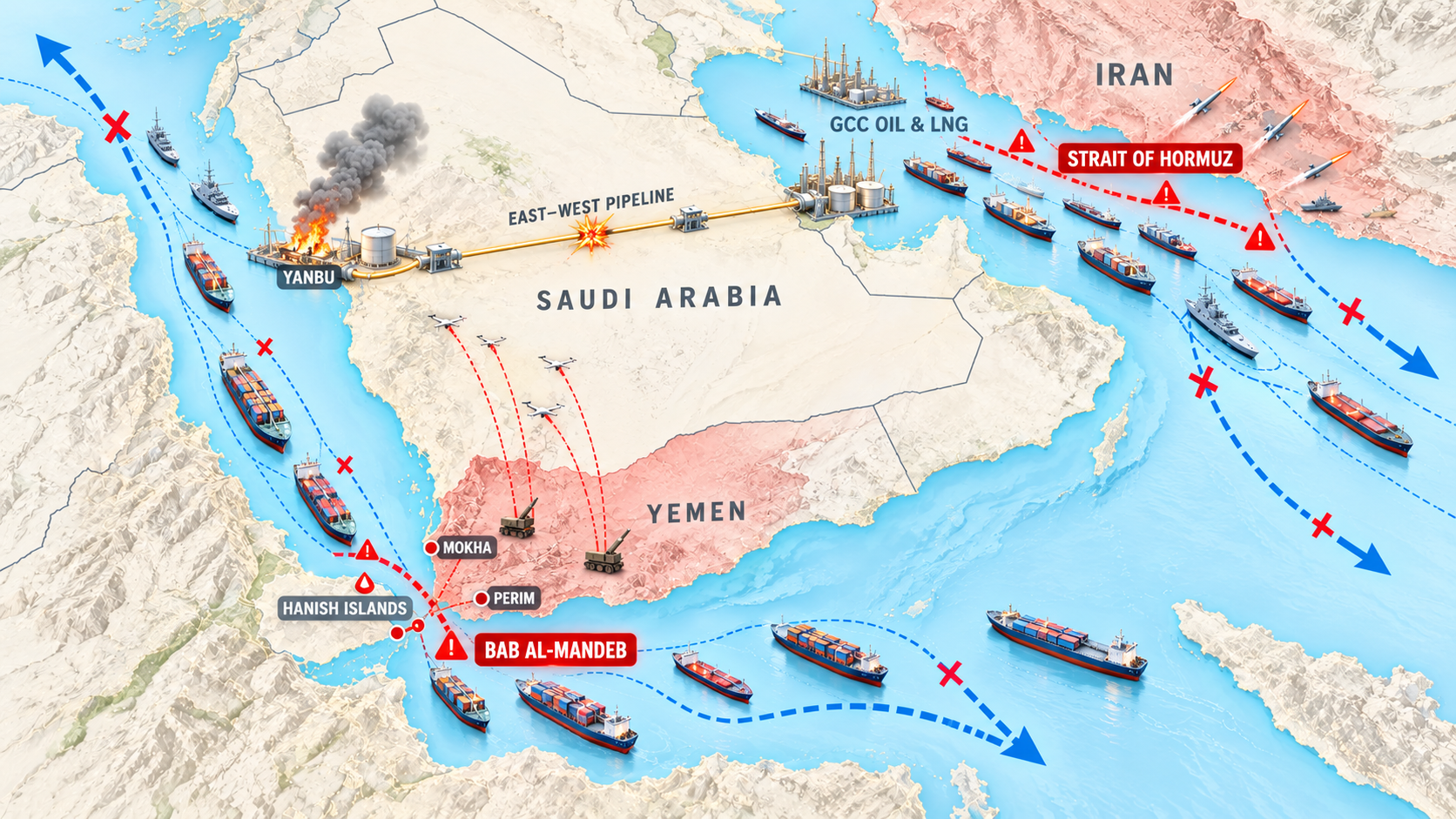
The Middle East’s energy system is being squeezed from both ends. Iran’s restriction of the Strait of Hormuz threatens the maritime outlet for Gulf oil and LNG, exports from Saudi Arabia, the UAE, Kuwait and Qatar.
On the western flank, the Houthis have captured Mokha, Perim and the Hanish island chain, giving them a position around Bab al-Mandeb, the gateway connecting the Red Sea with the Indian Ocean. Their blockade and attacks on shipping have made Saudi Arabia’s alternative Red Sea route vulnerable.
Saudi oil can bypass Hormuz through the East–West Pipeline to Yanbu. But that escape route is under pressure: the pipeline was shut after a drone attack, while the Houthis claim strikes on Yanbu’s oil infrastructure.
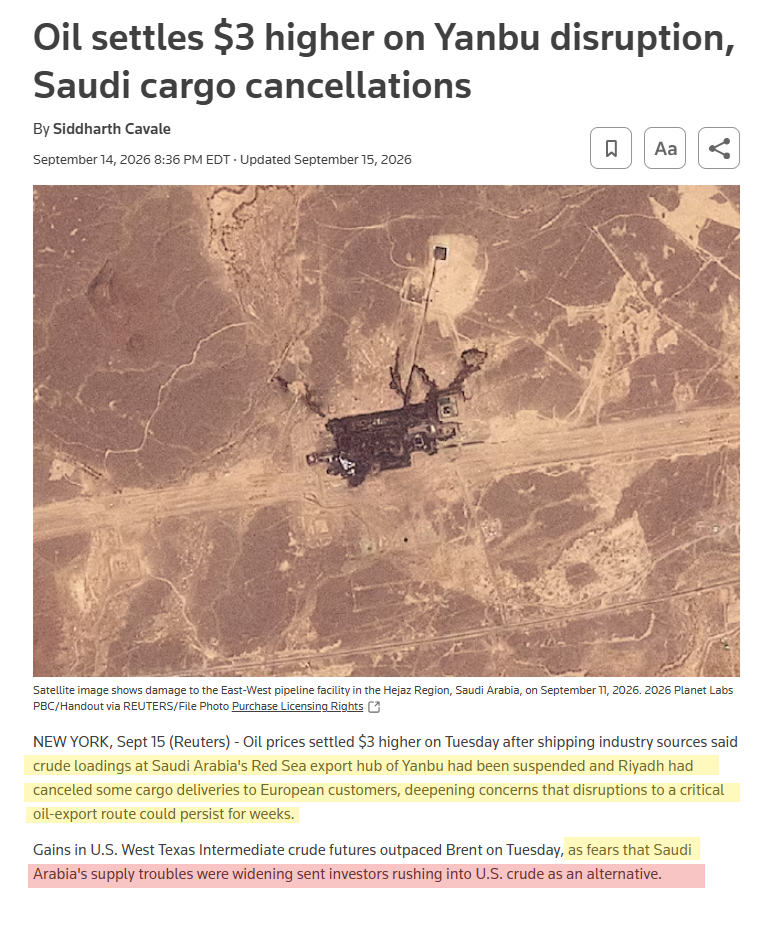
If both chokepoints remain constrained, tankers face delays, rerouting and higher insurance costs. The consequences are reduced Gulf export capacity, higher oil and LNG prices, inflation and supply risks for Asia and Europe.
With all these geopolitical events and situations comes the sanction bill. And with that the threat.
President Trump has signed the Lindsey O. Graham Sanctioning Russia and Iran Act of 2026 into law.
US President Donald Trump Friday signed into law the Lindsey O. Graham Sanctioning Russia and Iran Act of 2026, giving himself the authority to impose tariffs of up to 100% on countries, including India and China, that continue buying Russian oil and gas. The law “authorizes and expands statutory sanctions, tariffs, and prohibitions on Russia and extends existing sanctions on Iran,” the White House said in a statement. The Act is named to honour a veteran Republican Senator and a Russia hawk who died in July. The United States Trade Representative, the federal agency responsible for developing and recommending United States trade policy to the President, said in a social media post that the signing of the bill “demonstrates the growing bipartisan recognition that tariffs are an effective tool to safeguard our economic and national security and establish lasting peace and prosperity.” (Source: Trump signs Russia sanction bill into law giving him power to impose 100% tariffs on India / Indian Express)
What does all this show?
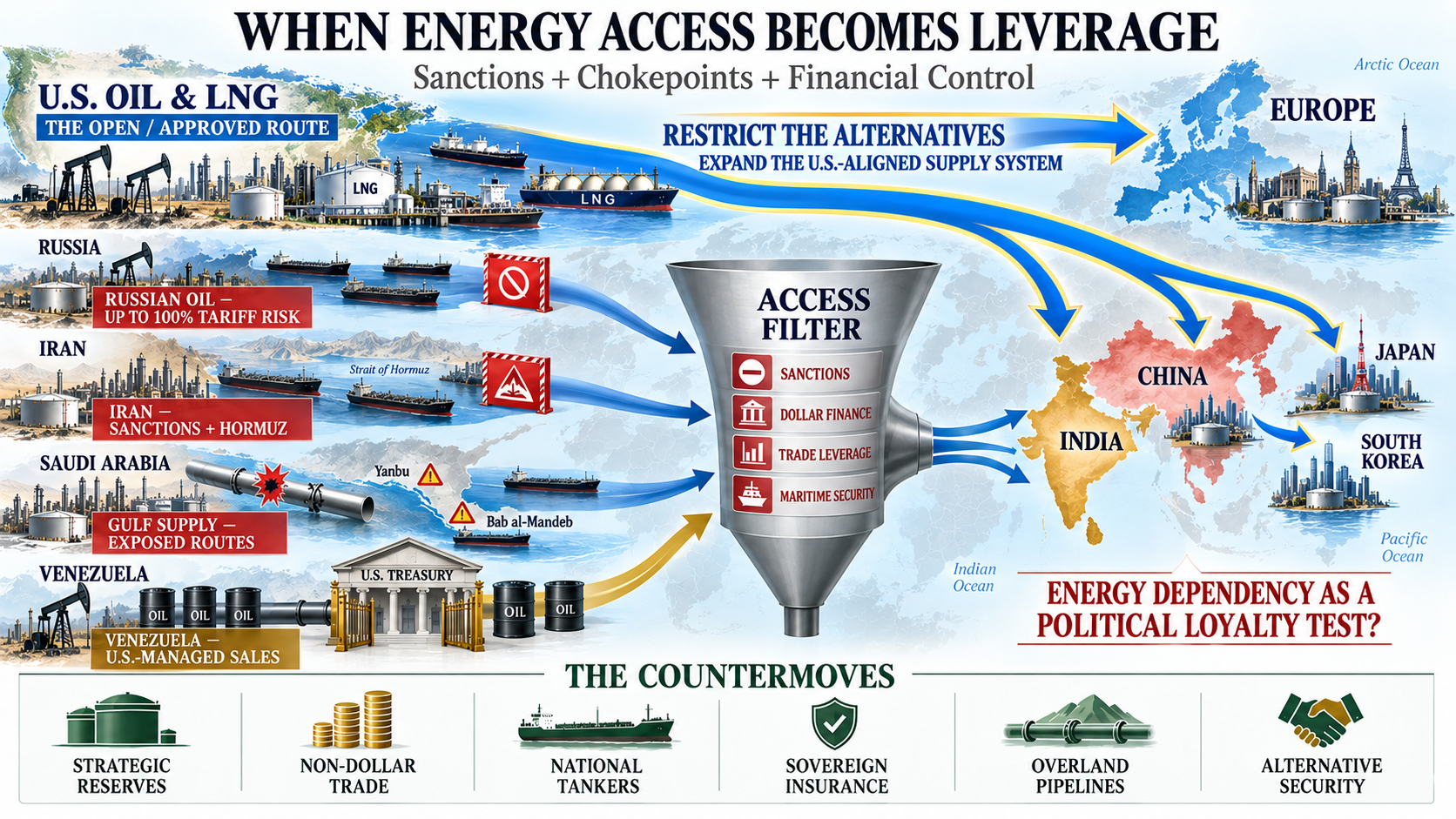
The current Oil and Gas situation is quickly becoming a system in which Washington exercises growing influence over which supplies remain commercially and politically accessible.
The Lindsey O. Graham Sanctioning Russia and Iran Act, signed by President Trump on September 18, authorizes tariffs of up to 100 percent against major buyers of Russian energy. Iranian exports remain sanctioned, while disruption around Hormuz threatens Gulf shipments. Saudi Arabia’s Red Sea alternative is exposed to Houthi attacks around Bab al-Mandeb, Yanbu and the East–West Pipeline. Meanwhile, Venezuelan oil has re-entered markets through arrangements substantially shaped by Washington, including US-directed sales and financial channels.
Whether these developments were designed as one coordinated strategy or not may be debated by many, but their their combined effect, however, narrows the practical choices available to India, China and other energy-importing states.
Energy procurement therefore risks becoming more than a commercial calculation. It can become a test of alignment with the financial, sanctions and security architecture led by the United States.
The predictable response will be diversification: larger strategic reserves, non-dollar settlement, sovereign tanker and insurance fleets, overland pipelines, broader refinery configurations and alternative maritime-security partnerships. These are defensive contingency measures, not evidence of imminent war.
Yet once governments believe energy access can be selectively restricted, pipelines, ports, tankers, insurers, satellites and chokepoints become increasingly strategic assets, and potential pressure points in a wider global geopolitical contest.
Let us look at all the Oil and Gas supply routes and choke points to fully understand the problems.
These are principal energy chokepoints. Remember the numbers are pre-disruption baselines, not necessarily current flows: conflict, rerouting around the Red Sea and infrastructure attacks can sharply reduce actual traffic.
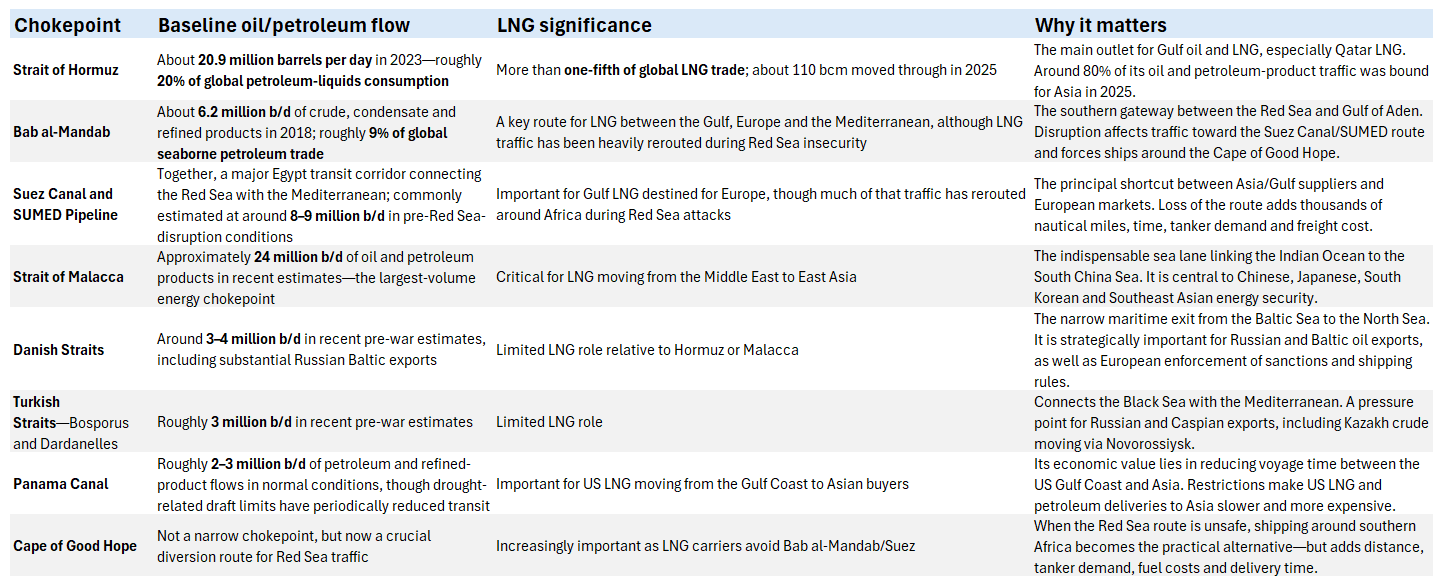
The Strait of Hormuz previously carried about 20.9 million barrels per day of oil and petroleum products—roughly one-fifth of global petroleum-liquids consumption—and more than one-fifth of world LNG trade. Bab al-Mandab, the southern entrance to the Red Sea, historically carried about 6.2 million barrels per day and is the gateway to the Suez Canal route linking the Gulf and Asia to Europe. The Strait of Malacca is even larger by petroleum volume, handling roughly 24 million barrels per day and serving as the critical energy artery from the Middle East to China, Japan and South Korea. Disruption across these routes does not merely raise freight costs; it fragments the physical geography of global energy supply.
The key Middle East system
The main strategic point is that Hormuz, Bab al-Mandab and the Red Sea/Suez corridor are not separate problems. They form an interconnected export system:
- Hormuz disrupted: Gulf producers struggle to get oil and LNG into the Indian Ocean at all.
- Bab al-Mandab disrupted: cargo can leave Hormuz but cannot use the Red Sea/Suez shortcut to Europe.
- Suez disrupted: ships must go around the Cape of Good Hope, increasing transit time and freight cost.
- Saudi East–West Pipeline/Yanbu disrupted: Riyadh loses a major bypass that could otherwise move crude from the Gulf coast to the Red Sea without transiting Hormuz.
This is why attacks on Saudi Arabia’s East–West Pipeline have disproportionate significance. The pipeline was not merely domestic infrastructure; it was a potential relief valve for a Hormuz crisis. Reuters reported that drone attacks damaged three pumping stations on the line and that the repair timetable remained unclear.
Vulnerable Globe
Globally, we now see a hierarchy of vulnerability.
The United States is relatively insulated because of domestic production, Canadian supply, Atlantic access, the dollar and naval reach.
Europe is more dependent on seaborne LNG and enters the winter with unusually low gas inventories.
China, India, Japan and South Korea are directly exposed to Hormuz; poorer Asian and African buyers are already being priced out of LNG cargoes.
Europe reduced its direct exposure to Russian pipeline gas after 2022 by expanding LNG imports, conserving demand and accelerating renewable investment. This improved its freedom from Moscow but increased exposure to global shipping, spot prices and U.S. supply. The United States supplied about 60 percent of EU LNG imports in January 2026, while European officials warned against replacing one dominant dependency with another.
US gas is cheap inside the United States; US LNG delivered to Europe is not. Its final price includes liquefaction, tanker transport, regasification and a premium set by global competition and geopolitical disruption. While remaining Russian gas has sometimes traded only modestly below US LNG because both are increasingly indexed to Europe’s LNG-driven market, that apparent convergence reflects the loss of Europe’s former pipeline-cost advantage, not the disappearance of LNG’s structural cost burden.
Connecting the Dots: Oil Market and Wars
When we go beyond the energy crisis currently and look deeper we can clearly see the 4 things
- Shared scarcity of air defense. Saudi Arabia is running short of interceptors and asking Europe for help at the same moment Europe needs every interceptor and every fighter for its own eastern flank. Ukraine has been consuming Western air-defense stocks for three years. The same Patriot and equivalent systems cannot be in Riyadh, Rzeszów, and Kyiv at once. When two theaters draw on one finite magazine, a surge in one directly weakens the other. This is the most concrete cross-theater constraint, and it is quietly the most strategically important line in the whole picture.
- US bandwidth and attention. Trump is trying to wind down the Iran war and open talks with Tehran while being pulled toward a new Yemen intervention by the Saudis, all while Europe wants firmer US backing against Russia. A president cannot fully lean into all three. His instinct visible this week is to stay out of Yemen directly, keep the Houthi channel open, and preserve the Iran off-ramp. Every actor in both theaters is calculating around the limits of American attention, and adversaries have an incentive to move while Washington is distracted.
- Alliance realignment under stress. The Turkey-Pakistan-Saudi pact, the Saudi appeals to Egypt and France, and CENTCOM's quiet coaching of Riyadh all point to a Gulf security order improvising new arrangements because the old assumption of automatic US protection is no longer reliable. In Europe, the E5 grouping and the Eastern Sentry coalition show the same improvisation. Both regions are hedging against the same uncertainty about the durability of American commitment.
- The information environment as its own battlespace. This is the meta-layer, and it is where your screenshots actually sit. The "Code 100" and Netanyahu items show how a real, frightening situation gets an extra coat of manufactured urgency laid over it. Some of that is ordinary engagement farming, since fear drives views. Some of it may be deliberate. Tusk explicitly warned that Russia wants to shape Western perception and sap resolve, and information operations are a documented Russian tool. When you are reading a feed during a crisis, the feed itself is a contested space, and the volume of "BREAKING" is not a measure of how close the world is to catastrophe. It is a measure of how profitable and how useful that impression is to various actors.
Now the question that we face is : where are we headed?
Russia, China and India are not facing the same problem and will not respond as a unified bloc.
- Russia sees the pressure as an immediate threat to state revenue, military endurance and possibly regime survival.
- China sees it as evidence that energy routes, dollar finance and maritime trade can be weaponized against it in a future confrontation.
- India sees it as an unacceptable attempt to subordinate the energy requirements of 1.4 billion people to another country’s geopolitical policy.
- Europe risks becoming militarily more exposed, economically less competitive and increasingly dependent on American energy at precisely the moment Washington is questioning the value of NATO.
My central conclusion is that Russia and China are unlikely to launch a deliberate, coordinated kinetic attack on the United States under present conditions. Their first response will be to circumvent, deter, divide, exhaust and redesign the US-dominated system.
The real danger begins if economic coercion turns into physical interdiction—seizure of tankers, enforced blockades, attacks on pipelines, closure of sea lanes or strikes on Russian or Chinese territory. At that point, the distinction between sanctions and warfare starts disappearing.
What is actually taking shape?
The United States does not control every barrel of oil. But the combined situation is producing a powerful structural effect:
- Iranian exports are sanctioned and the Hormuz route is disrupted.
- Red Sea and Bab al-Mandab shipping is under Houthi pressure.
- Saudi and other Gulf infrastructure faces missile and drone threats.
- Venezuelan production and marketing are increasingly subject to American control.
- Russian refineries, export infrastructure and shipping networks are being attacked or sanctioned.
- Buyers of Russian oil now face potential US tariffs of as much as 100%.
- Europe has lost much of its former Russian energy relationship.
- Washington openly encourages allies and Asian consumers to purchase American oil and LNG.
Trump’s newly signed Russia–Iran sanctions law targets Russian energy, its sanctions-evasion tanker fleet and Russia’s major commercial partners. India and China are the obvious potential targets.
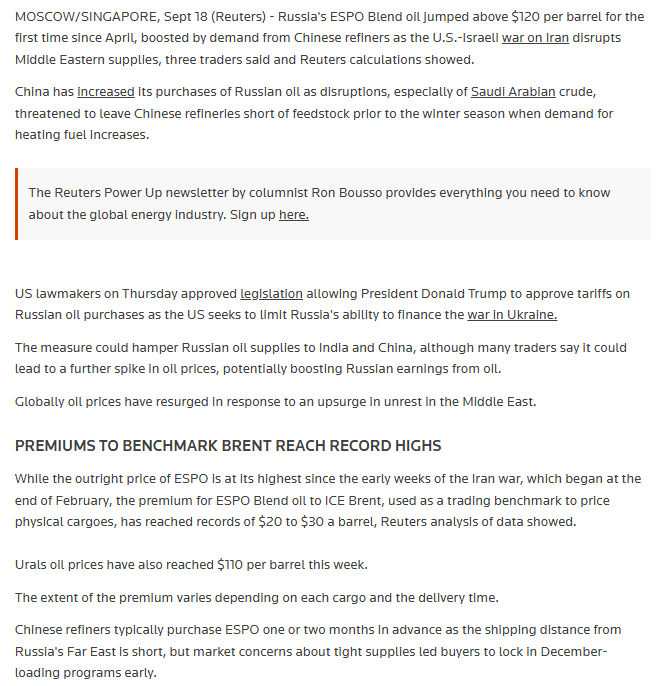
At the same time, disrupted Middle Eastern supply has driven Russian ESPO crude above $120 per barrel as Chinese refiners compete for available cargoes. This illustrates the contradiction in the strategy: restricting Russian supply can increase Russia’s revenue per barrel unless exports are actually stopped.
Whether this is one centrally designed master plan or the cumulative result of separate conflicts is less important than how it is perceived in Moscow, Beijing and New Delhi. States react to the strategic effect, not merely to declared intentions.
Russia’s options
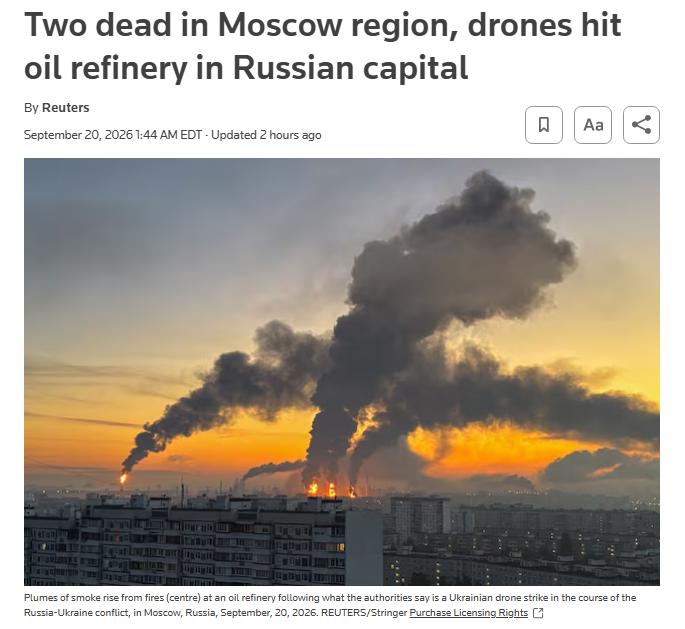
Russia is under the greatest immediate pressure. Energy revenue finances the war, sustains imports and stabilizes the domestic economy. Ukrainian attacks are now reaching Moscow-region refining infrastructure on an unprecedented scale.
Option A: Preserve exports through China and India: Russia will try to make the sanctions regime too expensive, disruptive and politically difficult to enforce fully. It will offer major buyers discounted, long-term supply contracts while expanding payments in yuan, rupees, dirhams and other non-dollar currencies. Barter, offsets and bilateral clearing arrangements could further reduce dependence on Western financial systems.
At sea, Moscow will rely on ship-to-ship transfers, frequently changing tanker ownership and registration, opaque insurers, intermediaries and its growing shadow fleet to obscure the origin and destination of cargoes. Strategically, Russia will accelerate pipelines to China, expand Arctic and Pacific export routes, and reduce its reliance on vulnerable European-facing infrastructure.
It may also offer refining, storage and other downstream investments to secure durable demand in Asia. Most importantly, Moscow can bundle energy with defense systems, nuclear technology, infrastructure and diplomatic cooperation. This transforms Russian oil and gas from ordinary commodities into components of wider strategic partnerships, raising the economic and geopolitical cost of compliance.
The objective is no longer simply to receive the best commercial price. It is to create a set of buyers with a strategic interest in preserving Russian supply.
China is indispensable here. India is extremely important but less predictable because of its large trade and technology relationship with the United States.
Option B: Negotiate an energy-infrastructure ceasefire: Russia could propose a reciprocal, monitored moratorium designed to reduce escalation without prejudging the war’s political settlement. Under the arrangement, Ukraine would cease attacks on Russian refineries, ports, pipelines and energy-export infrastructure.
In return, Russia would halt strikes against Ukraine’s electricity grid, gas facilities, heating networks and transport systems. Compliance could be monitored through satellite imagery, neutral third-party observers, or an agreed notification and investigation mechanism for suspected violations.
Crucially, the moratorium would remain separate from negotiations over territory, sovereignty or security guarantees, allowing both sides to accept limited restraint without conceding their fundamental positions.
It would not end the war, but it could protect civilians, stabilize energy markets, reduce retaliatory spirals and create a practical foundation for broader diplomacy.
This would be the most rational immediate off-ramp. Ukraine has already said it would consider pausing attacks inside Russia if Moscow verifiably ceased attacks on Ukrainian critical infrastructure.
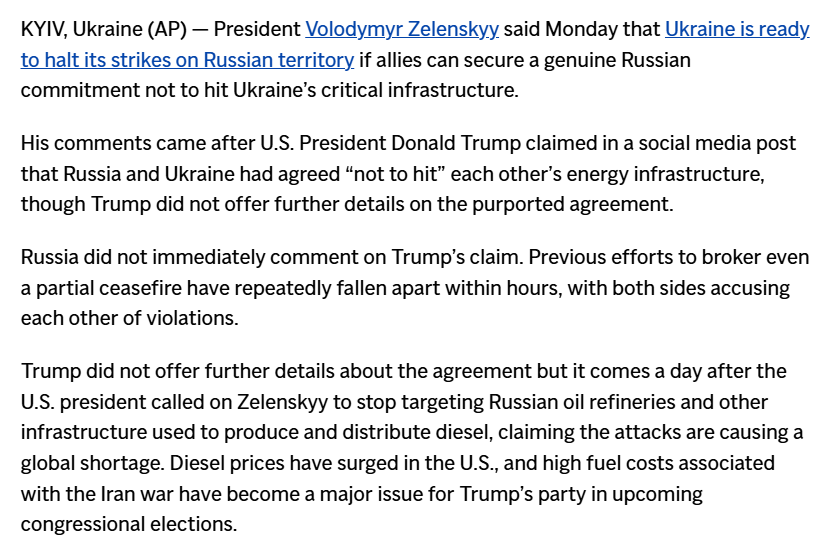
The problem is trust. Each side believes energy pressure is one of the few remaining ways to change the other’s calculations.
Option C: Escalate conventionally against Ukraine: If Ukrainian attacks on Russian refineries continue, Moscow’s most likely response is conventional escalation rather than immediate nuclear use. Russia could expand strikes on Ukraine’s electricity generation, heating networks and fuel infrastructure, seeking to make winter difficult for civilians and government.
It may also intensify attacks on logistics hubs, industrial facilities, drone and missile production sites, Black Sea ports, and railways supplying Ukraine from Europe. Further mobilization could provide manpower for expanded ground operations or sustained pressure along multiple fronts.
The objective would be military, economic and psychological: degrade Ukraine’s war-making capacity while raising the social and political cost of continuing the conflict.
Russia retains considerable conventional options; therefore, nuclear escalation is neither automatic nor necessarily Moscow’s next step.
Option D: Horizontal escalation against Europe: If Moscow concludes that attacks on Russia’s energy system have become, in effect, a NATO-directed campaign, it could retaliate beyond Ukraine while carefully avoiding actions that would clearly trigger Article 5. Likely measures include cyberattacks against European ports, power grids, banks and financial networks; intensified GPS jamming; sabotage of logistics hubs; and covert operations against facilities producing weapons for Ukraine.
Russia could also interfere with undersea communications or energy cables, harass European commercial shipping, and engineer ambiguous military incidents in the Baltic, Black Sea or Arctic. Beyond Europe, Moscow might provide weapons, intelligence, targeting support or diplomatic protection to governments and armed groups confronting the United States and its allies.
Such operations would impose costs, stretch Western resources and preserve plausible deniability while limiting escalation risks.
This form of calibrated, asymmetric retaliation is considerably more likely than a direct Russian strike on an American city, military installation or NATO territory.
The danger is that deniable attacks can kill people or damage critical infrastructure. Europe may then retaliate, converting an ambiguous confrontation into an overt one.
Option E: Direct military action against the United States: Russia would contemplate direct kinetic action principally under four conditions.
- First, American forces strike Russian territory or Russian military units.
- Second, the United States imposes a physical blockade preventing Russian energy exports from reaching markets.
- Third, NATO attacks Russia’s nuclear command structure, early-warning network or strategic deterrent forces, creating fears of an impending disarming strike.
- Fourth, Moscow concludes that NATO is deliberately seeking the destruction, fragmentation or political collapse of the Russian state. Even then, Russia’s initial response would probably remain geographically and operationally limited.
Moscow would be more likely to strike the specific vessel, aircraft, military base, surveillance asset, communications node or enabling platform involved in the attack.
The objective would be to punish, deter and establish boundaries without immediately initiating an unrestricted war. A deliberate strike against the continental United States would therefore represent a later, far more dangerous stage of escalation, not Russia’s automatic first response.
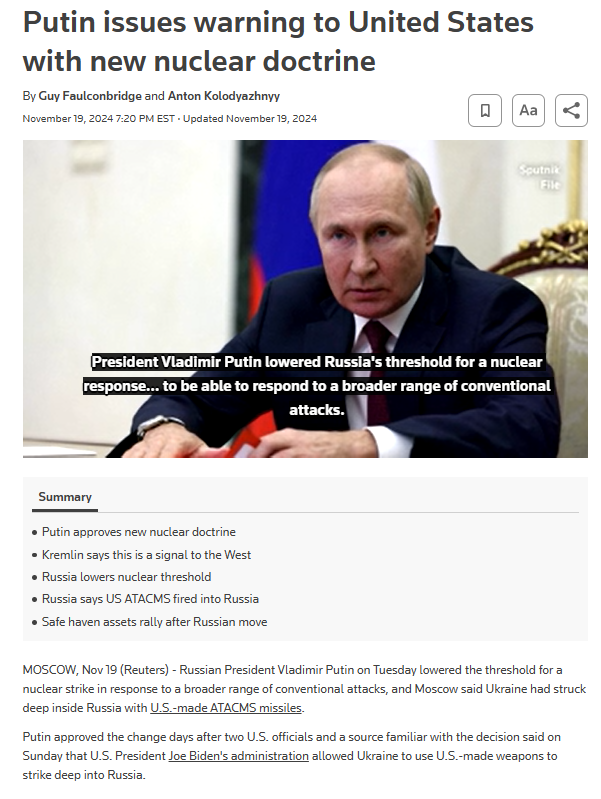
But a localized exchange could escalate rapidly because both countries possess nuclear weapons and dual-capable systems. Russia’s revised nuclear doctrine explicitly leaves room for nuclear use if conventional aggression creates a critical threat to Russian sovereignty or territorial integrity.
China’s options
China’s outlook is longer-term. Beijing is less concerned about saving Russia’s present campaign than preventing the United States from acquiring the practical power to decide which energy supplies China may purchase.
China imports large volumes of oil and gas through maritime routes ultimately vulnerable to US naval power. The present crisis is therefore a preview of what Beijing calls its energy-security and “Malacca dilemma.”
Option A: Build a continental energy system: China will respond to growing maritime and geopolitical risk by accelerating a broad program of energy diversification and strategic resilience.
Beijing is likely to expand Russian oil and gas pipelines, deepen Central Asian gas connections, and develop additional overland routes capable of moving energy without relying on vulnerable sea lanes.
It will strengthen China–Pakistan Economic Corridor infrastructure and the Myanmar oil and gas corridor, although both routes face capacity, security and political constraints.
Domestically, China will enlarge strategic petroleum reserves, maintain substantial coal inventories, increase mining capacity and preserve coal-fired generation as an emergency buffer.
At the same time, it will accelerate nuclear construction, renewable power, battery storage, grid modernization and the electrification of transport and industry. Beijing will also promote yuan-denominated energy contracts, reducing exposure to dollar-based payment systems and Western financial sanctions.
None of these measures can eliminate China’s maritime vulnerability: its economy will remain heavily dependent on imported energy and seaborne trade. However, diversification can reduce the share passing through Hormuz, the Indian Ocean and Malacca, while giving Beijing more endurance during sanctions, blockades or regional conflict.
Option B: Protect Russia from economic collapse: China does not support every Russian objective in Ukraine, nor does it want unlimited escalation. However, Beijing has a strategic interest in preventing Russia from being economically defeated, politically destabilized or absorbed into a Western-led system.
China could therefore increase purchases of Russian oil and gas, supply industrial machinery and critical components, expand yuan-denominated financing, and offer insurance or sovereign guarantees. It may also integrate bilateral payment networks, oppose secondary sanctions, and coordinate transactions through non-Western banks, commodity traders and shipping intermediaries.
Beijing will nevertheless manage this support cautiously. Its largest exposed banks remain vulnerable to American financial penalties and cannot be risked indiscriminately for Russia. Consequently, smaller banks, regional institutions, specialized trading companies and purpose-built clearing mechanisms are likely to carry more of the sanctions exposure.
China’s objective is not unconditional Russian victory, but Russian endurance: preserving Moscow as a strategic partner, energy supplier and counterweight to Western power.
China will be careful not to expose its largest banks indiscriminately to US sanctions. Smaller banks, regional institutions and purpose-built clearing structures may carry more of the risk.
Option C: Use critical minerals and manufacturing power: China’s strongest immediate countermeasure would not be military action, but the selective restriction of industrial inputs. Beijing controls supply chains for rare-earth elements, permanent magnets, battery materials, solar components, chemicals, pharmaceutical ingredients, electronics, machine parts and selected consumer goods.
Export controls, licensing delays, customs inspections or administrative restrictions could create shortages without requiring an embargo. The consequences could spread across American defence manufacturing, automobile production, advanced technology, electricity grids and renewable-energy infrastructure.
Even temporary disruptions would raise costs, delay production and expose weaknesses in Western supply chains. Used carefully, these measures would give China significant coercive leverage while remaining below the threshold of armed conflict. However, excessive restrictions could accelerate diversification away from Chinese suppliers and damage China’s own exporters.
Importantly, American and Chinese officials are still negotiating over trade, AI and critical minerals. That is evidence that both governments currently prefer bargaining to military confrontation. Reuters reported the September 20 talks (Source).
Option D: Financial countermeasures: China is likely to pursue financial diversification gradually rather than attempt a sudden break with the dollar-centred system.
Beijing may reduce its dollar exposure, expand bilateral currency-swap agreements, settle a larger share of commodity trade in yuan and develop alternative insurance, payment and clearing arrangements. It could also continue increasing gold holdings, promote digital cross-border settlement platforms and push BRICS members to transform financial mechanisms into functioning infrastructure. However, China cannot abandon the dollar without imposing substantial costs on itself.
A disorderly shift would reduce the value of its reserves, disrupt trade financing, weaken confidence in the yuan and threaten currency stability. The strategy will therefore be evolutionary: building parallel systems while continuing to use established Western financial networks where advantageous.
Nevertheless, every new round of sanctions strengthens Beijing’s incentive to accelerate this transition. The objective is not immediate de-dollarization, but greater resilience against future financial coercion and asset freezes.
Option E: Naval protection of Chinese energy: If pressure remains confined to sanctions, banking restrictions and commercial penalties, China will probably avoid a naval confrontation.
The calculation changes fundamentally if Chinese-owned vessels, or tankers carrying energy to China, are physically intercepted or seized. Beijing’s response would likely unfold in stages.
It could begin with diplomatic protests, challenges, commercial rerouting and warnings of retaliation. China might then provide state-backed insurance, sovereign guarantees and financial compensation to keep trade moving. If interdictions continued, Beijing could deploy coastguard or surveillance vessels to monitor shipping lanes and document encounters.
The next step could involve naval escorts for tankers, followed by organized convoy operations operating under explicit rules of engagement permitting self-defence. At that point, any attempt to board, divert or seize an escorted vessel could produce a direct confrontation between Chinese and Western forces.
This escalation ladder represents one of the clearest and most dangerous pathways by which sanctions and economic warfare could evolve into an armed clash between major powers.
Option F: Taiwan as horizontal escalation: China is unlikely to invade Taiwan simply because Russian or Iranian energy exports face tighter sanctions. A large amphibious assault would expose Chinese shipping, disrupt global trade and endanger the energy access Beijing seeks to protect.
However, Chinese leaders could conclude that American overstretch across Europe and the Middle East creates a temporary strategic opportunity. Beijing might intensify blockade rehearsals, impose selective customs or quarantine measures, seize a small offshore island, expand air and naval patrols, and increase cyberattacks, disinformation and political pressure.
Such actions could test American resolve while forcing Washington to divert additional forces and attention toward the Pacific. The greatest danger is not necessarily a coordinated Russian-Chinese plan for simultaneous war.
Washington would then face an acute force-allocation problem across multiple theatres, stretching naval assets, air defense, munitions, intelligence and logistics. Miscalculation in one region could rapidly weaken deterrence in another.
India’s options
India is not a junior member of a Russia–China camp. It has a different strategic tradition and a different set of vulnerabilities.
New Delhi needs:
- affordable energy;
- Russian defence and nuclear cooperation;
- American technology, investment and market access;
- Gulf remittances and energy;
- freedom from Chinese strategic dominance;
- autonomy in foreign policy.
The new US law places India in a genuine dilemma. Washington can threaten tariffs of up to 100% against major buyers of Russian energy, while India remains one of the world’s largest oil importers. India has warned that such measures could damage bilateral relations and global energy stability.
Indian Prime Minister Narendra Modi is caught in an energy policy bind with no easy exit. Cutting Russian oil imports to avoid potential new US tariffs could increase fuel prices ahead of key regional elections, or stress government finances. Maintaining such purchases could cripple Indian exports to its largest market. (Source: Reuters)
India’s immediate options
India has options short of abandoning Russian oil. It can negotiate a national-security waiver, accept transparency requirements or volume ceilings, and balance Russian purchases with additional American cargoes. It should also diversify toward Africa, Brazil, Guyana and other producers; secure long-term contracts; expand strategic petroleum reserves; and reduce dependence on spot markets.
New Delhi could continue buying Russian crude below an agreed price while making any reduction conditional on guaranteed, equivalent alternative supplies. Sovereign insurance, shipping and payment mechanisms could protect Indian refiners from external disruption. Over the longer term, India must accelerate nuclear power, solar generation, battery storage, biofuels and domestic exploration, while retaining coal capacity for emergency reliability.
India’s strongest argument is economic, not ideological. Abruptly forcing one of the world’s largest importers out of Russian crude would tighten the global market, raise prices and potentially increase Moscow’s revenue on every barrel still sold elsewhere. The surge in ESPO crude prices shows that this danger is not theoretical. Sanctions that reduce volumes but increase Russia’s earnings would punish India, destabilize energy markets and undermine their stated strategic purpose.
However, the US sanctions may not impact India's overall trade that drastically since Indian business have been diversifying over the last few years.
India’s diplomatic option
India is well positioned to convene an energy-security dialogue bringing together Asian consumers, Gulf producers, Russia, the United States, European governments, and representatives of the shipping, insurance and financial industries.
The purpose should not be to renegotiate geopolitical disputes. It should be to establish safeguards preventing political and military confrontation from producing a global energy catastrophe. Priorities could include protected civilian-energy corridors, mutual commitments against attacking pipelines, refineries, ports, tankers and desalination facilities, transparent maritime deconfliction mechanisms, and predictable sanctions waivers for essential supplies.
India can credibly present this initiative not as a defense of Russia, Iran or any supplier, but as protection for importing nations whose development, food security and stability depend on affordable energy. As both a major consumer and a voice of the Global South, India can argue that energy access must not become collateral damage in great-power competition—or a political loyalty test imposed on vulnerable economies.
Would India participate in kinetic action against the US?
Almost certainly not.
Even under American pressure, India’s response would be diplomatic, commercial and legal rather than military. New Delhi could impose retaliatory tariffs, redirect procurement, delay defense agreements, deepen trade with Russia and work assertively through BRICS. It might also cooperate tactically with China in opposing extraterritorial sanctions, developing alternative payment systems or defending the principle of sovereign energy choice.
That cooperation, however, would have limits. India does not want Chinese naval dominance across the Indian Ocean, dependence on Beijing-led financial structures or subordination within a China-centred bloc. Nor would it join a Chinese military confrontation with the United States merely to preserve access to Russian or Iranian oil.
India’s interests require relationships with Washington, Moscow, Europe, the Gulf and the wider Global South. Its most rational strategy therefore remains multi-alignment reinforced by greater economic, military and energy self-reliance—not permanent bloc membership, automatic alignment or participation in another power’s confrontation.
Europe’s Available Choices
Europe may occupy the most contradictory strategic position in the emerging world order. It is preparing for a possible conflict with Russia while becoming more dependent on American military power, imported liquefied natural gas and US-controlled security infrastructure. Simultaneously, high energy costs are weakening European industry, Middle Eastern instability threatens alternative supplies, and political changes in Washington could make the American commitment to NATO increasingly conditional.
Germany’s intention to raise annual defense spending above €200 billion by 2030 illustrates how seriously European governments now view the threat environment. This forms part of a broader NATO movement toward substantially higher military expenditure. Yet military preparation alone cannot resolve Europe’s underlying energy, economic and diplomatic vulnerabilities. Europe faces five broad choices—none without substantial costs.
Option 1: Accept full Atlantic dependence: Europe could conclude that the United States remains the only power capable of guaranteeing its security against Russia. Under this model, European governments would increase defence spending, purchase more American weapons, rely heavily on US intelligence and logistics, import growing volumes of American oil and LNG, and align closely with Washington’s sanctions and foreign-policy priorities.
This offers Europe the clearest short-term military protection. NATO already possesses established command structures, operational plans and interoperable forces. Replacing these arrangements quickly would be enormously expensive and potentially dangerous.
However, this model would convert Europe’s security and energy dependence into political leverage for Washington. American LNG prices, weapons contracts, sanctions policy and presidential preferences could increasingly shape European choices. Europe might spend substantially more, purchase American energy and arms, and support US geopolitical objectives—yet still face questions about whether Washington would defend every European ally under every circumstance. Atlantic dependence therefore offers immediate reassurance but creates long-term strategic vulnerability to changes in American leadership and interests.
Option 2: Build genuine European strategic autonomy: Europe could attempt to construct an independent security pillar capable of operating with, but not depending entirely upon, the United States. This would require integrated European command structures, common military planning, shared procurement, coordinated air and missile defence, expanded ammunition and drone production, and autonomous satellite, cyber and intelligence capabilities.
France and Britain would need to clarify whether their nuclear deterrents could provide a broader European guarantee. A European Security Council involving the EU, United Kingdom and Norway could coordinate defence, energy security and diplomacy. Europe would also need a larger defence-industrial base and mechanisms preventing national procurement preferences from fragmenting production.
Strategic autonomy would take years, enormous investment and difficult compromises over sovereignty. France, Germany, Poland and the smaller European states do not always share the same threat perceptions or strategic priorities. Nevertheless, without greater autonomy, Europe will remain dependent upon a United States increasingly inclined to treat alliances transactionally. The purpose would not be to dismantle NATO, but to ensure that Europe can act if American support becomes unavailable, delayed or conditional.
Option 3: Combine deterrence with direct negotiations with Russia: Europe can strengthen its defenses while simultaneously reopening sustained diplomatic channels with Moscow. These approaches are not mutually exclusive. Deterrence seeks to prevent aggression; diplomacy seeks to prevent misunderstanding, uncontrolled escalation and a permanent security confrontation.
Negotiations could begin with limited, verifiable subjects: mutual non-attack commitments covering nuclear plants and energy infrastructure; protected Black Sea shipping; notification requirements for major exercises; military communication hotlines; missile-deployment limitations; humanitarian exchanges; and geographically defined deconfliction zones. More ambitious negotiations could eventually address a monitored ceasefire, conventional-force limits near NATO borders and the future military status of contested territories.
Talking to Russia would not require recognizing every Russian territorial claim or abandoning Ukraine. Diplomacy is not capitulation; it is how adversaries manage conflicts they cannot safely resolve through total victory. Europe’s strategic failure has been to allow Washington to dominate negotiations even though Europeans bear the greatest geographic, refugee, industrial and nuclear risks. Europe requires its own diplomatic channel because its exposure is fundamentally different from America’s.
Option 4: Diversify energy without exchanging one dependency for another: Europe needs an energy portfolio—not a new dominant supplier. Its strategy should combine Norwegian oil and gas production; North African pipelines and electricity imports; expanded Caspian connections; and LNG purchased from multiple producers under diversified contracts. Europe must also extend the operating lives of safe nuclear plants, construct new nuclear capacity where feasible, accelerate renewable generation and strengthen cross-border grid interconnection.
Because intermittent generation alone cannot guarantee industrial reliability, Europe will require long-duration storage, demand-response systems and sufficient dispatchable backup capacity. Emergency coal, gas, diesel and other fuel reserves should be retained for severe disruptions.
Energy infrastructure must also be physically and digitally protected. Ports, pipelines, LNG terminals, refineries, power stations, grids, interconnectors and undersea cables are now strategic assets vulnerable to sabotage, cyberattack and military coercion.
American LNG can form an important part of this portfolio. It should not, however, become the foundation of another asymmetric dependency in which European energy security remains subject to the prices, policies and political priorities of a single external power.
Option 5: Fragment into separate national strategies: If European governments cannot agree on a common security and energy policy, individual states will increasingly pursue their own arrangements. France may emphasize nuclear energy, military sovereignty and an autonomous deterrent. Germany may prioritize industrial recovery, conventional rearmament and secure imported energy. Poland and the Baltic states may seek the largest possible American military presence. Hungary and Slovakia may preserve Russian energy connections, while Italy, Spain and Greece deepen Mediterranean and North African partnerships.
The United Kingdom may position itself as the military and diplomatic bridge between Washington and continental Europe. Norway will become increasingly important as an energy supplier and North Atlantic security actor. These strategies may make sense individually, but collectively they would weaken Europe.
Fragmentation would allow external powers to negotiate separately with European capitals, reward compliant governments and isolate dissenting ones. It would also produce duplicated weapons systems, competing energy contracts and inconsistent policies toward Russia, China and the United States. This is perhaps the most politically plausible outcome—but strategically the weakest.
Europe’s most sustainable course is therefore a strategy of managed interdependence: preserve NATO while building credible autonomous European military capacity; maintain deterrence while reopening direct diplomatic channels with Russia; and construct a genuinely diversified energy portfolio encompassing European production, Norway, North Africa, the Caspian region, multiple LNG suppliers, nuclear power, renewables, storage and protected emergency reserves.
American oil and LNG should remain part of that portfolio—but not its foundation. Europe cannot eliminate external dependence, nor should autarky be its objective.
It can, however, distribute that dependence widely enough to prevent Russia, the United States or any other supplier from converting energy access into decisive political control. Strategic autonomy begins not by severing relationships, but by ensuring that no single relationship becomes indispensable.
Final Word
Russia will probably escalate against Ukraine, resist sanctions through China and India, and apply asymmetric pressure against Europe before directly attacking the United States.
China will strengthen Russia economically, accelerate alternative energy and financial systems, use critical-mineral leverage and prepare maritime options—but continue negotiating with Washington for as long as possible.
India will reject a binary choice, negotiate exemptions, diversify supplies and defend strategic autonomy. It may cooperate with Russia and China on energy and payment systems, but it will not join an anti-American military bloc.
Europe has a choice it can no longer postpone: remain an increasingly transactional dependency of the United States, fragment into national strategies, or create a genuinely autonomous European defense-and-diplomacy capacity.
The most likely outcome is not an immediate Russia–China attack on America. It is the gradual construction of a parallel Eurasian system, accompanied by increasingly dangerous grey-zone confrontations.