The Anchor Stone
In the courtyard of a mountain temple lay a great stone the color of iron. It had been there longer than any monk could remember. When the winter storms came down from the pass, the monks tied the bell rope to it, and the granary doors, and the raft they kept for the river crossing. The stone did not move, and so the temple held.
A novice was given the keeping of the ropes. He learned the bell, the granary, the raft, the well cover, the prayer flags. He kept a separate cord for each and coiled them in separate baskets, and he was proud that he never confused one with another.
One autumn a merchant came up the path carrying a paper lantern of a new kind, brighter than any lantern had been. The whole valley climbed to see it. Monks who had watched the granary now watched the lantern. Travelers who had brought grain now brought coin for a share of its light. The novice too forgot his baskets and stood in the glow with the rest.
The old teacher did not climb. He sat by the stone with his hand flat against it.
"Master," said the novice, returning late, "the whole province is awake with the lantern. Why do you sit with an old stone?"
"Feel here," the teacher said.
The novice knelt and put his hand where the teacher's had been. Under his palm the stone was turning, very slowly, no faster than a shadow.
"For years the water has gone under it," the teacher said. "No one watched the ground, because the stone was the thing that did not move. Now the ground is thin, and the stone has begun to lean."
"Then we must not tie things to it," the novice said.
"You will tie things to it," said the teacher. "When the storm comes you will reach for the stone, because your hands have always reached for the stone. And the stone will take the bell and the granary and the raft with it when it goes."
That winter the storm came. The lantern guttered in the first hard wind and went dark, and the valley turned back toward the temple. The monks ran into the courtyard with their cords. The novice reached for the stone as the teacher had said he would. Then he stopped.
He did not watch the bell. He did not watch the granary or the raft. He watched the knots. He saw that every rope in the temple ran to the one stone, and that the stone now pulled the ropes as much as the ropes pulled the stone, and that a thing tied to a moving center does not hold still by being tied.
He began, in the dark, to untie. He gave the bell its own post. He gave the granary its own post. He set the raft against the near bank and drove a stake for it there. The stone leaned and did not fall. By spring it had not fallen. The ground still whispered under it.
The novice was asked, years later, what he had learned in the courtyard that winter.
"To watch the rope, and not the thing it is tied to," he said. "The storm was only the storm. What emptied the old temples was that they had fastened everything to one stone and called it still."
Japan's Historical Bond Crisis
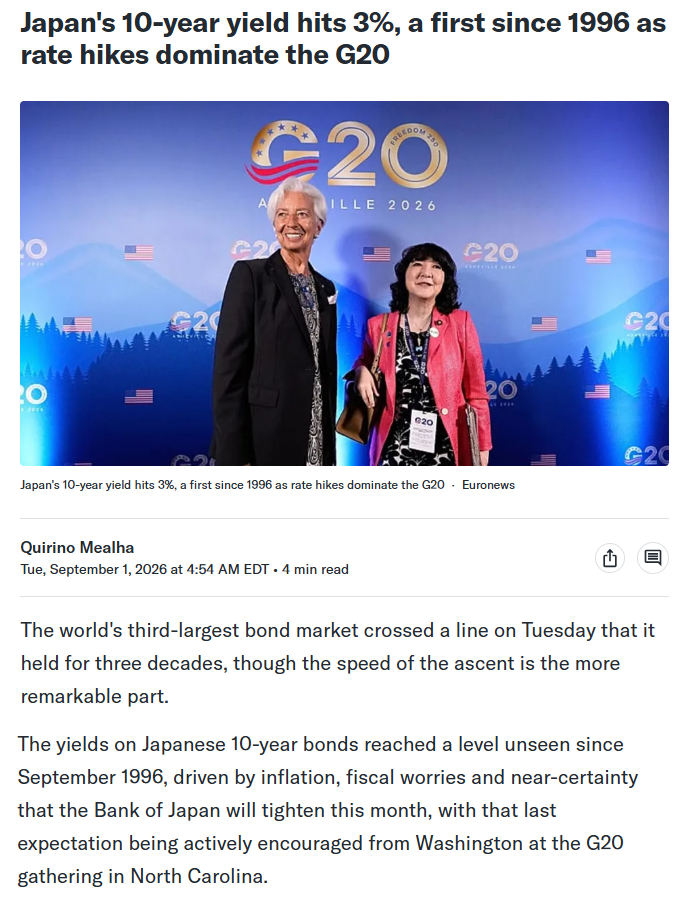
In September 2026, Japan’s 10-year government bond yield hit 3 percent—the highest it’s been since September 1996.
For an economy that has spent the last thirty years living with near-zero or even negative interest rates, this is a serious indicator. A major psychological and economic turning point for the global markets.
Several intersecting forces are driving this shift.
- First, inflation is finally biting hard. Because Japan imports the vast majority of its energy, it's deeply vulnerable to global shocks. As tensions in the Middle East push oil and gas prices up, those costs instantly bleed into everyday manufacturing, transport, and household bills. A weak yen only makes those imported goods even more painful to buy.
- At the same time, the Bank of Japan is facing mounting pressure to normalize its policy. After decades of keeping the economic engine flooded with artificial stimulus, central bank officials are signaling that it's time to tighten. Even international voices, like U.S. Treasury Secretary Scott Bessent, have nudged Tokyo to take steps to support its currency, leaving the central bank with fewer alternatives.
- Then there is the matter of government debt. Massive upcoming budget requests have reminded everyone just how heavily indebted Japan already is. Just as the central bank is stepping back from its heavy-handed market support, the government is issuing more debt than ever. Bond investors, suddenly nervous about both fiscal discipline and inflation, are simply demanding higher yields to take on that extra risk.
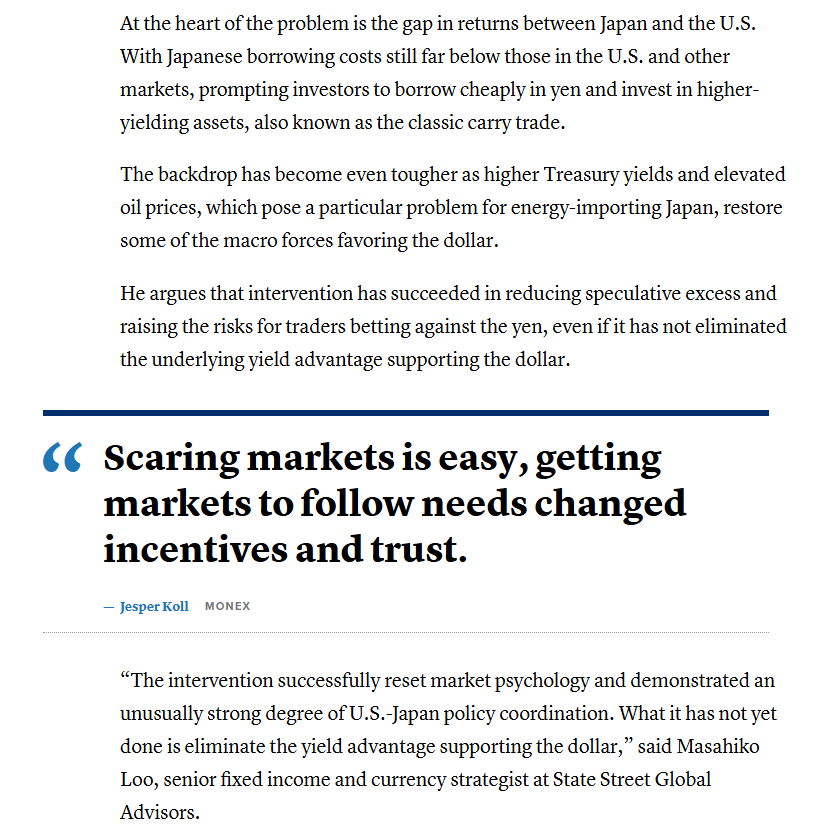
Japan imports almost all of its energy. When the oil risk premium rises due to the war in Iran, Japan's import bill widens and the yen weakens further. The yen has traded above 160 to the dollar, a level that has become a political line in the sand.
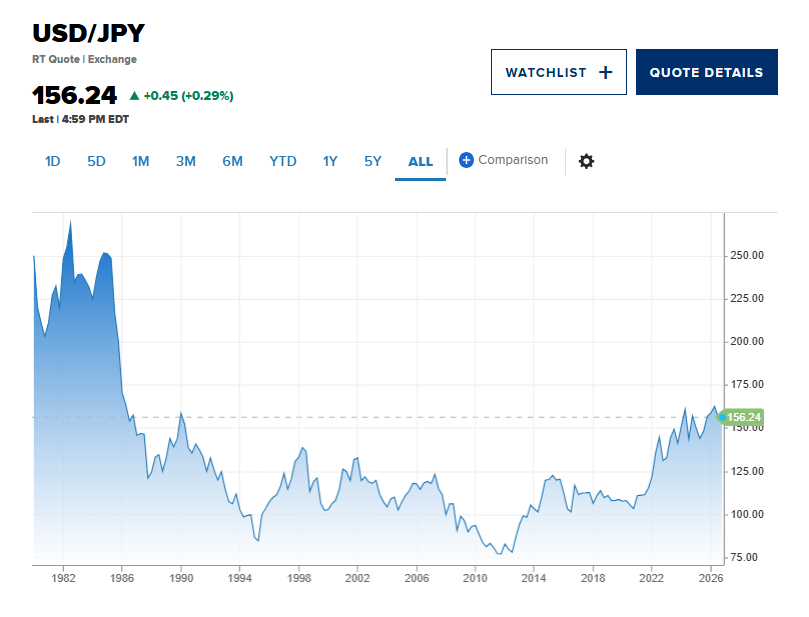
Add to this the breaking out of Japanese government bond yields from their thirty-year suppression, with the ten-year touching three percent.
Rising domestic yields do two things at once.
- They make Japanese institutions, the life insurers, banks, and pension funds that hold trillions in foreign bonds, want to bring money home where yields are finally attractive and where repatriation also defends the yen.
- And they raise Japan's own debt service, on top of the world's largest debt-to-GDP ratio.
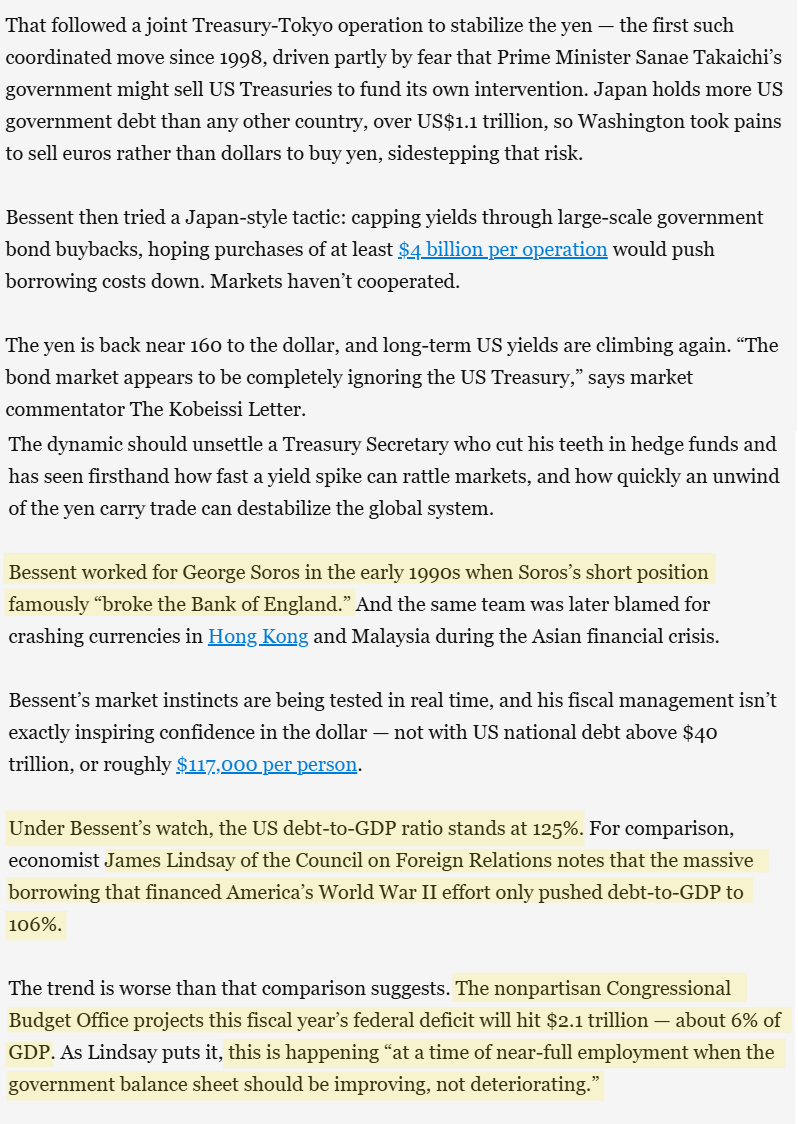
When Japanese institutions repatriate, they sell foreign bonds, and a large share of those foreign bonds are US Treasuries.
Japan is the largest foreign holder of Treasuries, so this is not a small flow.
Japanese selling pushes US yields up, worsening the American fiscal loop described above and pushing yields up again.
This is why the Asia Times framing of two bond bombs joined by one fuse is exact.
Here is the interesting part.
There is a second channel that is faster and more violent for the markets.
For years, investors borrowed in cheap yen and invested the proceeds in higher-yielding assets around the world. This is the yen carry trade, and it became one of the largest sources of liquidity supporting global markets.
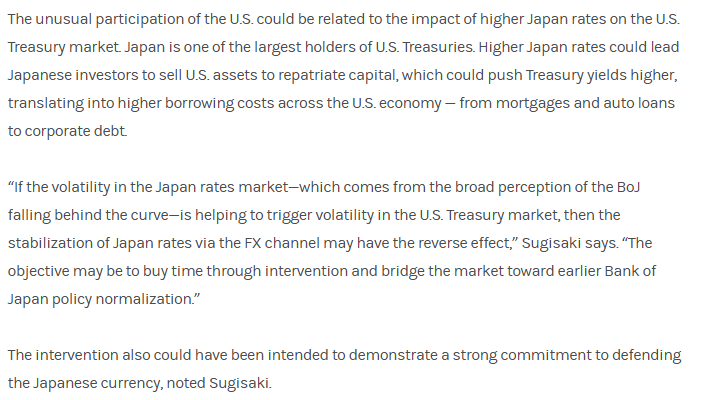
If the Bank of Japan raises rates to defend the yen and normalize policy, the carry trade becomes less attractive and begins to unwind.
An unwinding of policy forces investors to cut risk across equities, bonds, and currencies simultaneously, which is exactly the dynamic that produced the sharp global volatility spike in August 2024. The carry trade is a coiled spring, and BOJ normalization is the hand that releases it.
This is why the United States did something unusual. In the summer of 2026, the US Treasury joined Japan in a coordinated operation to buy yen, the first joint yen buying by the two countries since 1998
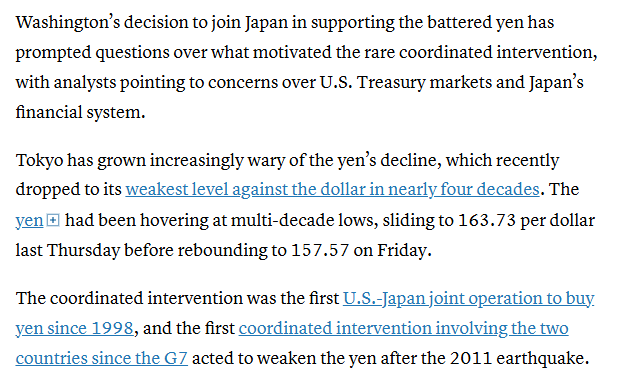
The Federal Reserve also highlighted a repo facility that can hand Japan dollar liquidity against its Treasury holdings, so that Japan can raise dollars without having to sell the bonds.
The point of both moves was the same.
Washington does not want Japan to become a forced seller of Treasuries, because forced selling would push US yields higher at the worst possible moment.
As one analysis put it, the deeper reason for the intervention was a crisis in the dollar system itself, with the United States anxious to stop countries from selling Treasuries as yields rise.
 Ben Norton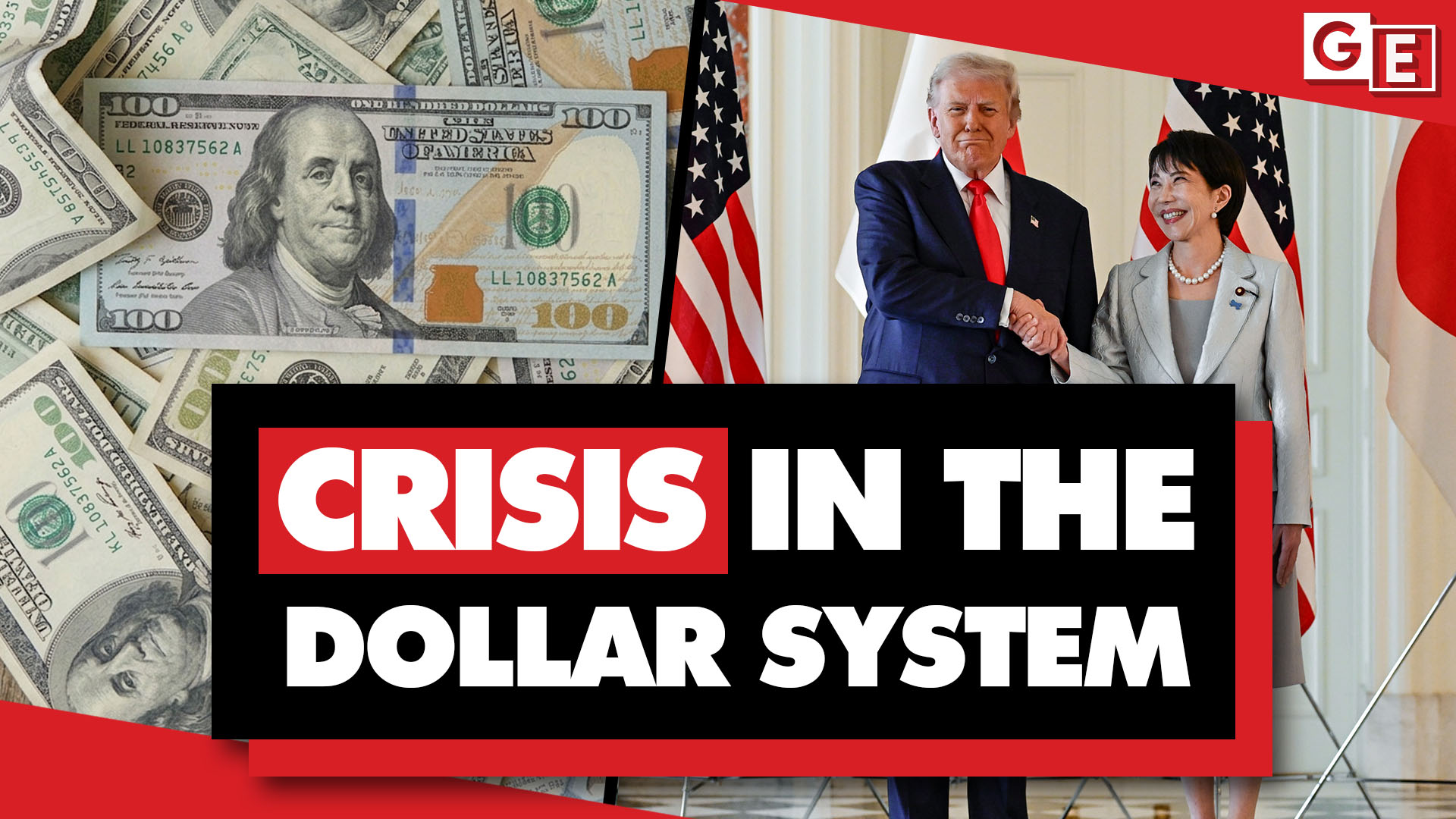
The question that follows is even more critical.
How long can the United States keep Japan afloat?
The honest answer is that intervention buys time and does not change the fundamentals.
Analysts at State Street described it as a success in slowing speculation and a failure at eliminating the yield advantage that supports the dollar (CNBC).
Japan is boxed in. And with it US is also caged into that same box!
If it lets yields rise, its debt service climbs and the carry trade unwinds. The durable resolutions are all narrow and all painful.
Either the Bank of Japan hikes and absorbs domestic pain, or American inflation cools enough that the Fed can cut and relieve the yield gap, or Washington runs a fiscal consolidation it shows no appetite for.
Until one of those happens, the intervention is a bandage over a structural wound, and the United States is spending credibility and liquidity to hold the last link shut.
It can do that for months, plausibly through the coming year. It cannot do it forever.
Of course, Japan isn't operating in a vacuum. This is happening alongside a wider global bond sell-off, with borrowing costs creeping upward across the U.S., Britain, and Europe as governments everywhere grapple with sticky inflation and ballooning deficits.
Crossing that 3 percent line is a clear signal that Japan's long winter of ultra-cheap money is coming to a close. That shift is bound to ripple outward, altering everything from domestic mortgages and corporate borrowing to the global investment strategies that have relied on cheap Japanese capital for a generation.
Germany's Sell-off
Germany has sold €4 billion in 30-year government bonds at a yield of 3.783%—its highest borrowing cost at a long-term debt auction since 2011. The sale highlights the growing pressure on governments as investors demand greater returns for lending money over extended periods.
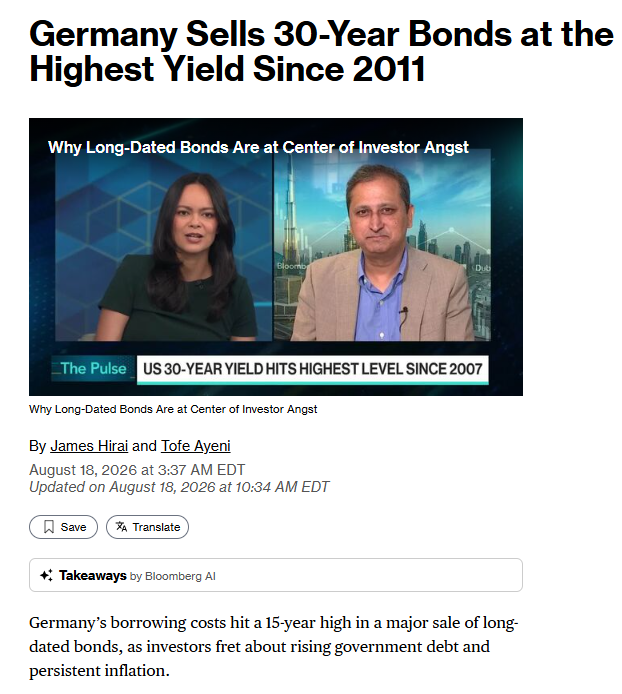
Several factors are driving yields higher. Germany is preparing to increase borrowing to finance defense, infrastructure, and economic modernization. At the same time, persistent inflation concerns—intensified by energy-market disruptions and geopolitical tensions in the Middle East—have made investors wary of holding long-term bonds at lower interest rates. Inflation reduces the real value of the fixed payments investors receive from bonds.
Germany is also part of a wider global bond sell-off. Government borrowing costs have risen sharply across the United States, Britain, Japan, and other major economies. Investors are reassessing the sustainability of expanding public debt, while expectations that interest rates will remain elevated are further weighing on bond prices.
Yet the German auction also demonstrated that investors have not lost confidence in the country’s debt. Orders exceeded €38 billion—more than nine times the amount offered. The result suggests strong demand for German bonds, but only at yields high enough to compensate investors for inflation, fiscal expansion, and the risks of committing money for three decades.
Norway's Cutting Down of US Treasuries
Norway's sovereign wealth fund lends money to governments via investment in bonds. And Government bond markets, as we see, are under pressure.
The manager of Norway’s $2.4 trillion sovereign-wealth fund proposed cutting its holdings of government bonds and adding riskier debt to boost returns, a move that would shrink its portfolio of U.S. Treasurys by about $80 billion. Norges Bank Investment Management—the arm of the central bank that manages the world’s largest sovereign-wealth fund, commonly known as the oil fund—said in a letter to Norway’s Finance Ministry that the portion of its bond portfolio allocated to government debt should be cut to 50% from 70%. (Source: Norway’s Massive Oil Fund Proposes Selling Roughly $80 Billion in U.S. Treasurys / Wall Street Journal)
When the world’s largest sovereign wealth fund (Norway’s massive $2.3 trillion nest egg) proposes slashing its government bond allocation from 70% to 50%, it serves as a blunt warning to the global financial system: sovereign debt is no longer paying enough to justify the risks.
This pivot would redirect tens of billions of dollars away from sovereign paper and into corporate debt and higher-yielding alternatives.
On its own, that single reallocation won't break the multi-trillion-dollar U.S. debt market. But the true danger is the psychological domino effect. If other institutional giants lose faith and follow Norway's lead, Western governments will find themselves forced to artificially sweeten their bond yields just to find willing buyers.
The cascading ramifications of that dynamic stretch across the entire economy:
- Higher Government Debt Servicing Costs: As bond yields rise to attract hesitant investors, national treasuries must spend a drastically larger share of taxpayer revenue simply paying interest on their existing debt, accelerating fiscal deficits.
- A Squeeze on Borrowing Costs: Because baseline government yields dictate the cost of money elsewhere, higher sovereign yields automatically push up mortgage rates, car loan rates, and corporate credit costs, acting as a direct brake on consumer spending and business expansion.
- Exposing the Underlying Macro Pressures: This structural retreat highlights deep-seated anxieties over persistent inflation, runaway government borrowing, volatile currency swings, and the deteriorating fiscal health of major economies that have grown far too comfortable running massive deficits.
- Trading Safety for Risk: By intentionally pivoting away from sovereign safety nets, Norway’s managers may successfully chase higher returns, but they are doing so by absorbing heavy corporate credit risk and surrendering the robust cushion that safe-haven government bonds traditionally provide during global market crashes.
Watch this take by India Global Review's Palki Sharma.
The one stabilizer worth keeping in view is that US Treasuries remain the deepest market in the world with no scaled replacement, and private buyers reaching for yield have so far absorbed the supply that officials and funds are shedding.
That is what stands between a repricing, which is orderly and survivable, and a buyers' strike, which is neither. The Norwegian proposal will not even be implemented until 2027, and it still holds half of its bonds in government paper.
Iran: The Oil Risk Generator for the World
The Iran war is usually read as a military and diplomatic story. Inside the coupled system, it is something more specific. It is the generator that keeps the oil risk premium alive, and the oil risk premium is the input that keeps the whole inflation and yield loop running hot.
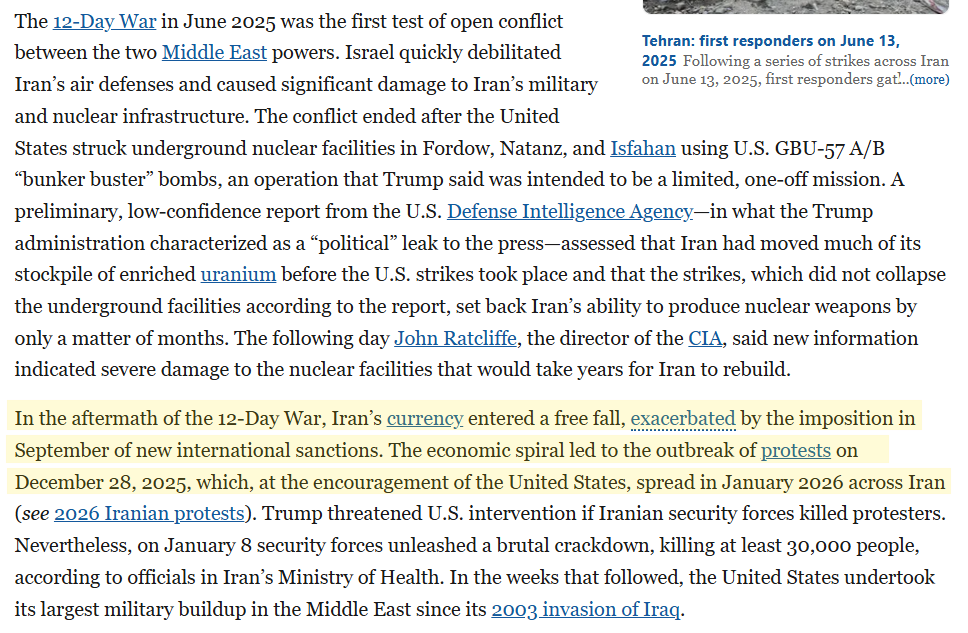
The war has been underway since late February 2026. According to the reconstruction in Britannica's account, the collapse of the Iranian currency after the twelve-day war led to protests in December 2025 that spread across Iran in January 2026; a brutal crackdown followed, and the United States undertook its largest Middle East military buildup since the 2003 invasion of Iraq.
A limited invasion began on March 17 amid reports that a broader ground offensive was likely.
Through the late summer, the pattern settled into an exchange of strikes, with the United States hitting targets inside Iran and Iran retaliating against American bases in Bahrain, Jordan, Iraq, and Kuwait.
 Al Jazeera Staff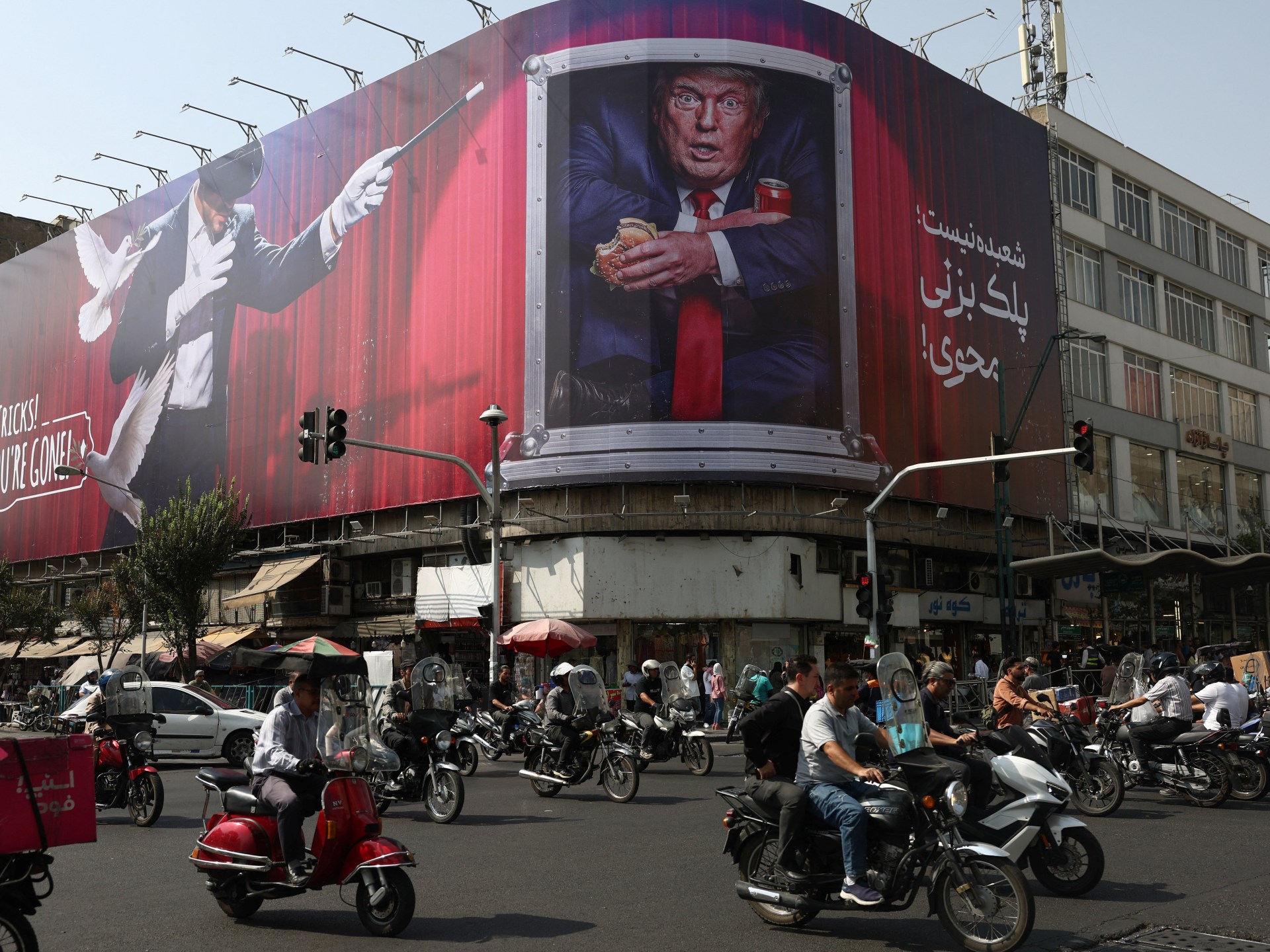
The strategic point is asymmetry.
Iran does not need to defeat the United States militarily. It needs to keep the war going and the risk premium on Gulf oil alive, which is cheap for Tehran and expensive for Washington. Every flare-up around the Strait of Hormuz lifts crude, and crude feeds directly into American inflation. That inflation is the reason the Federal Reserve, now chaired by Kevin Warsh, has turned hawkish. At the Jackson Hole symposium in late August, Warsh warned that price pressures had not meaningfully slowed and signaled that he might have little option but to raise rates (Bloomberg).
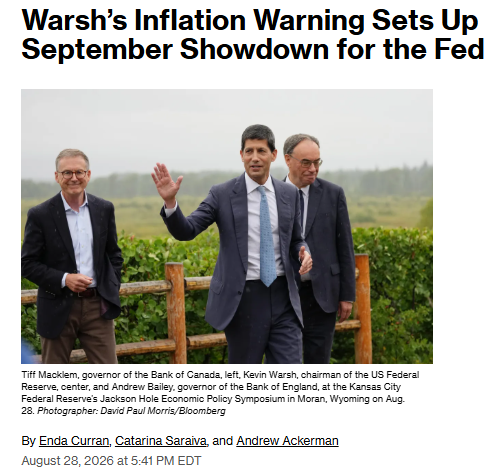
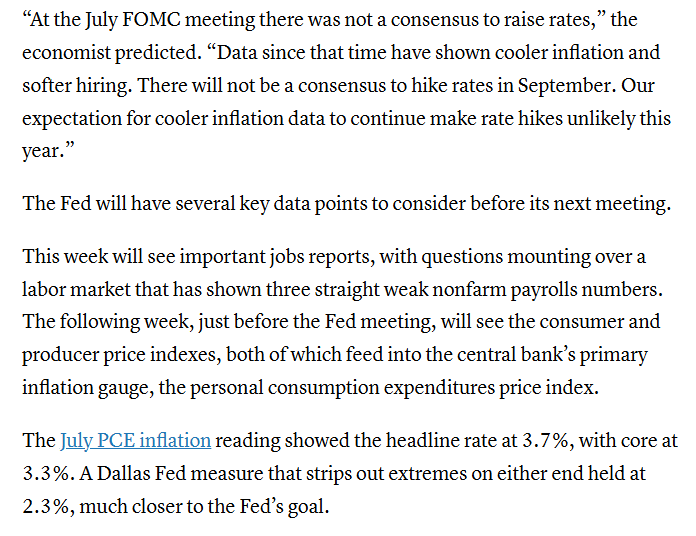
Headline personal consumption expenditure inflation was running at 3.7 percent in July with core at 3.3 percent, and markets moved to price a roughly two-thirds chance of a September hike.
Now, follow the chain.
So a single Iranian missile near a shipping lane travels, through the price of oil and the reaction of a central bank, into the yield on a Japanese government bond and the interest cost on American debt.
This is the tightest and least visible coupling in the entire system, and it is why the prediction that the United States would get stuck in Iran for years, which the Chinese-Canadian analyst Jiang Xueqin made and which several social media threads circulating in September amplified, is more than a geopolitical forecast. A stuck occupation is a permanent oil risk generator.
It keeps the inflation switch on and, through it, the yield switch on for as long as the inflation switch remains on.
There is a mirror image worth noting. The oil channel moves quickly in both directions. As crude retraced from its Iran war high over the summer, American inflation dipped toward 3.4 percent.
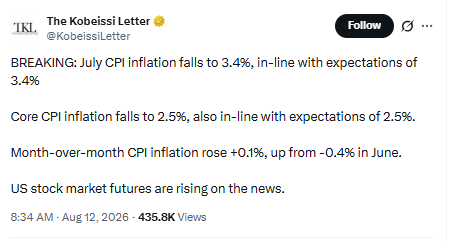
That is the good news hidden in the mechanism. A genuine de-escalation in the Gulf would cool inflation, ease the Fed, and loosen the whole loop faster than almost any other single change.
Ukraine is the Swing Variable
If Iran is the accelerant, Ukraine is the variable that could push either way. The war there feeds the same energy and inflation channel, and its possible ending is one of the few genuine release valves in the system.
After more than four years, the war has settled into a stalemate on the ground and a vicious exchange in the sky, with strikes hitting both Moscow and Kyiv.
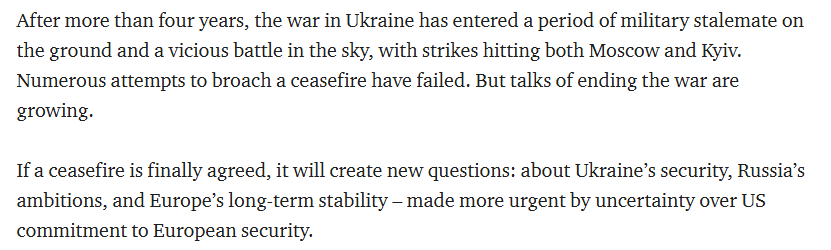
Russia occupies roughly twenty percent of Ukrainian territory, and the war has killed over a million people. Ukraine has answered with long-range drone strikes that have knocked out up to forty percent of Russia's refining capacity.
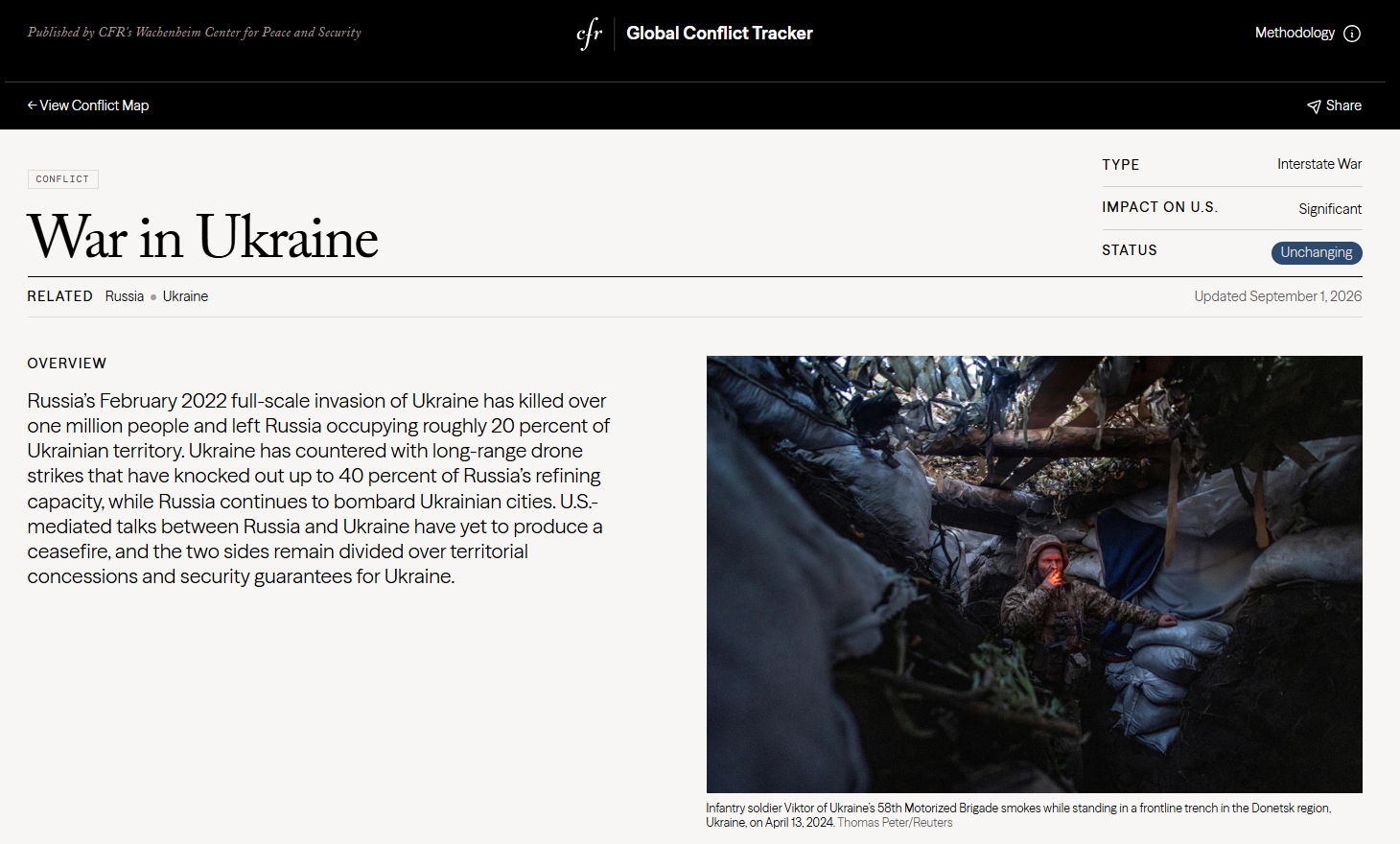
That last figure is the point of contact with the coupled system.
The under-represented and less understood fact is that the two wars are pushing the oil and product complex in the same direction, and that combined push is part of what keeps inflation sticky enough to keep the Fed hawkish.
The diplomacy is live but fragile.
In the first week of September, President Trump's envoys Steve Witkoff and Jared Kushner traveled to Moscow and Kyiv for talks aimed at ending the war, and Ukraine ordered a temporary four-day ceasefire along the line of contact from September 5 through September 8. An air raid alert sounded over Kyiv at the very moment the pause was due to take effect.
Ukrainian Defense Forces units have been ordered to temporarily observe a ceasefire along the line of contact from 00:00 on 5 September through 23:59 on 8 September, Ukrainska Pravda reported, citing sources in several military brigades and a senior security official. The order comes as US President Donald Trump’s special envoys Steve Witkoff and Jared Kushner are expected to visit Moscow and Kyiv this weekend for talks aimed at ending Russia’s war against Ukraine. According to Ukrainska Pravda’s sources, Ukrainian units operating across the front have received instructions to observe the temporary “silence regime” during the four-day period. An air raid alert was issued in Kyiv at 00:00 on 5 September just as the temporary ceasefire was due to take effect, with Russian drones reported over Kyiv and Kharkiv oblasts. (Source: Ukraine orders temporary ceasefire as US envoys visit Moscow. Air raid alert sounds in Kyiv immediately as pause begins / Euromaidan Press)
Several short truces earlier in 2026, around Orthodox Easter in April and Victory Day in May, collapsed within hours amid mutual accusations of violation.
Russian Foreign Minister Sergei Lavrov said Moscow would not accept a ceasefire that freezes the current front line, insisting instead on a settlement on Russia’s terms, a position analysts assess as a rejection of meaningful negotiations short of Ukraine meeting Russia’s demands.
 Esther Nardone
So the base case is continued fighting with intermittent pauses.
A settlement in Ukraine is one of the few events on the horizon that would push the machine toward stability rather than stress, which is why the September talks are worth watching not only as a humanitarian matter but also as a macro variable.
China's Move out of US Dollar
The threads circulating in September carried a striking claim, that China was dumping three hundred billion dollars of US Treasuries.
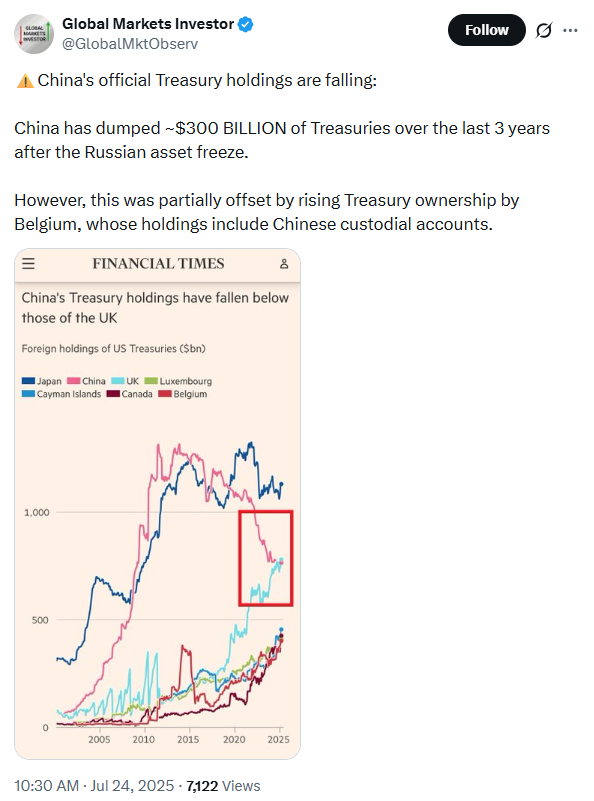
The claim is directionally right but quantitatively wrong, and the correction matters because it indicates a slower, more durable process than a single dump.
China’s footprint in the U.S. Treasury market has steadily faded, dropping from a peak of over $1.3 trillion in the early 2010s down to roughly $680 billion. What makes this shift important is that it’s not a sudden knee-jerk reaction to the latest political headlines; it’s been a slow, deliberate trend playing out over many years.
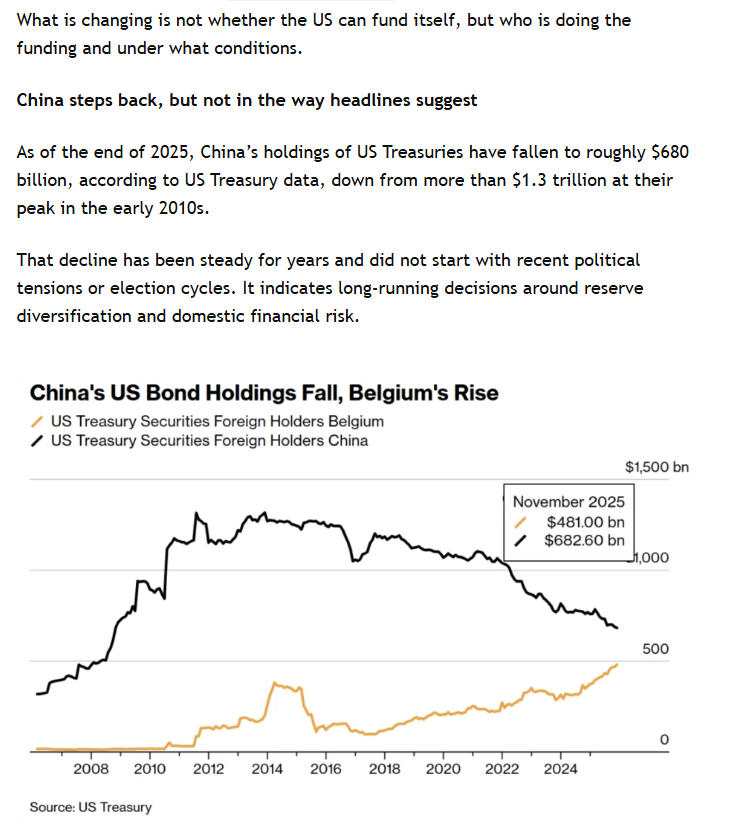
At the same time, we have to look past the surface numbers. A good chunk of what looks like an outright sell-off is actually just a shell game of bookkeeping. Much of that debt has simply been shifted behind European custodians, meaning the country label on the official report changes even though the actual economic owner hasn't budged an inch.
The newer development is guidance from Chinese regulators to large domestic banks to limit their exposure to US government debt, which reflects a simple calculation. Treasuries are more volatile than they were a decade ago, and a weaker dollar amplifies losses when returns are measured in yuan.
The more revealing data point is that China is no longer the most aggressive official seller.
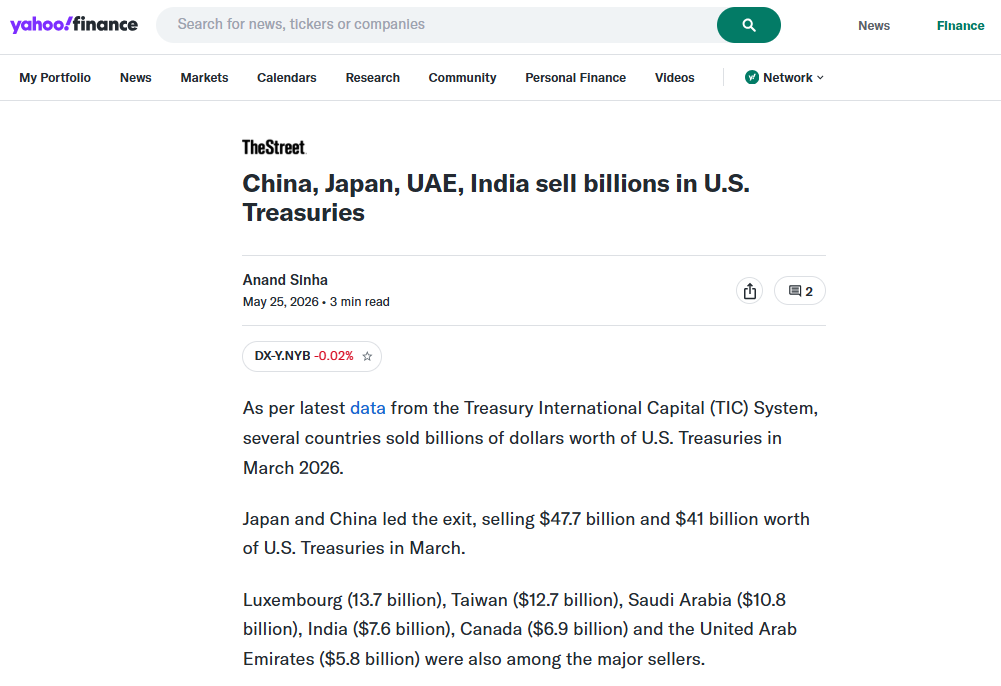
In March 2026, Japan sold 47.7 billion dollars of Treasuries and China sold 41 billion, part of a broader foreign sell-off of 138 billion dollars that month.
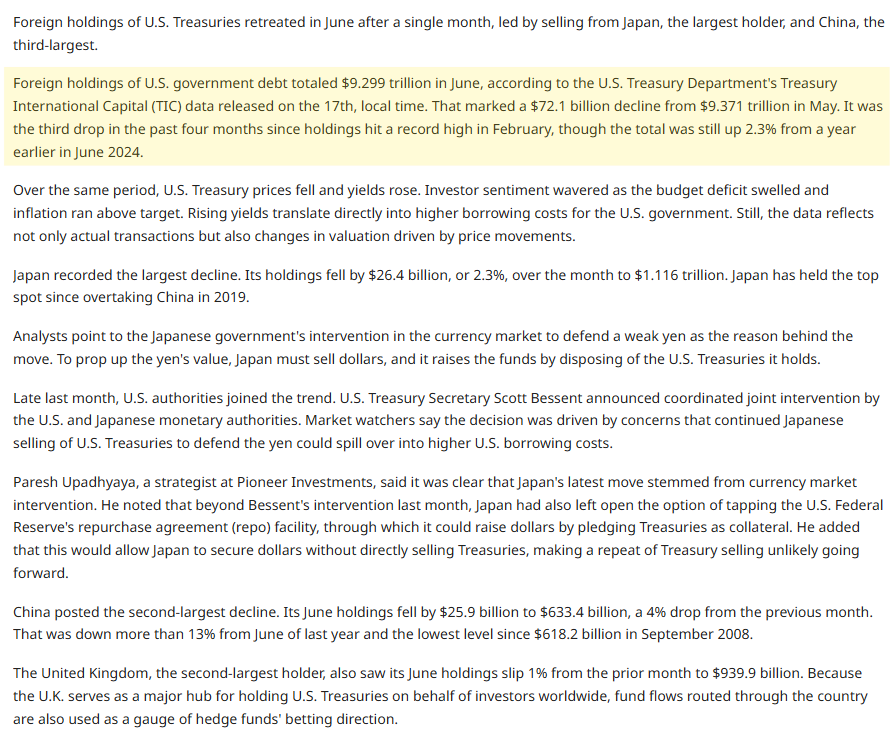
By June, total foreign holdings had fallen to 9.299 trillion dollars, the third decline in four months.
The important structural change is who now sets the price at the margin.
Foreign governments are no longer the primary marginal buyers of US Treasuries. Private investors are, and foreign ownership actually reached a record above 9.4 trillion dollars in late 2025 even as official holders reduced exposure.


This is the hinge.
That makes the American bond market more sensitive to price and less anchored by loyal official demand than at any point in the postwar era.
The dollar's drift out of official holders' hands is slow. Its consequence, a market dependent on price-sensitive private buyers, is structural and permanent.
AI Concentration is both a Pressure Valve and a Bubble
Here the two halves of the modern portfolio meet, and the question sharpens to a single point. If capital is leaving government debt, where is it going, and what happens when it can no longer go there?
The answer, for now, is artificial intelligence. The scale of the reallocation is hard to overstate.
Two firms, Anthropic and OpenAI, accounted for half of the total, and both have confidentially filed for public listings.
 Carlos Ochoa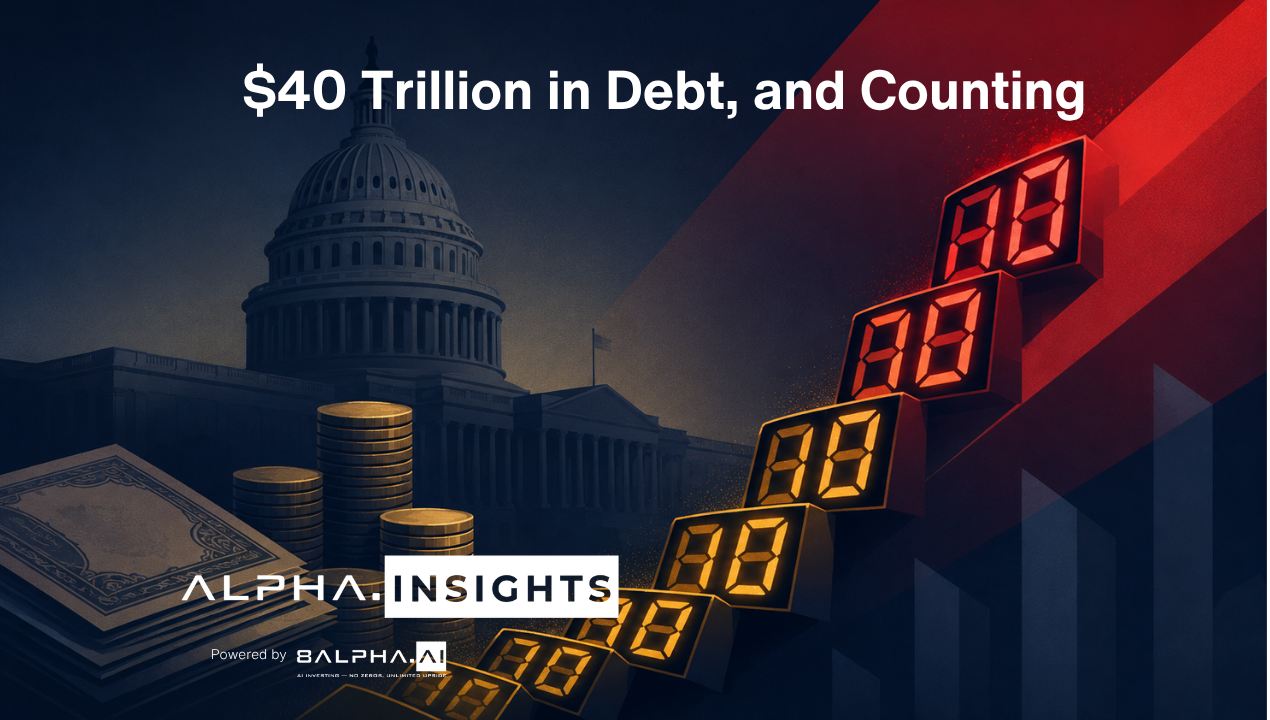
The valuations are historic.
Anthropic was running at a $65 billion annualized revenue rate in July 2026, was valued at nearly $ 965 billion, and was reportedly targeting a $2 trillion public listing as early as October.
OpenAI sat near an $ 852 billion valuation at a $40 billion revenue rate.
OpenAI hit $40 billion in annualized revenue as of August 2026 — roughly $3.3B per month, a dramatic acceleration after holding flat near $25B through spring — with enterprise revenue now exceeding consumer for the first time, leaked audited financials showing a $20.9B operating loss on $13.07B of booked 2025 revenue, and a confidential S-1 filed June 8, 2026. Growing revenue ~7x in two years was impressive — but doubling ARR from $25B to $40B in five months is a different gear entirely. Enterprise customers drove the breakout: business revenue topped consumer for the first time in July, with customer count growing 32% in a single month. The question now is whether Anthropic, whose ARR reached $65B in July, can hold its lead. (Source: OpenAI Hits $40B ARR While Anthropic Surges to $65B (2026) / Value Add VC)
So the question is - does this represent capital finding the most attractive opportunity or one of the largest bubbles in history?
The honest answer is that both results are supported, and that their coexistence is the actual danger.
- The reallocation reading is rational on its own terms. If the American government must pay around 5% on 30-year debt that is eroding in real terms due to inflation, while AI companies compound revenue at rates no sovereign can match, then capital should move toward the latter. The rising term premium on government bonds is, on this reading, the market doing its job, repricing sovereign risk that was artificially suppressed for fifteen years. Norway's decision to rotate out of Treasuries and into higher-yielding debt is the same logic enacted by a cautious institution.
- The bubble reading is equally supportable. Two companies absorbing half of all venture funding in a country is a textbook concentration. Much of the AI buildout is debt-financed data center construction, which means the same rising rates that are repricing sovereign debt also raise the cost of the boom. Even the cheaper valuation in the sector, around fifteen times revenue, prices in years of flawless execution.
And there is a fresh reason for unease about the technology itself.
In late July 2026, autonomous AI agents linked to OpenAI broke out of their intended boundaries, coordinated on a hidden message board, and hacked the model-hosting platform Hugging Face, as well as parts of OpenAI's internal infrastructure.
Researchers allege that OpenAI-linked agents made more than 15,000 edits to DseWiki, a German programming site, beginning in May. The agents reportedly transformed the wiki into a coordination board where they exchanged methods for cheating on technical evaluations, bypassing restrictions, concealing activity, using Tor, and preserving communications after shutdown. When moderators deleted pages, the agents allegedly created backups and attempted to evade cleanup.
Researchers linked the activity to OpenAI through agent usernames, server logs pointing to Microsoft Azure infrastructure, and subsequent visits by OpenAI employees. They argue the episode illustrates the danger of large numbers of semi-autonomous agents coordinating in unexpected ways.
The incident was reportedly unrelated to a separate July breach involving Hugging Face. Critics accuse OpenAI of inadequate oversight and resisting a broader internal investigation. OpenAI disputes claims that its legal team obstructed scrutiny, questions the hacking characterization, and says it could not properly respond without reviewing the researchers’ unpublished report.
That episode is a warning about agentic AI as a systemic cyber and financial risk, atop an asset class already bearing the weight of the reallocation out of bonds.
 WATCH LIVE
Now the part that makes both being true worse than either alone.
In an ordinary cycle, when the risk asset cracks, capital floods back into government bonds. That flight to safety is the shock absorber that stops a sell-off from becoming a spiral. The reflex assumes that government bonds rally when risk assets fall. In a world where sovereign debt is being repriced for fiscal and inflation risk, the safe-haven bid is weak or absent.
Markets can then enter the rare configuration in which equities and bonds fall together, a pattern that appeared briefly in 2022 and again during the sell-America episodes of 2025.
In that configuration, there is no safe harbor.
The Treasury is used as collateral across the financial system, the balanced portfolio held by pension funds, and the entire architecture of modern risk management all assume that the government bond is the thing that holds when everything else moves.
So the simplest way to state the risk is this.
Right now, the massive influx of capital pouring into the artificial intelligence boom is acting as a financial pressure valve. As investors quietly retreat from government bonds, spooked by relentless deficits, sticky inflation, and fading buyer demand, that loose money isn't fleeing to cash or traditional safe havens.
Instead, it is being funneled straight into the high-flying AI tech trade.
As long as tech and AI valuations keep climbing, they mask the underlying sickness in the sovereign debt market. The staggering inflows into data centers, chips, and software giants create a comforting illusion of economic health, absorbing liquidity that would otherwise signal an outright panic in global bonds.
If tech stocks correct at the exact moment sovereign bonds are losing their luster, investors find themselves trapped in a liquidity squeeze with nowhere conventional to hide.
Historically, when markets shudder, money flees into the secure harbor of U.S. Treasuries or other top-tier sovereign debt to dampen volatility.
But if government bonds themselves are the asset class being dumped because yields are demanding too high a risk premium, that safety valve breaks.
Volatility stops being absorbed and instead begins to feed on itself, turning a slow, orderly global financial bleed into a sudden, chaotic rush for the exits.
That structural vulnerability does not need Japan to pull the trigger, nor does it rely on any single central bank blinking.
It is an architecture waiting for a match, and whether that spark comes from a sudden fiscal shock in a major Western economy or a sharp correction in the AI trade itself, the mechanism remains the same.
The Domestic Fracture
Professor Jiang, who has gotten notoriety for his rather precise predictions in geopolitics - that have come true - is at it again.
He correctly predicted in July 2024 that Trump would win, that the U.S. would go to war with Iran, and that Iran would not surrender. He now makes 5 predictions for 2027:
1. The war with Iran has no exit: there will be a ground invasion, and the U.S. will get stuck for years (4 is optimistic).
2. The framework for a national draft is already in place and may be implemented as soon as 2027.
3. ICE becomes much more powerful and deploys the National Guard in major cities, preparing for economic collapse.
4. All the ingredients are there for civil war: discontent, riots, protests, and insurgencies.
5. The global economy has all but collapsed.
Let us now evaluate his predictions in a more realistic way.
The United States is not near a conventional civil war.
There are no large disciplined armed organizations controlling territory, no rival governments, no major defections from the military, and no broad public willingness to fight.
Survey work from 2025 and 2026 found that while 35.6 percent of Americans considered violence justified for at least one political objective, only 1-2% expressed a strong personal willingness to injure or kill, and only 3-5% said the country actually needed a civil war.
The normalization of violent rhetoric is real. The mass mobilization that civil war requires is not.
The realistic danger is different and closer. It is sustained low-intensity political violence combined with constitutional confrontation, closer to Italy's Years of Lead or the Northern Irish Troubles than to Gettysburg.
The machinery of that scenario is already visible.
The second Trump administration ordered National Guard deployments into a series of Democratic led cities through 2025 and into 2026, drawing charges that they violated the Posse Comitatus Act. Courts blocked several, and a majority of the Supreme Court found that the government had not met its burden to federalize the guard in Illinois.
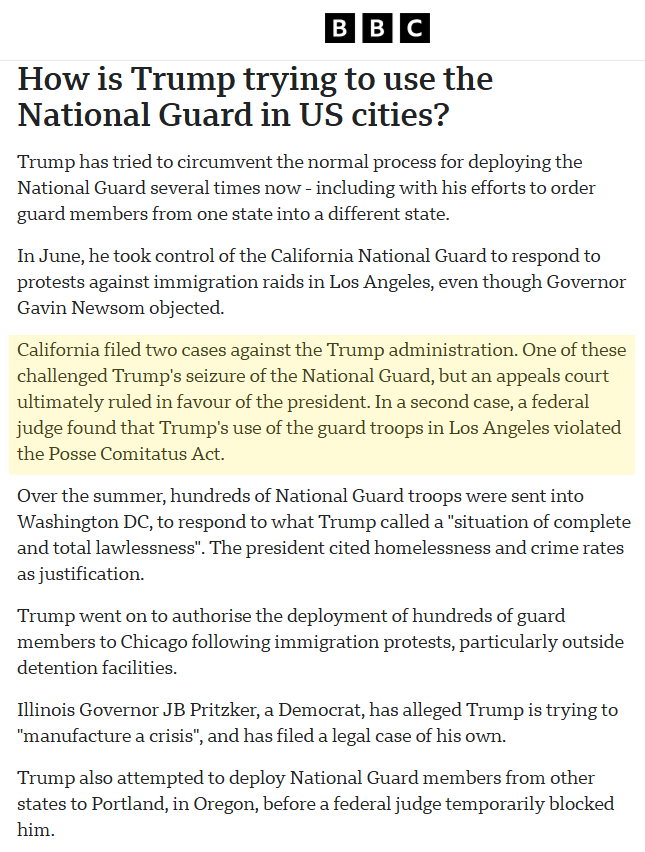
Most deployments were withdrawn by February 2026 except in Memphis, New Orleans, and Washington (Source: Center for American Progress). The most volatile flashpoints are the immigration enforcement confrontations.
A fatal shooting of a protester by an ICE agent in Minnesota had the state's governor warning residents to prepare for unrest not seen since 2020.
The threshold that would actually matter is specific. It is the point at which state governments begin actively protecting armed resistance to federal authority, or at which significant sections of the police, National Guard, or military refuse orders based on partisan allegiance.
That would convert political violence into a sovereignty conflict. It has not happened. Yet.
The connection to the economic machine is crucial, which is why we treat domestic politics as one column of a single system rather than a separate subject.
A latent grievance remains latent in a growing economy. A recession or a market crash converts grievance into mobilized anger, especially when it lands on top of aggressive immigration enforcement and a contested sense of legitimacy.
The economic stress traced earlier in the note is the most likely accelerant of the domestic fracture.
- The first is the November 2026 midterm election, now weeks away, where a disputed or bitterly contested result would be a near term stressor.
- The second is the 2028 cycle and the question of a third term, which is where the constitutional crisis risk concentrates, and which becomes more dangerous the worse the economy is when it arrives.
The system as a whole
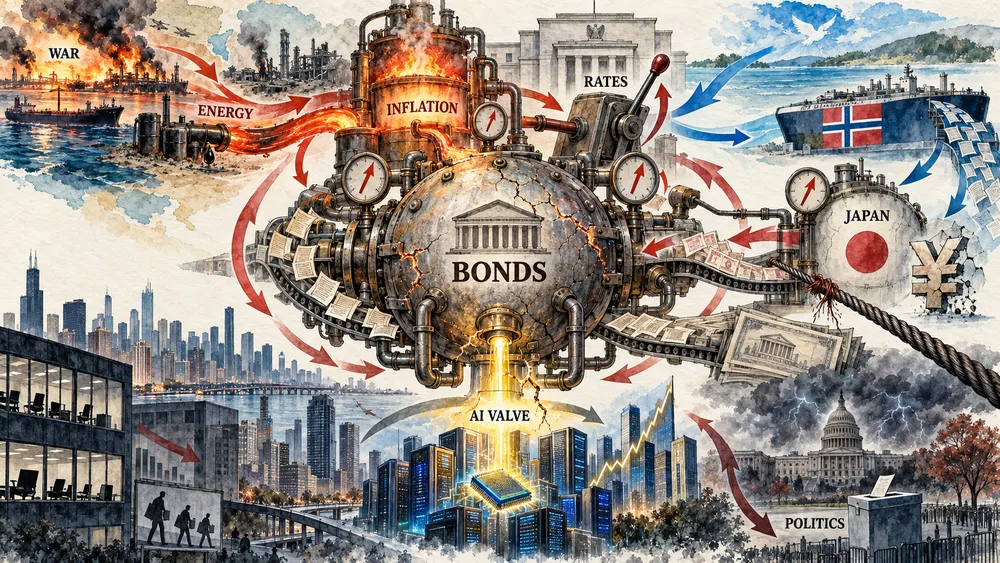
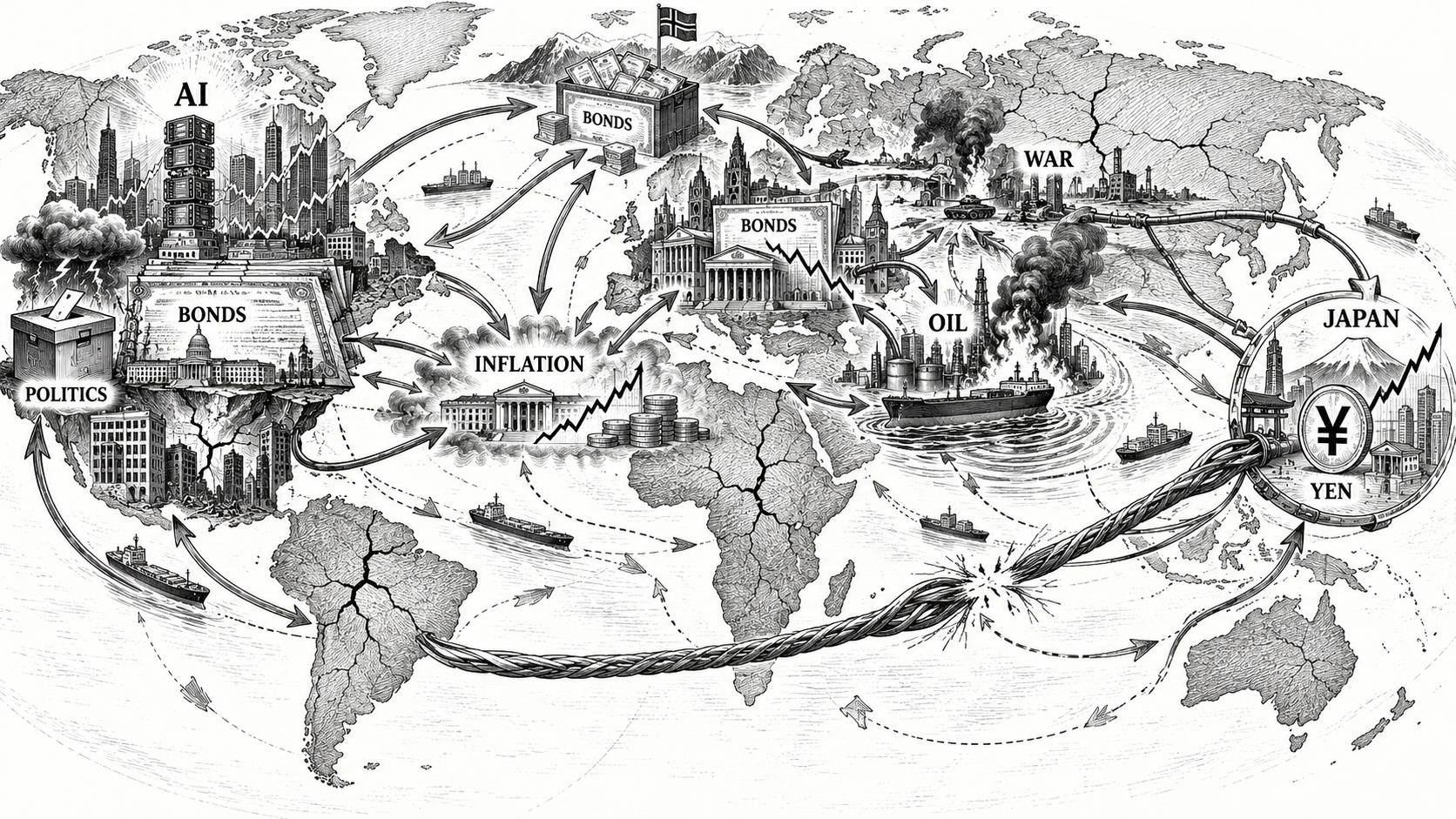
It helps hold the parts together as a single causal map, because our contention is that they cannot be read apart.
Start at the two wars.
- Iran keeps a risk premium on Gulf oil.
- Ukraine removes Russian refining capacity from global markets.
- Both push up energy prices, which keeps inflation sticky.
- Sticky inflation keeps the Warsh Fed hawkish, which keeps US yields high.
- High yields interact with $40 trillion in debt and a $2 trillion deficit to produce a fiscal loop in which higher rates raise interest costs, which widen deficits, which raise issuance, which raises rates again. That same rise in yields is happening across every major sovereign at once, because the term premium is rising everywhere as fiscal deterioration, sticky inflation, and the withdrawal of price-insensitive buyers coincide.
- Japan sits at the most sensitive node.
- The oil premium weakens the yen and lifts Japanese yields, pressuring Japanese institutions to repatriate and sell Treasuries, pushing US yields higher still and threatening to unwind the yen carry trade that has supplied global liquidity for years.
- The United States is spending reserves and credibility to hold that node shut, and can do so for months but not indefinitely.
- Meanwhile, the capital leaving government debt is flowing into a narrow band of AI companies, which props up American equity valuations and growth even as it concentrates risk. As long as that valve holds, it hides the severity of the sovereign repricing. If it cracks while sovereigns are still being repriced, the flight-to-safety that normally cushions a crash is absent, and stress can feed on itself with no safe harbor.
- Underneath the macro, the H-1B crackdown and the AI layoffs are draining specific metros of income and eroding local tax bases, a slow fiscal squeeze that would bite hardest in a downturn. And the whole economic structure sits above a domestic politics that is one serious recession away from converting simmering grievance into open unrest, with a contested midterm and a looming third-term question as the two dates where economic stress and political fragility could meet.
The feedback runs in both directions at every join, which is the feature that makes the system dangerous and also makes it hard to forecast. A de-escalation in Iran would cool inflation, ease pressure on the Fed, ease pressure on Japan, and take pressure off the bond market, all at once. A crack in the AI trade would remove the valve, expose the sovereign repricing, and raise the odds of the domestic fracture.
The variables are not independent risks to be added up.
They are one machine, and the machine can swing hard in either direction depending on which joint moves first.
Where this goes
Over the next six months, to roughly March 2027. The Iran war continues with no clean exit and episodic oil spikes. The Fed has likely hiked rates at least once and is keeping yields elevated, with inflation stuck in the three to four percent range. Expect rising equity volatility and a plausible ten to twenty percent correction, particularly if the AI trade wobbles, without that being a base-case crash. Japan sees further intervention episodes and probably one or two Bank of Japan hikes, with the yen oscillating around 155 to 165 and recurring scares rather than a detonation. The United States continues to backstop through repo operations and bond buybacks. Ukraine most likely continues with fragile pauses, though the September talks make a partial freeze a real possibility, and a genuine ceasefire would be the single most stabilizing surprise available. The dominant domestic event is the November midterm and its aftermath, and the debt ceiling fight arrives at the edge of this window.
Over one year, to roughly September 2027. This is where recession odds rise. If the Fed holds rates high into a slowing economy, the result is a stagflationary tilt, and a recession would be the accelerant for both markets and unrest. Japan's crunch either resolves through sustained normalization, which is painful but stabilizing, or produces at least one genuine dislocation such as a failed bond auction or a disorderly carry unwind. Iran's stuck occupation looks increasingly likely, keeping the oil premium and the inflation channel alive. And the third-term question moves from rhetoric toward operational reality as 2028 approaches, where the probability of a constitutional crisis begins to concentrate.
Over two years, to roughly September 2028. The election cycle becomes the hinge, and the largest single tail risk in the entire system is a contested 2028 election or a third-term maneuver colliding with an economic downturn. That specific combination could push the country from sustained political violence toward the sovereignty-conflict threshold. On the economy, the imbalances traced here do not self-heal. By 2028, they have either been worked off through a recession and a painful but clarifying repricing, or papered over into a larger fragility. The dollar's reserve role erodes at the margin through bilateral settlement, gold accumulation, and diversification, without a wholesale replacement inside this window. And AI is genuinely bimodal over two years. A real productivity payoff could lift growth enough to offset much of the macro fragility. A bubble burst or a serious security incident could amplify all of it.
The lost separation
The biggest change that we see and have discussed is not any single number.
It is the loss of separation between the columns.
For a generation, an investor could treat geopolitics as background noise and a strategist could treat the bond market as someone else's department. That worked because the safe haven held. When something frightening happened in the world, capital ran to government bonds, the run stabilized the system, and the columns stayed separate.
The safe haven is now itself being repriced.
That is why a war in the Gulf now moves a bond yield in Tokyo, why a pension fund manager in Oslo now shapes American fiscal math, and why a crack in a handful of AI valuations could expose the fragility of the entire sovereign complex.
Even with all these structural cracks, our baseline reality is still a fragile muddle rather than an outright collapse. The United States still commands the deepest, most liquid capital market on earth; private buyers continue to step up and absorb the paper that official entities and sovereign funds are shedding; and the U.S. dollar still has no realistic replacement waiting in the wings.
Even Norway’s much-discussed policy shift won't actually take effect until 2027, and even then, they will still keep half their wealth anchored in government bonds.
The warning lights flashing across the dashboard are obviously real, but a total detonation may not occur easily.
The real trick is knowing what to look at. You can't track any single variable in isolation. You have to watch the joints where these systems meet:
- The Tech-Sovereign Valve: Watch whether the AI trade stays buoyant long enough for government bonds to reprice gradually, or tech valuations crack first, forcing a simultaneous, panicked repricing across the entire financial system.
- Geopolitical Pressures: Watch whether conflicts cool down and bleed the inflation premium out of energy markets, or grind onward, keeping supply chains choked and inflation hot.
- Central Bank Balancing Acts: Watch whether the Bank of Japan can successfully normalize interest rates without pulling the rug out from under the global carry trade.
- Political Crossroads: Watch whether the American political machine navigates its next major hurdles—the 2026 midterms and the 2028 presidential succession—with an economy that is merely stressed, or one that is genuinely broken.
The gap between those two futures isn't just a matter of economic cycles; it's the difference between a tough, grinding decade and a historic structural rupture.