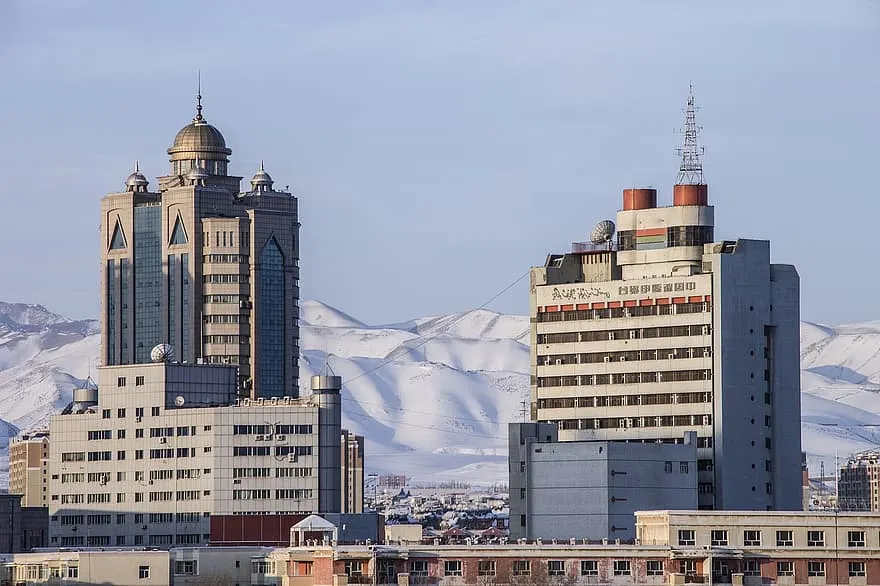
There is something afoot. One of its Urumqi, the capital of China’s far western region of Xinjiang – the province where the Uighurs were has gone into “wartime mode” and launched an emergency response plan after the city reported 16 new coronavirus cases on Friday. Just 16 cases and war-time mode?
It urged people not to make unnecessary trips outside the city and ordered infection tests for anyone who needed to leave Urumqi, aiming to prevent the spread of the virus. It has also carried out city-wide free infection tests, officials told the press conference as part of what the officials termed a “wartime” response.
The residents have become prisoners in their own region and no outside contact will be allowed.
The world needs to look at this developing situation more seriously.
Xi Jinping enters the May summit having brokered a ceasefire Trump credited publicly, weaponized Taiwan's opposition for diplomatic cover, and — per US intelligence — quietly arming Iran through cutout channels. This is not three stories. It is one architecture.
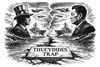
Applying Graham Allison's Thucydides Trap to the 2026 Iran war. Blending asymmetric war economics, $3T market distortions, alliance fractures, and revealing the deeper US-China power struggle beneath the conflict.
What started as a geopolitical stratagem during the Cold War of propping an adversary for their adversary (USSR), US create the powerhouse called China. Today China outcompetes US in every strategic technology. How did this happen?
Major powers are no longer coordinating, they’re insulating. China purges, India hedges, Europe retreats on sanctions, and the U.S. loses deniability space in Asia. Global alignment still exists—but trust has already collapsed.
From a tea stall to three terms as Prime Minister, Narendra Modi has faced coordinated destruction from every direction and responded by building. Today we explore what he truly represents for India, for its civilization, and to its poor, and to its long-humiliated Hindu majority.
West Bengal's 2026 election was a national security war — fought against ISI arms networks, America's "Zo State" project, Chinese encirclement, Jamaat's border consolidation, and a state government that shielded every hostile network operating against India's most vulnerable geography.
From Iran's burning strait to Pakistan's quiet unraveling, from Beijing's Taiwan calculus to Europe's frozen reckoning — five crises, one collapsing architecture, and the nations already building on the ruins of what the world pretended was permanent.